In an era where technological advancement accelerates at an unprecedented pace, emerging innovations are reshaping our world in profound ways. The convergence of artificial intelligence, quantum computing, and photovoltaic technology marks a transformative period in human history. These breakthrough technologies promise to revolutionize industries, enhance sustainability, and address global challenges with unprecedented efficiency.
From autonomous systems that redefine transportation to biotechnology breakthroughs enabling personalized medicine, the next decade will witness remarkable technological evolution. As we stand at this crucial intersection of innovation and implementation, understanding these emerging technologies becomes essential for professionals, researchers, and forward-thinking organizations.
This comprehensive analysis explores ten groundbreaking technologies poised to shape our future. Each innovation represents a significant leap forward in its respective field, offering solutions to complex challenges while opening new possibilities for human advancement. By examining their potential applications, current development status, and projected impact, we provide valuable insights for decision-makers and innovators alike.
Perovskite Solar Cells: The Next Generation of PV
Record-Breaking Efficiency Potential
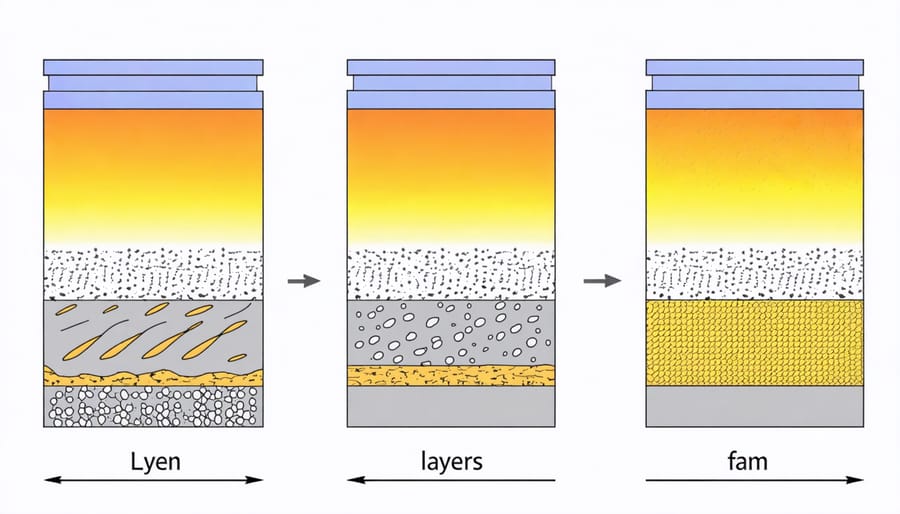
Recent breakthroughs in solar cell efficiency improvements have shattered previous limitations, with multi-junction cells achieving conversion rates exceeding 47% under concentrated sunlight. This remarkable advancement represents a significant leap from traditional silicon-based cells, which typically operate at 15-20% efficiency. The integration of novel materials and advanced architectures has enabled these unprecedented performance levels, particularly in tandem cell configurations that maximize light absorption across the solar spectrum.
Laboratory testing demonstrates that emerging technologies could theoretically push efficiency rates beyond 50%, approaching the Shockley-Queisser limit. When compared to conventional photovoltaic cells, these new designs show 40-60% greater energy capture capability, translating to substantially improved power generation per square meter. The enhanced performance metrics are particularly notable in challenging environmental conditions, maintaining higher efficiency levels even under varying temperature and light conditions.
These efficiency gains directly impact the economic viability of solar installations, potentially reducing the required panel surface area by up to 50% while delivering equivalent power output.
Commercialization Challenges
Despite the promising potential of emerging photovoltaic technologies, several significant challenges impede their successful commercialization. Manufacturing scalability remains a primary concern, as many novel technologies require specialized production processes that are difficult to implement at industrial scales. Cost-effectiveness poses another substantial barrier, with new materials and fabrication methods often carrying higher production expenses compared to established silicon-based technologies.
Material stability and long-term durability present ongoing challenges, particularly for perovskite solar cells and organic photovoltaics. These technologies must demonstrate reliable performance under various environmental conditions and maintain efficiency over extended periods to compete with traditional solar panels. Quality control and standardization issues also affect mass production capabilities, as maintaining consistent performance across large manufacturing batches proves challenging.
Market acceptance and integration into existing infrastructure require significant investment in testing, certification, and compliance with regulatory requirements. Additionally, the conservative nature of the energy sector often results in hesitation to adopt new technologies without extensive field validation. Addressing these commercialization challenges requires coordinated efforts between research institutions, industry partners, and regulatory bodies to establish clear pathways from laboratory success to market viability.
Bifacial Solar Panels
Bifacial solar panels represent a significant advancement in photovoltaic technology, offering enhanced energy capture capabilities through their unique dual-sided design. Unlike traditional solar panels that only capture sunlight on their front surface, bifacial panels can harness solar energy from both sides, significantly improving their overall efficiency and energy yield.
These innovative panels typically feature a transparent backing instead of the conventional opaque material, allowing them to capture both direct sunlight on the front and reflected light on the rear surface. The reflected light can come from various sources, including ground surfaces, nearby structures, or even snow cover, contributing to additional energy generation of up to 5-30% compared to monofacial panels.
The performance enhancement of bifacial panels depends heavily on several factors, including installation height, ground albedo (reflectivity), and tilt angle. Optimal installation conditions can maximize the bifacial gain, making these panels particularly effective in certain environments such as snow-covered regions or areas with highly reflective surfaces.
Recent technological improvements have addressed early challenges in bifacial technology, such as manufacturing costs and durability concerns. Modern bifacial panels now feature enhanced glass-glass construction, providing superior protection against environmental factors while maintaining excellent transparency for rear-side power generation.
The technology has gained significant traction in utility-scale solar installations, where the additional energy yield can substantially impact project economics. Research indicates that bifacial installations can reduce the overall levelized cost of electricity (LCOE) through increased energy production without proportionally increasing installation costs. As manufacturing processes continue to evolve and costs decrease, bifacial technology is positioned to become a mainstream solution in solar energy deployment.
Transparent Solar Cells
Transparent solar cells represent a groundbreaking advancement in photovoltaic technology, offering the possibility of transforming ordinary windows into energy-generating surfaces. These innovative devices, also known as transparent solar windows, utilize specialized organic materials and quantum dots to selectively harvest invisible portions of the light spectrum while maintaining optical transparency.
Recent developments have achieved transparency levels exceeding 70% while maintaining power conversion efficiencies of 5-10%. This breakthrough enables integration into building facades, automotive glazing, and electronic displays without compromising visibility or aesthetic appeal. The technology relies on luminescent solar concentrators (LSCs) that redirect specific wavelengths of light to conventional solar cells located at the edges of the transparent panels.
Major research institutions, including Michigan State University and MIT, have demonstrated successful prototypes with enhanced stability and durability. These advances address previous limitations in lifetime and degradation issues that historically challenged widespread adoption. The potential market impact is substantial, with estimates suggesting that building-integrated transparent solar cells could provide up to 40% of U.S. energy demands if deployed across available window surfaces.
Manufacturing processes have evolved to incorporate roll-to-roll printing techniques, significantly reducing production costs and enabling scalable implementation. Current applications focus on commercial buildings and greenhouse installations, where the technology offers dual benefits of energy generation and controlled light transmission for optimal plant growth. As efficiency continues to improve and costs decrease, transparent solar cells are positioned to become a crucial component in achieving net-zero energy buildings and sustainable urban development.

Organic Photovoltaics (OPV)
Organic Photovoltaics (OPV) represent a groundbreaking advancement in solar technology, offering unique advantages through their flexible, lightweight, and printable nature. Unlike traditional silicon-based solar cells, OPVs utilize organic semiconducting materials, typically conjugated polymers or small organic molecules, to convert sunlight into electrical energy.
The key innovation behind OPV technology lies in its solution-processable materials, enabling manufacturing through roll-to-roll printing techniques similar to newspaper production. This approach significantly reduces production costs and energy consumption during manufacturing, making OPVs an environmentally conscious choice from creation to implementation.
One of the most compelling features of OPVs is their mechanical flexibility. These solar cells can be integrated into curved surfaces, building materials, and even clothing, opening up unprecedented applications in building-integrated photovoltaics (BIPV) and wearable technology. Their semi-transparent nature also allows for innovative architectural applications, such as power-generating windows and skylights.
While current OPV efficiency rates typically range between 12-17% – lower than traditional silicon solar cells – their ability to perform well in low-light conditions and their superior performance at higher temperatures make them particularly valuable for indoor and urban applications. Recent research breakthroughs have demonstrated potential efficiency improvements through enhanced molecular design and optimized device architecture.
The environmental benefits of OPVs extend beyond their production process. These devices use earth-abundant materials, have a lower carbon footprint, and offer easier end-of-life recycling compared to conventional solar technologies. As research continues and manufacturing scales up, OPVs are positioned to play a crucial role in the next generation of sustainable energy solutions.
Floating Solar Arrays
Floating solar arrays, also known as floating photovoltaic (FPV) systems, represent a significant advancement in solar energy deployment by utilizing water bodies for panel installation. These innovative systems consist of solar panels mounted on specially designed floating platforms, typically installed on reservoirs, lakes, and industrial water bodies.
The water-based installation offers several distinct advantages over traditional land-based solar arrays. The natural cooling effect of water improves panel efficiency by reducing operating temperatures, resulting in up to 12% higher energy yield compared to ground-mounted systems. Additionally, the water surface helps minimize dust accumulation on panels, reducing maintenance requirements and extending system longevity.
FPV installations provide dual benefits for water conservation. The panels reduce water evaporation by creating shade, while the water body serves as a natural cooling mechanism. This symbiotic relationship is particularly valuable in arid regions where water conservation is crucial.
These systems also address land-use challenges by utilizing otherwise unused water surfaces, preserving valuable land for agriculture or development. Recent technological advances in floating platform design and anchoring systems have improved stability and reliability, making FPV installations increasingly attractive for utility-scale projects.
The global floating solar market is experiencing rapid growth, with notable installations in Asia and Europe demonstrating successful implementation at various scales. As technology costs continue to decrease and installation expertise grows, floating solar arrays are positioned to play a crucial role in the future of renewable energy generation.

Building-Integrated Photovoltaics (BIPV)
Building-Integrated Photovoltaics represents a revolutionary advancement in sustainable architecture, seamlessly incorporating solar cells into construction materials rather than treating them as separate installations. Unlike traditional distributed solar systems, BIPV technology transforms building elements like windows, facades, and roofing materials into power-generating assets while maintaining their primary architectural functions.
Recent innovations in BIPV include transparent solar glass that achieves up to 12% efficiency while allowing natural light transmission, making it ideal for commercial buildings and greenhouses. Advanced thin-film technologies have enabled the development of flexible solar materials that can conform to curved surfaces, expanding architectural possibilities while generating clean energy.
The market for BIPV solutions is experiencing rapid growth, with projections indicating a compound annual growth rate of 20.7% through 2026. This expansion is driven by increasingly stringent building energy codes and the growing emphasis on net-zero construction. Notable implementations include the Copenhagen International School, featuring 12,000 colored solar panels that generate 300 MWh annually while serving as an architectural statement.
The technology’s integration with smart building management systems enables real-time monitoring and optimization of energy production, contributing to enhanced building performance and reduced operational costs. However, challenges remain in standardization and initial cost barriers, though economies of scale are gradually improving accessibility.
Multi-Junction Solar Cells
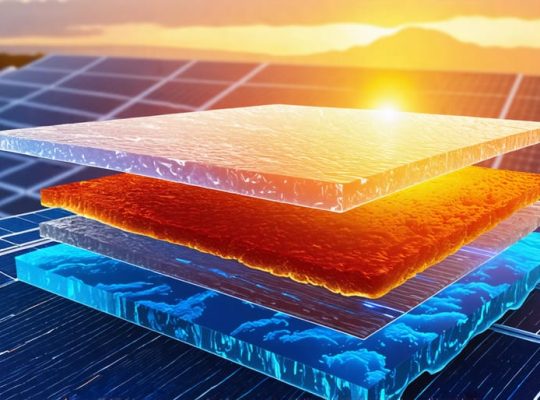
Multi-junction solar cells represent a significant breakthrough in photovoltaic technology, achieving unprecedented conversion efficiencies by stacking multiple semiconductor layers. Each layer is engineered to capture different portions of the solar spectrum, maximizing energy harvesting capabilities. The most advanced multi-junction cells utilize three or more layers, with top layers absorbing higher-energy photons while allowing lower-energy photons to pass through to subsequent layers.
Current state-of-the-art multi-junction cells have achieved laboratory efficiencies exceeding 47%, significantly outperforming traditional single-junction silicon cells that typically max out around 26%. These cells commonly incorporate materials such as gallium arsenide (GaAs), indium gallium phosphide (InGaP), and germanium in precisely engineered structures.
While initially developed for space applications due to their high power-to-weight ratio, multi-junction cells are increasingly finding terrestrial applications, particularly in concentrated photovoltaic (CPV) systems. When combined with solar concentrators, these cells can operate at several hundred times normal solar intensity, dramatically reducing the required cell area and overall system costs.
Despite their superior performance, challenges remain in scaling production and reducing manufacturing costs. Researchers are exploring novel material combinations and simplified fabrication processes to make this technology more commercially viable. Recent advances in perovskite-based multi-junction cells show promise for achieving both high efficiency and cost-effectiveness in future applications.
Quantum Dot Solar Cells
Quantum dot solar cells represent a revolutionary advancement in photovoltaic technology, leveraging nanoscale semiconductor particles to enhance solar energy conversion efficiency. These microscopic crystals, typically ranging from 2 to 10 nanometers in diameter, can be precisely tuned to capture specific wavelengths of light, potentially enabling the harvesting of a broader spectrum of solar energy than traditional silicon-based cells.
The key advantage of quantum dots lies in their ability to generate multiple electron-hole pairs from a single photon through a process called multiple exciton generation (MEG). This phenomenon could theoretically push solar cell efficiency beyond the Shockley-Queisser limit of around 33% for single-junction cells, with some researchers projecting potential efficiencies exceeding 45%.
Recent developments in colloidal quantum dot synthesis have significantly improved stability and manufacturing scalability. Advanced surface chemistry modifications have reduced electron recombination losses, while new deposition techniques enable more uniform quantum dot layers. These improvements have led to enhanced power conversion efficiencies, with laboratory demonstrations achieving over 16% efficiency.
Despite these promising advances, challenges remain in achieving commercial viability. Researchers are actively working to improve quantum dot stability, reduce production costs, and optimize manufacturing processes for large-scale deployment. The technology’s potential for flexible, lightweight solar panels and integration into building materials makes it particularly attractive for next-generation solar applications.
Solar Fabric and Wearable PV
Solar fabric and wearable photovoltaic technology represent a revolutionary advancement in renewable energy integration. These flexible solar cells are engineered at the nanoscale, incorporating lightweight, bendable materials that can be seamlessly woven into textiles and clothing. The technology utilizes organic photovoltaic materials and perovskite-based semiconductors, enabling the creation of solar-harvesting surfaces that maintain both functionality and aesthetic appeal.
Recent developments have produced solar fabrics with conversion efficiencies approaching 8%, while maintaining the flexibility and durability required for everyday wear. Applications range from military gear with integrated power generation to consumer clothing that can charge personal electronics. Smart backpacks and outerwear equipped with these photovoltaic materials are already entering the market, demonstrating the commercial viability of wearable solar technology.
Researchers are currently focusing on enhancing the power output while addressing challenges related to washability and long-term durability. The integration of energy storage solutions within the fabric structure represents the next frontier, potentially enabling complete energy harvesting and storage systems in wearable form factors. This technology promises to revolutionize both personal energy generation and the future of smart clothing.

AI-Optimized Solar Systems
Artificial Intelligence is revolutionizing solar system design and operation through advanced optimization algorithms and machine learning capabilities. These AI-powered solutions analyze multiple variables simultaneously, including solar irradiance patterns, shading effects, temperature variations, and energy consumption profiles, to maximize system efficiency and power output.
Modern AI systems can predict solar generation with unprecedented accuracy by processing real-time weather data and historical performance metrics. This enables dynamic adjustment of system parameters and predictive maintenance scheduling, reducing downtime and extending equipment lifespan. Machine learning algorithms continuously refine their predictions through feedback loops, achieving up to 30% improvement in system efficiency compared to traditional designs.
The integration of AI extends to smart inverter management, optimal panel positioning, and automated fault detection. Neural networks analyze vast datasets to identify subtle performance degradation patterns before they become critical issues. Additionally, AI-driven design tools can rapidly generate thousands of possible system configurations, considering factors such as roof geometry, local regulations, and budget constraints to determine the most cost-effective solution.
These systems also facilitate grid integration by optimizing energy storage and distribution based on demand forecasting and grid stability requirements, making solar power more reliable and grid-friendly than ever before.
As we look toward the horizon of technological advancement, these ten emerging technologies represent more than just individual innovations – they form the building blocks of our future technological landscape. The convergence of artificial intelligence, quantum computing, and biotechnology is creating unprecedented opportunities for solving complex global challenges. These developments are not evolving in isolation but are increasingly interconnected, creating synergistic effects that accelerate progress across multiple sectors.
The impact of these technologies extends far beyond their immediate applications. From revolutionizing healthcare through personalized medicine to transforming energy systems with advanced renewable solutions, these innovations are reshaping the foundations of society. The integration of sustainable technologies, particularly in energy and materials science, demonstrates a clear shift toward environmentally conscious development paradigms.
Looking ahead, we can expect these technologies to mature and converge in ways that may currently seem unimaginable. The next decade will likely see accelerated development in quantum computing capabilities, more sophisticated AI applications, and breakthrough advances in biotechnology. However, successful implementation will require careful consideration of ethical implications, regulatory frameworks, and societal impacts.
As these technologies continue to evolve, collaboration between research institutions, industry leaders, and policymakers will be crucial. The future belongs to those who can effectively harness these innovations while ensuring their responsible and equitable deployment across society. The journey ahead is both challenging and promising, marking the beginning of a new era in technological advancement.