Metal roof integrated solar panels represent a transformative advancement in building-integrated photovoltaic (BIPV) technology, merging sustainable energy generation with modern architectural design. These systems replace traditional roofing materials with photovoltaic modules that serve dual purposes: protecting the building envelope while generating clean electricity. Unlike conventional rack-mounted solar installations, integrated panels maintain the sleek aesthetic of metal roofing while offering superior weatherization and structural benefits.
The integration of solar technology with metal roofing addresses key challenges in renewable energy adoption, particularly for commercial and residential applications where appearance and functionality must coexist. Modern metal roof integrated systems achieve remarkable efficiency rates of up to 20%, while their seamless installation methodology significantly reduces the risk of water infiltration and structural stress points commonly associated with traditional solar mounting systems.
For facility managers and building professionals, these systems offer compelling advantages: reduced installation costs through combined roofing and solar installation, enhanced building envelope protection, and improved energy performance through optimized thermal management. The technology’s evolution continues to drive innovation in sustainable building practices, making it an increasingly viable option for new construction and retrofit projects alike.
The Structural Dynamics of Metal Roof Solar Integration
Load Distribution Principles
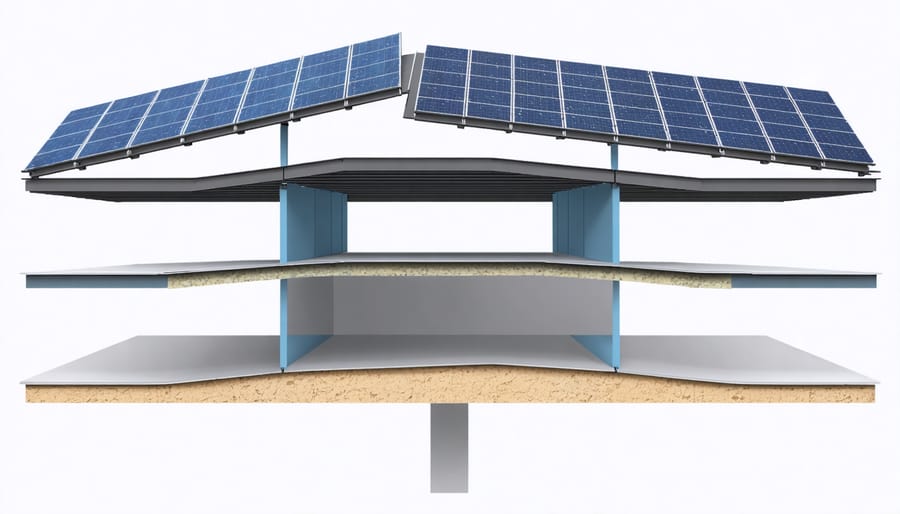
The successful integration of solar panels with metal roofing requires careful consideration of various load factors to maintain proper structural integrity. Dead loads encompass the combined weight of both the solar panels and mounting system, typically ranging from 2.5 to 4 pounds per square foot. These constant forces must be distributed evenly across the roof structure to prevent localized stress points.
Live loads, including snow accumulation and maintenance personnel, add variable weight that can significantly impact the system. In regions with heavy snowfall, loads can exceed 20 pounds per square foot, necessitating enhanced structural support. Wind loads present particular challenges for integrated systems, as uplift forces can create substantial stress on both the panels and roof attachment points.
The integration method must account for these combined forces while maintaining the roof’s water-tight properties. Modern mounting solutions incorporate load-distribution techniques such as rail systems and engineered attachment points that transfer forces directly to the building’s structural members, ensuring long-term system stability and roof protection.
Material Compatibility
Metal roofing materials vary in their compatibility with solar panel integration, with standing seam metal roofs offering optimal conditions for installation. Standing seam panels, typically made from aluminum or steel, provide natural mounting points along their raised seams, eliminating the need for roof penetrations. This characteristic significantly reduces installation complexity and potential leak risks.
Corrugated metal roofs, while common, require specialized mounting solutions and may need additional waterproofing measures. Galvanized steel, aluminum, and zinc-aluminum coated roofing materials all demonstrate excellent durability when paired with solar installations, provided proper isolation methods are employed to prevent galvanic corrosion between dissimilar metals.
The gauge or thickness of the metal roofing material plays a crucial role in supporting solar installations. Industry standards recommend a minimum of 24-gauge steel or 0.032-inch aluminum thickness to ensure adequate structural support. Roofing materials should also feature protective coatings or finishes that resist UV degradation and maintain their integrity under prolonged exposure to solar array contact points.
When selecting metal roofing for solar integration, consideration must be given to the roof’s thermal expansion characteristics and its ability to accommodate the additional load of solar mounting systems.
Critical Engineering Considerations
Thermal Expansion Management
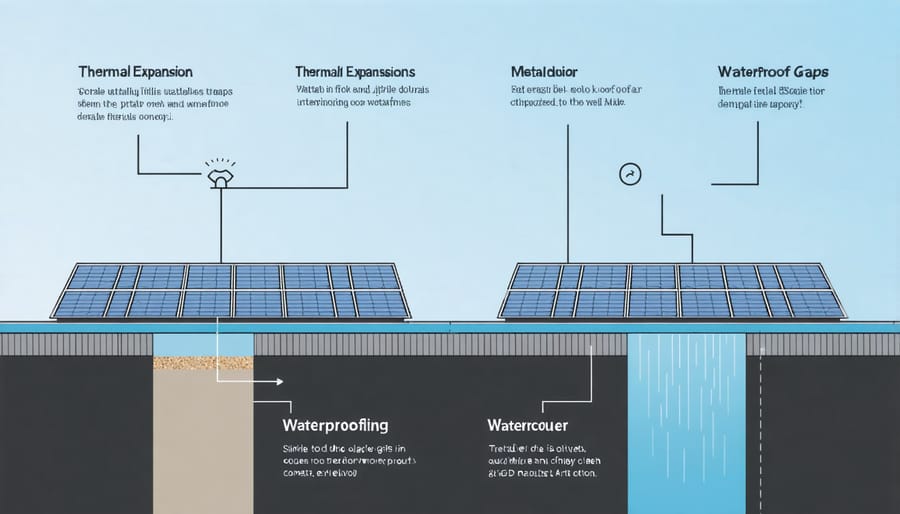
Thermal expansion is a critical consideration in metal roof integrated solar installations, as both the metal roofing material and solar panel components respond differently to temperature fluctuations. Metal roofs can expand and contract significantly with temperature changes, potentially moving up to an inch or more across a typical residential roofline during extreme temperature variations.
To effectively manage thermal expansion, installers must implement specific mounting techniques and component selections. The mounting system should incorporate thermal expansion joints and flexible mounting brackets that accommodate the differential movement between the solar panels and the metal roof structure. These components typically include sliding mechanisms or thermal breaks that allow for natural expansion without causing stress on either the panels or the roof.
The selection of appropriate mounting hardware is equally important. Installers should use stainless steel fasteners with EPDM washers, which provide weather-tight seals while allowing for thermal movement. Additionally, the rail system supporting the solar panels must be designed with adequate spacing between components to prevent binding or warping during thermal cycles.
Temperature considerations also affect wire management systems. Electrical conduits and cable runs must include expansion loops or flexible connections to prevent strain on electrical connections when thermal movement occurs. This ensures the long-term reliability of the electrical system while maintaining the integrity of the weatherproof roof assembly.
Waterproofing and Moisture Control
Maintaining proper waterproofing and moisture control is crucial when installing solar panels on metal roofs. The integration process requires precise attention to detail to preserve the roof’s inherent weather resistance while accommodating the mounting system. Installers must utilize specialized flashing techniques and water-tight sealing methods at all penetration points where mounting hardware connects to the roof structure.
Industry-standard practices include implementing EPDM rubber gaskets at mounting locations and applying high-grade sealants specifically designed for metal roof applications. These components work together to create a double-barrier system that prevents water infiltration. The mounting system should incorporate elevated standoffs that maintain proper drainage paths and prevent water pooling around attachment points.
Critical attention must be focused on maintaining the roof’s original drainage patterns. Solar mounting rails should be oriented parallel to the roof’s slope to avoid creating damming effects that could impede water flow. Additionally, proper torque specifications must be maintained on all fasteners to prevent thermal expansion and contraction from compromising seal integrity over time.
Regular inspection protocols should be established to monitor the effectiveness of moisture control measures. This includes examining sealant conditions, checking gasket compression, and verifying that drainage channels remain unobstructed. When properly executed, these waterproofing techniques ensure the long-term performance of both the solar array and the metal roof system.
Installation Best Practices
Mounting Systems and Attachment Methods
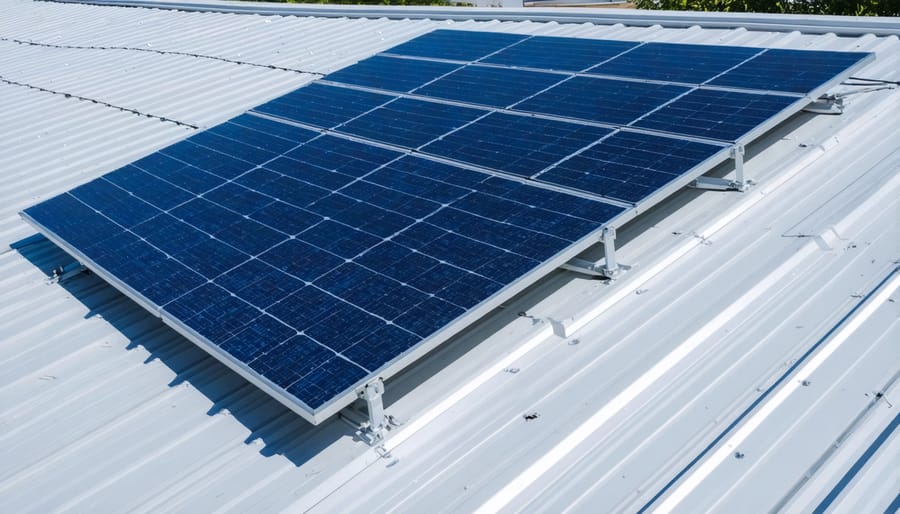
Metal roof integrated solar panels utilize several mounting systems, each designed to maximize structural integrity while maintaining weatherproofing capabilities. The most common method involves direct attachment to the standing seams using non-penetrating clamps, which preserve the roof’s water-tight characteristics while providing secure anchoring points for the solar array.
S-5! clamps and similar specialized fasteners are engineered specifically for standing seam metal roofs, utilizing mechanical compression to create a secure connection without compromising the roof’s surface. These systems distribute loads evenly across the roof structure and typically feature aluminum or stainless steel construction for durability and corrosion resistance.
Rail-based mounting systems provide additional support by creating a framework that spans multiple attachment points. This approach allows for optimal load distribution and simplified panel alignment. For trapezoidal and corrugated metal roofs, brackets with EPDM rubber gaskets are employed to ensure waterproof connections at mounting points.
Some advanced integration methods incorporate custom-designed panels that serve as both roofing material and solar modules. These systems eliminate the need for traditional mounting hardware while maintaining structural integrity through direct integration with the roof’s support structure. All mounting solutions must comply with local building codes and account for wind loads, snow loads, and thermal expansion characteristics.
Quality Control Measures
Quality control for metal roof integrated solar panels involves rigorous inspection protocols throughout the installation and operational lifecycle. Key verification points include mechanical load testing, water penetration resistance, and electrical performance validation. Certified inspectors evaluate the structural integrity of mounting systems, ensuring proper alignment and secure attachment to the metal roofing substrate.
Pre-installation testing focuses on material compatibility between solar panels and metal roofing components, while post-installation checks verify weatherproofing effectiveness and proper electrical connections. Advanced predictive maintenance systems monitor performance metrics in real-time, enabling early detection of potential issues.
Quality assurance protocols include thermal imaging inspections to identify hot spots or connection problems, pull-test verification for mounting hardware, and comprehensive electrical safety assessments. Documentation requirements mandate detailed records of installation procedures, component specifications, and system performance metrics.
Regular evaluation of sealing components, flashing integrity, and module degradation ensures long-term system reliability. Industry standards require periodic recertification and compliance verification, particularly in regions with extreme weather conditions or stringent building codes. These measures collectively safeguard system performance and structural integrity throughout the installation’s operational lifespan.
Long-term Maintenance Requirements
Regular maintenance is crucial for ensuring optimal maintenance best practices and longevity of metal roof integrated solar panels. The integrated nature of these systems requires a comprehensive approach to maintenance that addresses both the solar components and the metal roofing structure.
Annual inspections should focus on examining the interface between solar panels and metal roofing, checking for any signs of water penetration, corrosion, or deterioration of sealants. Particular attention should be paid to mounting points and flashing details, as these are critical areas where potential issues might develop. Professional technicians should verify the integrity of electrical connections and ensure all components remain properly grounded.
To maintain system’s lifetime performance, periodic cleaning of both panels and drainage channels is essential. This prevents debris accumulation that could impact system efficiency or cause water damming. The cleaning process must be conducted using appropriate methods that won’t damage the protective coatings on either the panels or metal roofing.
Structural assessment should be performed every 5-7 years, focusing on the load-bearing capacity of the roof and the condition of mounting systems. This includes evaluating the thermal expansion characteristics of both the metal roof and solar array to ensure proper movement allowances remain functional.
Documentation of all maintenance activities, including photographs and detailed reports, helps track system performance and identify potential issues before they become significant problems. This proactive approach helps protect the substantial investment in the integrated system while ensuring optimal energy generation throughout its intended service life.
Safety Standards and Compliance
Metal roof integrated solar installations must comply with various national and international safety standards to ensure structural integrity and long-term performance. The International Building Code (IBC) and National Electric Code (NEC) provide fundamental requirements for these installations, with specific attention to Article 690 of the NEC addressing photovoltaic system safety.
Key compliance areas include wind resistance ratings, fire classification requirements, and electrical safety standards. UL 1703 certification is mandatory for photovoltaic modules, while UL 2703 addresses mounting system safety. These standards ensure the integrated system maintains the metal roof’s weather-tight integrity while safely supporting the solar array.
Local building codes often require professional engineering stamps for structural calculations, particularly concerning additional roof loads and attachment methods. The Metal Construction Association (MCA) guidelines specifically address metal roof and solar panel integration, emphasizing proper water management and thermal movement considerations.
Fire safety compliance is crucial, with most jurisdictions requiring Class A fire ratings for integrated systems. The UL 2703 standard includes fire testing requirements specific to building-integrated photovoltaic (BIPV) systems, ensuring the installation doesn’t compromise the roof’s fire resistance properties.
Electrical grounding requirements demand particular attention in metal roof applications. The system must establish proper equipment grounding conductor sizing and maintain continuous grounding between solar components and the metal roof structure. This prevents potential induced current issues and ensures safety during maintenance operations.
Installation teams must maintain OSHA workplace safety standards, including fall protection requirements and electrical safety protocols. Regular system inspections and maintenance should follow manufacturer guidelines and local code requirements to maintain compliance throughout the system’s operational life.
Obtaining necessary permits and documentation is essential, including structural engineering reports, electrical diagrams, and fire safety certifications. Many jurisdictions require periodic reinspection to verify ongoing compliance with safety standards and system performance requirements.
The successful integration of solar panels with metal roofing systems requires careful attention to structural considerations, proper installation techniques, and ongoing maintenance protocols. Throughout this discussion, we’ve explored how metal roof integrated solar panels offer a sophisticated solution that combines renewable energy generation with architectural functionality. The key to maximizing these benefits lies in understanding the intricate relationship between load distribution, waterproofing requirements, and thermal expansion characteristics.
Proper structural integration demands a comprehensive approach, considering factors such as roof pitch, panel orientation, and mounting system compatibility. Engineers and installers must ensure that the building’s existing structure can support the additional weight while maintaining the integrity of both the solar array and the metal roofing system. The importance of professional assessment and installation cannot be overstated, as it directly impacts system performance, longevity, and safety.
Looking forward, the evolution of metal roof integrated solar technology continues to advance, offering increasingly efficient and aesthetically pleasing solutions. As the industry progresses, maintaining focus on structural integration best practices will remain crucial for achieving optimal system performance and reliability. By following established guidelines and working with qualified professionals, building owners and managers can successfully implement these systems while ensuring long-term structural integrity and energy generation efficiency.