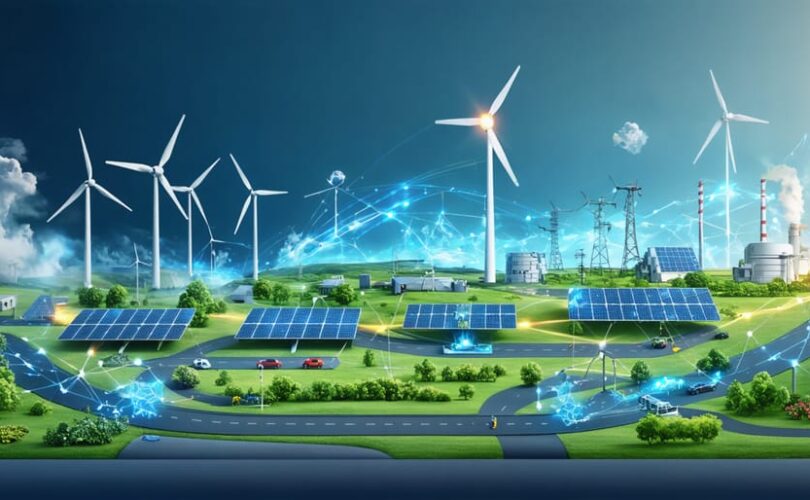
Transforming our energy landscape demands a strategic shift toward renewable resources, particularly in photovoltaic manufacturing where establishing a sustainable production cycle is paramount. The integration of diverse renewable energy sources not only reduces carbon emissions but also creates a self-sustaining manufacturing ecosystem that addresses both environmental concerns and economic viability. From solar and wind to geothermal and hydroelectric power, each renewable resource offers unique advantages in PV production, contributing to enhanced efficiency and reduced operational costs. As global energy demands continue to surge, understanding these six renewable energy resources becomes crucial for industry professionals, researchers, and environmentally conscious stakeholders who seek to optimize their manufacturing processes while minimizing environmental impact. This comprehensive analysis explores how these renewable sources can be effectively implemented in PV manufacturing, providing practical insights for achieving sustainable operations and maintaining competitive advantage in the rapidly evolving renewable energy sector.
Solar Energy in PV Manufacturing
On-site Solar Integration
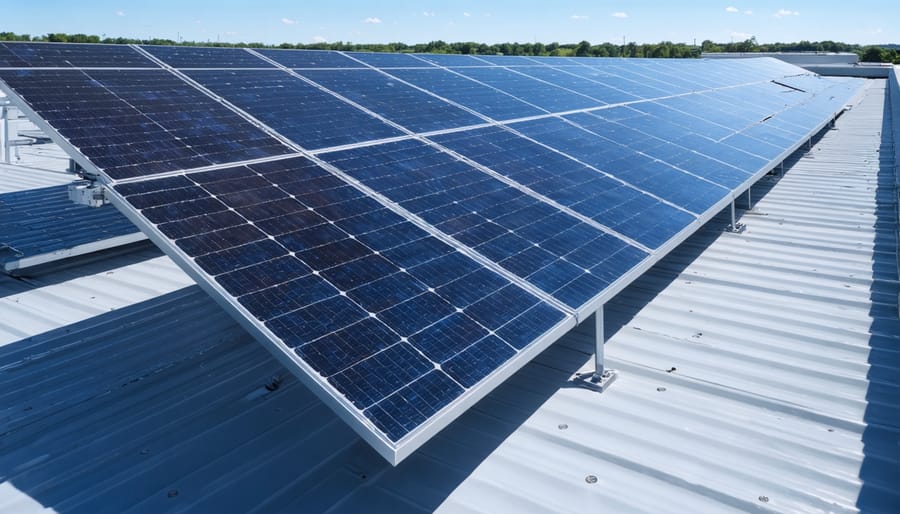
On-site solar integration represents a crucial step toward achieving self-sustaining manufacturing processes in the photovoltaic industry. By implementing a high-performance PV solar system within manufacturing facilities, companies can significantly reduce their carbon footprint while demonstrating the practical application of their own technology.
Modern solar manufacturing facilities typically incorporate rooftop and ground-mounted solar arrays, which can generate between 15% to 40% of their total energy requirements. These installations often feature advanced monitoring systems that optimize energy production and consumption patterns throughout the manufacturing process.
The integration process involves strategic placement of solar panels, smart inverter systems, and energy storage solutions to maximize power generation efficiency. Manufacturing facilities commonly implement a combination of fixed and tracking systems to capture optimal solar radiation throughout the day. Energy management systems coordinate power distribution between solar generation, grid supply, and storage systems to ensure continuous operation.
Key benefits include reduced operational costs, enhanced energy security, and decreased reliance on conventional power sources. Additionally, on-site solar integration serves as a practical demonstration of sustainable manufacturing principles, often becoming a valuable showcase for potential clients and industry partners.
For optimal implementation, facilities must conduct comprehensive energy audits, assess available installation space, and evaluate local solar resources to determine the most effective configuration for their specific needs.
Solar-Powered Equipment Innovation
Solar-powered manufacturing equipment represents a significant advancement in sustainable production processes, particularly in the photovoltaic industry. These innovative systems integrate solar energy directly into manufacturing operations, creating a self-sustaining cycle of clean energy production and utilization.
Modern solar-powered equipment encompasses a range of manufacturing tools, from precision automation systems to quality control instruments. Advanced solar tracking mechanisms ensure optimal energy capture throughout the day, while smart energy management systems regulate power distribution across different production stages. This technology has enabled manufacturers to reduce their carbon footprint while maintaining high production standards.
Key innovations include solar-powered conveyor systems, automated assembly lines, and testing equipment specifically designed for PV module production. These systems often incorporate energy storage solutions, allowing for continuous operation even during periods of limited sunlight. Hybrid systems that combine solar power with other renewable sources ensure manufacturing reliability while maximizing sustainability.
Recent developments have also introduced smart manufacturing solutions that utilize artificial intelligence to optimize energy consumption. These systems can predict energy needs, adjust production schedules based on solar availability, and automatically switch between power sources to maintain operational efficiency.
The implementation of solar-powered equipment in manufacturing facilities has demonstrated significant cost savings, with some facilities reporting up to 60% reduction in operational energy expenses. This innovation not only supports environmental sustainability but also contributes to the economic viability of renewable energy production.
Wind Energy Applications
Hybrid Wind-Solar Systems
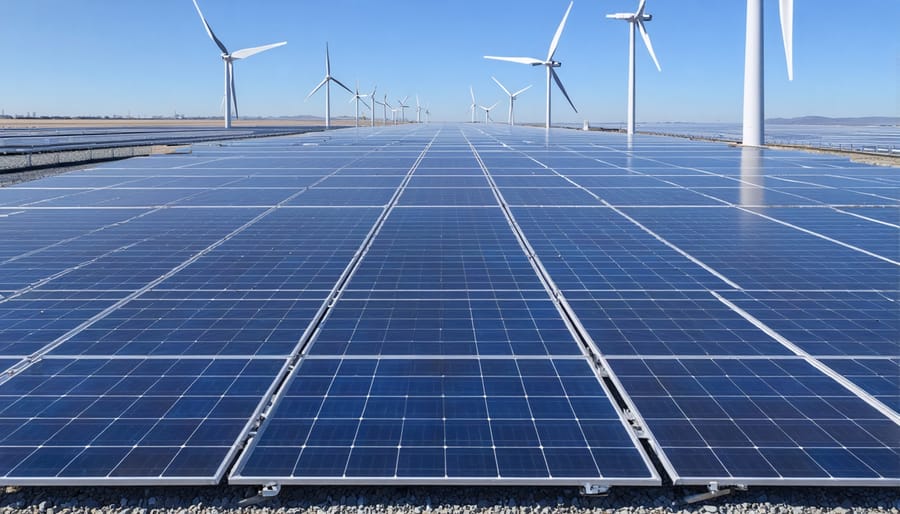
Hybrid wind-solar systems represent an innovative approach to renewable energy generation by combining the complementary nature of wind and solar resources. These integrated systems capitalize on the fact that wind speeds are often higher during nighttime and cloudy conditions, while solar power generation peaks during daylight hours. This synergistic relationship helps maintain consistent power output throughout the day and across seasonal variations.
The integration of these technologies offers several key advantages. First, it optimizes land use efficiency by utilizing the same infrastructure for both generation methods. Second, it reduces the need for energy storage systems by providing more reliable power generation. Third, it can share common power electronics and grid connection equipment, potentially lowering overall system costs.
Modern hybrid installations employ sophisticated control systems to manage power flow and optimize generation efficiency. These systems can automatically adjust output based on real-time demand and environmental conditions. For industrial applications, particularly in PV manufacturing facilities, hybrid systems can provide a reliable source of clean energy while reducing dependence on conventional power sources.
Implementation considerations include careful site assessment for both wind and solar resources, integrated monitoring systems, and advanced power management solutions. The scalability of these systems makes them suitable for both small-scale operations and large industrial facilities.
Wind-Powered Supply Chain
Wind power is revolutionizing supply chain operations in the renewable energy sector, particularly in PV manufacturing and distribution. Modern wind-powered logistics systems integrate turbines into warehouse operations, distribution centers, and transportation networks, significantly reducing the carbon footprint of solar panel production and delivery.
Large-scale manufacturing facilities are increasingly utilizing on-site wind farms to power their operations, with some facilities achieving up to 60% energy independence through strategic turbine placement. These installations often incorporate advanced energy storage systems, ensuring consistent power supply during variable wind conditions.
The transportation sector has also embraced wind energy innovation through hybrid vessels equipped with wind-assist propulsion technology. These ships, used for transporting solar panels and components, can reduce fuel consumption by 20-30% during optimal wind conditions. Additionally, wind-powered rail systems and electric vehicle charging stations powered by wind energy are becoming integral parts of sustainable logistics networks.
Companies are implementing sophisticated weather monitoring systems to optimize wind energy usage in their supply chains. These systems enable real-time adjustments to manufacturing schedules and transportation routes based on wind availability, maximizing energy efficiency while maintaining reliable delivery timelines. The integration of wind power in supply chains not only reduces operational costs but also enhances the overall sustainability of PV manufacturing processes.
Hydroelectric Power Integration
Micro-Hydro Solutions
Micro-hydro solutions offer manufacturing facilities a reliable and sustainable power source by harnessing the energy from small water streams or existing water infrastructure. These systems typically generate between 5 to 100 kilowatts of power, making them ideal for supplementing energy needs in photovoltaic production facilities located near suitable water sources.
Unlike large-scale hydroelectric dams, micro-hydro installations have minimal environmental impact and can be integrated into existing water systems, such as industrial cooling processes or water treatment facilities. The systems utilize small turbines that convert the kinetic energy of flowing water into electrical power, providing a consistent baseline energy supply that complements other renewable sources.
In PV manufacturing, micro-hydro systems can power critical processes such as silicon purification and wafer cutting, which require stable, continuous energy input. The technology’s reliability factor often exceeds 95%, making it particularly valuable for maintaining consistent production schedules. Implementation costs are typically recovered within 5-7 years through reduced energy expenses.
Manufacturing facilities can optimize micro-hydro efficiency by incorporating advanced monitoring systems and variable-flow turbines that adjust to changing water conditions. This adaptability ensures maximum power generation while maintaining sustainable water usage patterns.
Water Conservation Strategies
Water management plays a crucial role in renewable energy generation, particularly in hydroelectric and solar thermal facilities. Implementing effective water conservation in solar production and other renewable energy systems requires sophisticated strategies and technologies.
Modern hydroelectric facilities employ closed-loop cooling systems that recirculate water, significantly reducing consumption compared to traditional once-through systems. These facilities also implement advanced monitoring systems to detect and prevent water losses through evaporation and leakage.
In solar thermal plants, dry cooling technologies have emerged as an efficient alternative to conventional wet cooling methods, reducing water consumption by up to 90%. Hybrid cooling systems, which combine both dry and wet cooling techniques, offer optimal performance while maintaining water efficiency during peak demand periods.
Photovoltaic installations incorporate rainwater harvesting systems and drought-resistant vegetation to minimize water usage in panel cleaning and landscape maintenance. Additionally, automated cleaning systems with water recycling capabilities ensure optimal panel performance while conserving water resources.
Biomass facilities utilize water treatment and recycling systems to minimize freshwater intake, while wind farms require minimal water for maintenance, making them particularly suitable for water-stressed regions.
Geothermal Energy Solutions
Temperature Control Systems
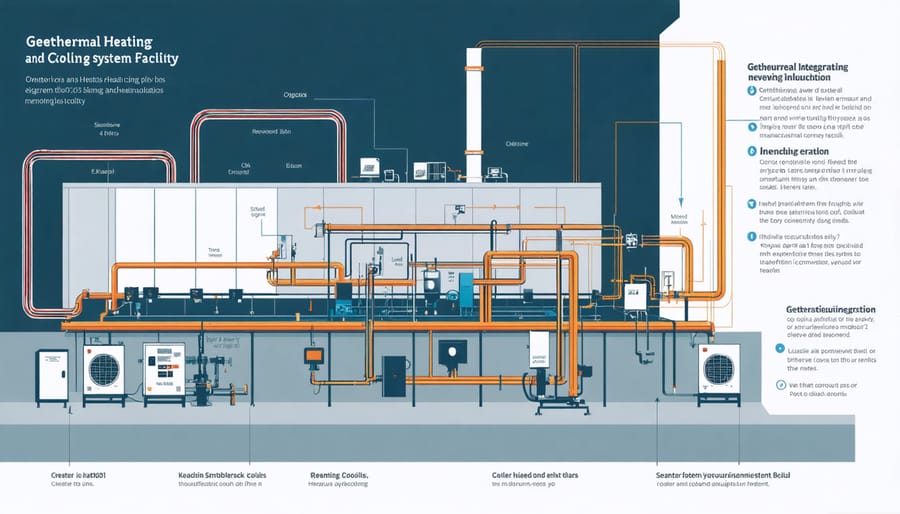
Geothermal HVAC systems represent a significant advancement in sustainable temperature control for manufacturing facilities, particularly in photovoltaic production environments. These systems harness the earth’s constant underground temperature to regulate facility climate, reducing energy consumption by up to 50% compared to conventional HVAC systems.
In PV manufacturing, precise temperature control is crucial for various processes, including silicon wafer production and solar cell assembly. Geothermal HVAC applications utilize a network of underground pipes filled with water or refrigerant to exchange heat with the earth. During summer, excess heat is transferred underground, while in winter, the system extracts heat from the earth to warm the facility.
The implementation of geothermal systems in manufacturing environments typically involves vertical or horizontal ground loops installed at depths of 100-400 feet. These systems offer exceptional reliability with minimal maintenance requirements and an operational lifespan exceeding 25 years. Modern installations often incorporate smart controls and monitoring systems to optimize performance and energy efficiency.
Cost analysis shows that while initial installation expenses are higher than traditional HVAC systems, the return on investment is typically achieved within 5-10 years through reduced operational costs and energy savings. Additionally, these systems contribute to manufacturing facilities’ sustainability goals by significantly reducing carbon emissions.
Process Heat Applications
Geothermal energy plays a crucial role in providing sustainable process heat for industrial applications, offering a reliable alternative to fossil fuel-based heating systems. Industrial facilities can harness geothermal resources at various temperature ranges to meet their specific heating requirements, from low-temperature applications around 100°C to high-temperature processes exceeding 300°C.
The implementation of geothermal process heating systems typically involves extracting hot water or steam from underground reservoirs through production wells. This thermal energy can be directly utilized in manufacturing processes, such as material drying, chemical processing, and thermal treatment of components. In the context of PV manufacturing, geothermal process heat proves particularly valuable for temperature-controlled environments and thermal processing of silicon wafers.
Notable advantages include consistent heat supply, minimal operational emissions, and reduced energy costs compared to conventional heating methods. Industrial facilities located near geothermal resources can achieve significant reductions in their carbon footprint while maintaining reliable production schedules. The technology has demonstrated success in various industries, including food processing, textile manufacturing, and chemical production.
For optimal implementation, facilities must conduct thorough geological surveys, assess resource availability, and design appropriate heat exchange systems that match their specific process requirements. Regular maintenance and monitoring ensure sustained performance and system longevity.
Biomass Energy Utilization
Waste-to-Energy Systems
Waste-to-energy systems represent an innovative approach to renewable energy generation in PV manufacturing, converting industrial waste materials into valuable energy resources while helping to reduce carbon footprint. These systems employ various technologies, including anaerobic digestion, gasification, and thermal treatment processes, to transform manufacturing byproducts into usable energy forms.
In PV manufacturing facilities, waste-to-energy systems can process silicon waste, packaging materials, and organic compounds, generating electricity, heat, or biofuels. Advanced gasification technologies convert carbon-based waste materials into synthesis gas (syngas), which can power generators or fuel cells. Thermal treatment systems utilize high-temperature processes to extract energy from non-recyclable materials while ensuring minimal environmental impact.
The implementation of waste-to-energy systems creates a circular economy within PV manufacturing, where waste becomes a valuable resource. These systems typically achieve energy conversion efficiencies between 20-30%, depending on the technology and waste composition. Additionally, they reduce the volume of waste sent to landfills by up to 90%, contributing to sustainable manufacturing practices.
Modern waste-to-energy facilities incorporate advanced emissions control systems and continuous monitoring to ensure compliance with environmental regulations while maximizing energy recovery potential.
Sustainable Fuel Sources
Sustainable biomass fuels represent a crucial backup power source for photovoltaic manufacturing facilities, offering reliable energy generation when solar and wind resources are unavailable. These renewable alternatives primarily consist of organic materials derived from agricultural residues, forestry byproducts, and dedicated energy crops.
Modern biomass processing technologies enable the conversion of organic matter into various forms of biofuel, including bioethanol, biodiesel, and biogas. These fuels can be efficiently stored and utilized in combined heat and power (CHP) systems, providing both electrical power and thermal energy for manufacturing processes.
The integration of biomass systems in PV manufacturing facilities typically involves advanced gasification units or anaerobic digesters, which convert raw biomass into clean-burning synthesis gas or methane. These systems can be scaled to meet specific facility requirements while maintaining consistent power output regardless of weather conditions.
Key advantages of biomass as a backup power source include its carbon-neutral status, domestic availability, and ability to support local agricultural economies. However, implementation requires careful consideration of factors such as feedstock sustainability, storage infrastructure, and emission control systems to ensure optimal performance and environmental compliance.
For maximum efficiency, biomass systems are often integrated with smart grid technologies and energy management systems, enabling seamless transition between different power sources while maintaining stable manufacturing operations.
Hydrogen Power Integration
Green Hydrogen Production
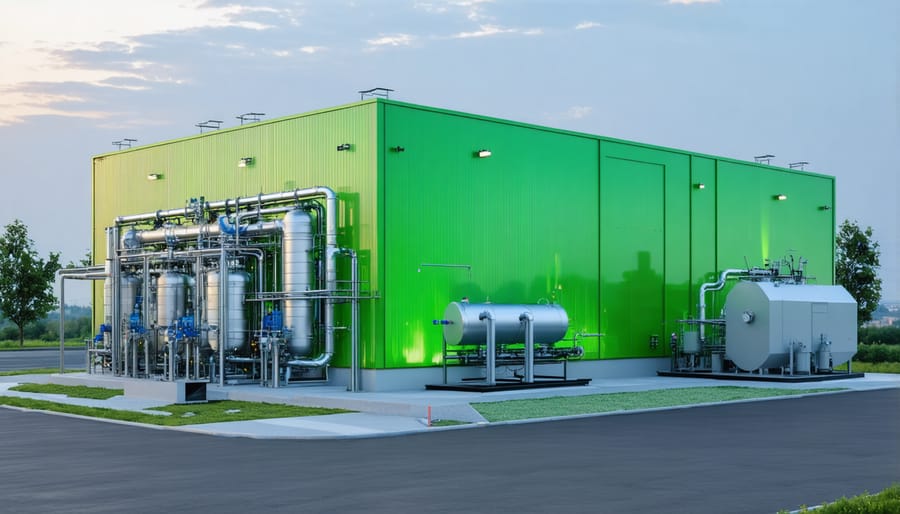
Green hydrogen production represents a groundbreaking advancement in renewable energy technology, utilizing electricity from renewable sources to split water molecules through electrolysis. This process creates hydrogen fuel without generating carbon emissions, making it a crucial component of sustainable energy systems. When powered by solar or wind energy, the electrolysis process becomes entirely clean, producing what industry experts call “green hydrogen.”
The production method involves sophisticated electrolyzer systems that separate hydrogen from oxygen using renewable electricity. Modern electrolyzer technologies, including Proton Exchange Membrane (PEM) and alkaline systems, achieve efficiency rates of up to 80%. This efficiency, combined with declining renewable energy costs, makes green hydrogen increasingly viable for industrial applications and energy storage.
As renewable energy capacity expands globally, green hydrogen production facilities are scaling up, offering a promising solution for sectors that are difficult to decarbonize, such as heavy industry, long-distance transport, and chemical manufacturing. The technology also provides an effective means of storing surplus renewable energy, addressing intermittency challenges in solar and wind power generation.
Future Applications
Hydrogen’s potential in manufacturing processes extends far beyond its current applications. In industrial settings, hydrogen can serve as a clean reducing agent for metal processing, particularly in steel production where it can replace coal-based methods. The chemical industry stands to benefit significantly, as hydrogen can be utilized in the synthesis of ammonia, methanol, and other essential compounds through carbon-neutral pathways.
Manufacturing facilities are exploring hydrogen fuel cells for both stationary power generation and material handling equipment. This dual-purpose approach provides reliable backup power while supporting daily operations. In high-temperature industrial processes, hydrogen combustion offers a viable alternative to natural gas, potentially revolutionizing glass, cement, and ceramic production.
The semiconductor industry is particularly interested in hydrogen’s role in creating ultra-pure environments for chip manufacturing. Additionally, emerging technologies suggest hydrogen could enable more efficient heat treatment processes and metal fabrication techniques, paving the way for cleaner, more sustainable manufacturing practices across multiple sectors.
The integration of renewable energy resources into PV manufacturing represents a crucial step toward creating truly sustainable PV supply chains. As we’ve explored, solar, wind, hydroelectric, geothermal, biomass, and tidal energy each offer unique advantages and applications in photovoltaic production processes. The successful implementation of these resources has already demonstrated significant reductions in carbon emissions while improving manufacturing efficiency and cost-effectiveness.
Looking ahead, the renewable energy landscape in PV manufacturing continues to evolve rapidly. Technological advancements, particularly in energy storage solutions and smart grid integration, are making it increasingly feasible to power production facilities entirely through renewable sources. Industry projections indicate that by 2030, a substantial portion of global PV manufacturing could be powered by renewable energy, creating a truly circular and sustainable production model.
This transition not only enhances environmental sustainability but also strengthens the economic viability of PV manufacturing operations. As renewable technologies mature and costs continue to decline, the business case for comprehensive renewable integration becomes increasingly compelling, paving the way for a more sustainable future in photovoltaic production.