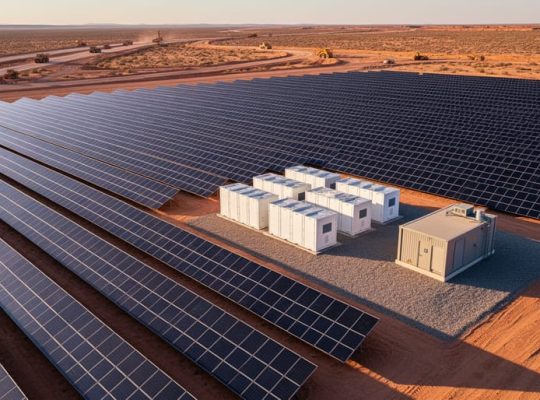
A 7kW solar system with battery backup represents a pivotal shift in residential energy independence, combining robust power generation with essential storage capabilities. These hybrid solar power systems typically generate 28-32 kWh daily, sufficient to power a modern household while maintaining critical loads during grid outages. By integrating advanced lithium-ion battery storage, typically ranging from 10-15 kWh capacity, homeowners can achieve up to 80% energy self-sufficiency and maintain power security during adverse conditions.
The system’s dual functionality enables seamless switching between grid power and stored energy, optimizing consumption patterns while reducing utility costs by 60-75% annually. For properties consuming 25-35 kWh daily, this configuration presents an ideal balance between generation capacity, storage capability, and economic viability. Recent technological advancements in battery chemistry and smart inverter systems have elevated these installations from simple backup solutions to sophisticated energy management platforms, capable of supporting sustained off-grid operation while maintaining grid-interactive benefits.
Understanding 7kW Solar Systems with Battery Storage
Core System Components
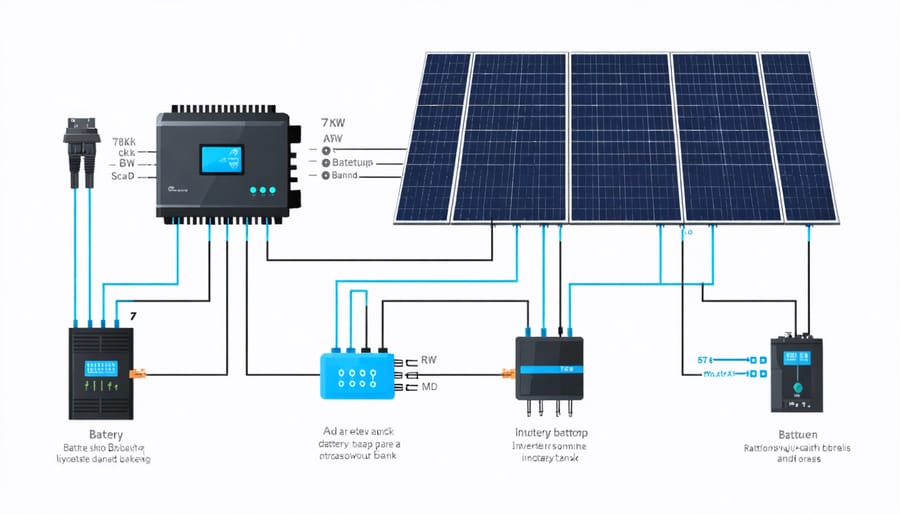
A 7kW solar system with battery backup comprises four essential components that work in harmony to deliver reliable power generation and storage. The solar array typically consists of 20-24 high-efficiency photovoltaic panels, each rated between 300-370 watts, strategically positioned to maximize sun exposure and energy production.
The system’s heart is a hybrid inverter, usually rated at 7-8kW, which performs the crucial task of converting DC power from the panels into usable AC electricity while managing power flow between the panels, batteries, and home. Modern hybrid inverters incorporate sophisticated monitoring capabilities and smart grid integration features.
The battery bank, typically lithium-ion phosphate (LiFePO4) with a capacity ranging from 10-14kWh, provides crucial energy storage for nighttime use and backup power during outages. These advanced batteries offer superior cycle life, deeper discharge capabilities, and enhanced safety compared to traditional lead-acid alternatives.
A charge controller, either integrated into the hybrid inverter or as a separate MPPT (Maximum Power Point Tracking) unit, optimizes the charging process and protects the batteries from overcharging. This component ensures system longevity by maintaining proper voltage levels and charging parameters.
Additional components include mounting hardware, safety disconnects, monitoring systems, and surge protection devices, all working together to create a robust and efficient power generation and storage solution.
Power Output and Storage Capacity
A 7kW solar system with battery backup delivers substantial power generation potential while providing reliable energy storage capabilities for residential and small commercial applications. Under optimal conditions, this system can generate approximately 28-35 kWh of electricity daily, depending on geographical location, panel orientation, and seasonal variations.
The battery backup component typically ranges from 10kWh to 15kWh of usable storage capacity, sufficient to power essential loads during grid outages or peak consumption periods. This storage capacity can sustain average household operations for 12-24 hours, depending on energy consumption patterns and load prioritization.
During peak sunlight hours, the system simultaneously powers immediate electrical needs while charging the battery bank. Excess energy can be stored for evening use or fed back into the grid where net metering programs exist. The system’s intelligent power management ensures seamless switching between solar, battery, and grid power sources.
Modern lithium-ion batteries used in these systems maintain 85-90% efficiency in energy conversion and storage, significantly outperforming traditional lead-acid alternatives. The system’s hybrid inverter, typically rated at 7.6kW to 8kW, efficiently manages power flow between solar panels, batteries, and household circuits, maintaining stable voltage and frequency levels throughout operation.
Hybrid Storage Integration
Grid Connection vs. Battery Backup
A 7kW solar system with battery backup can operate in multiple modes, depending on your energy needs and grid conditions. Grid-connected storage systems typically function in three primary modes: grid-tied, battery priority, and backup power.
In grid-tied mode, the system prioritizes direct solar consumption while maintaining grid connectivity. Excess solar production charges the batteries and feeds into the grid, while power draws from the grid supplement any shortfall. This mode optimizes energy cost savings through net metering and time-of-use arbitrage.
Battery priority mode directs solar energy first to immediate consumption, then to battery charging, with grid export as the last option. This maximizes self-consumption and provides protection against power outages. The system automatically switches to stored energy during peak rate periods, reducing utility costs.
During grid outages, the backup power mode activates automatically. The system isolates from the grid and powers essential loads through the battery bank, while solar panels continue charging the batteries during daylight hours. This configuration requires careful load management to extend backup duration.
Energy flow management is handled by sophisticated charge controllers and hybrid inverters, which optimize power distribution based on programmable parameters. These include battery state of charge, time-based scheduling, and load prioritization. Modern systems also incorporate smart monitoring capabilities, allowing real-time adjustment of operating modes through mobile applications or web interfaces.
The choice between operating modes depends on factors such as local utility rates, grid reliability, and personal energy independence goals. Professional system configuration ensures optimal performance across all operating scenarios.
Smart Energy Management
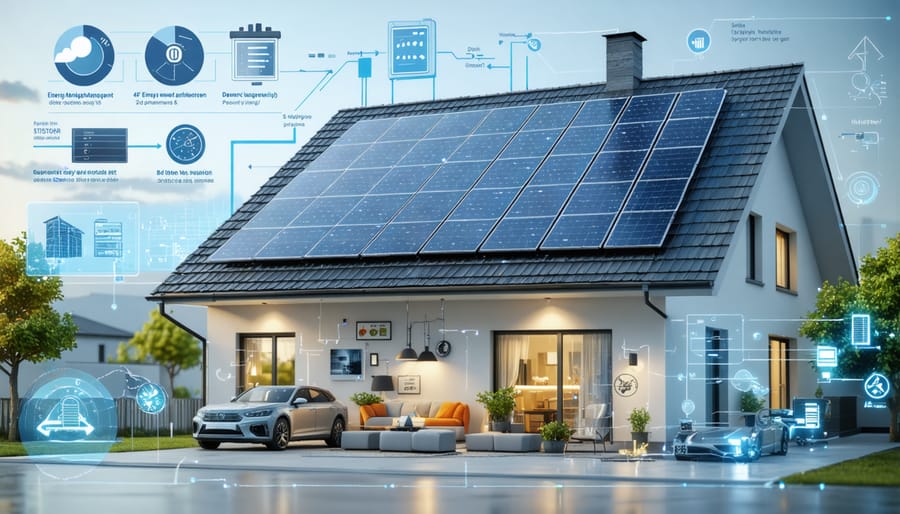
Modern 7kW solar systems with battery backup incorporate sophisticated energy management systems (EMS) that optimize power generation, storage, and consumption. These intelligent monitoring solutions provide real-time data analysis and automated decision-making capabilities to maximize system efficiency.
The core component of smart energy management is the power monitoring interface, which tracks multiple parameters including solar production, battery state of charge, household consumption patterns, and grid interaction. Advanced systems utilize machine learning algorithms to predict energy needs based on historical usage data and weather forecasts, automatically adjusting power flow to optimize self-consumption.
Key optimization strategies include peak load shifting, where stored energy is strategically deployed during high-demand periods, and intelligent battery charging that considers factors such as time-of-use electricity rates and forecast solar production. Many systems also feature dynamic export limiting, ensuring compliance with grid requirements while maximizing system benefits.
Remote monitoring capabilities allow system owners to track performance through mobile applications or web portals, providing detailed analytics and system health notifications. These platforms typically display energy flow diagrams, performance metrics, and financial savings calculations, enabling informed decision-making about energy usage.
For maximum efficiency, smart energy management systems can integrate with home automation platforms to coordinate power-intensive activities like electric vehicle charging or pool pump operation with periods of peak solar production. Some advanced systems even incorporate weather sensors and predictive analytics to protect battery life and optimize charging cycles based on environmental conditions.
Regular performance analysis through these monitoring systems helps identify potential issues early, ensuring optimal system operation and extending equipment lifespan through preventive maintenance.
Installation and System Requirements
Space and Mounting Requirements
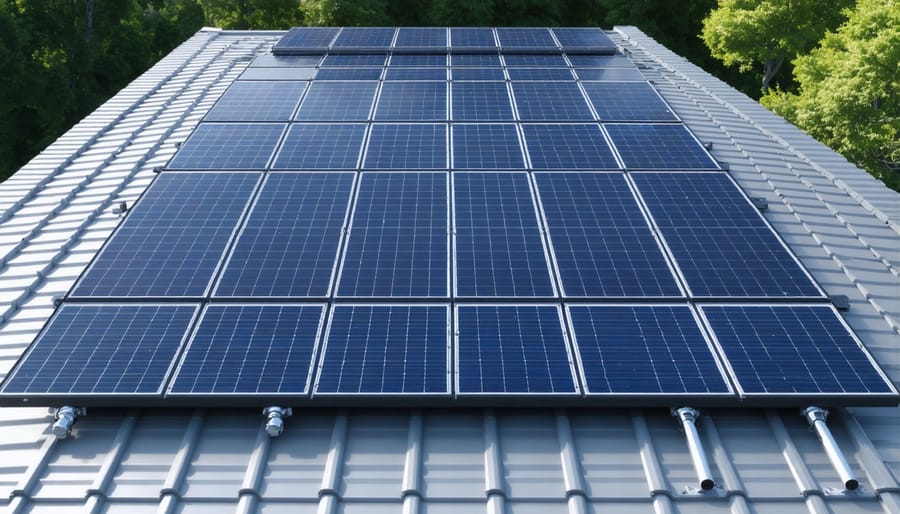
A 7kW solar system with battery backup requires careful consideration of space allocation for both the solar array and storage components. The solar panels typically need 40-50 square meters of unshaded roof space, depending on panel efficiency and layout configuration. For optimal performance, panels should be mounted at a 30-45 degree angle, facing south in the Northern Hemisphere.
The battery backup system demands a dedicated indoor space that is clean, dry, and temperature-controlled (ideally between 10-30°C). A standard lithium-ion battery bank for a 7kW system requires approximately 1-1.5 square meters of floor space and should be mounted on a sturdy wall or platform capable of supporting 100-150 kg.
Additional space requirements include mounting locations for the inverter and charge controller, typically necessitating 1 square meter of wall space. These components should be installed in a well-ventilated area, protected from direct sunlight and moisture. A minimum clearance of 50 cm around all equipment is recommended for maintenance access and proper air circulation.
The main electrical panel and transfer switch require approximately 0.5 square meters of wall space. All components should be installed in compliance with local building codes and electrical regulations, with proper consideration for fire safety and emergency access requirements.
Electrical Integration
The integration of a 7kW solar system with battery backup into an existing electrical infrastructure requires careful consideration of several technical components. The main electrical panel must be evaluated to ensure compatibility with the new system, typically requiring a minimum 200-amp service panel. A critical load subpanel is essential for isolating and powering priority circuits during grid outages.
The system requires the installation of a solar inverter, which converts DC power from solar panels to AC power for home use. For battery backup functionality, a specialized hybrid inverter or separate battery inverter is necessary. These components must be properly synchronized with the automatic transfer switch, which manages the transition between grid power and battery backup.
Safety equipment includes DC and AC disconnects, surge protection devices, and proper grounding systems. All installations must comply with National Electrical Code (NEC) requirements, particularly Article 690 for photovoltaic systems and Article 705 for interconnected power production sources.
The integration process typically involves installing a power meter for monitoring energy production and consumption, communication systems for smart monitoring capabilities, and appropriate circuit breakers rated for bidirectional power flow. Professional installation by certified electricians is crucial to ensure proper system operation and maintain warranty coverage.
For grid-connected systems, utility company requirements must be met, including specific interconnection standards and the installation of an approved grid disconnect switch accessible to utility personnel.
Financial and Performance Analysis
Return on Investment
A 7kW solar system with battery backup typically requires an initial investment of $15,000 to $25,000, including installation costs. This price range accounts for high-quality solar panels, inverter technology, battery storage system, and professional installation. While the upfront cost may seem substantial, the long-term financial benefits are significant.
The average household can expect to reduce their electricity bills by 70-90% with this system configuration. Annual savings typically range from $1,200 to $2,000, depending on local electricity rates and consumption patterns. Additional financial benefits include federal tax incentives, which can offset up to 30% of the total system cost, and state-specific rebates where available.
The payback period for a 7kW system with battery backup generally falls between 7-10 years, considering current energy prices and incentives. This calculation factors in the increasing cost of grid electricity, which historically rises by 2-3% annually. After the payback period, the system continues to generate free electricity for its remaining operational life, typically 20-25 years for panels and 10-15 years for batteries.
Performance Monitoring
Effective performance monitoring is crucial for maintaining optimal functionality of a 7kW solar system with battery backup. Modern monitoring solutions combine hardware sensors and software interfaces to track key metrics including power generation, battery state of charge, and overall system efficiency. Professional-grade monitoring systems typically feature real-time data collection through current transformers (CTs) and voltage sensors, providing insights into both AC and DC power flows.
To optimize system performance, users should regularly analyze performance ratios, inverter efficiency, and battery cycling patterns. Essential monitoring parameters include daily energy yield, grid import/export values, and battery charge/discharge cycles. Advanced monitoring platforms offer remote access capabilities through smartphone applications or web interfaces, enabling system owners to track performance metrics and receive automated alerts for potential issues.
Professional monitoring solutions also facilitate preventive maintenance by identifying performance degradation trends and system anomalies before they develop into serious problems. This proactive approach helps maintain system reliability and maximize the return on investment over the system’s operational lifetime.
A 7kW solar system with battery backup represents a significant step toward energy independence and sustainability. Throughout this analysis, we’ve explored the key components, technical specifications, and practical considerations that make these systems an effective solution for both residential and small commercial applications. The integration of battery storage not only provides crucial backup power during grid outages but also enables users to maximize their solar investment through strategic energy management.
As technology continues to advance, we can expect to see improvements in battery efficiency, storage capacity, and overall system integration. The decreasing costs of both solar panels and battery storage solutions will likely make these systems increasingly accessible to a broader range of consumers. Future developments in smart grid technology and energy management systems will further enhance the capabilities of 7kW solar-plus-storage installations.
When considering such a system, it’s essential to conduct thorough site assessments, evaluate energy consumption patterns, and work with qualified professionals for proper sizing and installation. The long-term benefits of reduced electricity bills, increased energy security, and lower carbon emissions make these systems a compelling investment for those seeking to embrace renewable energy solutions.
As we move toward a more sustainable energy future, 7kW solar systems with battery backup will continue to play a crucial role in distributed energy generation and storage, contributing to grid stability and environmental preservation.