Community solar programs offer a compelling alternative for homeowners and renters seeking to embrace renewable energy without installing rooftop panels. As electricity costs continue to rise and environmental concerns mount, these shared solar facilities have emerged as a potential solution that promises both financial savings and environmental benefits. Recent data from the National Renewable Energy Laboratory indicates that community solar subscribers typically save 10-15% on their electricity bills, while contributing to local clean energy production.
However, determining whether community solar represents a “good deal” requires careful evaluation of multiple factors, including subscription terms, rate structures, contract length, and local utility policies. The growing popularity of these programs – with over 3 GW of community solar installed across the United States as of 2023 – has led to diverse offering models, each with distinct advantages and potential drawbacks for subscribers.
This analysis explores the key economic and practical considerations that shape the value proposition of community solar, helping you assess whether participation aligns with your energy goals and financial interests. By examining real-world performance data, regulatory frameworks, and subscriber experiences, we’ll provide a comprehensive framework for evaluating community solar opportunities in your area.
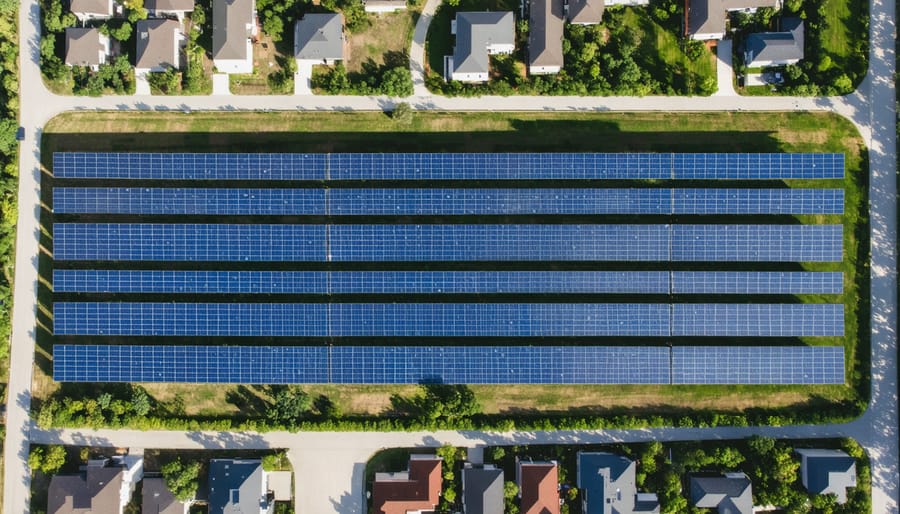
Understanding Community Solar Economics
Subscription Models and Pricing
Community solar programs typically offer two primary subscription models: pay-as-you-go and upfront payment options. With pay-as-you-go subscriptions, participants purchase solar credits monthly based on their allocated share of the solar farm’s production, usually at a rate 10-15% lower than standard utility rates. This model offers flexibility and requires minimal initial investment.
Upfront payment models involve purchasing a specific portion of the solar project’s capacity for a predetermined period, often 20-25 years. While requiring more substantial initial capital, these arrangements typically yield higher long-term savings, with some programs offering up to 30% reduction in energy costs over the subscription period.
Most providers structure their pricing based on capacity blocks or percentage allocation of the total project output. Subscription fees may be fixed or floating, with floating rates typically indexed to local utility prices to maintain consistent savings. Contract terms generally range from 12 months to 25 years, with early termination options available for additional flexibility.
Many programs incorporate income-based pricing tiers, offering enhanced benefits for low-to-moderate-income households. Additional features may include production guarantees, which ensure minimum energy generation levels, and portability options allowing subscribers to transfer their subscription when moving within the same utility territory.
To maximize value, providers often include performance monitoring systems and transparent billing mechanisms that clearly display energy production, credits applied, and actual savings achieved.
Savings Potential and ROI
Community solar programs typically offer subscribers savings ranging from 5% to 15% on their monthly electricity bills, with some programs delivering even higher returns in favorable markets. The actual return on investment depends on several key factors, including local utility rates, program structure, and subscription terms.
Most community solar subscribers see immediate savings without any upfront costs, as many programs operate on a pay-as-you-go model. For example, a household with a $150 monthly electricity bill might save $180-$270 annually through a typical 10% discount structure. Over a 20-year program duration, these savings can accumulate to $3,600-$5,400, accounting for conservative utility rate increases.
The financial benefits extend beyond direct bill credits. Some programs offer guaranteed savings rates, protecting subscribers from rising utility costs. Additionally, certain states provide incentives and tax benefits for community solar participation, further enhancing the economic advantage.
When evaluating program economics, consider the contract length, early termination fees, and credit transfer policies. Programs with flexible terms generally offer lower savings rates but provide greater adaptability for changing circumstances. Conversely, longer-term commitments often secure higher discount rates but require careful consideration of future plans and energy needs.
Local Energy Autonomy Benefits
Grid Independence and Resilience
Community solar projects contribute significantly to grid independence and resilience by creating a more distributed energy generation network. This decentralized approach reduces the strain on traditional utility infrastructure while enhancing the overall stability of the power supply system. When multiple solar installations are strategically placed throughout a community, they create redundancy that helps maintain power availability during grid disruptions or maintenance periods.
The grid interconnection benefits extend beyond individual subscribers to strengthen the entire local electrical infrastructure. During peak demand periods, community solar arrays can provide supplemental power to the grid, reducing the need for expensive utility upgrades and helping prevent brownouts or blackouts.
Community solar installations often incorporate advanced monitoring systems and smart grid technologies, enabling better load management and more efficient power distribution. This technological integration allows for real-time adjustment to energy production and consumption patterns, creating a more responsive and reliable power network.
Additionally, community solar projects typically include energy storage solutions, which further enhance grid stability. These storage systems can cache excess energy during high production periods and release it when needed, smoothing out supply fluctuations and reducing dependence on fossil fuel-based peaker plants. This capability is particularly valuable during extreme weather events or emergency situations when traditional power infrastructure may be compromised.
Community Economic Impact
Community solar projects generate substantial economic benefits for local communities, extending far beyond renewable energy production. These installations typically create 3-5 permanent jobs per megawatt of installed capacity, primarily in installation, maintenance, and operations. During the construction phase, projects can employ 30-40 workers temporarily, providing significant short-term employment opportunities.
The economic impact ripples through local businesses as well. Project developers often partner with local contractors, electricians, and suppliers, keeping investment within the community. Studies indicate that for every $1 million invested in community solar projects, approximately $2.1 million in local economic activity is generated through direct, indirect, and induced spending.
Community solar projects also contribute to municipal tax revenues without significantly increasing demand for public services. Many jurisdictions receive annual property tax payments from solar installations, helping fund schools, infrastructure, and essential services. Additionally, these projects can revitalize underutilized land, including brownfields and former industrial sites, creating new revenue streams from previously unproductive properties.
Landowners hosting community solar installations benefit from steady lease payments, often ranging from $500 to $2,000 per acre annually, depending on location and project size. This provides farmers and property owners with reliable supplemental income while maintaining land ownership. The presence of community solar projects can also attract environmentally conscious businesses to the area, further stimulating economic growth and diversification.
Policy Framework and Incentives
State-Level Policies
State policies significantly influence the structure and success of community solar programs across the United States. Leading states like Minnesota, Massachusetts, and Colorado have implemented comprehensive frameworks that facilitate program growth while protecting consumer interests. Minnesota’s solar garden program, for instance, has become a national model, requiring utilities to purchase power from community solar projects at regulated rates.
Maryland and New York have adopted policies that emphasize low-income participation, mandating that a percentage of community solar capacity be allocated to disadvantaged communities. Illinois implements a adjustable bill credit rate mechanism that ensures subscribers receive fair compensation for their participation, while Maine’s net energy billing program allows for virtual net metering across utility territories.
Some states have established capacity limits on individual projects and overall program size to manage grid integration and ensure sustainable growth. Others focus on consumer protection measures, requiring standardized disclosure forms and minimum savings guarantees. California’s community solar program specifically targets disadvantaged communities and areas with limited rooftop solar potential.
Understanding these state-specific policies is crucial for potential subscribers, as they directly impact project availability, subscription terms, and financial returns. Prospective participants should review their state’s regulatory framework to evaluate program benefits and limitations.
Federal Support Programs
The federal government offers substantial support for community solar initiatives through various government incentives and programs. The Investment Tax Credit (ITC) remains one of the most significant federal incentives, allowing project developers to claim up to 30% of the installation costs as a tax credit. This benefit often translates into lower subscription costs for community solar participants.
The Department of Energy’s National Community Solar Partnership (NCSP) provides technical assistance, resources, and funding opportunities to accelerate community solar deployment nationwide. This program aims to enable community solar access to every American household by 2025, focusing particularly on low-income and disadvantaged communities.
Additional federal support comes through the Rural Energy for America Program (REAP), which offers grants and loan guarantees for renewable energy projects in rural areas. The Environmental Protection Agency’s RE-Powering America’s Land initiative also promotes community solar development on previously contaminated properties, providing both environmental and economic benefits to local communities.
These federal programs, combined with state and local initiatives, create a robust framework that enhances the financial viability of community solar projects and helps make participation more affordable for subscribers.
Making the Decision
Key Considerations
Before committing to a community solar program, carefully evaluate these essential factors to ensure it aligns with your energy needs and financial goals:
Program Structure and Terms
– Review the contract length and early termination conditions
– Understand the subscription or ownership model
– Verify the billing mechanism and payment schedule
– Examine any upfront costs or membership fees
– Confirm the guaranteed savings percentage on your electricity bill
Project Developer Credibility
– Research the developer’s track record and experience
– Check their financial stability and business longevity
– Review customer testimonials and Better Business Bureau ratings
– Verify proper licensing and insurance coverage
– Assess their maintenance and customer service protocols
Location and System Performance
– Confirm the solar farm’s location and proximity to your utility
– Evaluate the projected energy production estimates
– Understand how weather patterns might affect generation
– Review the system’s maintenance schedule and procedures
– Verify grid connection and transmission capabilities
Financial Considerations
– Calculate your estimated monthly savings
– Compare costs with current utility rates
– Understand rate escalators and future pricing adjustments
– Review credit requirements and payment terms
– Assess potential impact on property value or taxes
Consumer Protections
– Review cancellation policies and procedures
– Understand performance guarantees and warranties
– Verify compliance with state regulations
– Examine dispute resolution procedures
– Confirm transferability options if you move
By thoroughly evaluating these key considerations, you can make an informed decision about whether a community solar program offers genuine value for your specific situation.
Red Flags to Watch For
When evaluating community solar agreements, several warning signs warrant careful consideration. Long-term contracts exceeding 20 years should be scrutinized, as they may lock participants into unfavorable terms despite evolving market conditions. Be wary of providers who guarantee specific savings percentages without clear documentation or make unrealistic promises about energy bill reductions.
Pay particular attention to cancellation policies and associated fees. Quality programs typically offer reasonable termination options without excessive penalties. Watch for unclear or complicated billing structures that make it difficult to understand your actual savings. Some providers may include escalator clauses that increase rates annually, potentially eroding projected benefits over time.
Investigate the provider’s track record and financial stability. New companies without established operational history or those lacking proper licensing and insurance coverage pose increased risk. Be cautious of high-pressure sales tactics or providers who discourage you from reviewing contracts with legal counsel.
Check for transparency regarding project location, maintenance responsibilities, and performance guarantees. Vague terms about system upkeep or energy production expectations should raise concerns. Additionally, examine subscription transfer policies, especially if you plan to move within the contract period.
Before signing, verify that the provider maintains compliance with state regulations and holds necessary certifications. Request references from current subscribers and investigate any complaints filed with consumer protection agencies or better business bureaus.
Determining whether community solar is a good deal requires careful evaluation of multiple factors. The financial benefits typically include lower electricity costs, predictable rates, and minimal upfront investment compared to rooftop solar installations. However, the actual savings vary significantly based on local utility rates, program structure, and contract terms.
Key considerations that influence the value proposition include the subscription fee structure, length of commitment, guaranteed savings percentage, and escalator clauses that may affect future rates. Location-specific factors such as state incentives, regulatory framework, and the track record of the project developer also play crucial roles in determining the program’s financial viability.
For many consumers, community solar offers an attractive combination of environmental benefits and economic advantages, particularly those who cannot install rooftop systems due to property limitations or financial constraints. The ability to support renewable energy development while potentially reducing electricity costs makes these programs compelling for environmentally conscious consumers.
However, prospective participants should thoroughly review contract terms, compare multiple offerings if available, and calculate potential savings based on their specific energy consumption patterns. Consulting with energy advisors or financial professionals can provide additional insights into whether a particular community solar program aligns with individual financial goals and circumstances.
Success in community solar participation often depends on choosing a reputable provider, understanding all terms and conditions, and ensuring the program’s structure matches your long-term energy needs and financial objectives.