Artificial Intelligence is revolutionizing photovoltaic technology through advanced optimization algorithms and real-time performance analytics. Machine learning models now predict solar panel output with unprecedented accuracy, enabling dynamic adjustments that increase energy yield by up to 20%. By processing vast amounts of environmental data, weather patterns, and historical performance metrics, AI systems optimize panel positioning, identify maintenance needs before failures occur, and maximize power generation efficiency across entire solar installations. This technological convergence represents a significant leap forward in renewable energy management, offering solar facility operators powerful tools to enhance system reliability, reduce operational costs, and accelerate the global transition to sustainable energy sources. The integration of AI-driven solutions marks a new era in solar energy optimization, where intelligent algorithms continuously adapt to changing conditions, ensuring optimal performance in real-time while providing actionable insights for long-term strategic planning.
The Power of AI in Solar Panel Systems
Real-Time Performance Monitoring
AI-driven monitoring systems revolutionize how we track and optimize solar panel efficiency through sophisticated data collection and analysis. These systems employ advanced sensors and machine learning algorithms to continuously monitor key performance indicators, including power output, temperature variations, and environmental conditions in real-time.
The monitoring infrastructure captures thousands of data points per second, enabling immediate detection of performance anomalies and potential issues. AI algorithms process this extensive dataset to establish baseline performance metrics, identify patterns, and predict potential system failures before they occur.
By analyzing historical performance data alongside real-time measurements, these systems can automatically adjust panel orientation, optimize cleaning schedules, and recommend maintenance interventions. The AI-driven approach also accounts for weather forecasts, seasonal variations, and local environmental factors to maximize energy generation.
The collected data serves multiple purposes: performance optimization, predictive maintenance, and system longevity assessment. This comprehensive monitoring approach ensures optimal system performance while reducing operational costs and extending equipment lifespan through proactive maintenance strategies.

Predictive Maintenance Solutions
Artificial Intelligence revolutionizes maintenance protocols in solar installations by analyzing vast amounts of operational data to predict potential system failures before they occur. Advanced machine learning algorithms continuously monitor key performance indicators, including voltage fluctuations, thermal patterns, and power output variations, to identify subtle signs of degradation or impending component failures.
These predictive maintenance systems utilize historical performance data, weather patterns, and real-time sensor readings to create accurate forecasting models. By detecting anomalies in system behavior, AI can trigger preventive maintenance alerts, allowing technicians to address issues proactively rather than reactively. This approach significantly reduces system downtime and maintenance costs while extending the operational lifespan of solar installations.
The AI systems also optimize maintenance schedules by considering factors such as component age, environmental conditions, and performance degradation rates. This data-driven approach ensures maintenance activities are performed at optimal intervals, maximizing system efficiency while minimizing unnecessary service visits. The result is a more reliable and cost-effective solar power generation system that delivers consistent performance throughout its lifecycle.
Smart Energy Management Systems
Dynamic Load Balancing
Artificial Intelligence revolutionizes energy distribution in solar installations through sophisticated dynamic load balancing systems. These systems continuously analyze real-time data from multiple sources, including weather patterns, energy consumption trends, and grid demands, to optimize power distribution across the network.
AI algorithms predict energy requirements and automatically adjust power flow to match demand patterns, ensuring optimal efficiency and minimizing waste. The system learns from historical data to anticipate peak usage periods and redistributes energy accordingly, maintaining grid stability while maximizing the utilization of available solar power.
Machine learning models analyze consumption patterns at different times of day, seasonal variations, and user behavior to create adaptive distribution strategies. This intelligent approach enables proactive load management, reducing strain on the grid during high-demand periods and storing excess energy when consumption is low.
The AI-driven load balancing system also factors in variables such as temperature, humidity, and equipment performance to make real-time adjustments. It can identify potential bottlenecks in distribution and automatically implement corrective measures, ensuring seamless power delivery while maintaining system efficiency.
By implementing dynamic load balancing, solar installations can achieve up to 25% improvement in distribution efficiency and significantly reduce energy losses. This optimization contributes to greater grid reliability and enhanced overall system performance, making solar power more dependable and cost-effective for end-users.
Weather-Based Optimization
Weather conditions significantly impact solar panel performance, and AI-driven systems excel at optimizing energy harvest through sophisticated weather adaptation strategies. These systems utilize machine learning algorithms to analyze real-time weather data, historical patterns, and forecasting models to make predictive adjustments to solar panel operations.
Advanced AI models process multiple weather parameters simultaneously, including cloud cover, temperature, humidity, and precipitation, to determine optimal panel positioning and power management settings. The system continuously learns from weather patterns and their effects on energy production, enabling increasingly accurate predictions and responses over time.
During partially cloudy conditions, AI algorithms can rapidly adjust individual panel orientations to maximize exposure to available sunlight. The system also anticipates weather changes, preparing the installation for incoming weather events by adjusting tilt angles and operating parameters preemptively.
Temperature management is another crucial aspect where AI demonstrates its value. The system monitors panel temperatures and ambient conditions, implementing cooling strategies when necessary to maintain optimal operating efficiency. This includes adjusting airflow patterns and activating cooling systems at precisely calculated intervals.
The integration of weather-based optimization has shown remarkable results, with some installations reporting up to 20% increase in energy yield compared to traditional fixed-position systems. This improvement stems from the AI’s ability to make micro-adjustments throughout the day, ensuring optimal performance regardless of weather conditions.
Implementation and Integration
System Requirements
Implementing AI-driven solutions for solar panel optimization requires a robust technical foundation. At minimum, organizations need a modern computing infrastructure with sufficient processing power to handle complex machine learning algorithms and real-time data analysis. This typically includes dedicated servers with multi-core processors and a minimum of 32GB RAM for basic implementations, scaling up based on the system size.
Data storage requirements are substantial, as AI systems need historical performance data, weather patterns, and operational metrics. A secure database system capable of handling terabytes of information is essential, with considerations for both hot and cold storage solutions.
Network infrastructure must support high-speed data transmission from multiple sensor points, with reliable connectivity between solar installations and the central processing system. A minimum internet bandwidth of 100 Mbps is recommended for medium-sized installations.
The software stack should include specialized AI frameworks and libraries, such as TensorFlow or PyTorch, along with custom-developed algorithms for solar-specific applications. Compatible sensor systems and monitoring equipment must be installed on existing solar panels, including irradiance sensors, temperature monitors, and power output meters.
For optimal performance, organizations should maintain redundant systems and backup solutions to ensure continuous operation. Cloud-based solutions can provide scalability and reduced infrastructure costs, though careful consideration must be given to data security and compliance requirements.
Installation Process
The implementation of AI-driven optimization systems for solar installations follows a systematic approach that ensures seamless integration and optimal performance. Initially, a comprehensive site assessment determines the existing infrastructure’s compatibility and identifies necessary hardware upgrades.
The first step involves installing smart sensors and monitoring devices across the solar array. These devices collect real-time data about panel performance, environmental conditions, and system operations. Connection points are established at critical junctions, including inverters, individual panels, and weather stations.
Next, the AI software platform is deployed, either through cloud-based services or on-premises solutions, depending on security requirements and data volume. The system undergoes an initial calibration period, typically lasting 2-4 weeks, during which it learns normal operating patterns and establishes baseline performance metrics.
Integration with existing SCADA systems follows, ensuring proper communication between the AI platform and solar facility controls. Custom algorithms are configured based on specific site characteristics and operational goals. This includes setting up predictive maintenance protocols and performance optimization parameters.
The final phase involves staff training and system validation. Operators receive comprehensive instruction on utilizing the AI interface, interpreting recommendations, and managing automated responses. A testing period validates system accuracy and reliability before full deployment.
Post-installation monitoring continues for several months, with regular fine-tuning of algorithms to maximize system efficiency and adapt to changing conditions. Documentation and standard operating procedures are established to ensure consistent operation and maintenance practices.
Measurable Benefits and ROI
Performance Metrics
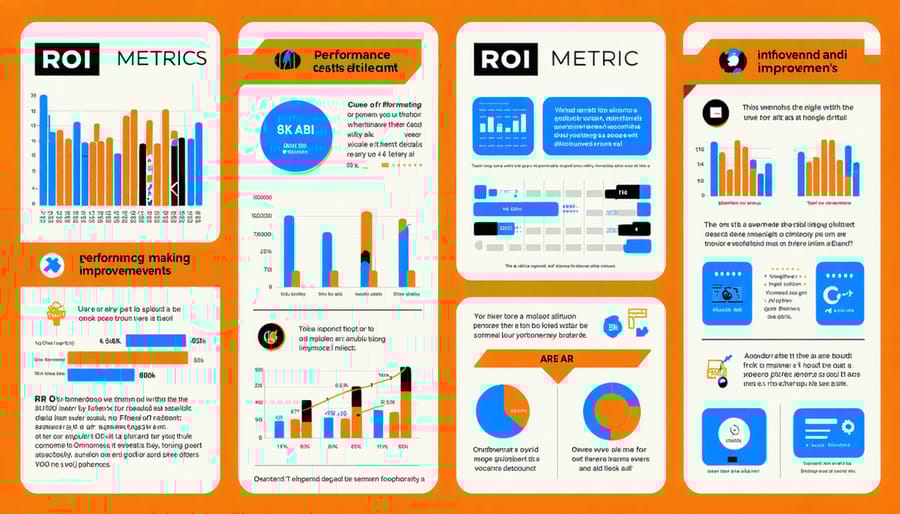
AI-driven solar panel optimization systems have demonstrated significant performance improvements across multiple metrics. Studies show that machine learning algorithms can increase overall energy yield by 10-15% compared to traditional fixed-tilt systems. Real-time monitoring and predictive maintenance capabilities have reduced system downtime by up to 30%, while fault detection accuracy has improved to 95%.
Energy forecasting accuracy has seen remarkable enhancement, with AI models achieving prediction rates within 2-3% of actual generation values, compared to conventional methods’ 8-10% variance. Implementation of AI-driven cleaning schedules has resulted in a 25% reduction in performance degradation due to soiling, while smart tracking systems have shown efficiency gains of up to 20% in variable weather conditions.
Cost metrics are equally impressive, with maintenance expenses decreasing by 35% through predictive analytics and automated fault detection. The return on investment period has shortened by an average of 1.5 years when AI optimization is implemented. These performance improvements are particularly notable in large-scale installations, where AI systems have demonstrated the ability to manage complex arrays with thousands of panels while maintaining optimal efficiency levels.
Cost-Benefit Analysis
The implementation of AI-driven solutions in solar panel systems presents a compelling financial case when analyzed over their operational lifetime. Initial investment costs, including AI hardware integration and software licensing, typically range from $10,000 to $30,000 for utility-scale installations. However, these systems demonstrate significant returns through enhanced energy yield and reduced maintenance expenses.
Studies indicate that AI-optimized solar installations achieve 15-20% higher energy production efficiency compared to traditional systems. This translates to approximately $5,000-8,000 in additional annual revenue for medium-sized solar farms. Maintenance costs decrease by up to 30% through predictive analytics and automated fault detection, saving an estimated $3,000-5,000 annually in operational expenses.
The return on investment (ROI) typically materializes within 2-3 years, depending on installation size and local energy prices. Long-term benefits include extended equipment lifespan, reduced downtime, and optimized performance during varying weather conditions. When factoring in decreased labor costs and improved grid integration capabilities, AI-driven systems demonstrate a clear financial advantage over conventional solar installations, with potential lifetime savings exceeding $100,000 for larger installations.
The integration of AI-driven optimization in solar panel technology represents a significant leap forward in renewable energy efficiency and sustainability. Through advanced machine learning algorithms and intelligent monitoring systems, we’ve witnessed remarkable improvements in energy yield, maintenance efficiency, and overall system performance. The combination of predictive analytics and real-time optimization has demonstrated that AI can effectively address traditional challenges in solar energy production, from weather-related variations to component degradation.
As we look toward the future, the potential for AI in solar technology continues to expand. emerging solar innovations are increasingly focused on developing more sophisticated AI models that can handle complex environmental variables and system interactions. The integration of quantum computing and advanced neural networks promises even more precise optimization capabilities, potentially revolutionizing how we harness solar energy.
The economic implications of AI-driven solar optimization are equally compelling, with reduced operational costs and increased return on investment becoming increasingly evident. As these technologies become more accessible and refined, we can expect wider adoption across both residential and commercial installations. This technological evolution, coupled with ongoing research and development, positions AI as a crucial enabler in achieving global renewable energy goals and advancing sustainable power generation for future generations.