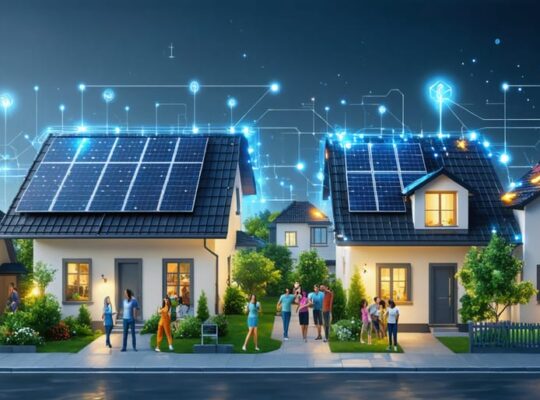
Government-funded solar programs are revolutionizing America’s transition to renewable energy, offering unprecedented opportunities for homeowners, businesses, and communities to harness solar power while significantly reducing installation costs. The federal Investment Tax Credit (ITC), combined with state-specific incentives and local utility rebates, can offset up to 60% of solar system expenses, making clean energy more accessible than ever before. These initiatives, part of a broader national strategy to combat climate change and achieve energy independence, have already facilitated the installation of over 4 million residential solar systems across the United States.
Recent expansions in government funding, particularly through the Inflation Reduction Act of 2022, have introduced innovative financing mechanisms and enhanced incentives for low-income households and disadvantaged communities. These programs not only accelerate solar adoption but also create thousands of green jobs, stimulate local economies, and strengthen the nation’s energy infrastructure. Understanding these opportunities and navigating the available funding options has become crucial for anyone considering solar investment, as these programs represent a strategic pathway toward sustainable energy independence and environmental stewardship.
Understanding Government Solar Funding Programs
Federal Solar Investment Programs
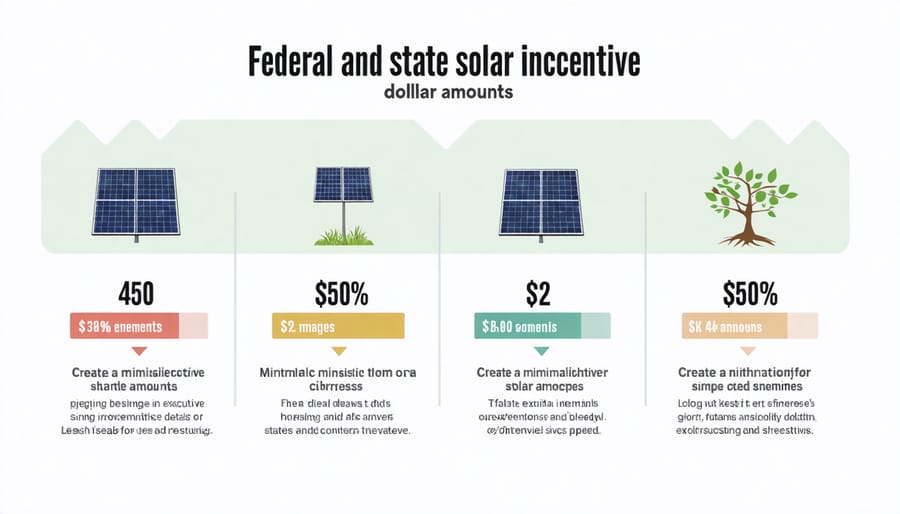
The federal government offers substantial support for solar energy adoption through various financial mechanisms. The cornerstone of these initiatives is the federal solar tax credits, which allow property owners to deduct up to 30% of their solar installation costs from their federal taxes. This Investment Tax Credit (ITC) has been extended through 2032, providing long-term stability for solar investments.
Beyond tax credits, the Department of Energy administers several grant programs targeting different sectors. The Solar Energy Technologies Office (SETO) funding program supports research and development initiatives, while the Rural Energy for America Program (REAP) specifically assists agricultural producers and rural small businesses in implementing renewable energy solutions.
Additional federal incentives include accelerated depreciation benefits for commercial installations, loan guarantees for large-scale projects, and specialized programs for public institutions. The Energy Efficiency and Conservation Block Grant (EECBG) Program provides funding to state and local governments for community-based solar projects.
These programs often work in conjunction with state and local initiatives, creating multiple layers of financial support. Property owners can typically combine various incentives, maximizing their return on investment while contributing to national clean energy goals. Understanding eligibility requirements and application procedures is crucial for successful participation in these programs.
State-Level Solar Initiatives
State-level solar initiatives have emerged as powerful drivers of renewable energy adoption across the United States, with each state implementing unique programs tailored to their specific needs and resources. California leads with its Solar Initiative Program, which has invested over $2.2 billion in solar incentives and has successfully installed more than 3,000 megawatts of solar capacity.
New York’s NY-Sun program exemplifies comprehensive state-level support, offering direct incentives, financing options, and workforce development programs. The initiative aims to install 6 gigawatts of distributed solar capacity by 2025, supported by a $1.8 billion investment commitment.
Massachusetts’ SMART (Solar Massachusetts Renewable Target) program provides production-based incentives through a declining block model, encouraging early adoption while managing program costs. The program has been particularly effective in promoting community solar projects and agricultural solar installations.
Other notable programs include New Jersey’s Successor Solar Incentive Program (SuSI) and Illinois’ Solar for All initiative, which specifically addresses solar access for low-income communities. These programs typically combine financial incentives, technical assistance, and regulatory support to create comprehensive frameworks for solar adoption.
State programs often work in conjunction with federal incentives, creating layered support systems that maximize benefits for participants. Many states have also implemented innovative financing mechanisms, such as Property Assessed Clean Energy (PACE) programs, which help overcome initial cost barriers.
Citizen-Funded Solar Project Models
Solar Cooperatives
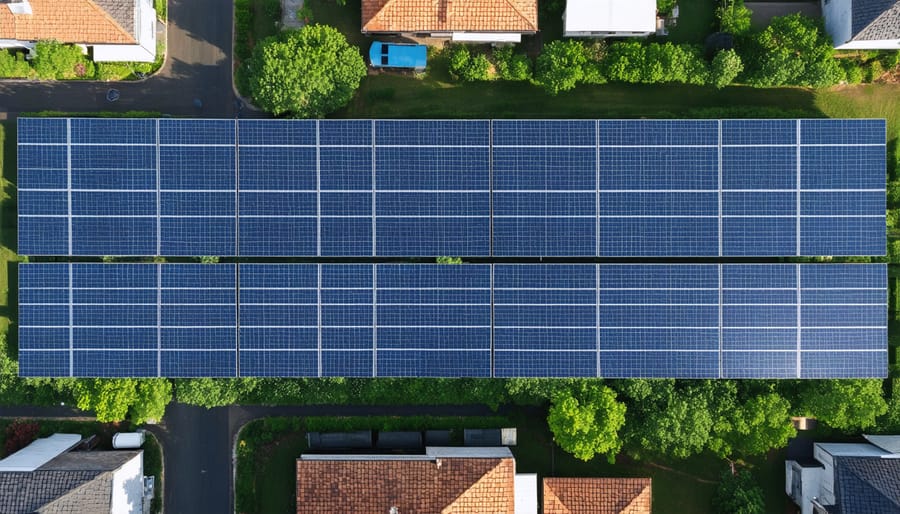
Solar cooperatives represent a powerful model for community-driven renewable energy initiatives, combining government support with collective citizen investment. These organizations enable communities to pool resources and expertise while leveraging federal and state incentives for solar energy development. The process of forming solar cooperatives typically begins with community members establishing a legal entity that can receive government funding and manage shared solar installations.
Government support for solar cooperatives often comes through multiple channels, including technical assistance grants, tax incentives, and direct funding programs. The Rural Energy for America Program (REAP) and the Department of Energy’s Solar Energy Technologies Office (SETO) provide substantial support for cooperative solar initiatives, particularly in rural and underserved communities.
These cooperatives operate on democratic principles, with members having equal voting rights and sharing both the costs and benefits of solar installations. The government’s role extends beyond financial support to include regulatory frameworks that facilitate grid connection, net metering arrangements, and power purchase agreements.
Successful solar cooperatives often demonstrate several key characteristics:
– Strong organizational structure with clear governance policies
– Diverse membership representing various community stakeholders
– Professional management of technical and administrative operations
– Effective partnerships with local utilities and government agencies
– Transparent financial management and benefit distribution systems
Through these cooperative structures, communities can achieve economies of scale, reduce individual installation costs, and create sustainable local energy systems while maximizing available government support mechanisms. This model has proven particularly effective in areas where individual solar installations might be financially or technically challenging for single households.
Public-Private Partnerships
Public-private partnerships (PPPs) have emerged as a powerful mechanism for accelerating solar energy adoption through shared investment and risk distribution between government entities and private stakeholders. These hybrid funding models typically combine government incentives, such as tax credits and grants, with private capital from citizens, businesses, and financial institutions.
Under these partnerships, government agencies often provide initial seed funding and regulatory support, while private investors contribute additional capital and operational expertise. This collaborative approach enables larger-scale solar installations than either sector could achieve independently, while maintaining public oversight of essential energy infrastructure.
Common PPP structures in solar programs include:
1. Community Solar Partnerships: Local governments provide land and permits while citizens invest through share purchases or subscription models
2. Municipal Bond Programs: Government-backed solar bonds allow citizens to invest in public solar projects while earning returns
3. Performance-Based Incentive Programs: Government guarantees support private investment through predetermined energy purchase agreements
The success of these hybrid models relies on clear governance frameworks, transparent risk allocation, and well-defined performance metrics. Governments typically maintain oversight through regulatory compliance requirements and performance monitoring, while private partners manage day-to-day operations and maintenance.
Financial benefits are distributed according to pre-established agreements, with citizens often receiving returns through reduced energy costs or direct revenue sharing. This approach has proven particularly effective in funding large-scale community solar installations and municipal building retrofits.
Several jurisdictions have demonstrated the viability of PPP models through successful implementations. These programs often achieve broader public participation in renewable energy initiatives while maintaining professional project management standards and ensuring long-term sustainability.

Implementation Success Stories
Government-funded solar programs have demonstrated remarkable success across various communities, with several noteworthy implementations showcasing the potential of public-private partnerships in renewable energy development.
The Colorado Community Solar Gardens Program stands as a prime example of effective government support for solar initiatives. Launched in 2010, this program has enabled the development of over 70 community solar projects, generating more than 100 MW of clean energy. The program’s success lies in its innovative financing structure, which allows residents to purchase or lease solar panels without installing them on their properties, making solar access more equitable and widespread.
In Massachusetts, the Solar Massachusetts Renewable Target (SMART) program has achieved exceptional results since its 2018 implementation. The program has facilitated the installation of over 2,500 solar projects, creating approximately 2,100 local jobs and generating significant economic benefits for participating communities. Notable success stories include the Beverly Community Solar Project, which provides clean energy to 150 low-income households while reducing their electricity costs by 25%.
The New York State Energy Research and Development Authority (NYSERDA) has demonstrated remarkable achievements through its NY-Sun initiative. One standout project is the Tompkins County Community Solar Farm, which serves 373 households and has reduced carbon emissions by an estimated 1,430 metric tons annually. The project’s innovative subscription model has become a blueprint for other communities nationwide.
Washington State’s Community Solar Project in Seattle presents another successful case study. This initiative, supported by Seattle City Light, has enabled 1,850 participants to benefit from solar energy, regardless of their property ownership status. The project has exceeded its initial energy generation targets by 15% and has created a replicable model for urban community solar development.
These success stories share common elements that contributed to their effectiveness: strong government support through clear regulatory frameworks, simplified permitting processes, and strategic financial incentives. Additionally, successful projects typically feature robust community engagement, transparent communication channels, and partnerships with local educational institutions for workforce development and technical training.
The demonstrated achievements of these programs have not only advanced clean energy adoption but have also created templates for future implementations, proving that government-funded solar initiatives can effectively drive sustainable community development while meeting environmental goals.
Technical Requirements and Compliance
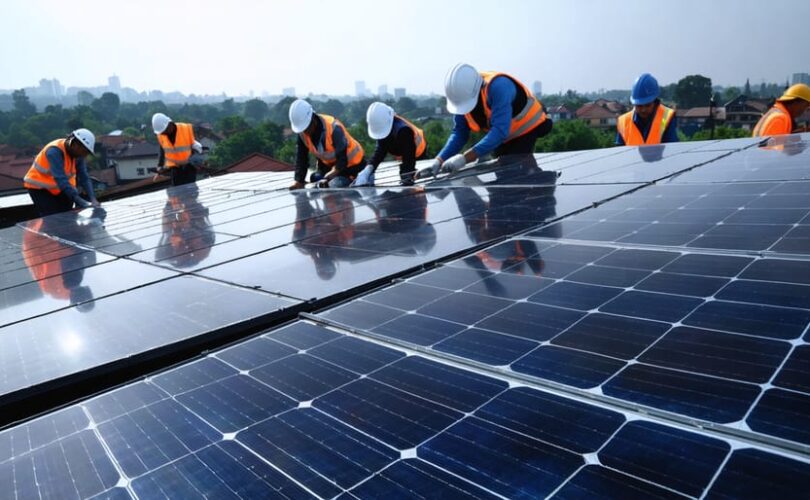
Government-funded solar programs must adhere to strict solar installation requirements and technical specifications to ensure safety, efficiency, and long-term sustainability. Projects typically must meet or exceed the National Electrical Code (NEC) standards, particularly Article 690 which governs photovoltaic system installations.
Equipment specifications generally mandate the use of UL-listed components, including solar panels with a minimum efficiency rating of 18% and inverters with 96% or higher conversion efficiency. Systems must incorporate rapid shutdown capabilities and meet current cybersecurity protocols for grid-connected installations.
Structural requirements necessitate professional engineering certification for roof-mounted systems, confirming that existing structures can support additional loads of 2.5-4 pounds per square foot. Ground-mounted installations must comply with local zoning regulations and demonstrate appropriate soil stability through geotechnical assessments.
Performance monitoring systems are mandatory for most funded projects, requiring the installation of revenue-grade meters and data acquisition systems that track energy production with ±2% accuracy. These systems must maintain connectivity to reporting platforms for a minimum of five years post-installation.
Environmental compliance includes adherence to local watershed protection regulations, wildlife impact assessments, and proper disposal protocols for end-of-life equipment. Projects must also demonstrate commitment to recycling programs for solar components and packaging materials.
Quality assurance measures require certified installers with NABCEP credentials or equivalent qualifications. Documentation must include detailed system designs, shade analysis reports, and energy production estimates using approved modeling software. Annual maintenance plans and emergency response procedures are essential components of the technical submission package.
Projects must incorporate smart grid integration capabilities, including provisions for demand response programs and grid support functions. This includes voltage regulation features and the ability to adjust power factor as required by local utilities.
Government-funded community solar initiatives have demonstrated significant potential in accelerating the transition to renewable energy while fostering social equity and economic development. These programs have successfully reduced barriers to solar adoption, enabling broader participation across diverse socioeconomic groups and creating sustainable energy solutions for communities nationwide.
The impact of these initiatives extends beyond immediate energy cost savings. They have created thousands of clean energy jobs, stimulated local economies, and contributed substantially to greenhouse gas emission reductions. Furthermore, the collaborative model between government agencies, utilities, and citizens has established a framework for future renewable energy projects that prioritize community engagement and shared benefits.
Looking ahead, government-supported solar programs are expected to expand significantly, driven by increasing climate action commitments and renewable energy targets. Enhanced funding mechanisms, streamlined administrative processes, and technological advancements will likely facilitate more extensive implementation of community solar projects. The integration of energy storage solutions and smart grid technologies will further optimize these systems’ efficiency and reliability.
As these programs evolve, they will continue to serve as catalysts for innovation in the renewable energy sector, promoting educational initiatives, workforce development, and technological research. The success of current projects has created a strong foundation for future expansion, suggesting that government-funded community solar programs will remain integral to achieving national clean energy objectives while ensuring equitable access to sustainable power sources.