Solar panel lifecycle analysis reveals a critical intersection between renewable energy advancement and environmental responsibility. From raw material extraction to end-of-life disposal, understanding the complete environmental footprint of photovoltaic systems has become increasingly vital for sustainable energy development. Recent studies indicate that modern solar panels require 1-4 years to offset their production energy costs, while their operational lifespan extends to 25-30 years, representing a significant net positive for environmental impact.
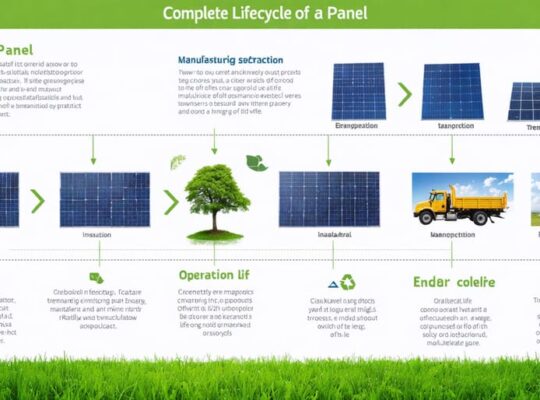
The comprehensive assessment of solar panel lifecycles encompasses four key phases: raw material procurement, manufacturing processes, operational performance, and end-of-life management. Each stage presents unique challenges and opportunities for sustainability optimization. Manufacturing innovations have reduced energy intensity by 12-15% in the past decade, while recycling technologies now recover up to 95% of semiconductor materials and 90% of glass in end-of-life panels.
As global solar installations accelerate, reaching 713 GW in 2020, the importance of lifecycle analysis becomes paramount for industry stakeholders, policymakers, and environmentally conscious consumers. This analytical framework not only guides technological improvements and policy decisions but also ensures the solar industry’s commitment to genuine environmental sustainability throughout the entire product lifecycle. Understanding these impacts enables more informed decisions about solar technology deployment while driving innovations in sustainable manufacturing and recycling processes.
Understanding the Solar Panel Life Cycle
Raw Material Extraction and Processing
The extraction and processing of raw materials for solar panel production represents a significant phase in their environmental footprint. Silicon, the primary material used in photovoltaic cells, requires extensive mining and purification processes that contribute to resource consumption in solar production. The transformation of quartz into metallurgical-grade silicon demands substantial energy input, typically requiring temperatures exceeding 1,800°C in arc furnaces.
Additional materials, including aluminum for frames, silver for electrical contacts, and glass for surface protection, also require considerable extraction and processing energy. The mining of these materials can lead to habitat disruption, while chemical processes used in purification may generate hazardous byproducts.
However, technological advances are improving material efficiency and reducing environmental impact. Modern manufacturing facilities increasingly utilize renewable energy sources for processing, while research into alternative materials and recycling methods continues to minimize the industry’s ecological footprint. The development of thinner wafers and more efficient processing techniques has significantly reduced silicon waste and energy consumption in recent years.
Manufacturing and Assembly
The environmental impact of solar manufacturing encompasses several critical processes that require careful consideration. The production phase begins with raw material extraction, primarily silicon mining, followed by energy-intensive purification processes to achieve the necessary semiconductor-grade silicon.
Manufacturing solar cells involves multiple chemical treatments, including etching and doping, which require strict environmental controls to manage potentially hazardous materials. The assembly process combines these cells with protective glass, polymer backsheets, and aluminum frames, each component contributing to the overall environmental footprint.
Energy consumption during manufacturing remains a significant concern, with estimates suggesting that a typical solar panel requires 2-3 years of operation to offset its production energy costs. However, technological improvements and automation have steadily reduced this energy payback period.
Water usage in manufacturing also presents environmental challenges, particularly in the silicon wafer cutting and cell cleaning processes. Modern facilities increasingly implement closed-loop water recycling systems to minimize consumption and prevent contamination of local water sources.
Manufacturers are adopting cleaner production methods, including the use of renewable energy in factories and the development of less toxic materials for cell production. These improvements, combined with stringent quality control measures, help reduce waste and enhance the overall sustainability of solar panel production.
End-of-Life Management Strategies
Recycling Technologies and Processes
The recycling of solar panels involves several sophisticated processes designed to recover valuable materials while minimizing environmental impact. Current recycling technologies primarily focus on two main categories: mechanical and chemical processing methods.
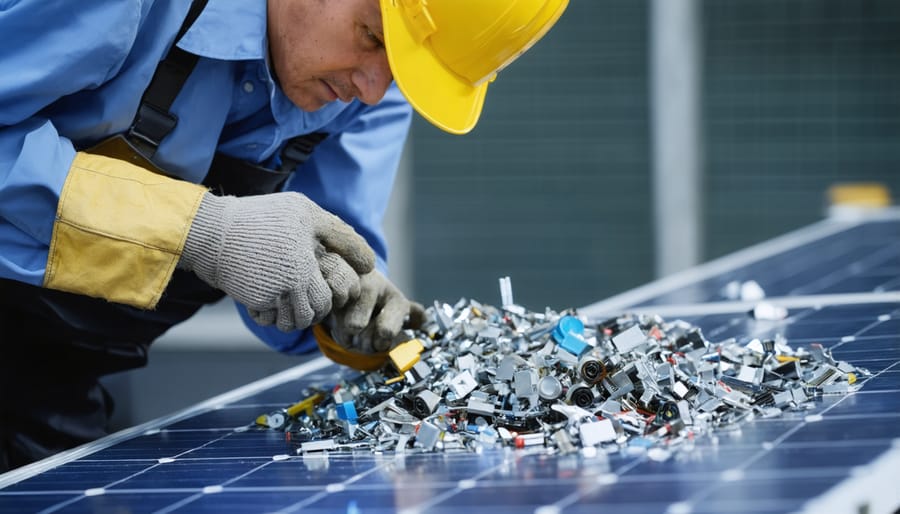
Mechanical recycling begins with the removal of the aluminum frame and junction box, followed by shredding or crushing the panels into smaller pieces. Advanced sorting systems then separate different materials based on their physical properties. This process successfully recovers up to 95% of the glass and 85% of the semiconductor materials.
Chemical recycling techniques employ various solutions to extract precious metals and semiconductor materials. The most common method involves thermal processing to separate the solar cells from the glass, followed by chemical treatment to recover silver, silicon, and other valuable components. Recent innovations have introduced selective etching processes that achieve higher recovery rates while using fewer harmful chemicals.
Several emerging technologies are revolutionizing solar panel recycling:
– Automated dismantling systems using robotics and artificial intelligence
– Advanced thermal decomposition methods for enhanced material separation
– Novel chemical processes that reduce environmental impact
– Ultrasonic separation techniques for improved material recovery
Life Cycle Assessment (LCA) studies indicate that current recycling processes can significantly reduce the environmental footprint of solar panel production. By recovering materials like silicon and silver, these processes decrease the need for raw material extraction and energy-intensive manufacturing processes.
Industry leaders are continuously developing more efficient recycling methods. Recent breakthroughs include:
– High-precision laser separation technology
– Electrochemical material extraction
– Automated sorting systems using machine learning
– Water-based separation processes
These innovations are particularly important as the volume of end-of-life solar panels is expected to increase significantly in the coming decades. The development of these technologies ensures that the solar energy industry can maintain its sustainability credentials while managing waste effectively and recovering valuable materials for reuse in new panel production.
Material Recovery Efficiency
The material recovery efficiency of solar panels plays a crucial role in determining the economic and environmental viability of end-of-life management. Current recycling technologies can recover approximately 80-85% of the materials from crystalline silicon panels, with higher recovery rates possible for newer recycling methods.
The most valuable recoverable materials include silver, aluminum, copper, and silicon. Silver, used in the metallization paste for solar cell contacts, represents the highest economic value despite its small quantity. Aluminum, primarily from the frame and backing structures, offers significant recovery potential due to its high volume and established recycling markets.
Glass, which constitutes about 75% of a typical solar panel’s weight, can be recovered at rates exceeding 95% with current technologies. This recovered glass can be repurposed for various applications, including the manufacturing of new solar panels or other glass products. Silicon recovery presents more challenges, but advanced thermal and chemical processes can achieve recovery rates of up to 85%.
The economic value of recovered materials varies significantly based on market conditions and material purity. Current estimates suggest that recycling one metric ton of solar panels can yield materials worth $250-300, though this value fluctuates with market prices. Advanced recycling technologies are continuously improving recovery rates and material purity, potentially increasing the economic returns.
Thin-film solar panels, which contain rare elements like indium and gallium, present different recovery challenges but often offer higher value per unit due to these precious materials. The recovery efficiency for these elements can reach 95% using specialized hydrometallurgical processes.
Future improvements in material recovery efficiency are expected through automation, artificial intelligence in sorting processes, and new chemical separation techniques. These advancements aim to increase both the quantity and quality of recovered materials while reducing processing costs.
Environmental Impact Assessment
Carbon Footprint Analysis
The PV system carbon footprint varies significantly throughout its lifecycle stages, with each phase contributing differently to the overall environmental impact. During the manufacturing phase, which typically accounts for 50-70% of the total carbon emissions, energy-intensive processes like silicon purification and cell production generate substantial CO2 emissions. The exact quantity depends on factors such as manufacturing location, energy sources used, and technological efficiency.
Transportation and installation phases contribute approximately 10-15% of the total emissions, primarily from fuel consumption during shipping and the use of installation equipment. These emissions can be reduced through local manufacturing and optimized logistics planning.
The operational phase presents minimal direct carbon emissions, as solar panels generate clean electricity without combustion processes. However, maintenance activities and replacement of components contribute a small percentage of lifecycle emissions, typically less than 5% of the total.
End-of-life management, including decommissioning and recycling, accounts for approximately 10% of total emissions. Advanced recycling technologies are continuously being developed to reduce this impact while recovering valuable materials.
When compared to conventional energy sources, solar panels demonstrate significant environmental advantages. A typical solar panel system offsets its manufacturing emissions within 1-4 years of operation, depending on geographical location and system efficiency. Over a 25-30 year lifespan, solar panels can prevent 20-30 times the amount of carbon emissions generated during their production.
Recent technological improvements in manufacturing processes and materials have led to reduced carbon intensity per watt of capacity. Industry leaders are implementing more energy-efficient production methods and increasingly utilizing renewable energy in their manufacturing facilities, further decreasing the carbon footprint of new solar installations.

Resource Conservation Benefits
Solar panel lifecycle analysis reveals significant resource conservation benefits through material recovery and waste reduction strategies. The recycling of photovoltaic (PV) modules conserves valuable materials, including silicon, glass, aluminum, and precious metals, while minimizing the impact on local ecosystems.
Modern recycling processes can recover up to 95% of semiconductor materials and 90% of glass from decommissioned solar panels. This high recovery rate significantly reduces the demand for raw material extraction and processing. For example, recycling one metric ton of solar panels can recover approximately 800kg of glass, 140kg of aluminum frame, and various amounts of copper and silicon, which can be redirected back into the manufacturing supply chain.
The conservation benefits extend beyond material recovery. By implementing effective recycling programs, the solar industry reduces landfill waste and minimizes the environmental footprint associated with raw material mining. This circular economy approach helps preserve natural resources and reduces energy consumption in the manufacturing of new solar panels.
Furthermore, advanced recycling technologies are continuously improving recovery rates and processing efficiency. Innovative methods, such as thermal, mechanical, and chemical separation processes, enable the extraction of high-purity materials suitable for reuse in new solar panels or other applications. This technological progress enhances the sustainability profile of solar energy while creating economic opportunities in the recycling sector.
The resource conservation benefits also include reduced water consumption and decreased chemical usage in raw material processing. By recovering and reusing materials from end-of-life solar panels, manufacturers can significantly lower their environmental impact while maintaining product quality and performance standards. This sustainable approach aligns with global environmental goals and strengthens the solar industry’s position as a leader in renewable energy solutions.
Future Developments and Industry Trends
Technological Innovations
Recent technological breakthroughs have revolutionized solar panel design and end-of-life management, addressing key sustainability challenges in the industry. Advanced recycling processes now achieve recovery rates exceeding 95% for silicon-based panels, utilizing automated separation technologies and chemical treatment methods that minimize environmental impact.
Innovative designs incorporating easily separable components have emerged, facilitating more efficient recycling processes. Manufacturers are developing panels with specialized adhesives that can be dissolved at end-of-life, allowing for cleaner material separation. These developments align with circular economy principles and have been validated through industry climate impact models.
Noteworthy advances include the implementation of RFID tracking systems in newer panels, enabling better lifecycle monitoring and streamlined recycling processes. Additionally, research institutions have developed novel encapsulation materials that maintain panel efficiency while being more environmentally friendly and easier to recycle.
Cradle-to-cradle design approaches are gaining traction, with manufacturers incorporating recycled materials into new panel production. This includes using recovered silicon and glass from decommissioned panels, significantly reducing the carbon footprint of new installations.
These technological innovations are complemented by automated inspection systems that extend panel lifespan through early detection of performance issues. Smart monitoring solutions integrate with maintenance protocols, optimizing operational efficiency while preparing for eventual recycling, thereby maximizing the environmental benefits of solar energy systems throughout their lifecycle.

Policy and Regulatory Evolution
The regulatory landscape for solar panel life cycle management is evolving rapidly, with governments worldwide implementing stricter guidelines for sustainable manufacturing and end-of-life handling. The European Union leads with its WEEE (Waste Electrical and Electronic Equipment) Directive, requiring manufacturers to establish collection and recycling programs for photovoltaic modules. Similar frameworks are emerging in other regions, with the United States developing state-level regulations for solar waste management.
Industry standards are becoming more rigorous, with organizations like the International Electrotechnical Commission (IEC) developing comprehensive testing protocols for durability and recyclability. These standards increasingly emphasize design for recycling, requiring manufacturers to consider end-of-life disposal during the product development phase.
Recent policy trends focus on extended producer responsibility (EPR) programs, which hold manufacturers accountable for the entire lifecycle of their products. These programs typically mandate detailed documentation of material composition, recycling procedures, and recovery rates. Several countries are also introducing certification systems for recycling facilities, ensuring proper handling of hazardous materials and maximum resource recovery.
Looking ahead, industry experts anticipate more stringent requirements for eco-design, material transparency, and recycling efficiency. The development of circular economy regulations will likely drive innovation in recyclable materials and design approaches. Additionally, financial mechanisms such as recycling funds and disposal fees are being considered to support sustainable end-of-life management infrastructure development.
The lifecycle analysis of solar panels reveals both the remarkable potential and ongoing challenges in sustainable energy production. Through comprehensive examination of each phase – from raw material extraction to end-of-life management – we’ve seen that solar technology offers significant environmental benefits while presenting opportunities for improvement in manufacturing processes and disposal methods.
Key findings demonstrate that solar panels generate substantially less lifetime carbon emissions compared to fossil fuel alternatives, typically paying back their energy debt within 1-4 years of operation. However, the industry must continue addressing challenges in sustainable material sourcing, energy-efficient manufacturing, and developing robust recycling infrastructure to maximize environmental benefits.
The growing focus on circular economy principles in solar panel design and production represents a crucial step toward greater sustainability. By implementing improved recycling technologies and establishing comprehensive take-back programs, the industry can significantly reduce waste and recover valuable materials, thereby decreasing the environmental impact of future production cycles.
Looking ahead, the success of sustainable solar energy depends on collaborative efforts between manufacturers, researchers, policymakers, and consumers. Continued investment in research and development of more efficient manufacturing processes, coupled with stronger regulatory frameworks for end-of-life management, will be essential for optimizing the environmental performance of solar technology.
As solar adoption continues to accelerate globally, prioritizing sustainable lifecycle management becomes increasingly critical. By understanding and actively addressing the environmental impacts throughout the entire lifecycle, the solar industry can maintain its position as a leading solution in the transition to clean energy while minimizing its ecological footprint.