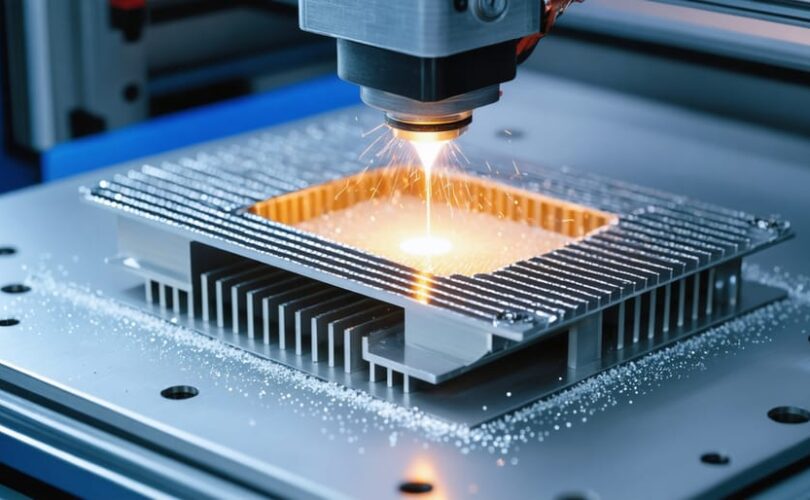
Additive manufacturing, commonly known as 3D printing, is revolutionizing how components are fabricated across multiple industries, and the solar energy sector stands at the forefront of this transformation. Metal additive 3D printing specifically offers unprecedented opportunities to reimagine component design, optimize manufacturing processes, and enhance system performance in photovoltaic technology applications. This advanced manufacturing technique builds metal parts layer by layer from digital designs, enabling complex geometries impossible to achieve through traditional methods like casting, forging, or machining.
For solar industry professionals, understanding metal additive manufacturing is no longer optional but essential. The technology addresses critical challenges in photovoltaic manufacturing, from reducing material waste and production costs to enabling rapid prototyping of innovative mounting systems, electrical connections, and thermal management solutions. Unlike conventional subtractive manufacturing that removes material from solid blocks, additive processes deposit metal powder or wire precisely where needed, achieving material utilization rates exceeding 90 percent while creating intricate internal channels, lattice structures, and optimized load-bearing designs.
The implications for solar energy systems are profound. Metal 3D printing enables customized junction boxes, lightweight structural components, enhanced heat sinks for inverters, and specialized mounting hardware adapted to unique installation environments. As manufacturing costs decline and material options expand beyond aluminum and stainless steel to include copper alloys and titanium, adoption across the photovoltaic supply chain accelerates. This comprehensive examination explores the fundamental technologies, current applications, performance advantages, implementation challenges, and emerging opportunities that position metal additive manufacturing as a transformative force in advancing solar energy accessibility and efficiency worldwide.
Understanding Metal Additive Manufacturing in the PV Context
What Is Metal Additive Manufacturing?
Metal additive manufacturing, commonly known as metal 3D printing, is an advanced fabrication technique that builds three-dimensional components layer by layer from metal powders or wire feedstock. Unlike traditional subtractive manufacturing methods that remove material from solid blocks, this process adds material precisely where needed, enabling the creation of complex geometries that would be impossible or prohibitively expensive to produce conventionally.
Three primary technologies dominate metal additive manufacturing. Powder bed fusion uses high-powered lasers or electron beams to selectively melt fine metal powder particles together, fusing them into solid layers. Each layer bonds to the previous one as the build platform gradually lowers, creating intricate structures with exceptional precision. Direct energy deposition employs a focused energy source, typically a laser, to melt metal powder or wire as it’s deposited onto a substrate, making it particularly suitable for repairing existing components or adding features to manufactured parts. Binder jetting takes a different approach by depositing liquid binding agents onto metal powder layers, which are subsequently sintered in a furnace to achieve full density.
These technologies offer significant advantages for photovoltaic applications, including design freedom for optimized electrical contacts, reduced material waste in precious metal components, and the ability to create customized solutions for specialized solar installations. As the renewable energy sector continues advancing, metal additive manufacturing presents opportunities for innovation in component design and manufacturing efficiency.
Key Technologies Used in PV Applications
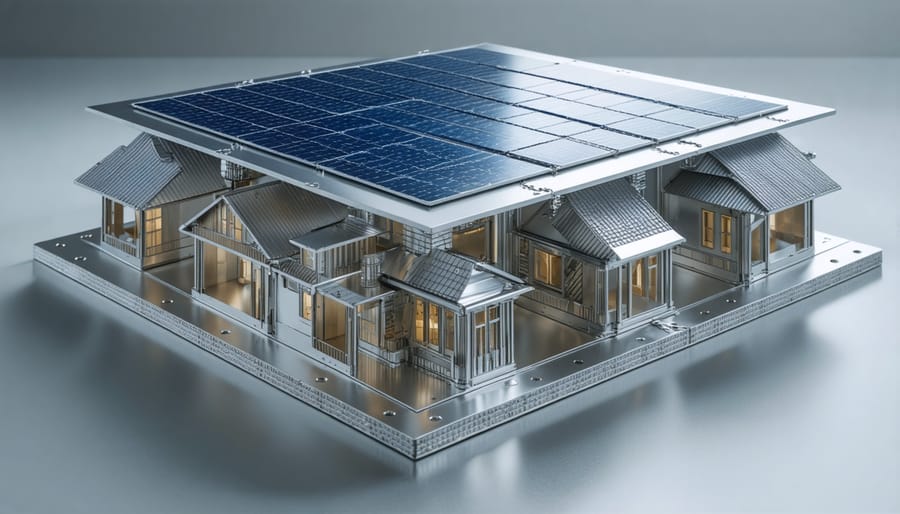
Metal additive manufacturing for photovoltaic applications primarily relies on two advanced technologies: Selective Laser Melting (SLM) and Electron Beam Melting (EBM). Both powder bed fusion processes build components layer by layer, yet they employ fundamentally different energy sources and operational environments.
Selective Laser Melting uses high-powered laser beams to selectively fuse metal powder particles in an inert gas atmosphere, typically argon or nitrogen. This technology excels in producing intricate geometries with exceptional surface quality and dimensional accuracy, making it particularly suitable for manufacturing solar panel mounting brackets, electrical connectors, and heat dissipation components. SLM systems can process a wide range of metals including aluminum alloys, stainless steel, and titanium, with layer thicknesses ranging from 20 to 100 micrometers. The inert atmosphere prevents oxidation during processing, ensuring material integrity essential for outdoor solar installations.
Electron Beam Melting operates in a high vacuum environment, utilizing a focused electron beam to melt metal powder. EBM typically achieves faster build rates than SLM due to higher energy density and can process materials at elevated temperatures, reducing residual stresses in finished components. This characteristic proves advantageous for producing structural elements requiring superior mechanical properties. However, EBM’s resolution generally falls slightly below SLM capabilities, and material selection is currently more limited.
For photovoltaic manufacturing, SLM dominates due to its superior precision and broader material compatibility, essential for producing electrical components and thermal management systems. EBM finds applications in larger structural components where build speed and mechanical strength outweigh surface finish requirements. Academic institutions collaborating with solar manufacturers continue researching hybrid approaches that combine both technologies’ advantages, advancing capabilities for next-generation photovoltaic production systems.
Critical Applications in Solar Panel Production
Manufacturing Precision Components and Mounting Systems
Metal additive manufacturing revolutionizes the production of precision components essential for photovoltaic installations by enabling customized solutions that traditional machining cannot economically achieve. This technology excels at creating mounting brackets with complex geometries that optimize load distribution across solar arrays while minimizing material waste. Engineers can design junction boxes with integrated cable management features and heat dissipation channels, improving electrical performance and longevity in demanding outdoor environments.
The layer-by-layer fabrication process allows manufacturers to produce structural components with internal lattice structures that maintain strength while reducing weight by up to 60 percent compared to solid metal parts. This weight reduction simplifies installation logistics and reduces structural load requirements for rooftop systems. Metal 3D printing also enables rapid prototyping of mounting hardware, allowing researchers and installers to test multiple design iterations before committing to large production runs.
Universities collaborating with industry partners are exploring topology-optimized bracket designs that respond to site-specific wind loads and snow accumulation patterns. These customized components ensure panels remain securely positioned while accommodating thermal expansion cycles throughout seasonal temperature variations. Academic research programs are documenting how additive manufacturing reduces lead times from weeks to days for specialized mounting solutions needed in challenging installations such as building-integrated photovoltaics or floating solar farms.
The precision achievable through metal printing—tolerances within 0.1 millimeters—ensures consistent alignment across panel arrays, directly impacting energy capture efficiency. As material costs decrease and printer capabilities expand, customized precision components become increasingly viable for mainstream solar projects.
Creating Advanced Electrode Structures
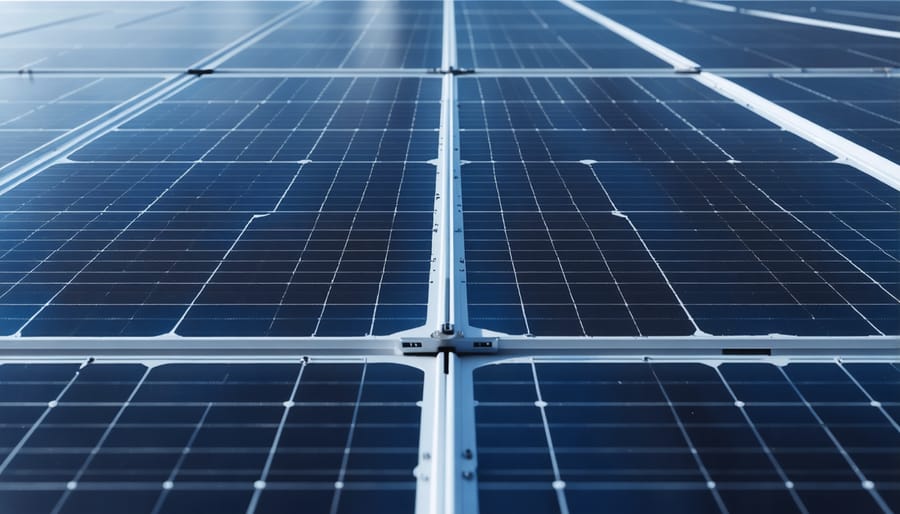
Additive 3D printing metal technology has revolutionized electrode fabrication in photovoltaic cells, enabling manufacturers to create complex geometries that were previously impossible with conventional screen-printing methods. These advanced electrode structures significantly improve electron collection efficiency by reducing series resistance and minimizing shading losses on the cell surface.
Metal 3D printing allows for the precise deposition of highly conductive materials, including silver, copper, and aluminum alloys, in intricate patterns that optimize current flow. The layer-by-layer additive process enables engineers to design three-dimensional conductive pathways with aspect ratios and geometries that enhance carrier extraction while reducing material consumption. This approach addresses two critical challenges: improving electrical performance and lowering production costs.
Research collaborations between industry leaders and universities have demonstrated that 3D-printed metal electrodes can achieve line widths below 20 micrometers with excellent adhesion to silicon surfaces. These fine-featured structures reduce optical losses while maintaining superior conductivity compared to traditional metallization techniques. The technology also enables the creation of multi-level electrode architectures that separate light absorption and current collection functions.
Educational programs focused on additive manufacturing techniques are preparing the next generation of photovoltaic professionals to leverage these innovations. As 3D printing metal technologies mature, they promise to deliver solar cells with higher efficiencies, reduced material waste, and greater design flexibility for emerging applications.
Prototyping and Testing Equipment
Metal additive manufacturing has become instrumental in accelerating photovoltaic research and development by enabling rapid production of specialized testing equipment and prototype components. Traditional manufacturing methods often require weeks or months to produce custom fixtures and research apparatus, creating bottlenecks in innovation cycles. Metal 3D printing addresses this challenge by allowing researchers to design, iterate, and fabricate testing equipment within days rather than months.
Research institutions and university laboratories have particularly benefited from this technology when developing novel solar cell architectures and module designs. Custom test fixtures for evaluating electrical contacts, mechanical stress testing frames for durability studies, and specialized mounting brackets for outdoor exposure testing can all be produced on-demand using materials like aluminum alloys and stainless steel. This capability proves especially valuable when investigating new cell geometries or junction configurations that require unique characterization equipment.
The technology also supports rapid prototyping of production tooling concepts before committing to expensive mass manufacturing equipment. Engineers can test jig designs, alignment fixtures, and handling mechanisms under actual production conditions, identifying design flaws and optimization opportunities early in the development process. Universities collaborating with industry partners frequently leverage metal additive manufacturing to bridge the gap between laboratory discoveries and commercial implementation.
Furthermore, the ability to produce small batches of complex components enables researchers to explore unconventional approaches without significant capital investment. This democratization of manufacturing capability fosters innovation by reducing financial barriers to experimentation, ultimately advancing the broader photovoltaic industry’s technological capabilities and contributing to more efficient, cost-effective solar energy solutions.
Performance and Efficiency Benefits
Material Optimization and Waste Reduction
Additive metal 3D printing represents a significant advancement in sustainable manufacturing for photovoltaic applications, particularly through its efficient material utilization. Unlike traditional subtractive manufacturing methods that remove material from solid blocks—often wasting 60-90% of the initial material—additive processes build components layer by layer, using only the metal powder necessary for the final structure. This fundamental difference translates to material efficiency rates exceeding 95% in many applications.
For photovoltaic system components, this efficiency offers substantial economic and environmental benefits. Metal powders such as aluminum alloys and stainless steel, commonly used in solar mounting systems and electrical connections, can be precisely deposited where needed. Unused powder remains recyclable for subsequent builds, further minimizing waste. This closed-loop approach aligns with the renewable energy sector’s sustainability objectives while reducing raw material costs by 40-70% compared to conventional machining.
The environmental impact extends beyond material savings. Reduced waste generation means lower energy consumption in material production and decreased landfill burden. For solar manufacturers developing lightweight structural components or complex heat exchangers for concentrated photovoltaic systems, additive manufacturing eliminates the need for multiple machining operations, each generating additional scrap material.
Academic research programs, including collaborations with leading universities, continue advancing powder recycling technologies and optimizing build parameters to maximize material efficiency. These developments position additive metal printing as an increasingly viable solution for cost-effective, environmentally responsible photovoltaic component manufacturing, supporting the industry’s transition toward circular economy principles.
Design Freedom and Functional Integration
Additive metal 3D printing liberates photovoltaic component design from the constraints of traditional subtractive manufacturing methods like machining or casting. This technology enables engineers to create intricate geometries—including lattice structures, internal cooling channels, and optimized surface textures—that would be impossible or prohibitively expensive to produce through conventional means.
In thermal management applications, metal additive manufacturing allows for the integration of conformal cooling channels directly within mounting brackets and inverter housings. These precisely engineered pathways follow the contours of heat-generating components, dramatically improving heat dissipation efficiency compared to external cooling solutions. The result is extended equipment lifespan and maintained performance even under high-temperature operating conditions.
For light capture optimization, 3D-printed metal reflectors can incorporate micro-scale surface features that enhance light redirection toward solar cells. These complex topographies, designed through computational modeling, maximize photon absorption while minimizing material waste. When combined with advances in nanotechnology in solar cell development, these precision-engineered components contribute to measurable efficiency gains.
Structural efficiency benefits emerge from topology optimization, where additive manufacturing produces components with material placed only where structural analysis indicates necessity. This approach yields parts that maintain mechanical strength while reducing weight by 40-60% compared to traditionally manufactured equivalents. For solar tracking systems and rooftop installations, this weight reduction translates directly to lower structural loads, simplified installation requirements, and reduced transportation costs—factors particularly relevant for large-scale renewable energy deployment.
Materials Advancing PV Manufacturing

Aluminum and Copper Alloys
Aluminum and copper alloys represent critical materials in additive manufacturing for photovoltaic applications, offering unique properties that directly enhance solar panel performance. Aluminum alloys, particularly AlSi10Mg, provide exceptional strength-to-weight ratios while maintaining excellent thermal conductivity—essential characteristics for mounting structures and heat dissipation components that prevent efficiency losses due to elevated operating temperatures.
Copper alloys excel in electrical applications within solar systems, demonstrating superior electrical conductivity that minimizes power losses in busbar connections and junction box components. The ability to 3D print complex copper geometries enables optimized current pathways that traditional manufacturing methods cannot achieve, potentially reducing resistive losses by up to 15% in critical connection points.
Both materials benefit from additive manufacturing’s design freedom, allowing engineers to create integrated cooling channels and optimized geometries that improve thermal management—a persistent challenge in photovoltaic systems. Research collaborations between industry leaders and universities have demonstrated that 3D-printed aluminum heat sinks can achieve 20-30% better thermal performance compared to conventional designs while reducing material waste by approximately 40%.
However, these materials require careful parameter control during printing to prevent porosity and achieve consistent mechanical properties, necessitating specialized knowledge that many educational programs now address through targeted curriculum development.
Stainless Steel and Specialty Alloys
Stainless steel alloys, particularly 316L and 17-4 PH variants, have gained traction in photovoltaic manufacturing due to their exceptional corrosion resistance and mechanical strength. These materials prove invaluable for outdoor mounting hardware, junction box components, and structural elements that must withstand decades of environmental exposure. The 316L grade offers superior resistance to chloride corrosion in coastal installations, while 17-4 PH provides enhanced strength through precipitation hardening processes.
Beyond conventional stainless steels, specialty alloys are emerging as game-changers for solar applications. Nickel-based superalloys demonstrate remarkable performance in concentrated solar power systems, where extreme temperatures challenge traditional materials. Research collaborations between industry and universities are exploring Inconel 718 and Hastelloy variants for high-temperature thermal management components. These advanced materials enable more efficient heat exchangers and receiver tubes in concentrated photovoltaic systems.
The additive manufacturing process allows for precise control over microstructure, enhancing corrosion resistance beyond wrought equivalents. Educational programs now incorporate specialty alloy metallurgy to prepare professionals for these advanced applications, recognizing that material selection directly impacts system longevity and return on investment in renewable energy infrastructure.
Current Challenges and Limitations
Cost and Scalability Concerns
Metal additive manufacturing presents significant economic considerations for photovoltaic applications. Industrial-grade metal 3D printers typically range from $200,000 to over $1 million, with specialized powder materials adding $100-300 per kilogram. Production speeds remain relatively slow compared to conventional manufacturing methods, with complex components requiring hours to days for completion. These factors currently position the technology more favorably for low-volume, high-value applications rather than mass production.
For photovoltaic manufacturers, economic viability emerges strongest in producing customized mounting hardware, specialized electrical contacts, and prototype components where design flexibility outweighs per-unit costs. Universities collaborating on solar research increasingly utilize metal additive manufacturing for experimental cell architectures and novel thermal management solutions. As equipment costs decline and printing speeds improve through technological advancement, broader adoption across medium-scale production becomes increasingly feasible. Current market analysis suggests the technology serves as a valuable complement to traditional manufacturing rather than a wholesale replacement, particularly benefiting research institutions and manufacturers serving specialized solar installation requirements.
Quality Control and Standardization
Quality control remains a critical consideration as metal additive manufacturing transitions from prototyping to production-scale photovoltaic component fabrication. Current certification requirements vary significantly across regions and applications, creating challenges for manufacturers seeking to standardize processes. The American Society for Testing and Materials (ASTM) and International Organization for Standardization (ISO) continue developing comprehensive standards specific to metal 3D printing, though guidelines tailored to solar energy applications remain limited. Consistency in material properties presents ongoing challenges, as variables including powder quality, layer thickness, and cooling rates can affect mechanical strength and electrical conductivity of printed components. Universities collaborating with industry partners are establishing testing protocols to verify the long-term reliability of additively manufactured parts in demanding outdoor photovoltaic environments. Non-destructive testing methods, including computed tomography scanning and ultrasonic inspection, are becoming essential for detecting internal defects that could compromise performance. Educational programs now incorporate quality assurance training to prepare the next generation of professionals for implementing rigorous standards. As the technology matures, establishing reproducible processes and transparent certification pathways will prove essential for widespread adoption in commercial solar manufacturing.
Industry Innovations and Research Developments
University Research Programs
Leading academic institutions are advancing metal additive manufacturing for photovoltaic applications through dedicated research programs that bridge theoretical innovation with practical implementation. Carnegie Mellon University’s NextManufacturing Center investigates laser powder bed fusion techniques for creating optimized solar panel mounting systems, while MIT’s Laboratory for Manufacturing and Productivity explores binder jetting processes for cost-effective component production. The National Renewable Energy Laboratory collaborates with universities nationwide to develop standardized testing protocols for additively manufactured solar hardware, ensuring quality and reliability.
These research programs focus on material science breakthroughs, examining how different metal alloys perform under various environmental conditions typical of solar installations. Universities like Georgia Tech and UC Berkeley are investigating topology optimization algorithms that reduce material consumption while maintaining structural integrity in mounting brackets and tracker components.
Many institutions offer specialized coursework and certification programs in metal additive manufacturing, preparing the next generation of photovoltaic professionals. Collaborative partnerships between academia and industry leaders enable students to gain hands-on experience with industrial-grade equipment and real-world project challenges. These educational initiatives align with comprehensive workforce development strategies, ensuring knowledge transfer from research laboratories to commercial solar manufacturing facilities. Through open-access publications and industry conferences, university programs democratize advanced manufacturing knowledge, fostering innovation across the renewable energy sector.

Commercial Success Stories
Several pioneering companies have demonstrated the tangible benefits of integrating metal additive manufacturing into photovoltaic production systems. German solar equipment manufacturer Meyer Burger has successfully deployed metal 3D printing for producing customized heat exchange components in their heterojunction cell production lines, achieving a 30% reduction in thermal management system costs while improving temperature uniformity across manufacturing zones.
Arizona-based First Solar has leveraged additive manufacturing to create optimized brackets and mounting hardware for their thin-film module assembly processes, reducing component weight by 40% and cutting lead times from eight weeks to just three days. This advancement exemplifies broader solar manufacturing innovations transforming production efficiency.
Japanese manufacturer Kyocera reported significant improvements after implementing 3D-printed titanium fixtures for their precision wafer handling systems, documenting a 60% decrease in wafer breakage rates and extended fixture lifespans exceeding five years. These measurable outcomes demonstrate how metal additive manufacturing delivers both immediate cost savings and long-term operational advantages. Academic partnerships, including collaborative research with MIT’s Photovoltaic Research Laboratory, continue validating these commercial successes while exploring next-generation applications in junction box design and electrical interconnection systems.
Future Outlook for Metal 3D Printing in Solar Energy
Predicted Technology Advances
The photovoltaic industry stands to benefit significantly from anticipated advancements in metal additive manufacturing technology over the next five to ten years. Industry experts project that printing speeds will increase by 300-500% through innovations in multi-laser systems and enhanced powder bed fusion techniques, dramatically reducing production timelines for solar component manufacturing. Material development laboratories are actively expanding metal alloy options specifically engineered for solar applications, including enhanced aluminum-silicon combinations and novel copper-based composites with superior thermal and electrical properties.
Cost reduction remains a primary focus, with equipment manufacturers targeting 40-60% decreases in capital investment requirements through modular system designs and improved powder recycling processes. These economic improvements will democratize access to additive manufacturing capabilities for mid-sized solar manufacturers and research institutions. Academic collaborations are accelerating innovation cycles, with universities partnering with industry leaders to develop optimized printing parameters and quality control protocols. As these emerging solar technologies mature, broader adoption across the photovoltaic supply chain becomes increasingly feasible, positioning additive manufacturing as a standard production methodology rather than an experimental approach.
Implications for PV Professionals
For professionals entering or advancing in the photovoltaic sector, additive manufacturing expertise represents a valuable skill set with expanding career opportunities. As solar manufacturers increasingly adopt metal 3D printing for component optimization and rapid prototyping, understanding the fundamentals of this technology becomes advantageous for engineers, production managers, and research specialists.
Current professionals should consider developing competencies in computer-aided design (CAD) software specific to additive manufacturing, as well as familiarity with material properties of aluminum alloys, copper, and stainless steel commonly used in solar applications. Knowledge of topology optimization and generative design principles enables engineers to maximize the performance benefits that additive manufacturing offers over traditional fabrication methods.
The growing integration of metal 3D printing in solar manufacturing creates demand for specialists who can bridge design engineering and production processes. Universities are expanding curricula to include additive manufacturing courses within renewable energy programs, providing structured pathways for skill development. Industry certifications in metal printing technologies further enhance professional credentials.
As the technology matures and becomes more cost-effective, companies seek professionals who can evaluate when additive manufacturing provides strategic advantages over conventional methods, making technical assessment skills increasingly valuable in this evolving field.
Metal additive manufacturing represents a transformative innovation pathway for solar technology, offering unprecedented design flexibility, material efficiency, and performance optimization capabilities. As the photovoltaic industry continues its rapid evolution, professionals who develop expertise in this emerging fabrication method will position themselves at the forefront of next-generation solar manufacturing. The convergence of 3D printing technologies with renewable energy applications creates compelling opportunities for enhanced cell efficiency, reduced production costs, and novel device architectures that were previously impossible to achieve through conventional manufacturing.
The integration of metal additive manufacturing into solar production workflows requires a commitment to continuous learning and skill development. Industry professionals should actively pursue educational opportunities through specialized training programs, university collaborations, and hands-on experience with these advanced fabrication systems. Understanding the interplay between metallurgical properties, printing parameters, and photovoltaic performance will become increasingly valuable as adoption expands across manufacturing facilities worldwide.
We encourage aspiring and established professionals alike to engage with educational resources that bridge theoretical knowledge with practical application. Whether through formal academic programs, industry workshops, or collaborative research initiatives, investing in additive manufacturing competencies will yield significant returns as the technology matures. The future of solar energy depends on innovators who can harness cutting-edge fabrication methods to drive efficiency improvements and cost reductions, ultimately accelerating the global transition to sustainable energy systems.