
The rapid growth of solar energy in the United States has created an urgent need to address end-of-life management for photovoltaic panels. As millions of solar installations approach their 25-30 year lifecycle of solar panels, the recycling infrastructure must evolve to handle an estimated 78 million metric tons of solar panel waste by 2050. Currently, only 10% of decommissioned solar panels in the USA undergo proper recycling, despite containing valuable recoverable materials like silver, silicon, and aluminum. This represents both an environmental challenge and an economic opportunity, as the recovered materials market could reach $15 billion by 2050. Leading recycling facilities are now implementing advanced thermal and mechanical separation processes, while federal and state regulations are beginning to mandate responsible end-of-life management practices. Understanding these developments is crucial for industry stakeholders, from manufacturers to installers, as the solar sector transitions toward a more circular economy model.
The Solar Panel Recycling Process
Material Recovery Methods
Material recovery from solar panels involves sophisticated processes that determine how solar panels are recycled effectively. The primary methods include mechanical, thermal, and chemical separation techniques, each serving a specific purpose in the recovery chain.
Mechanical separation begins with the removal of the aluminum frame and junction box. The panels then undergo controlled crushing and screening to separate glass from other materials. Advanced optical sorting technologies help distinguish different materials based on their physical properties.
Thermal processing involves pyrolysis, where the panels are heated in an oxygen-free environment to separate the encapsulant material from the solar cells. This process typically operates at temperatures between 450-500°C, allowing for the recovery of silicon wafers and metallic components.
Chemical separation utilizes specific solvents and leaching agents to extract precious metals and semiconductor materials. This includes recovering silver from contact fingers and busbars, as well as purifying silicon for potential reuse. Chemical processes also help separate and recover rare earth elements present in specialized photovoltaic technologies.
Recent innovations in hydrometallurgical processes have improved the recovery rates of valuable materials while reducing environmental impact. These advanced methods typically achieve material recovery rates exceeding 95% for glass and aluminum, with growing efficiency in recovering other components.
Recycling Infrastructure
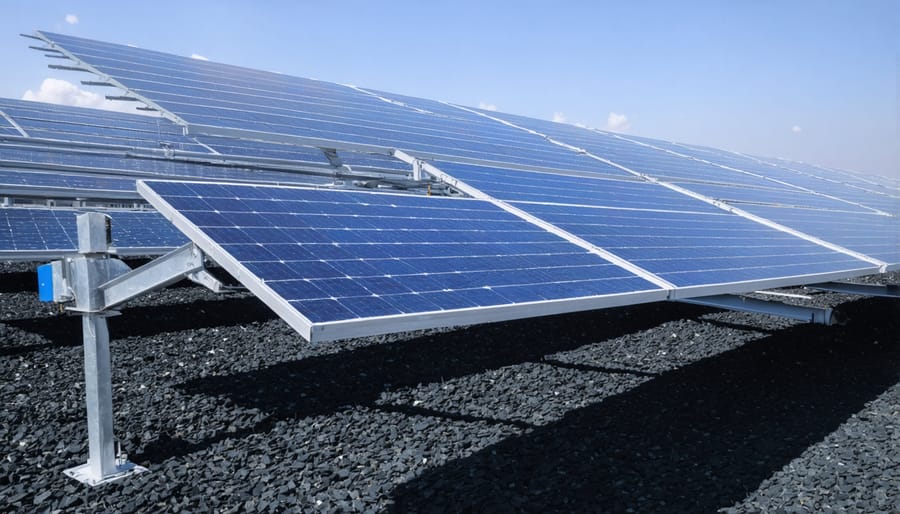
The United States currently maintains a growing network of solar panel recycling facilities, though the infrastructure remains in development compared to other renewable energy sectors. First Solar, a leading manufacturer, operates one of the country’s largest recycling facilities in Ohio, capable of processing up to 2 million panels annually. Their advanced recycling system recovers up to 90% of materials, including valuable semiconductors and glass components.
Several specialized recycling companies, including Recycle PV Solar and We Recycle Solar, have established facilities across multiple states, primarily in solar-rich regions like California, Arizona, and Texas. These facilities employ various technologies to separate and process different panel components, though their combined capacity currently handles only a fraction of end-of-life panels.
Research institutions and private companies are actively developing new recycling technologies and expanding existing facilities. The National Renewable Energy Laboratory (NREL) collaborates with industry partners to enhance recycling efficiency and reduce processing costs. Additionally, several states are implementing programs to support recycling infrastructure development, with Washington state leading the way through mandatory recycling requirements.
Despite these advancements, the current infrastructure faces challenges in scaling to meet future demand. Industry experts project that the volume of decommissioned panels will increase significantly by 2030, necessitating substantial expansion of recycling facilities and capabilities across the country.
Regulations and Policies
Federal Guidelines
The United States Environmental Protection Agency (EPA) classifies end-of-life solar panels as electronic waste (e-waste), requiring proper handling and disposal under the Resource Conservation and Recovery Act (RCRA). While there is currently no federal mandate specifically for solar panel recycling, several states have implemented their own regulations to address this growing need.
Recent federal initiatives include the Department of Energy’s Solar Energy Technologies Office (SETO) funding programs, which support research and development of cost-effective recycling technologies. The Biden administration’s clean energy goals have also prompted discussions about establishing nationwide recycling standards and infrastructure.
The Federal Trade Commission’s Green Guides provide guidelines for environmental marketing claims related to solar panel recycling and disposal. Manufacturers and recyclers must comply with these guidelines when promoting their recycling services or making environmental benefit claims.
Looking ahead, the EPA is developing comprehensive guidelines for photovoltaic waste management, expected to be implemented by 2025. These guidelines will likely include specific requirements for collection, transportation, and processing of end-of-life solar panels, as well as reporting requirements for manufacturers and recyclers. Industry stakeholders are actively participating in the development of these regulations through public comment periods and stakeholder meetings.
State-Level Initiatives
Several states have implemented their own solar panel recycling initiatives to address the growing need for end-of-life PV management. Washington state leads with mandatory recycling requirements through its Photovoltaic Module Stewardship and Takeback Program, requiring manufacturers to finance and implement recycling programs. California has established the Solar Panel Collection and Recycling Program, setting guidelines for proper disposal and recycling procedures while maintaining strict environmental standards.
New York and New Jersey have introduced legislation promoting solar panel recycling through extended producer responsibility programs, requiring manufacturers to develop collection and recycling systems. Minnesota’s PV recycling initiatives focus on partnerships between waste management facilities and solar installers, creating efficient collection networks throughout the state.
Other states, including Oregon and Colorado, have developed voluntary programs that incentivize solar panel recycling through tax benefits and certification programs. These initiatives often collaborate with local universities and research institutions to develop innovative recycling technologies and best practices. Massachusetts and Illinois have implemented educational programs for installers and consumers about proper disposal methods and recycling opportunities.
Notable emerging trends include multi-state collaborations for recycling infrastructure development and the establishment of regional processing centers to achieve economies of scale in recycling operations.
Economic and Environmental Impact
Material Recovery Value
The economic value of recycled materials from solar panels presents significant opportunities for the recycling industry. A typical crystalline silicon solar panel contains approximately 75% glass, 10% polymer, 8% aluminum, 5% silicon, 1% copper, and less than 0.1% silver and other metals. The current market value of these materials makes recycling financially viable when processed at scale.
Recovered silicon wafers and silver contacts represent the highest value components, with current market prices supporting profitable recovery operations. The aluminum frame and copper wiring also contribute substantially to the material value. Recent technological advances in recycling processes have improved recovery rates, with some facilities achieving up to 95% recovery of valuable materials.
Analysis from the International Renewable Energy Agency (IRENA) suggests that the recoverable value from end-of-life solar panels could reach $15 billion by 2050. This projection is based on current material prices and anticipated improvements in recycling technology. The growing volume of decommissioned panels, combined with rising raw material costs, is expected to enhance the economic attractiveness of solar panel recycling operations throughout the United States.
Establishing efficient recycling infrastructure now positions the industry to capitalize on this emerging market while supporting sustainable material management practices.
Environmental Benefits
The recycling of solar panels delivers significant environmental benefits compared to landfill disposal, particularly in reducing the carbon footprint of the solar energy industry. When panels are discarded in landfills, valuable materials like silicon, silver, and aluminum are lost, necessitating new raw material extraction through energy-intensive mining processes. Additionally, potentially hazardous materials in solar panels, such as lead and cadmium, can leach into soil and groundwater if not properly managed.
Recycling solar panels recovers up to 95% of the semiconductor materials and 90% of the glass content, substantially reducing the demand for virgin materials. This recovery process prevents approximately 1,200 pounds of carbon dioxide emissions per ton of recycled panels compared to manufacturing new ones from raw materials. Furthermore, recycling helps conserve limited landfill space and prevents the release of toxic substances into the environment.
The environmental impact extends beyond material recovery. Proper recycling practices support the circular economy, reducing the energy required for new panel production by up to 50%. By recovering critical materials like silver and silicon, recycling decreases the environmental degradation associated with mining operations, including habitat destruction and water pollution. This circular approach also helps maintain the solar industry’s reputation as a truly sustainable energy solution, ensuring that the environmental benefits of solar power extend throughout the entire product lifecycle.
Future of Solar Panel Recycling
Technological Innovations
Recent advancements in innovative recycling technologies are revolutionizing how we process end-of-life solar panels in the United States. Thermal decomposition processes now enable the recovery of up to 95% of glass and 85% of silicon content from panels. Advanced mechanical separation techniques, utilizing automated robotic systems, precisely dismantle panels while preserving valuable components.
Chemical processing methods have evolved to extract high-purity silicon and silver more efficiently, significantly reducing the environmental impact of recycling operations. Researchers at leading institutions are developing novel solutions using electrochemical processes to separate and purify semiconductor materials, achieving higher recovery rates than conventional methods.
Artificial intelligence and machine learning algorithms are being implemented to optimize sorting processes, identifying different panel types and materials with remarkable accuracy. This technology enables recycling facilities to process mixed batches of panels more efficiently, reducing operational costs and improving material recovery rates.
Emerging technologies include ultrasonic delamination, which separates the glass from other materials without damaging components, and selective etching processes that target specific materials while leaving others intact. These developments are particularly significant for processing newer panel technologies, including bifacial and heterojunction cells, ensuring sustainable end-of-life management for next-generation solar products.

Industry Growth Projections
The U.S. solar panel recycling industry is poised for significant expansion over the next decade, with projections indicating a compound annual growth rate of approximately 25% between 2023 and 2030. This growth is primarily driven by the first generation of solar installations reaching their end-of-life cycle, coupled with increasing regulatory pressure for sustainable disposal solutions.
Market analysts forecast that by 2030, the annual volume of decommissioned solar panels in the United States will exceed 1 million tons. This surge in recyclable materials is expected to create substantial opportunities for specialized recycling facilities, with the potential market value reaching $60 million by 2027.
Several factors are contributing to this projected growth, including technological advancements in recycling processes, declining recycling costs, and the implementation of extended producer responsibility (EPR) programs in multiple states. Additionally, major solar manufacturers are investing in reverse logistics networks and recycling infrastructure to prepare for the anticipated increase in end-of-life panels.
The industry is also witnessing increased interest from venture capital firms and environmental funds, with investments focused on developing more efficient recycling technologies and establishing regional processing centers. These developments suggest that the U.S. solar panel recycling sector is transitioning from an emerging market to a mature industry, with the potential to create thousands of green jobs while supporting the circular economy objectives of the renewable energy sector.
The future of solar panel recycling in the United States stands at a critical juncture, with increasing momentum toward sustainable end-of-life management solutions. As the first major wave of installed panels approaches retirement, the industry has made significant strides in developing efficient recycling processes and establishing necessary infrastructure. The emergence of specialized recycling facilities, coupled with advancing technologies for material recovery, positions the U.S. to address the growing volume of decommissioned panels effectively.
Key developments in regulatory frameworks, including state-level EPR programs and federal guidelines, have created a more structured approach to solar panel recycling. These initiatives, combined with industry-led efforts and research partnerships, are fostering an environment conducive to circular economy principles in the solar sector.
Looking ahead, the U.S. solar panel recycling industry is projected to experience substantial growth, driven by increasing panel installations and environmental awareness. Technological innovations in recycling processes continue to improve recovery rates of valuable materials, making recycling more economically viable. The collaboration between manufacturers, recyclers, and research institutions suggests a promising trajectory for developing more efficient and cost-effective recycling solutions.
As the industry matures, standardization of recycling practices and expansion of processing facilities will be crucial. The commitment to sustainable practices, coupled with regulatory support and technological advancement, indicates a positive outlook for solar panel recycling in the United States, ensuring the long-term sustainability of solar energy deployment.