Discover the groundbreaking potential of photovoltaic graphene dots (PV GDs) in revolutionizing solar energy harvesting and conversion. These innovative nanomaterials, synthesized from graphene quantum dots, exhibit extraordinary properties that promise to transform the photovoltaic industry. With their unique light absorption capabilities, high electron mobility, and enhanced charge transfer efficiency, PV GDs offer a compelling solution to the challenges faced by traditional solar cell technologies. As researchers continue to explore and optimize the synthesis methods and applications of PV GDs, the future of renewable energy looks brighter than ever. Embrace the power of photovoltaic graphene dots and join the journey towards a sustainable, energy-efficient world.
What are Photovoltaic Graphene Dots?

Synthesis Methods
The synthesis of photovoltaic graphene dots (PV GDs) involves various top-down and bottom-up approaches. Top-down methods typically start with larger graphene sheets and break them down into smaller, nanometer-sized particles. This can be achieved through techniques such as ultrasonication, electrochemical exfoliation, or chemical oxidation followed by reduction. These methods allow for the precise control of PV GD size and shape, enabling the tuning of their optical and electronic properties.
On the other hand, bottom-up approaches involve the assembly of PV GDs from smaller precursors, such as organic molecules or polymers. One common bottom-up method is the hydrothermal synthesis, where precursors are heated in an aqueous solution under high pressure and temperature conditions. This results in the formation of well-defined PV GDs with controllable sizes and surface functionalities. Other bottom-up techniques include microwave-assisted synthesis, pyrolysis, and chemical vapor deposition.
The choice of synthesis method depends on the desired properties and applications of the PV GDs. Researchers often employ a combination of top-down and bottom-up approaches to fine-tune the characteristics of PV GDs, such as their bandgap, absorption spectrum, and charge transport efficiency. By optimizing the synthesis conditions and precursor materials, scientists can create PV GDs with enhanced photovoltaic performance and stability, paving the way for their integration into next-generation solar cells and optoelectronic devices.
Optical and Electrical Properties
Photovoltaic graphene dots (PV GDs) exhibit remarkable optical and electrical properties that make them highly suitable for solar energy applications. One of the most notable features of PV GDs is their broad absorption spectrum, spanning from the ultraviolet to the near-infrared region. This wide absorption range allows PV GDs to capture a significant portion of the solar spectrum, enhancing their light-harvesting capabilities and increasing the overall efficiency of solar cells.
In addition to their excellent optical properties, PV GDs also possess unique electrical characteristics. They exhibit high electron mobility and conductivity, facilitating efficient charge transport within the photovoltaic device. The quantum confinement effect in PV GDs leads to tunable bandgaps, enabling the optimization of their electronic properties for specific solar cell architectures. Moreover, the large surface-to-volume ratio of PV GDs provides abundant active sites for charge transfer and separation, minimizing recombination losses and improving the performance of solar cells.
The combination of these optical and electrical properties makes PV GDs a promising nanomaterial for next-generation photovoltaics. By incorporating PV GDs into solar cell designs, researchers aim to enhance light absorption, charge transport, and overall power conversion efficiency, paving the way for more cost-effective and sustainable solar energy solutions.
Applications of Photovoltaic Graphene Dots in Solar Energy
Enhancing Solar Cell Efficiency
Photovoltaic graphene dots (PV GDs) have emerged as a revolutionary nanomaterial that can significantly enhance the efficiency of solar cells. By improving light absorption and charge transport properties, PV GDs offer a promising solution to boost the performance of photovoltaic devices. These nanoparticles possess unique optical and electrical characteristics that enable them to capture a wider range of the solar spectrum, including infrared light, which is often underutilized in traditional solar cells. Moreover, the excellent charge mobility and conductivity of PV GDs facilitate the efficient transfer of photo-generated electrons, minimizing recombination losses and increasing the overall power output. When integrated into the active layer of solar energy applications, PV GDs can substantially improve the light-to-electricity conversion efficiency, paving the way for more cost-effective and high-performance photovoltaic systems. As researchers continue to optimize the synthesis and application of PV GDs, these innovative nanomaterials hold immense potential to revolutionize the solar industry and contribute to the global transition towards sustainable energy solutions.
Photovoltaic Modules and Panels
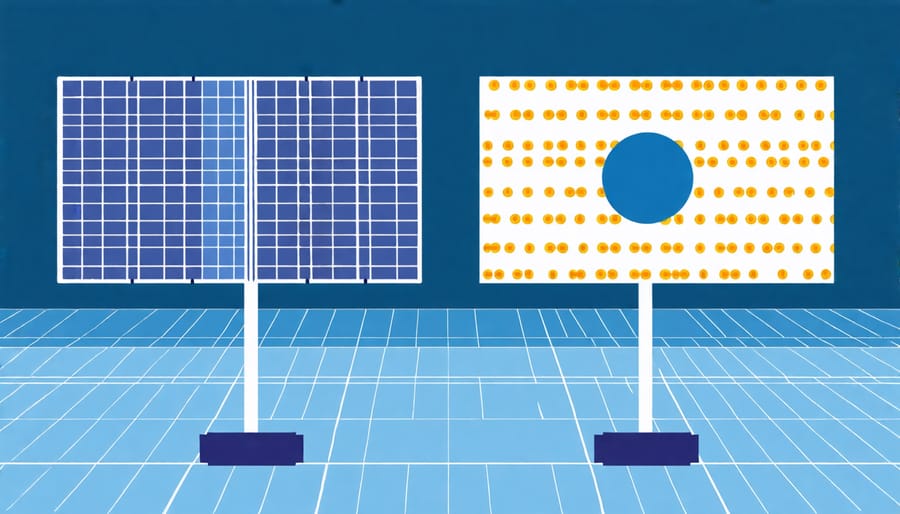
Photovoltaic graphene dots (PV GDs) have demonstrated remarkable potential for enhancing the performance of photovoltaic modules and panels. By integrating these nanomaterials into the active layers of solar cells, researchers have observed significant improvements in power output and durability. The unique properties of PV GDs, such as their excellent light absorption, efficient charge transport, and stability, make them ideal candidates for boosting the efficiency of photovoltaic modules.
One promising approach involves incorporating PV GDs into the electron transport layer (ETL) of perovskite solar cells. Studies have shown that the addition of PV GDs can enhance the conductivity and charge extraction capabilities of the ETL, leading to higher power conversion efficiencies. Moreover, the presence of PV GDs can improve the stability of perovskite solar cells by suppressing the formation of defects and mitigating the adverse effects of moisture and oxygen.
Another exciting application of PV GDs is in the development of semi-transparent and flexible photovoltaic panels. By leveraging the optical and electrical properties of PV GDs, researchers have successfully fabricated solar cells that can be integrated into windows, building facades, and wearable devices. These innovative designs not only generate clean energy but also offer aesthetic appeal and versatility, expanding the range of applications for photovoltaic technology.

Energy Storage Applications
Photovoltaic graphene dots (PV GDs) have emerged as promising materials for energy storage applications, particularly in supercapacitors and batteries. The unique properties of PV GDs, such as their high surface area, excellent electrical conductivity, and fast charge transfer capabilities, make them ideal candidates for enhancing the performance of energy storage devices.
In supercapacitors, PV GDs can be used as electrode materials, significantly increasing the specific capacitance and energy density of the device. The high surface area of PV GDs allows for greater charge storage, while their excellent electrical conductivity enables rapid charge and discharge cycles. By incorporating PV GDs into supercapacitor electrodes, researchers have demonstrated substantial improvements in energy storage capacity and power density compared to conventional materials.
Similarly, PV GDs have shown great potential in battery applications, particularly in lithium-ion batteries. When used as anode materials, PV GDs can enhance the specific capacity, cycling stability, and charging speed of the battery. The fast charge transfer capabilities of PV GDs facilitate rapid lithium-ion intercalation and deintercalation, leading to improved battery performance. Moreover, the high surface area of PV GDs provides ample sites for lithium-ion storage, resulting in higher energy densities.
Research on PV GDs for energy storage applications continues to advance, with scientists exploring various strategies to optimize their performance, such as surface functionalization, doping, and composite formation. As the demand for efficient and sustainable energy storage solutions grows, PV GDs are poised to play a crucial role in the development of next-generation supercapacitors and batteries.
Challenges and Future Prospects
Despite the promising potential of photovoltaic graphene dots (PV GDs) in solar energy applications, several challenges must be addressed to enable their large-scale production and commercialization. One of the primary hurdles is the development of cost-effective and scalable synthesis methods that can produce high-quality PV GDs with consistent properties. Further research is needed to optimize the synthesis processes and enhance the reproducibility of PV GD production.
Another challenge lies in the integration of PV GDs into existing solar cell technologies. While PV GDs have demonstrated excellent compatibility with various solar cell architectures, there is still room for improvement in terms of device stability, long-term performance, and energy conversion efficiency. Researchers must focus on developing novel device designs and fabrication techniques that can fully harness the unique properties of PV GDs and maximize their impact on solar cell performance.
Moreover, the environmental impact and life cycle assessment of PV GD-based solar cells need to be thoroughly investigated. It is crucial to ensure that the production, use, and disposal of these materials are sustainable and do not pose significant risks to the environment or human health. Collaboration between industry stakeholders, researchers, and policymakers is essential to establish guidelines and regulations for the responsible development and deployment of PV GD technologies.
Looking ahead, the future prospects of PV GDs in the renewable energy landscape are highly promising. As research advances and the challenges mentioned above are successfully addressed, PV GDs have the potential to revolutionize the solar energy industry. Their unique properties, such as enhanced light absorption, improved charge transport, and increased stability, could lead to the development of highly efficient and cost-effective solar cells that can compete with traditional silicon-based technologies.
Furthermore, the versatility of PV GDs opens up opportunities for their integration into various applications beyond conventional solar panels. For example, PV GDs could be incorporated into building-integrated photovoltaics (BIPV), wearable electronics, and portable energy harvesting devices. The development of transparent and flexible PV GD-based solar cells could enable the creation of novel energy-generating surfaces, such as windows and facades, further expanding the reach of solar energy utilization.
In conclusion, while challenges remain in the large-scale production and commercialization of PV GD-based solar energy technologies, the future prospects are highly encouraging. With continued research, collaboration, and innovation, PV GDs have the potential to make a significant impact on the renewable energy landscape, contributing to a more sustainable and energy-efficient future.
Conclusion
In conclusion, photovoltaic graphene dots (PV GDs) represent a groundbreaking advancement in solar energy technology. Their unique properties, such as high optical absorption, excellent charge transport, and tunable bandgaps, make them ideal candidates for enhancing the efficiency and performance of solar cells. The various synthesis methods, including top-down and bottom-up approaches, offer flexibility in producing PV GDs with desired characteristics. The diverse applications of PV GDs, ranging from photovoltaic devices and photocatalysis to biosensing and drug delivery, highlight their versatility and potential impact across multiple fields.
As the demand for sustainable and renewable energy sources continues to grow, PV GDs hold immense promise in addressing the challenges faced by the solar energy industry. Their ability to improve power conversion efficiency, reduce costs, and enable the development of flexible and transparent solar cells opens up new possibilities for integrating solar energy into our daily lives. However, further research is needed to optimize their synthesis, enhance their stability, and scale up production for commercial viability.
The advancements in PV GDs are a testament to the power of interdisciplinary collaboration between materials science, nanotechnology, and renewable energy. As researchers continue to push the boundaries of what is possible with these innovative nanomaterials, we can look forward to a brighter, cleaner, and more sustainable future powered by the sun. It is crucial for aspiring photovoltaic professionals, renewable energy enthusiasts, and environmentally conscious individuals to stay informed about the latest developments in this rapidly evolving field. By embracing the potential of PV GDs and supporting further research and development, we can accelerate the transition towards a carbon-neutral world and secure a greener future for generations to come.