Harness the transformative potential of 2D perovskite in photovoltaics by exploring its unique structural advantages and versatility for creating more efficient solar cells. Implement collaboration with leading universities to access cutting-edge research and drive innovation in this burgeoning field. Pursue educational program offerings that deepen your understanding of this material’s unique properties and how it compares to other advanced photovoltaic technologies. Examine comprehensive environmental impact assessments to ensure sustainable integration into renewable energy systems, balancing efficiency with ecological responsibility. Embrace interdisciplinary partnerships that can help overcome current efficiency barriers, refining design and synthesis methods to enhance performance and commercial viability while addressing scalability challenges.
The Science Behind 2D Perovskite
Structure and Composition
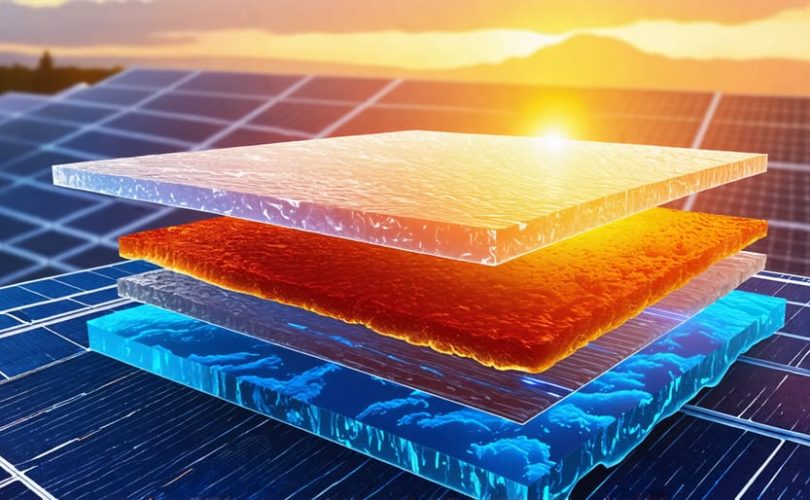
Two-dimensional (2D) perovskites, a highly intriguing subclass of the broader perovskite family, present a distinctive layered structure that closely resembles a sandwich, comprising organic and inorganic elements. Structurally, 2D perovskites consist of alternating organic cations and inorganic metal-halide octahedra. This arrangement is akin to a stack of planes, where the organic layers separate the inorganic slabs, thereby constraining them within a two-dimensional framework. This layered configuration is instrumental in enhancing the material’s intrinsic stability against external factors, such as moisture and oxygen, which are critical concerns in photovoltaic applications.
At the core of their chemical composition lies the metal cation—commonly lead (Pb), but also potentially tin (Sn) for reduced toxicity—coordinated with halides like iodine (I), bromine (Br), or chlorine (Cl). The organic component usually consists of bulky ammonium-based cations, such as butylammonium or phenylethylammonium, which further contribute to the material’s stability by protecting the more sensitive inorganic layers.
The unique structural arrangement of 2D perovskites translates to several advantageous properties, including enhanced moisture resistance and adjustable optical characteristics. These characteristics make 2D perovskites particularly promising for next-generation photovoltaics. Their capacity to harness solar energy efficiently and withstand environmental stressors positions them as a significant focus in renewable energy research. Academic institutions and industrial stakeholders are actively exploring innovative applications and improvements through collaborative research and educational programs. As the quest for sustainable, high-efficiency solar technology continues, 2D perovskites stand at the frontier, offering potential breakthroughs in solar cell performance and longevity.

Properties and Advantages
Two-dimensional (2D) perovskites are garnering significant attention due to their exceptional optical and electronic properties, making them highly suitable for next-generation solar applications. One of their most remarkable features is their superior light absorption characteristics. 2D perovskites can absorb a broad spectrum of sunlight with high efficiency due to their tunable bandgaps and layered structure. This capability enhances their potential in creating highly efficient solar cells compared to traditional photovoltaic materials.
In addition to their light absorption potential, 2D perovskites exhibit excellent exciton confinement. This refers to how the material traps electron-hole pairs, known as excitons, enhancing their separation and transport, which is critical for efficient electricity generation in solar cells. Furthermore, 2D perovskites display high carrier mobility, facilitating the swift movement of charge carriers and reducing recombination losses, thereby improving cell efficiency.
These materials also present considerable advantages in terms of flexibility and thin-film processing. The intrinsic structural properties of 2D perovskites allow them to be integrated into thin, flexible layers, facilitating low-cost and versatile fabrication methods that are compatible with a range of substrates. This is particularly advantageous for developing lightweight and adaptable solar solutions that align with emerging technologies in flexible electronics.
Collaborative efforts between academia and industry are accelerating innovation in this field, fostering breakthroughs in material performance and fabrication techniques. Educational programs focusing on material science and renewable energy are playing pivotal roles in advancing knowledge and skill development, paving the way for future advancements. As the field of 2D perovskites continues to evolve, their implementation could significantly contribute to the sustainability and efficiency of solar energy systems, aligning with global efforts towards greener energy solutions.
Applications in Solar PV Technology
Current Implementations
Recent advancements in the field of photovoltaic technology have seen notable implementations of 2D perovskite materials. These materials are lauded for their exceptional light-absorbing capabilities and enhanced stability compared to their 3D counterparts. One significant case study involves a collaboration between a leading European university and a solar energy company. This partnership focused on integrating 2D perovskite layers into existing solar panel architectures, resulting in a notable increase in power conversion efficiency. The project has successfully demonstrated that 2D perovskites can enhance the overall performance of commercial photovoltaic systems.
In the United States, an academic consortium comprising several top-tier research universities has been conducting extensive field trials. They are exploring the scalability and adaptability of 2D perovskite solar cells in different environmental conditions. Preliminary results from these trials underscore the material’s potential to sustain high efficiency in varied climates, making it a promising candidate for widespread deployment.
Moreover, in Asia, a startup has pioneered the development of hybrid 2D perovskite modules that amalgamate organic and inorganic components. These modules have shown promising results in reducing manufacturing costs while maintaining robust efficiency levels. These case studies exemplify the growing importance of collaborative research and innovation in harnessing 2D perovskites’ potential. Through partnerships between industry and academia, significant strides are being made to fast-track their commercialization, promising a more sustainable future for solar energy.
Benefits Over Traditional Materials
2D perovskite materials have emerged as promising alternatives to traditional PV materials like silicon, offering several compelling benefits that cater to the evolving needs of the solar photovoltaic industry. Among the most significant advantages is their superior light absorption capability. 2D perovskites can efficiently harvest sunlight even at reduced thicknesses compared to silicon, which means potential reductions in material costs and enhanced flexibility in application. This characteristic is particularly advantageous for developing lightweight, flexible solar panels that could be integrated into a wider range of surfaces and environments.
Additionally, 2D perovskites are highly tunable at the molecular level, allowing researchers to adjust their chemical composition and structure to optimize performance parameters such as efficiency and stability. This tunability presents a stark contrast to the more static nature of silicon, providing opportunities for innovation and customization in photovoltaic applications.
Another crucial benefit is the potential for lower temperature processing, making the production of 2D perovskite solar cells less energy-intensive than the high-temperature requirements of traditional silicon-based technologies. This can contribute to a more sustainable production process, aligning with the industry’s push towards environmentally friendly solutions.
Furthermore, ongoing collaborations with universities and educational programs are facilitating the rapid advancement of understanding and technology surrounding 2D perovskites. These efforts are essential for overcoming existing challenges while exploring new applications, thereby enhancing the material’s potential to revolutionize the renewable energy landscape.
Environmental Impact and Sustainability
Eco-Friendly Manufacturing
The eco-friendly manufacturing of 2D perovskite materials presents a promising step forward in sustainable solar technology. Unlike traditional photovoltaic materials, 2D perovskites can be synthesized using solution-based processes at low temperatures, significantly reducing energy consumption and carbon emissions during production. These techniques not only lower the ecological footprint but also enable cost-effective large-scale manufacturing. Moreover, the use of abundant and non-toxic elements, such as lead alternatives currently under exploration, further minimizes environmental impact. Collaborative efforts between industry and academic institutions are crucial in advancing these eco-friendly methods. Universities have been instrumental in researching alternative solvents and developing educational programs that emphasize environmentally responsible practices in photovoltaic manufacturing. By fostering these collaborations, the industry can leverage cutting-edge research to innovate and adopt more sustainable manufacturing practices. Such partnerships ensure aspiring photovoltaic professionals and industry stakeholders are equipped with the knowledge to drive future advancements in eco-friendly solar technologies.

Long-Term Environmental Benefits
2D perovskites are poised to revolutionize the solar photovoltaic landscape by offering significant long-term environmental benefits. Their unique structural properties enable increased solar efficiency, which is crucial for maximizing renewable energy output. By harnessing a broader spectrum of sunlight and displaying exceptional charge-carrier mobility, 2D perovskites can potentially surpass the performance of traditional silicon-based solar cells. This shift can lead to a higher yield of clean energy, reducing dependency on fossil fuels and lowering greenhouse gas emissions. Moreover, the fabrication of 2D perovskites typically involves fewer energy-intensive processes, further minimizing their environmental footprint. Collaboration with universities and industry leaders is vital to advancing research and optimizing these materials for commercial use. Through these educational programs and partnerships, future photovoltaic professionals can drive the sustainable energy transition. As more projects adopt this technology, 2D perovskites offer promising prospects for a cleaner and more sustainable future, aligning perfectly with global renewable energy goals.
Challenges and Future Prospects
Technical and Economic Barriers
The advancement of 2D perovskite technology in photovoltaic applications faces several significant technical and economic barriers. One primary technical challenge is the long-term stability of 2D perovskite solar cells, as they are susceptible to environmental factors such as humidity and UV radiation. Efforts to enhance stability often involve complex material engineering, necessitating collaboration with universities and research institutions to innovate protective coatings and encapsulation techniques.
Economically, the scalability of 2D perovskite solar cells remains a hurdle. The high cost of high-purity precursor materials and the sophisticated manufacturing processes required for large-scale production drive expenses up significantly. Moreover, the lack of standardized production methods adds to the difficulty of reducing costs. Educational program offerings focusing on advanced materials processing and innovative manufacturing techniques could help train a workforce equipped to tackle these challenges.
Ultimately, overcoming these barriers through rigorous research and strategic industry partnerships will be crucial for the widespread adoption and commercialization of 2D perovskite technology in the renewable energy sector.
Emerging Research and Collaborations
Emerging research on 2D perovskite materials is pivotal in enhancing the efficiency and stability of solar cells, which are critical for advancing solar photovoltaic technologies. Currently, significant research trends are exploring the crystal structure and surface engineering of 2D perovskite to improve their photovoltaic performance. Collaborations with universities are essential in these endeavors, as they offer the advantage of tapping into academic expertise and advanced research facilities. Universities often foster educational programs and workshops, enabling aspiring photovoltaic professionals and academic researchers to engage directly with cutting-edge developments in this field. Such partnerships can expedite the commercialization process of 2D perovskites by overcoming existing barriers, such as material stability and scalability issues. Furthermore, joint research initiatives are instrumental in steering future research directions toward more sustainable and efficient energy solutions. By harnessing this collaborative potential, industry stakeholders can not only enhance the application of 2D perovskites but also contribute significantly to a more sustainable energy future.
Conclusion
As the photovoltaic industry continues to seek more efficient and sustainable materials, 2D perovskites emerge as a promising contender. These materials offer a unique combination of lightweight properties, ease of fabrication, and high efficiency that could revolutionize solar technologies. The potential impact of 2D perovskites on the future of the PV industry is significant, with the ability to address the limitations of traditional silicon-based solar cells. Their flexibility and the capacity for integration into a variety of architectures are particularly appealing for diverse applications ranging from wearable electronics to building-integrated photovoltaics.
Collaboration with leading universities and investment in educational programs will be crucial in advancing this technology. Such partnerships can drive innovation and facilitate the transition of lab-scale discoveries to commercial solutions. Furthermore, the ongoing education of aspiring photovoltaic professionals and industry stakeholders is essential to harnessing the full potential of 2D perovskites.
As research and development efforts continue to address challenges such as long-term stability and scalability, the environmental benefits of adopting 2D perovskites become increasingly clear. By reducing carbon footprints and enhancing energy efficiency, they hold the promise of significantly contributing to global renewable energy goals. The future of the PV industry looks brighter with 2D perovskites poised to play a pivotal role in shaping a more sustainable energy landscape.