Showing 25 Result(s)
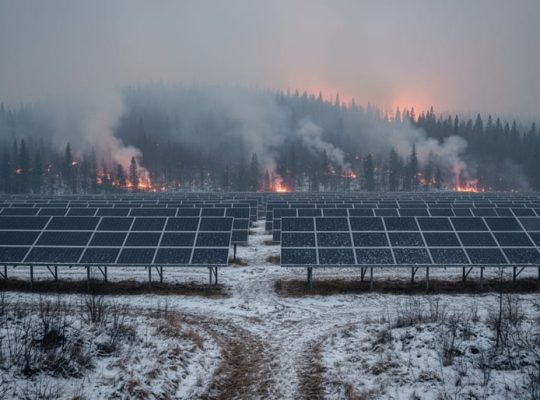
Ground-mounted solar panels under a gray, smoky sky with a thin layer of ash on the glass; behind them, a snow-patched conifer forest releases faint smoldering smoke.

Why Zombie Fires Are the Hidden Threat Your Solar Panels Aren’t Ready For

In the Arctic and boreal regions, fires are smoldering beneath snowpack right now—burning through peat and organic soil layers with virtually no visible flame. These “zombie fires” can persist for months underground during winter, only to re-emerge in spring and trigger new wildfire seasons before traditional fire weather even begins. Unlike conventional wildfires that burn intensely for days or weeks, zombie fires create prolonged smoke events that can blanket solar installations with fine particulate matter for extended periods, presenting a distinct challenge for photovoltaic system performance and longevity.
Zombie…
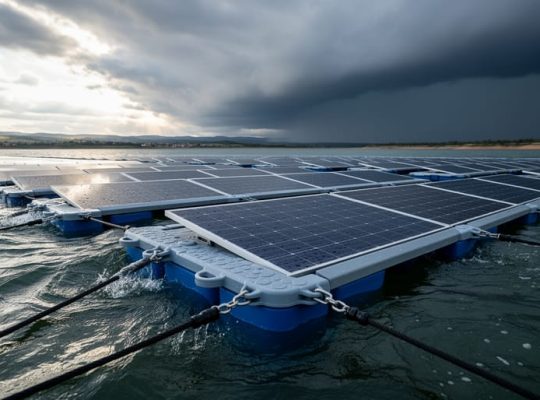
Low-angle water-level view of floating solar panels on a reservoir during an approaching storm, waves hitting modular floats, reinforced mooring lines taut in the foreground, with a distant shoreline beneath dark clouds.

Why Floating Solar Arrays Fail in Extreme Weather (And How Climate-Resilient Design Prevents It)

Floating photovoltaic systems face unprecedented climate challenges that demand engineering solutions capable of withstanding extreme weather events, rising water levels, and intensified environmental stressors. As the global floating solar market expands toward 10 GW of installed capacity, infrastructure resilience has transitioned from an optional consideration to a fundamental design imperative that determines project viability and long-term returns.
Traditional climate-resilient solar …

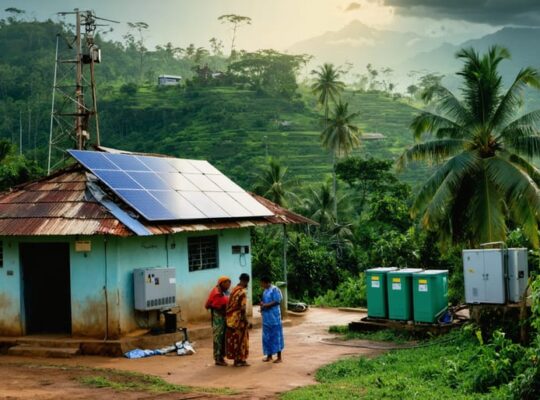
Wide eye-level view of a tropical hillside village with rooftop solar panels and a weatherproof battery unit near a small clinic, two residents inspecting the system under golden hour light as receding storm clouds clear, with a water tank, radio mast, and palms in the background.

How Off-Grid Communities Are Surviving Climate Chaos with Solar Power

Off-grid communities represent the convergence of climate vulnerability and energy independence, where photovoltaic systems transform from convenience to lifeline. In regions where extreme weather events increasingly disrupt centralized power infrastructure, solar microgrids enable populations to maintain critical services—refrigeration for medicines, communication systems for emergency response, and water purification during extended grid failures. These installations demonstrate measurable climate resilience: communities in Puerto Rico maintained power through Category 5 hurricanes, while remote villages in Sub-Saharan Africa achieved …

"Solar panel array integrated into a forest clearing with lush vegetation and towering trees in the background."

How Forest Wildlife Adapts to Solar PV Installations (New Research)

Forest ecosystems represent one of Earth’s most complex and interconnected biological networks, where countless species adapt and thrive through environmental stress. From towering canopy layers that filter sunlight to dense understory vegetation harboring diverse wildlife, these intricate systems maintain critical ecological balance through sophisticated relationships between flora and fauna. As climate change intensifies, understanding forest ecosystem dynamics becomes …

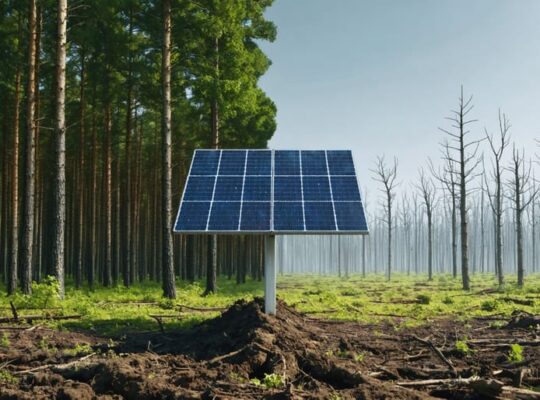
Conceptual illustration showing a vivid, healthy forest transitioning into a barren, dying forest with a solar panel in the foreground, highlighting the impact of zombie forests on solar energy development.

Zombie Forests: The Silent Threat to Solar PV Integration in Climate-Changed Landscapes

Climate change is creating an unprecedented phenomenon in forest ecosystems worldwide – “zombie forests,” where existing trees persist in locations that can no longer support their natural regeneration. These ecological specters, unable to adapt and thrive through environmental stress, represent a critical challenge for both environmental sustainability and renewable energy infrastructure.
As temperatures rise and precipitation patterns shift, many forest …

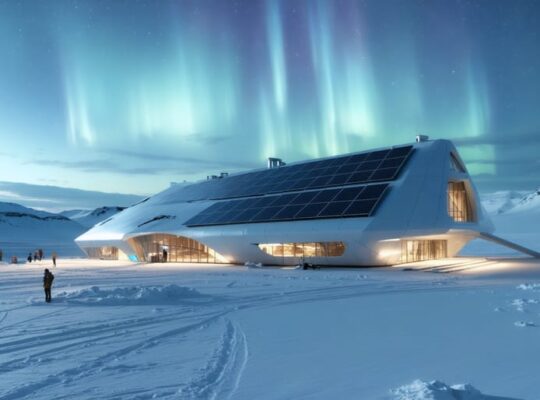
A conceptual illustration of an arctic research center featuring state-of-the-art solar panels amidst snow-covered terrain under the polar lights, representing advancements in sustainable cold climate technologies.

How Arctic Research Centers Are Revolutionizing Cold Climate Solar Solutions

The Cold Climate Housing Research Center (CCHRC) stands at the forefront of advancing sustainable building technologies for extreme environments, pioneering innovative solutions that enhance cold climate solar performance and energy efficiency. Operating as a living laboratory in Fairbanks, Alaska, where temperatures can plunge below -40°F, this state-of-the-art facility combines rigorous scientific research with practical applications to develop resilient housing …

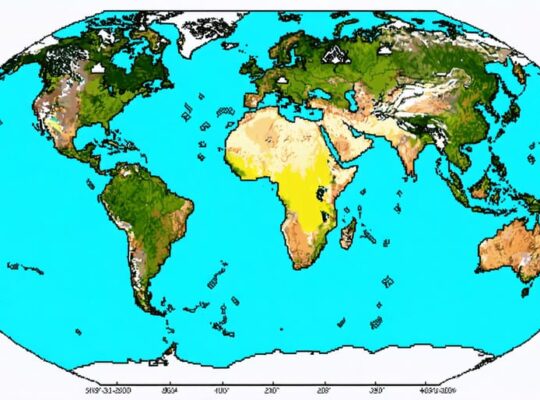
A color-coded global map illustrating the nine major climate zones according to the Köppen-Geiger classification system, highlighting diverse weather patterns relevant to solar PV installations.

How Solar PV Systems Thrive in 9 Global Climate Zones

Understanding climate zones revolutionizes how we design and implement weather-proof PV systems across diverse geographical regions. From the scorching heat of tropical zones to the frigid temperatures of polar regions, these nine distinct climate classifications fundamentally shape our approach to solar energy deployment. Each zone presents unique challenges and opportunities for photovoltaic technology, demanding specific engineering solutions and maintenance protocols. …

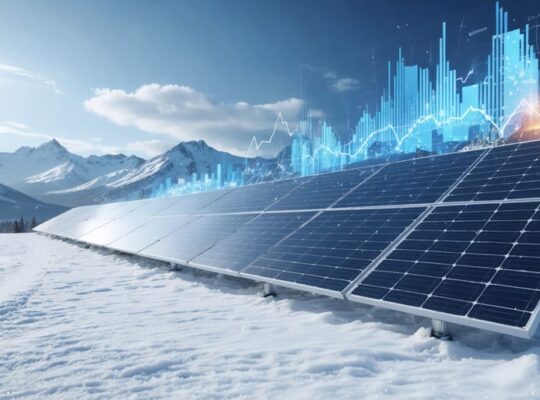
Conceptual depiction of solar panels in a snowy environment with data graphs and weather patterns in the sky symbolizing the use of climate resilience tools for enhancing solar performance in cold climates.

How the U.S. Climate Resilience Toolkit Strengthens Cold Climate Solar Performance

The U.S. Climate Resilience Toolkit stands as a critical resource for photovoltaic professionals navigating the complexities of solar system optimization in challenging climate conditions. This comprehensive federal platform integrates real-time climate data, predictive modeling tools, and region-specific adaptation strategies to enhance solar infrastructure resilience. Solar facility managers can leverage the toolkit’s advanced assessment frameworks to identify vulnerability points, implement targeted mitigation measures, and develop robust climate adaptation plans that safeguard PV system performance. Through its interactive …

Solar panel array at high altitude with snow-capped mountains and clear sky, illustrating enhanced solar irradiance and technological adaptation to thin air conditions.

High Altitude Solar Power: Maximizing PV Performance in Thin Air

The relationship between elevation and atmospheric pressure fundamentally shapes the performance of photovoltaic systems, demanding precise engineering considerations for optimal energy generation. As altitude increases, the thinner atmosphere creates both challenges and opportunities for solar installations – reducing panel operating temperatures while simultaneously affecting voltage requirements and system specifications. Understanding these atmospheric dynamics enables engineers to

A dynamic image showing hurricane-resistant solar panels with advanced mounting systems and arrows illustrating wind dynamics against a backdrop of forming storm clouds.

Solar Panels That Defy Hurricane Forces: Building Weather-Resilient PV Systems

As coastal regions face intensifying storms and extreme weather events, the development of hurricane-proof solar installations has become crucial for sustainable energy resilience. Advanced engineering and robust materials now enable solar arrays to withstand Category 5 hurricane winds exceeding 157 mph, while innovative mounting systems automatically adjust panel angles to minimize wind resistance during severe weather events. These technological breakthroughs represent a significant …