Showing 48 Result(s)
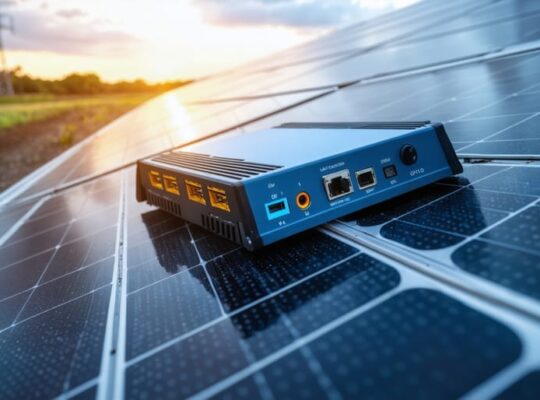
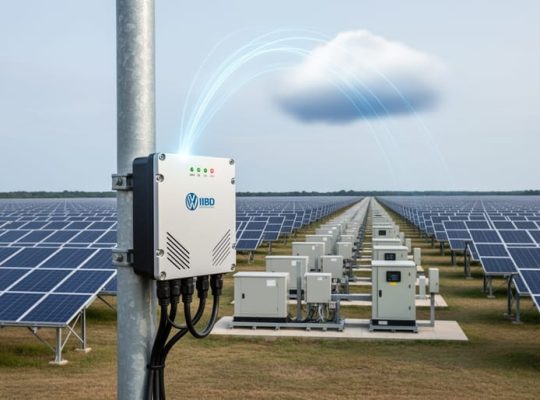
Industrial edge gateway mounted near a utility-scale solar panel array with subtle light trails rising toward a cloud under bright overcast light, inverter skids and panel rows receding in the background.

How Edge Computing Creates Your PV Site Automatically in Modern Monitoring Platforms

Modern photovoltaic monitoring platforms increasingly leverage edge computing to streamline site deployment, but the term “automatically created” requires clarification. When installers connect intelligent edge devices—such as data loggers, inverters with built-in communication modules, or dedicated monitoring gateways—to a cloud-based monitoring platform, the system behavior varies significantly depending on the platform architecture and configuration settings.
In most contemporary systems, edge devices initiate automatic site registration by transmitting device identifiers, location data, and system specifications …
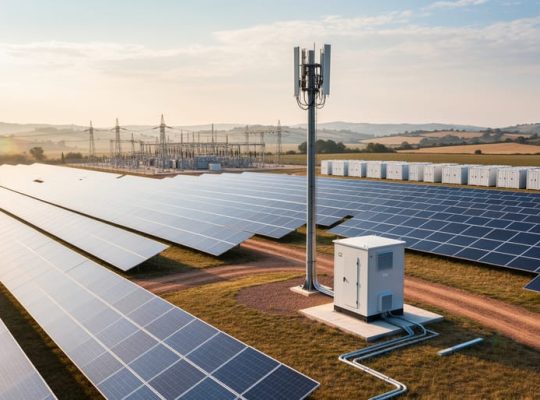
Aerial three-quarter view of a solar farm with rows of photovoltaic panels in warm sunlight, a nearby 5G cellular tower and small equipment cabinet, with a substation and rolling hills in the background.

How 5G Edge Computing Transforms Solar PV Performance in Real Time

The convergence of 5G networks and edge computing is fundamentally transforming solar photovoltaic system optimization, enabling real-time data processing at unprecedented speeds while dramatically reducing latency in energy management decisions. This technological pairing processes performance metrics, weather patterns, and grid demands within milliseconds at the network edge rather than distant cloud servers, allowing solar installations to respond instantaneously to changing conditions and maximize energy capture efficiency.
Traditional solar monitoring systems face critical limitations: cloud-based analytics create delays of …

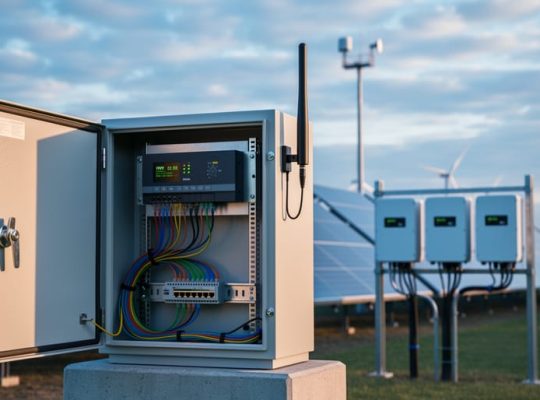
Open control cabinet with hybrid edge controller, ethernet cabling, and cellular antenna beside solar inverters at a solar farm, with rows of solar panels nearby and distant wind turbines and a small weather mast beneath a high cloud bank at golden hour.

Why Hybrid Cloud Controllers Are Transforming Solar Farm Operations

The renewable energy sector stands at a technological crossroads where wind and solar power converge through intelligent control systems. Wind/solar hybrid controllers represent the evolution of renewable energy management, serving as the central nervous system that orchestrates power generation from multiple sources while optimizing storage, distribution, and data analytics. These sophisticated devices do far more than switch between energy sources; they integrate real-time meteorological data, predict generation patterns, balance load requirements, and communicate with cloud-based platforms to enable remote monitoring and predictive …

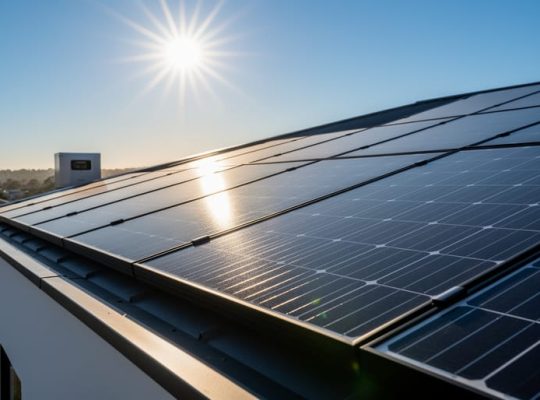
Low-angle view of monocrystalline solar panels on a modern home at golden hour, sunlight raking across the cells with a subtle sun starburst and a blurred inverter housing and suburban landscape in the background.

How Photovoltaic Cells Transform Sunlight Into Electricity That Powers Your Life

A photovoltaic cell or device converts sunlight to electrical energy through the photovoltaic effect, a quantum mechanical process where photons from solar radiation liberate electrons within semiconductor materials, generating direct current electricity. This fundamental conversion process stands as the cornerstone of modern solar energy systems, transforming approximately 15-23% of incident solar energy into usable electrical power in commercial applications, with cutting-edge laboratory cells achieving efficiencies exceeding 47% through multi-junction configurations.
Understanding this conversion extends beyond basic physics into…

Rugged edge computing module mounted next to a solar inverter under photovoltaic panels, with rows of solar arrays, battery containers, and a distant communications mast softly blurred in warm golden hour light.

Edge Monitoring Is Transforming Solar PV Performance (Here’s Why It Matters)

The solar photovoltaic industry stands at a technological crossroads where centralized monitoring systems no longer suffice for increasingly distributed energy networks. Edge monitoring represents a paradigm shift in how solar installations collect, process, and act upon performance data—moving computational intelligence from distant data centers directly to the power generation source.
Traditional monitoring architectures rely on transmitting raw data from solar arrays to centralized servers for analysis, creating latency issues, bandwidth constraints, and vulnerability to connectivity disruptions. Edge monitoring fundamentally …

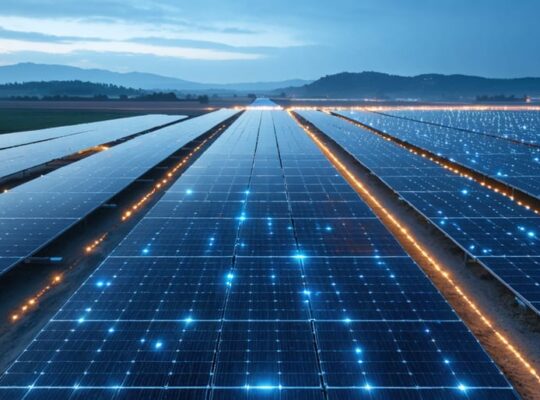
Elevated oblique view of a large solar farm at sunset with soft glowing circuitry and light trails hovering above the panels, suggesting quantum computing analysis; distant hills and maintenance vehicles appear subtly blurred.

How Quantum Computers Could Predict Solar Panel Failures Before They Happen

# Quantum Computers: Revolutionizing Predictive Maintenance in Solar Energy
The photovoltaic industry faces an increasingly complex challenge: how to maintain thousands of solar installations efficiently while predicting failures before they occur. Traditional computing methods struggle with the sheer volume of variables—weather patterns, component degradation rates, thermal stress factors, and electrical performance data—that must be analyzed simultaneously. Quantum computers offer a fundamentally different approach, one that could transform solar maintenance from reactive troubleshooting into precise, predictive science.

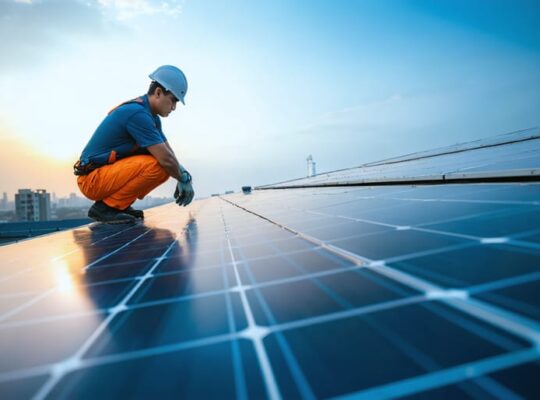
Technician kneeling beside rooftop solar panels showing partial shading from HVAC vents and light dust, with city skyline and inverter cabinet softly blurred in the background under golden-hour light.

Why Your Solar Panels Are Underperforming (And How Performance Ratio Reveals the Truth)

# Understanding PV Performance Ratio: The Essential Metric for Solar System Success
**Performance Ratio (PR) quantifies how effectively a photovoltaic system converts available solar radiation into usable electricity compared to its theoretical maximum output.** This single percentage reveals whether your solar installation operates at peak efficiency or suffers from losses due to shading, soiling, inverter inefficiencies, temperature effects, or system design flaws. For solar professionals, PR serves as the industry-standard benchmark for system health—typically ranging from 75% to 85% for well-designed installations—making it …

"Advanced solar PV installation with clean panels in a modern facility surrounded by green landscape."

Smart Maintenance Scheduling That Maximizes Your Solar PV Performance

Implementing a robust preventive maintenance scheduler for solar PV systems drives operational efficiency, reduces downtime, and helps maximize system performance. Strategic maintenance scheduling transforms reactive troubleshooting into proactive system optimization, delivering up to 30% improvement in energy yield and extending equipment lifespan by 5-10 years. Modern maintenance management platforms integrate real-time monitoring, automated task allocation, and predictive analytics to …

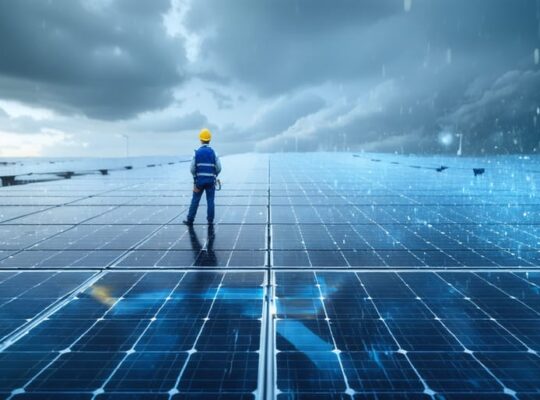
Conceptual image of a solar technician amid a field of solar panels showing wear and environmental impact under a cloudy sky, illustrating maintenance challenges in photovoltaic systems.

The Real Maintenance Challenges That Could Derail Your Solar PV System

As photovoltaic systems continue revolutionizing the renewable energy landscape, understanding their limitations becomes crucial for informed decision-making. While solar power offers numerous environmental benefits, significant technical and operational challenges persist that demand careful consideration. From substantial initial capital requirements and weather-dependent performance to complex maintenance protocols and disposal concerns, photovoltaic installations present multifaceted disadvantages that impact their overall viability.
The limitations of photovoltaic technology extend beyond mere technical constraints. Current …

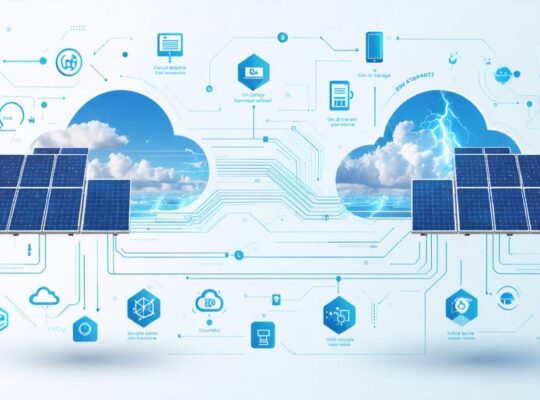
Infographic showcasing the integration of on-premises and cloud storage for solar PV data management, featuring elements like solar panels, data streams, storage icons, and security symbols to represent an efficient and secure hybrid cloud infrastructure.

Hybrid Cloud Storage: The Smart Solution for Growing Solar PV Data

In today’s data-intensive solar energy landscape, hybrid cloud storage solutions emerge as the cornerstone of efficient, scalable operations for photovoltaic installations. By combining on-premises infrastructure with cloud-based storage capabilities, organizations can optimize their data management strategies while maintaining critical system performance. This innovative approach enables real-time monitoring of solar arrays, secure storage of performance metrics, and seamless integration with smart grid systems—all while ensuring data sovereignty and regulatory compliance.
As solar installations grow in scale and complexity…