Showing 31 Result(s)
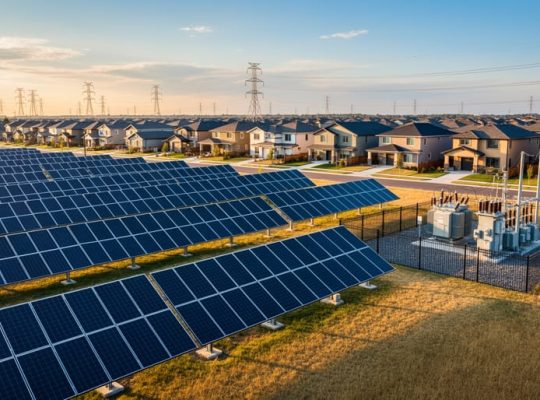
Community-scale solar array adjacent to suburban homes with a small utility substation and power lines at sunset, viewed from a slightly elevated angle.

How Xcel’s Community Solar Program Transforms Local Energy Control

Xcel Energy’s Community Solar program operates through a subscription-based model where customers purchase or lease portions of larger solar arrays without installing panels on their properties. Subscribers receive monthly bill credits for their share of electricity generated, typically offsetting 50-120% of household consumption depending on subscription size and local regulations. The program functions across Colorado, Minnesota, and New Mexico, each with distinct policy frameworks that determine credit rates, subscriber eligibility, and utility compensation structures.
Understand how the Federal Energy Regulatory Commission…


Engineer in safety vest inspecting rows of blue solar panels on a flat commercial rooftop at golden hour, with an urban skyline in the background.

How the 30% Solar ITC Transforms Your Project Economics (And Your Bottom Line)

Maximize your solar investment returns by understanding that the 30% Solar Investment Tax Credit (ITC) allows you to deduct nearly one-third of your complete solar installation costs from your federal taxes—a substantial financial incentive that significantly reduces the payback period for residential and commercial photovoltaic systems. Calculate your potential savings by multiplying your total system cost, including equipment, labor, permitting, and installation expenses, by 0.30 to determine your exact tax credit amount. Verify your eligibility by confirming you have sufficient tax liability to claim the full credit, as the ITC …

Diverse solar engineers and technicians in safety gear examine a utility-scale photovoltaic array with a tablet and meter near an inverter skid at sunset, with long panel rows and a distant substation visible.

Why PV Power Plants Need a Skilled Workforce More Than Ever

# PV Power Plants and the Critical Workforce Development Challenge
Solar photovoltaic (PV) power plants—utility-scale installations converting sunlight directly into electricity through semiconductor technology—now represent the fastest-growing segment of global energy infrastructure. These facilities, ranging from 1 megawatt community installations to gigawatt-scale solar farms spanning thousands of acres, require specialized technical expertise across engineering, installation, operations, and maintenance disciplines. Yet the solar industry faces a critical workforce shortage: projections indicate a need for over 500,000 new …

Conceptual illustration of a solar PV system with digital network lines and cybersecurity icons overlaid, representing the protection of solar energy infrastructure from cyber threats within an interconnected power grid.

Solar Grid Cybersecurity: Protecting Your PV Investment from Digital Threats

As cyber threats against critical infrastructure escalate, the intersection of power grid security and renewable energy systems presents unprecedented challenges. Recent attacks on electrical infrastructure have demonstrated the vulnerability of interconnected power systems, with solar installations becoming increasingly attractive targets for malicious actors. The U.S. Department of Energy reported a 350% increase in cyber incidents targeting grid-connected renewable energy systems between 2019 and 2023, highlighting the urgent need for robust security measures.
Modern power grids, particularly those integrating distributed energy …

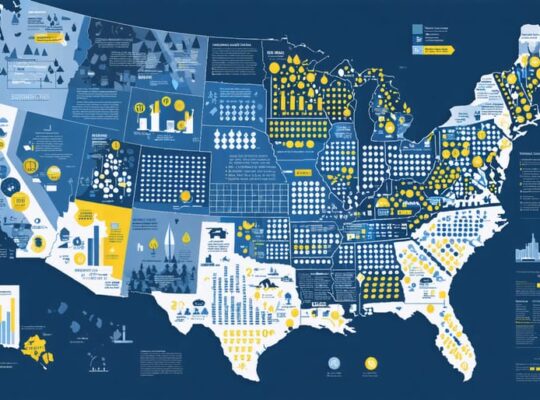
A conceptual map of the United States showing solar tax incentive variations across different states, with graphical overlays representing federal and state tax implications on solar panel installations.

Solar Panel Tax Policies: How New Regulations Impact Your PV Investment

The evolving landscape of solar panel taxation presents both challenges and opportunities for the renewable energy sector. As governments worldwide implement diverse fiscal policies to regulate photovoltaic installations, understanding the tax implications becomes crucial for stakeholders across the industry. Recent legislative changes have introduced complex frameworks that affect everything from residential solar installations to utility-scale projects, fundamentally reshaping the economic calculations behind solar energy adoption.
The intersection of environmental policy and tax law has created a multifaceted system where …

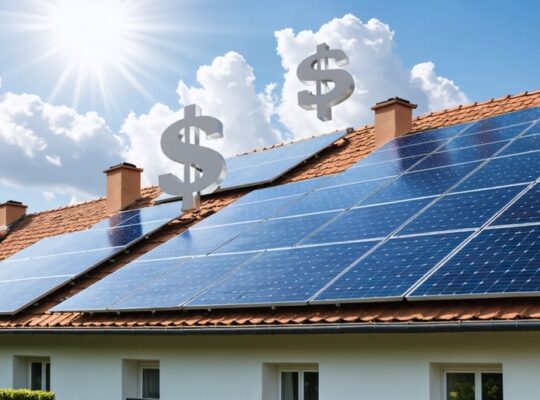
Conceptual illustration of a sunny neighborhood with solar-equipped rooftops, highlighting tax credit savings through sun rays with integrated dollar signs.

Solar PV Tax Credits That Actually Save You Money in 2024

Solar photovoltaic (PV) tax credits represent one of the most significant financial incentives driving America’s clean energy transition. The federal Solar Investment Tax Credit (ITC) currently allows property owners to deduct 30% of their solar installation costs from their federal taxes, while additional government solar incentives at state and local levels can further reduce overall system costs. This powerful combination of tax benefits has transformed solar energy from a …

A diverse group of people standing in front of a large array of solar panels set against a bright Florida landscape, symbolizing community involvement in renewable energy.

Florida’s Community Solar Revolution: Powering Local Energy Independence

Florida’s pioneering community solar initiatives are revolutionizing how residents access clean, renewable energy while fostering local energy independence. Through innovative community solar partnerships, municipalities across the Sunshine State are developing shared solar facilities that enable multiple households and businesses to benefit from solar power without installing panels on their properties.
The state’s abundant solar resources, combined with recent …

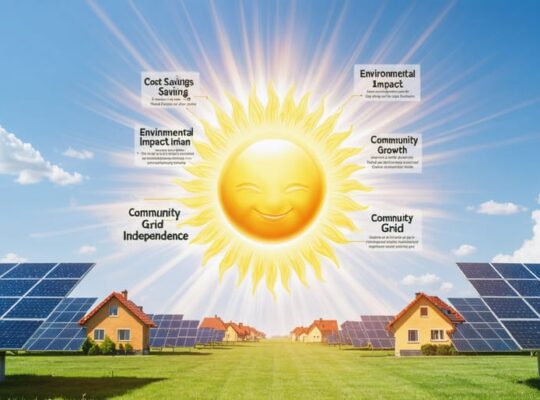
Illustration depicting the interconnected benefits of community solar, including cost savings, environmental impact, community growth, and grid independence, with homes connected to a centralized solar farm.

Community Solar: The Real Cost Benefits That Most People Miss

Community solar programs offer a compelling alternative for homeowners and renters seeking to embrace renewable energy without installing rooftop panels. As electricity costs continue to rise and environmental concerns mount, these shared solar facilities have emerged as a potential solution that promises both financial savings and environmental benefits. Recent data from the National Renewable Energy Laboratory indicates that community solar subscribers typically save 10-15% on their electricity bills, while contributing to local clean energy production.
However, determining whether community solar represents a “good deal&#…

Conceptual illustration showing solar panels connected to state maps, symbolic lines representing financial and environmental benefits, and currency and green energy icons.

Solar PV Policy Breakthroughs That Actually Boost Your Bottom Line

Renewable energy policy stands at the forefront of global climate action, fundamentally reshaping the U.S. renewable energy landscape through strategic incentives, regulatory frameworks, and market mechanisms. Federal and state governments have implemented comprehensive policy portfolios—including investment tax credits, renewable portfolio standards, and feed-in tariffs—that collectively drive the transition toward sustainable energy systems. These policies have catalyzed unprecedented growth in solar…

Diverse community members collaborating around a large solar panel installation, with residential neighborhoods in the background, symbolizing energy independence and community integration.

How the National Community Solar Partnership Transforms Local Energy Independence

The National Community Solar Partnership (NCSP) represents a groundbreaking federal initiative that’s transforming America’s energy landscape by making solar power accessible to all communities, regardless of income or location. This Department of Energy-led program has mobilized over 800 partners across government, industry, and nonprofit sectors to accelerate the deployment of community solar projects nationwide, targeting 20 gigawatts of community solar capacity by 2025—enough to power millions of households and create substantial energy cost savings for consumers.
Through strategic technical assistance, policy …