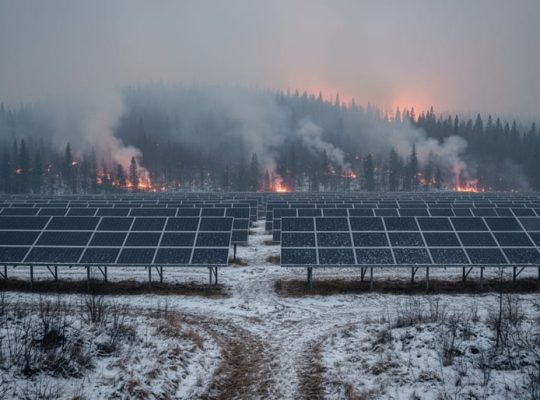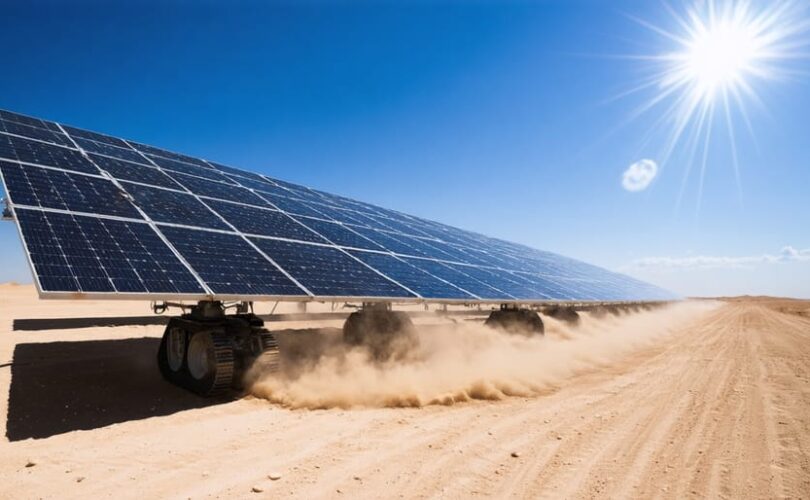
Climate change resilience demands a fundamental shift in how we design, implement, and maintain energy infrastructure – particularly for desert solar installations and renewable energy systems. Rising global temperatures, extreme weather events, and environmental degradation pose unprecedented challenges to our energy security, requiring robust adaptation strategies that combine technological innovation with ecological sensitivity.
Effective climate resilience in energy infrastructure encompasses three critical dimensions: structural reinforcement against extreme weather, adaptive management protocols that respond to changing environmental conditions, and integrated ecosystem approaches that enhance natural buffers. These strategies must be implemented across multiple scales, from individual installation hardening to system-wide grid modernization efforts.
Recent advances in materials science, predictive analytics, and ecosystem-based adaptation have revolutionized our approach to climate resilience. By incorporating climate projections into infrastructure design, implementing smart monitoring systems, and developing nature-based solutions, organizations can build resilient energy systems that withstand environmental pressures while maintaining optimal performance. This integrated approach not only protects critical infrastructure but also contributes to broader sustainability goals and environmental conservation efforts.
The success of climate adaptation strategies depends on proactive planning, cross-sector collaboration, and continuous innovation in response to evolving environmental challenges. As we face increasingly complex climate threats, the ability to adapt and strengthen our energy infrastructure becomes not just an operational necessity but a fundamental requirement for sustainable development.
Understanding Desert Climate Challenges for PV Systems
Temperature Extremes and Performance Impact
Temperature extremes pose significant challenges to solar panel efficiency and system longevity in desert environments. As ambient temperatures rise above standard testing conditions (25°C), photovoltaic cell performance experiences a notable decline. Research indicates that crystalline silicon solar panels typically lose 0.3% to 0.5% of their efficiency for every degree Celsius increase above optimal operating temperature.
High-temperature exposure not only affects immediate performance but can also accelerate material degradation. Thermal stress causes expansion and contraction cycles in panel components, potentially leading to microscopic cracks in solar cells, delamination of encapsulant materials, and degradation of electrical connections. These effects can reduce system output by up to 20% over the installation’s lifetime if not properly managed.
Extreme temperature fluctuations between day and night in desert regions further compound these challenges. The rapid cooling during nighttime hours creates thermal shock, which can compromise the structural integrity of panel materials and mounting systems. Additionally, prolonged exposure to intense heat can cause permanent changes in semiconductor properties, leading to irreversible efficiency losses.
Modern solar installations must incorporate temperature-specific design considerations, including advanced thermal management systems and heat-resistant materials, to maintain optimal performance under extreme conditions. Regular monitoring and maintenance become crucial for identifying temperature-related degradation before it significantly impacts system output.
Sand, Dust, and Erosion Effects
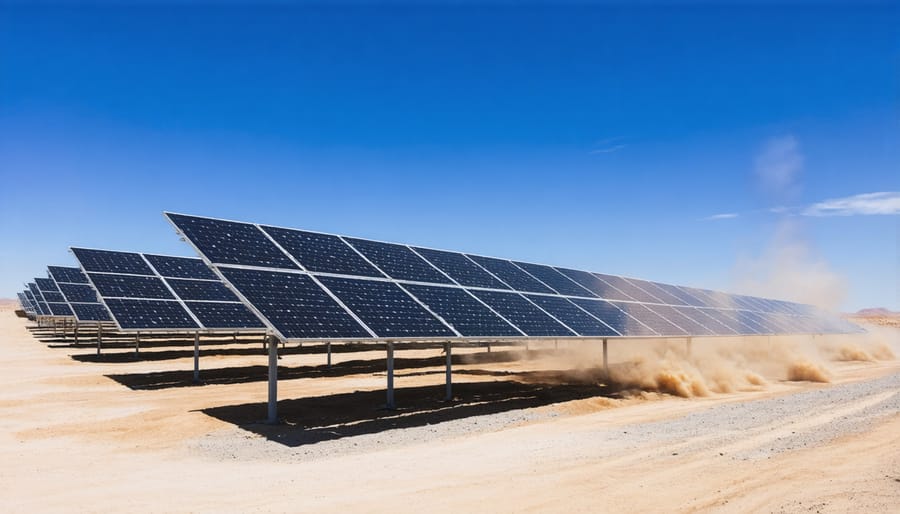
Sand, dust, and erosion pose significant challenges to photovoltaic systems in desert environments, impacting both performance and longevity. Particulate matter accumulation on solar panels can reduce energy yield by up to 40% in severely affected regions, while physical wear from windborne particles gradually degrades system components.
The primary mechanisms of particulate matter impact include surface soiling, which reduces light transmission to solar cells, and abrasive wear on protective glass covers and frame materials. Fine dust particles are particularly problematic as they can form stubborn layers that adhere strongly to panel surfaces, requiring specialized cleaning procedures. Sand particles, being larger and more abrasive, can cause microscopic scratches that permanently affect panel transparency and efficiency.
These effects are compounded by climate change-induced weather patterns, including increased frequency and intensity of dust storms. The combination of higher temperatures and prolonged dry periods creates conditions favorable for dust accumulation and erosion damage. Research indicates that panels exposed to such conditions may experience accelerated degradation rates, potentially reducing their operational lifespan by 15-25%.
Prevention and mitigation strategies include advanced anti-soiling coatings, optimized panel tilt angles, and automated cleaning systems. Regular monitoring of particulate matter levels and surface degradation helps maintain system performance and guides maintenance scheduling. Understanding these impacts is crucial for designing resilient solar installations that can withstand harsh desert conditions while maintaining optimal energy production.
Advanced Adaptation Technologies
Smart Cleaning Systems
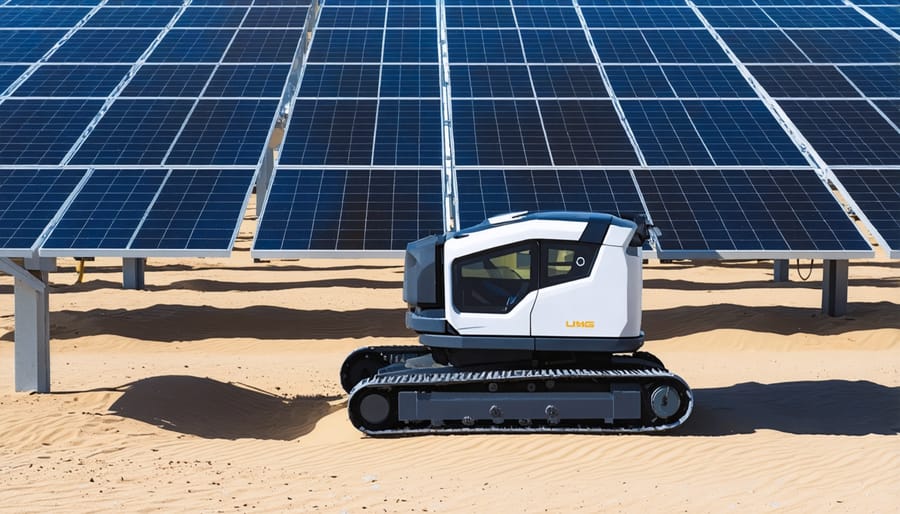
Smart cleaning systems represent a critical advancement in maintaining optimal performance of photovoltaic installations in desert environments. These automated solutions combine sophisticated sensors, robotics, and artificial intelligence to effectively manage dust accumulation and maintain panel efficiency without manual intervention.
Modern cleaning systems typically employ microprocessor-controlled robots that traverse solar arrays on predetermined schedules. These robots utilize soft brushes, compressed air, or specialized cleaning solutions to remove dust and debris without damaging the panel surfaces. Advanced sensors monitor dust levels and environmental conditions, triggering cleaning cycles when necessary rather than following rigid schedules, thereby optimizing water and energy usage.
Dust mitigation strategies have evolved to include electrostatic repulsion systems, which create an electrical field that prevents particles from settling on panel surfaces. These systems are particularly effective in reducing cleaning frequency and maintaining consistent power output. Some installations incorporate hydrophobic coating technologies that make panels naturally resistant to dust adhesion and facilitate easier cleaning.
Water conservation is paramount in desert environments, leading to the development of dry-cleaning solutions and water recycling systems. Modern cleaning platforms can achieve up to 95% water recovery, significantly reducing consumption while maintaining cleaning effectiveness. Additionally, some systems utilize weather forecasting data to optimize cleaning schedules around natural cleaning events such as rainfall, further improving resource efficiency.
The integration of IoT capabilities allows remote monitoring and control of cleaning operations, enabling operators to adjust parameters based on real-time performance data and environmental conditions.
Thermal Management Solutions
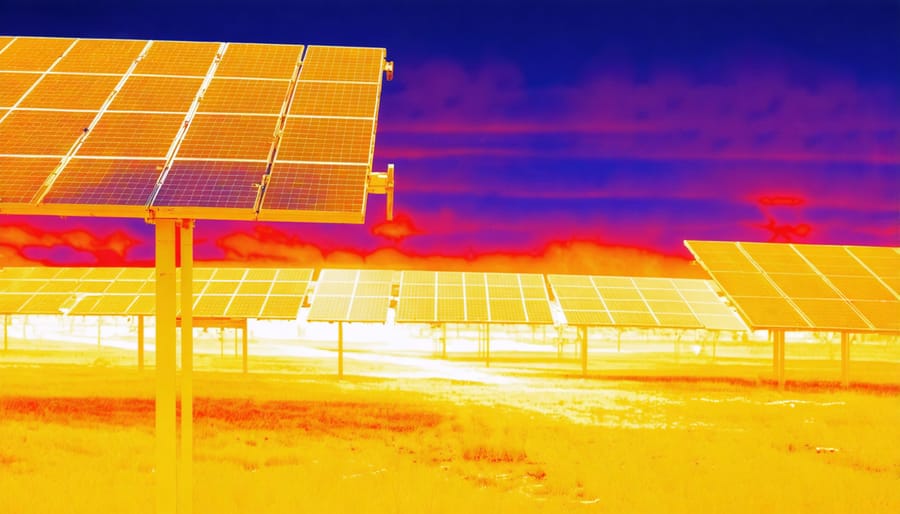
Effective thermal management is crucial for maintaining optimal performance and longevity of photovoltaic systems in high-temperature environments. Advanced cooling technologies and heat dissipation methods have emerged as essential solutions for climate change resilience in solar installations.
Passive cooling systems, including enhanced natural ventilation and specialized thermal coatings, provide cost-effective temperature regulation without additional energy consumption. These systems utilize strategic air gaps and heat-reflective materials to minimize thermal absorption and maximize natural convection cooling.
Active cooling mechanisms, while more energy-intensive, offer precise temperature control for critical applications. These include water-based cooling systems, forced-air ventilation, and phase change materials (PCMs) that absorb excess heat during peak temperature periods. Recent innovations in PCM technology have significantly improved their efficiency and cost-effectiveness for large-scale installations.
Hybrid approaches combining multiple cooling strategies have shown promising results in extreme climate conditions. For instance, integrated systems utilizing both passive ventilation and smart PCM deployment can maintain optimal operating temperatures while minimizing energy consumption.
Smart thermal management systems equipped with temperature sensors and automated controls optimize cooling efficiency by adjusting cooling mechanisms based on real-time environmental conditions. These systems can predict and respond to temperature fluctuations, ensuring consistent performance while reducing operational costs.
The selection of appropriate thermal management solutions depends on specific site conditions, climate patterns, and system requirements, necessitating careful analysis during the design phase.
Material Innovations
Recent advancements in material science have revolutionized the development of components specifically engineered for extreme desert environments. These innovations focus on enhancing durability, thermal management, and overall system resilience against harsh environmental conditions.
Advanced polymer composites with enhanced UV resistance now protect crucial system components from solar degradation. These materials incorporate specialized additives and nano-particles that significantly extend the lifetime of protective covers and structural elements while maintaining optimal light transmission for photovoltaic cells.
Thermal-regulating materials featuring phase-change technology help maintain stable operating temperatures even during extreme heat events. These innovative compounds absorb excess heat during peak temperatures and release it gradually during cooler periods, effectively reducing thermal stress on system components.
Anti-soiling coatings represent another breakthrough, utilizing hydrophobic and oleophobic properties to prevent dust accumulation. These self-cleaning surfaces significantly reduce maintenance requirements and maintain system efficiency in dusty desert conditions. Some variants incorporate transparent conducting oxides that combine anti-soiling properties with enhanced electrical conductivity.
Emerging structural materials with superior sand erosion resistance protect sensitive components from abrasive desert conditions. These materials often combine ceramic-based compounds with flexible polymers, creating durable yet adaptable surfaces that withstand years of exposure to wind-driven sand particles.
The integration of smart materials capable of responding to environmental stressors represents the cutting edge of desert-specific innovations, promising even greater resilience for future installations.
Climate-Resilient Design Strategies
Optimal Panel Positioning
Proper panel positioning in desert environments is crucial for maximizing energy yield while ensuring system longevity against harsh climate conditions. The optimal tilt angle for desert installations typically ranges between 20-30 degrees, depending on the specific geographical location and seasonal variations. This angle helps minimize dust accumulation while maintaining efficient energy production throughout the year.
For mounting systems, robust foundations using reinforced concrete or helical piles are essential to withstand high wind loads common in desert regions. Engineers should factor in soil composition and stability when selecting foundation types, as sandy conditions may require additional structural support.
Row spacing calculations must account for both shadow effects and maintenance access. A general guideline is to maintain inter-row spacing of 2.5 to 3 times the panel height to prevent power losses from mutual shading while allowing sufficient room for cleaning operations. East-west orientation of arrays typically provides optimal year-round performance in desert locations, though site-specific factors may warrant alternative configurations.
Wind deflectors and aerodynamic mounting structures can significantly reduce wind loads on the installation. These features should be integrated into the initial design phase rather than added as afterthoughts. Additionally, implementing tracking systems can increase energy yield by 25-35%, though their deployment must be carefully evaluated against increased maintenance requirements and potential vulnerability to sand accumulation.
Weather Monitoring Integration
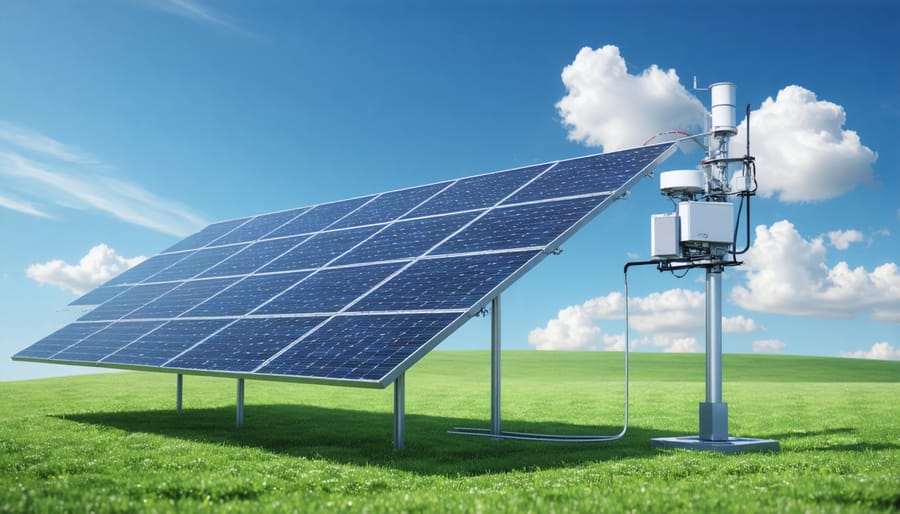
Weather monitoring systems play a crucial role in enhancing the resilience of photovoltaic installations against climate change impacts. These systems integrate advanced sensors, data analytics, and automated response mechanisms to optimize solar plant operations under varying weather conditions.
Modern weather monitoring installations typically include pyranometers for solar radiation measurement, anemometers for wind speed and direction, temperature sensors, and humidity monitors. These devices work in concert to provide real-time environmental data that enables predictive maintenance and adaptive operational strategies.
The implementation of these systems involves strategic sensor placement throughout the solar facility, with particular attention to microclimate variations across large installations. Data collected from these sensors feeds into sophisticated weather modeling software that can predict potential weather-related challenges hours or even days in advance.
Key operational benefits include:
– Early warning systems for extreme weather events
– Optimization of panel cleaning schedules based on dust and precipitation patterns
– Automated adjustment of panel angles to protect against high winds
– Performance correlation with weather conditions for improved yield forecasting
Integration with smart grid systems allows for better power output prediction and grid stability management. Additionally, historical weather data collection enables long-term trend analysis, supporting future climate adaptation strategies and system upgrades.
For maximum effectiveness, weather monitoring systems should be regularly calibrated and maintained, with data validation protocols in place to ensure accuracy and reliability of the collected information.
Maintenance Planning
Effective maintenance planning is crucial for ensuring the long-term resilience of climate adaptation infrastructure. A comprehensive maintenance strategy should incorporate both preventive measures and performance optimization protocols to maximize system effectiveness and longevity.
Regular inspections serve as the foundation of preventive maintenance, allowing for early detection of potential issues before they escalate into major problems. These inspections should follow a structured schedule and include detailed documentation of system conditions, performance metrics, and any identified concerns.
Organizations should develop clear maintenance protocols that outline specific tasks, frequencies, and responsible parties. This includes establishing performance benchmarks and monitoring systems to track key indicators of system health. Critical components require particular attention, with maintenance schedules aligned to manufacturer specifications and local environmental conditions.
Resource allocation plays a vital role in maintenance planning. Organizations should budget for both routine maintenance and potential emergency repairs, ensuring adequate staffing, equipment, and materials are available when needed. Training programs for maintenance personnel should be implemented to keep teams updated on best practices and new technologies.
Digital maintenance management systems can streamline operations by automating scheduling, tracking work orders, and maintaining detailed maintenance histories. These systems help optimize resource allocation and provide valuable data for continuous improvement of maintenance strategies.
Performance optimization should focus on analyzing system data to identify opportunities for efficiency improvements and implementing adaptive measures based on changing climate conditions and system requirements.
Future-Proofing Desert PV Installations
As desert environments face intensifying climate challenges, implementing effective climate resilience strategies becomes crucial for photovoltaic installations. Advanced materials technology is leading the way in future-proofing desert solar facilities, with the development of heat-resistant photovoltaic cells that maintain higher efficiency levels even under extreme temperature conditions.
Innovative cooling systems are emerging as essential components of next-generation desert installations. These include phase-change materials that absorb excess heat during peak temperatures and release it during cooler periods, maintaining optimal operating conditions. Hybrid cooling solutions combining passive and active methods are showing promising results in experimental installations, reducing cell temperature by up to 15°C while minimizing water consumption.
Artificial Intelligence and machine learning algorithms are revolutionizing predictive maintenance protocols. These systems analyze environmental data and panel performance metrics to anticipate potential failures before they occur, significantly reducing downtime and maintenance costs. Smart monitoring systems equipped with advanced sensors can detect dust accumulation patterns and optimize cleaning schedules, ensuring maximum efficiency while conserving water resources.
Climate modeling integration is becoming standard practice in installation planning. By incorporating long-term climate projections into design parameters, engineers can better account for future environmental conditions and implement appropriate adaptations. This includes strengthened mounting systems capable of withstanding increased wind loads and more frequent extreme weather events.
Research institutions are developing new surface treatments and coatings that enhance panel durability while improving self-cleaning properties. These innovations include hydrophobic coatings that repel dust and sand, and photocatalytic surfaces that break down organic matter, reducing maintenance requirements and extending panel lifespan.
Infrastructure hardening measures are being implemented with future climate scenarios in mind. This includes robust power storage solutions, enhanced grid connection systems, and redundant communication networks to ensure continuous operation during extreme weather events. The integration of microgrids and smart distribution systems provides additional resilience against climate-related disruptions.
Looking ahead, the focus is on developing completely autonomous solar installations that can adapt to changing environmental conditions without human intervention. This includes self-diagnosing systems, automated maintenance robots, and advanced weather response protocols that optimize performance while ensuring long-term sustainability in increasingly challenging desert environments.
As we look toward the future of climate change resilience and adaptation, the integration of multiple strategies emerges as crucial for sustainable development. The combination of technological innovations, policy frameworks, and community-based approaches has proven most effective in building resilient systems. Advanced weather monitoring systems, coupled with robust infrastructure design, continue to form the backbone of successful adaptation strategies.
The implementation of nature-based solutions, including green infrastructure and ecosystem restoration, demonstrates promising results in enhancing climate resilience while providing additional environmental benefits. These approaches, when combined with engineered solutions, create more robust and adaptable systems capable of withstanding various climate challenges.
Looking ahead, the emphasis on adaptive management and flexible response mechanisms will become increasingly important. Organizations and communities must maintain the ability to adjust their strategies based on new climate data and emerging challenges. The development of comprehensive risk assessment tools and early warning systems will play a vital role in this adaptive approach.
The success of future adaptation efforts will largely depend on continued international cooperation, knowledge sharing, and investment in research and development. As climate patterns become more unpredictable, the need for innovative solutions and cross-sector collaboration grows more pressing. By maintaining focus on these key strategies while remaining open to new approaches, communities and organizations can build greater resilience against climate change impacts.