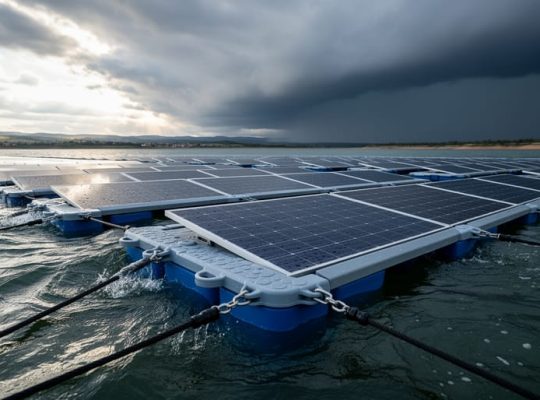
The relationship between elevation and atmospheric pressure fundamentally shapes the performance of photovoltaic systems, demanding precise engineering considerations for optimal energy generation. As altitude increases, the thinner atmosphere creates both challenges and opportunities for solar installations – reducing panel operating temperatures while simultaneously affecting voltage requirements and system specifications. Understanding these atmospheric dynamics enables engineers to boost solar panel efficiency through altitude-specific optimizations. This critical interplay influences everything from inverter selection to array configuration, making it essential for system designers to account for site-specific elevation data during the planning phase. For every 100-meter increase in elevation, atmospheric pressure decreases by approximately 1.2 kPa, creating a predictable but significant impact on PV system performance that must be carefully calculated and compensated for through proper equipment selection and system design parameters.
The Science of Atmospheric Pressure at High Elevations
Understanding Air Density and Solar Irradiance
At higher elevations, the reduced air density creates unique conditions that significantly influence solar radiation transmission through the atmosphere. As altitude increases, the air becomes thinner, containing fewer particles and molecules that typically scatter, reflect, or absorb incoming solar radiation. This decreased atmospheric interference allows more direct solar radiation to reach the Earth’s surface, resulting in higher solar irradiance levels compared to locations at sea level.
The relationship between air density and solar radiation follows Beer-Lambert’s law, which describes how radiation intensity decreases exponentially as it passes through the atmosphere. At higher elevations, the shorter path length through the atmosphere means less attenuation of solar radiation. Additionally, reduced air density leads to decreased atmospheric water vapor content and fewer aerosols, both of which typically absorb or scatter incoming radiation.
For photovoltaic applications, this phenomenon translates to potentially higher energy yields at elevated locations, provided other environmental factors remain constant. However, it’s essential to consider that while reduced air density enhances solar radiation transmission, it also affects other system parameters such as thermal management and voltage ratings. System designers must account for these factors when planning installations at different elevations to optimize performance and ensure reliable operation.
Temperature Variations and Atmospheric Effects
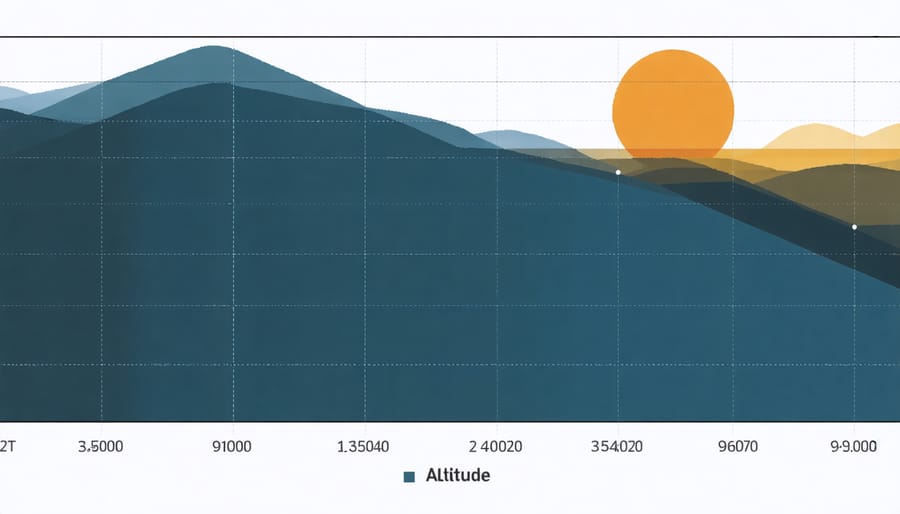
Temperature variations across different elevations significantly impact photovoltaic system performance. As altitude increases, ambient temperature typically decreases at a rate of approximately 6.5°C per kilometer. This temperature reduction can actually benefit PV efficiency, as solar panels generally perform better in cooler conditions.
However, the relationship between elevation, temperature, and PV performance is complex. While lower temperatures at higher elevations can improve cell efficiency, the reduced atmospheric density means less heat dissipation from the panels. This can lead to localized heating effects that partially offset the advantages of cooler ambient temperatures.
At higher elevations, daily temperature fluctuations tend to be more extreme, with greater variation between daytime highs and nighttime lows. These thermal cycles create additional stress on PV system components and must be considered during system design and material selection.
The atmospheric effects on temperature also influence air density and wind patterns at different elevations. These factors affect both the cooling capability of the surrounding air and the mechanical loads on the PV installation. System designers must account for these variations when determining optimal panel spacing, mounting structures, and cooling requirements to ensure reliable long-term performance.
High-Altitude PV System Design Considerations
Module Selection and Rating Adjustments
When selecting PV modules for high-altitude installations, several critical factors must be considered to ensure optimal performance and longevity. Modules must be specifically designed to adapt to environmental stress common at higher elevations, including increased UV exposure and extreme temperature variations.
For every 1,000 meters increase in elevation, module voltage ratings typically require a 1.5% downward adjustment to account for reduced atmospheric pressure. This adjustment prevents system overcharging and ensures compliance with maximum voltage limitations. Engineers should select modules with enhanced UV resistance and reinforced glass to withstand the intensified solar radiation at altitude.
Temperature coefficients become particularly important in high-altitude installations. Modules with lower temperature coefficients (-0.35%/°C or better) are preferred as they maintain better efficiency despite rapid temperature fluctuations common at higher elevations. The physical construction of the modules should also feature robust frames and enhanced mechanical load ratings to handle potential snow loads and strong winds.
Manufacturers’ altitude ratings must be carefully reviewed, as some modules have specific maximum elevation restrictions. System designers should also consider the impact of reduced air density on heat dissipation and adjust spacing and mounting configurations accordingly. Documentation of these adjustments should be maintained for warranty compliance and system optimization.
Mounting and Structural Requirements
Mounting systems in high-altitude environments require specific adaptations to withstand unique atmospheric conditions and structural challenges. The reduced air density at higher elevations results in decreased wind resistance, but higher wind speeds necessitate robust mounting solutions. Engineers must account for these factors when designing support structures and selecting appropriate materials.
Foundation requirements often differ at elevation, as soil conditions and freeze-thaw cycles can be more severe. Mounting systems should incorporate additional reinforcement and deeper anchoring to ensure stability. The use of corrosion-resistant materials becomes particularly crucial, as atmospheric conditions can accelerate weathering and degradation of components.
Wind load calculations must be adjusted for altitude, typically requiring stronger support structures and more frequent attachment points. The spacing between mounting rails and the number of attachment points may need to be increased compared to installations at lower elevations. Additionally, thermal expansion and contraction are more pronounced at altitude due to greater temperature fluctuations, necessitating proper allowance for movement in mounting systems.
Snow and ice loads present another critical consideration. Mounting systems must be designed to handle substantial weight accumulation while maintaining proper drainage paths. The angle of installation may need to be steeper than in lower elevations to facilitate snow shedding and prevent excessive loading on the structure.
Quality control during installation becomes paramount, with particular attention to torque specifications and weather sealing to ensure long-term reliability in challenging high-altitude conditions.
Cooling and Ventilation Strategies
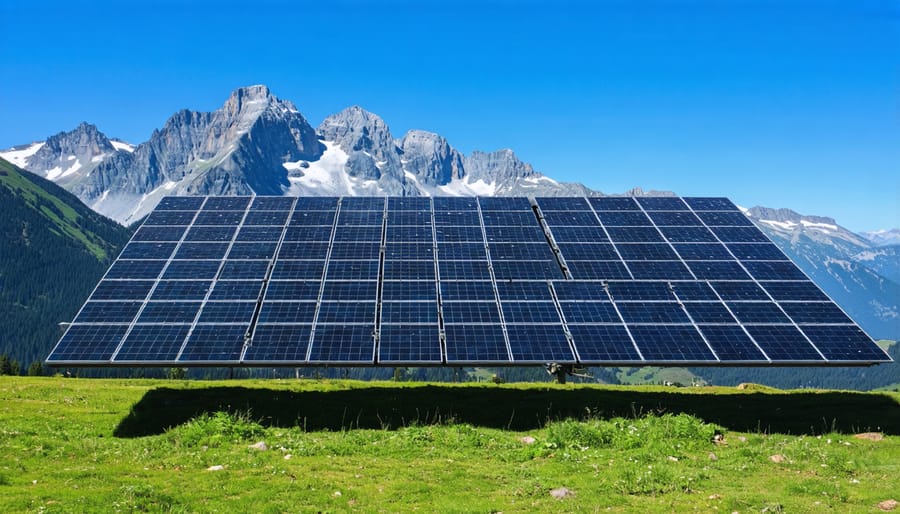
In high-elevation environments, effective cooling and ventilation strategies are crucial for maintaining optimal photovoltaic system performance. As atmospheric pressure decreases with elevation, the air’s natural cooling capacity diminishes, requiring specialized approaches to thermal management. Modern resilient solar panel solutions incorporate advanced cooling mechanisms to address these challenges.
Active cooling systems, such as forced air circulation and liquid cooling circuits, can be implemented to regulate panel temperatures effectively. These systems are particularly important in high-altitude installations where natural convection is less efficient. Proper spacing between panels and mounting structures facilitates air movement, while heat sinks and thermal dissipation materials enhance cooling efficiency.
Ventilation design must account for the reduced air density at elevation. This includes wider air gaps between panels and mounting surfaces, optimized tilt angles for natural airflow, and strategic placement of venting systems. Some installations benefit from hybrid cooling approaches that combine passive and active methods to maintain consistent operating temperatures.
Temperature monitoring systems and automated controls help optimize cooling performance based on real-time conditions. These systems can adjust cooling mechanisms according to atmospheric pressure variations, solar intensity, and ambient temperature, ensuring sustained efficiency across different elevation zones.
Climate Adaptation Techniques
Weather Protection Measures
At high elevations, solar installations face unique environmental challenges that require specialized weather protection systems to maintain optimal performance. These protective measures typically include reinforced mounting structures designed to withstand increased wind loads, which become more significant at higher altitudes. UV-resistant materials and specialized coatings protect system components from intensified solar radiation exposure, while advanced grounding systems offer enhanced lightning protection.
Temperature fluctuations at high elevations necessitate the implementation of thermal management solutions. These include expanded spacing between modules to facilitate air circulation and the use of temperature-resistant materials in electrical connections and junction boxes. Anti-freezing measures become particularly crucial in locations where extreme cold can affect system operations.
Snow load considerations require robust structural support and optimal tilt angles to facilitate natural snow shedding. Many high-altitude installations incorporate heated elements or special surface treatments to prevent snow accumulation and ice formation. Additionally, corrosion-resistant materials are essential due to increased exposure to moisture and potential chemical reactions in thin air environments.
Monitoring systems specifically calibrated for high-altitude conditions track environmental parameters and system performance. These systems often include specialized sensors for wind speed, temperature variations, and snow accumulation, enabling proactive maintenance and system adjustments. Regular inspections and maintenance protocols are typically more frequent for high-altitude installations to ensure continued system reliability and performance optimization.
Performance Monitoring at Altitude
Performance monitoring at high-altitude installations requires specialized approaches and equipment to ensure accurate data collection and system optimization. Atmospheric pressure variations significantly impact sensor readings and equipment performance, necessitating careful calibration and adjustment of monitoring systems.
Key monitoring parameters at elevation include temperature coefficients, which must be adjusted to account for the thinner air’s impact on thermal behavior. Irradiance sensors require special calibration due to the altered spectral composition of sunlight at higher altitudes, where less atmospheric filtering occurs.
Data logging systems must be equipped with pressure-compensated sensors to maintain accuracy across varying atmospheric conditions. This includes specialized pyranometers with temperature and pressure compensation features, and flow meters calibrated for lower air density operations.
Remote monitoring solutions become particularly crucial at high-altitude installations, as these locations often experience extreme weather conditions and limited accessibility. Automated systems should incorporate redundant measurement capabilities and robust communication protocols to ensure continuous data collection even during challenging conditions.
Maintenance protocols for monitoring equipment must account for the unique environmental stresses present at elevation. This includes regular recalibration schedules, enhanced protection against UV exposure, and specific attention to sensor drift caused by extreme temperature variations.
Best practices include implementing real-time performance ratio calculations that factor in altitude-specific parameters, establishing baseline performance metrics adjusted for elevation, and maintaining detailed records of atmospheric pressure variations to correlate with system performance data.
Maintenance Protocols
Regular maintenance of high-altitude photovoltaic systems requires specific protocols to ensure optimal performance under reduced atmospheric pressure conditions. System operators should conduct quarterly inspections of all electrical connections, as thermal cycling effects are more pronounced at higher elevations due to extreme temperature variations.
Maintenance schedules should include monthly cleaning of PV panels, as reduced air density can lead to increased dust accumulation. Technicians must verify the proper functioning of inverter cooling systems every three months, as heat dissipation becomes more challenging in thin air environments.
Pressure-sensitive components require bi-annual calibration checks, particularly for systems installed above 2,000 meters. This includes testing of weather seals, junction boxes, and conduit systems that may experience different stress patterns due to lower atmospheric pressure.
Annual comprehensive maintenance should include:
– Verification of structural integrity and mounting system tension
– Assessment of electrical insulation resistance
– Inspection of surge protection devices
– Evaluation of grounding system effectiveness
– Testing of monitoring system accuracy
Personnel conducting maintenance at high altitudes must follow specific safety protocols, including proper acclimatization periods and use of appropriate personal protective equipment. Documentation of all maintenance activities should include atmospheric pressure readings to establish performance correlations and identify potential system adaptations needed for optimal operation.
The relationship between elevation, atmospheric pressure, and photovoltaic system performance presents both challenges and opportunities for solar installations at varying altitudes. Throughout this analysis, we’ve established that higher elevations typically offer enhanced solar radiation potential despite reduced atmospheric pressure, making them attractive locations for PV installations when properly engineered.
To optimize high-altitude PV installations, system designers and installers should implement several key recommendations. First, conduct comprehensive site-specific assessments that account for local atmospheric conditions, including pressure variations and typical weather patterns. Second, select components rated for high-altitude operation, particularly inverters and electrical equipment that may require derating at elevated locations.
Installation teams should adjust their design calculations to account for reduced air density’s impact on thermal management systems. Implementing enhanced cooling solutions and maintaining adequate spacing between modules becomes particularly crucial at higher elevations. Additionally, regular monitoring and maintenance programs should be adapted to address the unique challenges of high-altitude operations.
For optimal results, consult with manufacturers about altitude-specific specifications and warranty considerations. Engage with local installers who have experience with high-elevation projects, as their practical knowledge can prove invaluable. Finally, consider implementing more robust surge protection and grounding systems to address the increased likelihood of lightning strikes at higher elevations.
By carefully considering these factors and implementing appropriate adaptations, PV systems can effectively harness the enhanced solar resource available at higher elevations while maintaining reliable, long-term performance.