The Desert Renewable Energy Conservation Plan (DRECP) represents a groundbreaking framework for transforming desert landscapes into sustainable energy hubs while preserving critical ecosystems. Spanning 22.5 million acres across California’s desert regions, this comprehensive initiative strategically balances renewable energy development with environmental conservation. By designating specific development focus areas and implementing stringent protection measures, the DRECP enables the deployment of utility-scale solar, wind, and geothermal projects while safeguarding sensitive species and their habitats. This innovative approach has established a replicable model for other regions worldwide, demonstrating how large-scale renewable energy goals can align with biodiversity preservation. As California advances toward its ambitious clean energy targets, the DRECP serves as both a regulatory framework and a testament to sustainable infrastructure development, proving that environmental stewardship and renewable energy expansion can effectively coexist in our most challenging landscapes.
Understanding the Desert Renewable Energy Conservation Plan
Development Focus Areas
The Desert Renewable Energy Conservation Plan designates specific Development Focus Areas (DFAs) where renewable energy projects can be streamlined while maintaining environmental protection. These zones, covering approximately 388,000 acres across California’s desert regions, were carefully selected based on multiple criteria including solar resource quality, existing transmission infrastructure, and minimal wildlife impact.
Within these DFAs, developers benefit from streamlined permitting processes and pre-approved environmental assessments. The areas are strategically located near existing transmission corridors and substations, reducing the need for extensive new infrastructure development. Most DFAs are situated on previously disturbed lands or areas with lower conservation value, minimizing ecological disruption.
The plan categorizes development zones based on their renewable energy potential and environmental sensitivity. Priority development areas feature optimal solar radiation levels, favorable terrain, and proximity to power infrastructure. Buffer zones around these areas help manage potential impacts on neighboring conservation lands while ensuring project viability. This systematic approach enables efficient renewable energy deployment while preserving critical desert ecosystems.
Conservation Management Actions
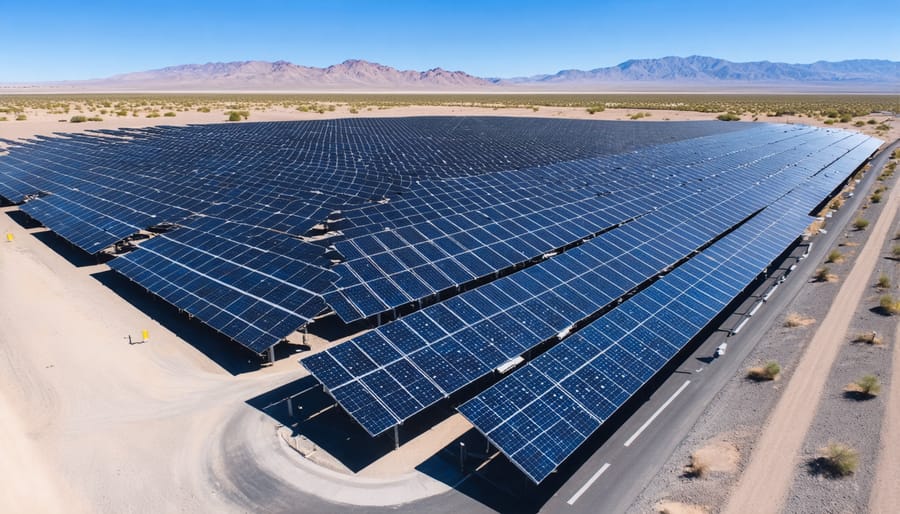
The DRECP implements comprehensive conservation management actions to protect desert ecosystems while facilitating renewable energy development. These measures include establishing Development Focus Areas (DFAs) that minimize impact on sensitive species and habitats, alongside implementing strict avoidance and mitigation protocols for protected species.
Key conservation requirements include maintaining wildlife corridors, implementing dust control measures, and conducting pre-construction biological surveys. Project developers must adhere to specific setback requirements from sensitive areas and implement advanced monitoring systems to track wildlife movement patterns.
The plan mandates compensatory mitigation through land acquisition or restoration projects when impacts cannot be avoided. Water conservation measures are particularly crucial, requiring developers to implement water-efficient cooling systems and maintain groundwater monitoring programs.
Additional requirements include implementing bird and bat conservation strategies, establishing buffer zones around cultural resources, and developing site-specific management plans. These actions are regularly reviewed and updated based on adaptive management principles, ensuring the effectiveness of conservation efforts while supporting renewable energy goals in desert regions.
PV System Design Considerations Under DRECP
Environmental Impact Mitigation
The Desert Renewable Energy Conservation Plan incorporates comprehensive strategies to minimize the ecological impact of renewable energy development in desert regions. Key mitigation measures include careful site selection that avoids critical wildlife corridors and sensitive habitat areas, implementation of advanced dust control systems during construction, and establishment of buffer zones around significant biological resources.
Project developers must implement specific protocols for wildlife protection, including comprehensive species surveys, seasonal construction restrictions to accommodate breeding periods, and installation of wildlife-friendly fencing. Water conservation measures are particularly crucial, with requirements for drought-resistant landscaping and efficient cooling systems that minimize water consumption in solar thermal operations.
To offset unavoidable impacts, the plan mandates compensatory mitigation through habitat restoration and conservation land acquisition. Developers must contribute to conservation funds or directly preserve comparable habitat areas at a specified ratio to their project footprint. Advanced monitoring systems track wildlife movement patterns and habitat health, enabling adaptive management strategies.
The plan also emphasizes soil stabilization techniques to prevent erosion and maintain desert ecosystem integrity. This includes requirements for native plant restoration in disturbed areas and implementation of innovative dust suppression methods. Regular environmental audits and reporting ensure ongoing compliance with mitigation requirements throughout the project lifecycle.
Desert-Specific Engineering Solutions
Desert renewable energy projects require specialized engineering solutions to withstand extreme environmental conditions while maintaining optimal performance. Key adaptations include enhanced thermal management systems, reinforced structural designs, and advanced dust mitigation technologies. Engineers must optimize solar panel efficiency through innovative cooling mechanisms and anti-soiling coatings.
Robust foundation designs incorporate deep anchoring systems to withstand high winds and prevent sand erosion. Solar tracking systems are modified with enhanced bearings and protective seals to prevent sand infiltration. Advanced cooling systems, including passive ventilation and specialized heat-dissipating materials, help maintain equipment within operational temperature ranges despite extreme desert heat.
Dust mitigation solutions encompass automated cleaning systems, hydrophobic surface treatments, and electrostatic repulsion technology. These systems reduce manual maintenance requirements while ensuring consistent energy production. Water conservation is addressed through dry-cleaning methods and recycling systems for essential maintenance operations.
Equipment enclosures feature reinforced sealing, filtered ventilation, and corrosion-resistant materials to protect sensitive components from sand, dust, and temperature fluctuations. Monitoring systems are equipped with redundant sensors and communication protocols to ensure reliable operation in remote desert locations, enabling prompt response to environmental challenges and maintaining system performance throughout the installation’s lifecycle.

Enhancing Desert PV System Resilience
Climate Adaptation Strategies
The Desert Renewable Energy Conservation Plan incorporates robust climate adaptation strategies to ensure the longevity and efficiency of renewable energy installations in harsh desert environments. These strategies focus on developing weather-resistant solar installations capable of withstanding extreme temperature fluctuations, intense UV exposure, and severe weather events.
Key adaptation measures include the implementation of advanced cooling systems for photovoltaic panels, utilizing thermal management technologies to maintain optimal operating temperatures. Installation designs incorporate elevated mounting structures that promote natural airflow and reduce heat accumulation, while specialized coating materials protect components from sand abrasion and UV degradation.
The plan mandates regular monitoring of weather patterns and climate data to anticipate and respond to changing environmental conditions. This includes the deployment of smart sensors and automated systems that adjust panel orientations during dust storms or extreme wind events. Infrastructure reinforcement protocols ensure that support structures can withstand both immediate weather challenges and long-term climate stresses.
Water conservation plays a crucial role in these adaptation strategies, with emphasis on dry-cleaning technologies and water-efficient cooling systems. The plan also requires the development of comprehensive emergency response protocols for extreme weather events, ensuring rapid system protection and recovery procedures are in place.
Maintenance and Monitoring Protocols
The Desert Renewable Energy Conservation Plan mandates specific maintenance and monitoring protocols to ensure long-term project viability while protecting desert ecosystems. Facility operators must conduct regular inspections of solar arrays, transmission infrastructure, and environmental protection measures according to predetermined schedules.
Key maintenance requirements include dust mitigation through approved cleaning methods, vegetation management that preserves native species, and equipment performance monitoring. Operators must maintain detailed maintenance logs and submit quarterly reports documenting system efficiency, environmental compliance, and any remedial actions taken.
Environmental monitoring involves tracking wildlife activity, analyzing soil conditions, and assessing vegetation changes within project boundaries. Motion-activated cameras and other surveillance equipment help operators detect and respond to wildlife interactions with facility infrastructure. Water usage monitoring is particularly crucial, with strict limitations on groundwater extraction and requirements for efficient cleaning technologies.
Adaptive management protocols allow for adjustments based on monitoring results. If environmental impacts exceed predicted levels, operators must implement additional mitigation measures. Annual comprehensive assessments evaluate the effectiveness of existing protocols and identify necessary modifications.
Emergency response procedures must be maintained and regularly updated, including protocols for extreme weather events, equipment failures, and environmental incidents. Staff training programs ensure proper implementation of all maintenance and monitoring requirements, with periodic updates to incorporate new technologies and best practices.
Future Opportunities and Challenges
The Desert Renewable Energy Conservation Plan (DRECP) faces both promising opportunities and significant challenges in the coming years. As renewable energy technology advances, the integration of resilient solar technology solutions will be crucial for maximizing the plan’s effectiveness while maintaining ecological balance.
One significant opportunity lies in the potential for increased energy storage capabilities, which could help address intermittency issues common to desert solar installations. Advanced battery technologies and innovative storage solutions are expected to enhance the reliability of renewable energy generation within DRECP-designated areas.
The plan’s adaptive management framework presents opportunities for continuous improvement based on monitoring results and emerging scientific data. This flexibility allows for refinements in conservation strategies and development guidelines as new information becomes available about species behavior and habitat requirements.
However, several challenges require careful consideration. Climate change impacts, including increased temperatures and prolonged drought periods, may affect both renewable energy infrastructure and conservation efforts. These environmental stresses could necessitate modifications to existing management strategies and protection measures.
Infrastructure development remains a critical challenge, particularly regarding transmission line capacity and grid integration. The remote location of many DRECP areas requires substantial investment in transmission infrastructure to effectively deliver generated power to urban centers.
Additionally, balancing the competing demands of renewable energy development and species conservation will continue to require careful navigation. As technology evolves and development pressures increase, maintaining this balance while meeting California’s renewable energy goals will be crucial.
Water resource management presents another significant challenge, especially concerning the maintenance and cleaning of solar installations in arid environments. Innovative water conservation techniques and dry-cleaning technologies will be essential for sustainable operation.
The success of the DRECP will largely depend on continued collaboration between stakeholders, adaptive management practices, and the integration of emerging technologies that support both energy generation and conservation objectives.
The Desert Renewable Energy Conservation Plan represents a landmark achievement in balancing renewable energy development with environmental conservation. Through its comprehensive framework, the plan has successfully established clear guidelines for solar and wind energy projects while protecting crucial desert ecosystems and wildlife corridors. The implementation of DRECP has demonstrated that large-scale renewable energy development can coexist with environmental stewardship when properly planned and executed.
Looking ahead, the DRECP will continue to play a vital role in California’s renewable energy future. As technology advances and energy demands grow, the plan’s adaptive management approach ensures its relevance and effectiveness. The designated development focus areas provide ample opportunity for future projects while maintaining the integrity of conservation lands.
Industry stakeholders can expect continued refinements to the planning process as new environmental data becomes available and renewable energy technologies evolve. The plan’s success has already inspired similar conservation-minded development approaches in other regions, setting a precedent for sustainable energy planning nationwide.
For project developers and environmental professionals, understanding and working within the DRECP framework will remain essential for successful desert renewable energy initiatives. The plan’s balanced approach to development and conservation continues to serve as a model for responsible renewable energy expansion while preserving critical desert landscapes for future generations.