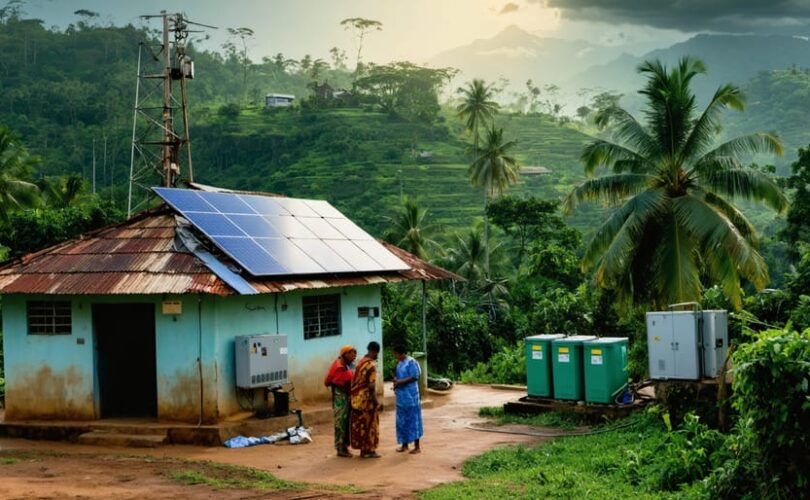
Off-grid communities represent the convergence of climate vulnerability and energy independence, where photovoltaic systems transform from convenience to lifeline. In regions where extreme weather events increasingly disrupt centralized power infrastructure, solar microgrids enable populations to maintain critical services—refrigeration for medicines, communication systems for emergency response, and water purification during extended grid failures. These installations demonstrate measurable climate resilience: communities in Puerto Rico maintained power through Category 5 hurricanes, while remote villages in Sub-Saharan Africa achieved 99.8% energy availability despite drought-induced grid instability.
The technical foundation rests on properly sized battery storage, weather-resistant mounting systems, and intelligent load management—components that convert solar arrays into autonomous power stations capable of multi-day operation without sunlight. Recent deployments show that communities with diversified PV systems reduce climate-related power outages by 87% compared to grid-dependent counterparts, while simultaneously cutting energy costs by 60-75%.
Yet implementation extends beyond hardware specifications. Successful off-grid transitions require community engagement protocols, maintenance training programs, and financing structures that address upfront capital barriers—challenges that universities and research institutions increasingly tackle through collaborative field studies. Understanding these systems means examining both the photovoltaic engineering principles and the socioeconomic frameworks that determine whether technology translates into genuine resilience for the world’s most climate-exposed populations.
The Climate Resilience Challenge Facing Remote Communities
When the Grid Goes Dark: The Cost of Energy Vulnerability
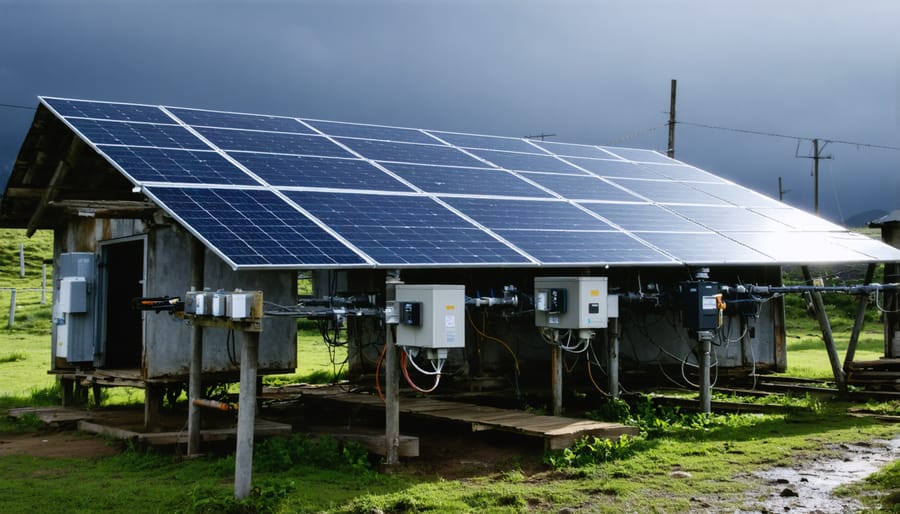
Climate-induced power disruptions are escalating in frequency and severity, particularly affecting remote communities. In February 2021, Winter Storm Uri left over 4.5 million Texas residents without electricity for days, with some rural areas experiencing outages exceeding two weeks. The economic toll reached approximately $195 billion, while hypothermia-related deaths exceeded 200. Similarly, the 2019 California wildfires prompted Pacific Gas & Electric to implement widespread Public Safety Power Shutoffs, leaving 738,000 customers—many in remote mountain communities—without power for up to five days during peak fire season.
Remote Alaskan villages face particularly acute vulnerability. In 2022, extreme weather events disrupted diesel fuel deliveries to multiple communities, compromising their primary electricity source and threatening critical infrastructure including water treatment facilities and medical clinics. These disruptions cost affected communities an estimated $2.3 million in emergency response and damaged equipment.
The pattern is clear: climate events are intensifying, and centralized grid infrastructure proves increasingly unreliable for isolated populations. Research indicates that rural areas experience 2.8 times longer power restoration periods compared to urban centers following major weather events. This disparity creates cascading safety risks—refrigerated medications spoil, communication systems fail, and heating or cooling becomes unavailable during extreme temperatures.
The imperative for climate-resilient PV systems has never been more urgent. Communities dependent on centralized grids face mounting economic losses and life-threatening conditions with each successive climate disruption, underscoring the critical need for distributed, resilient energy solutions.
Why Remote Areas Need Different Energy Solutions
Remote communities face a fundamentally different energy landscape than their grid-connected counterparts, requiring tailored solutions that address multifaceted challenges. Geographic isolation represents the primary barrier—extending traditional grid infrastructure across vast distances becomes economically prohibitive, with transmission line costs ranging from $100,000 to $300,000 per mile in difficult terrain. This financial reality leaves approximately 770 million people worldwide without reliable electricity access.
Distance compounds operational complexities beyond initial infrastructure investment. Maintenance personnel must travel significant distances to service equipment, dramatically increasing response times during system failures. What might be a same-day repair in urban settings can extend to weeks in remote locations, particularly during adverse weather conditions that simultaneously damage infrastructure and prevent access. This delayed response capacity creates cascading vulnerabilities during emergencies when reliable power becomes critical for communication, medical equipment, and climate control systems.
Furthermore, remote communities typically operate on diesel generators, incurring fuel transportation costs that can triple energy expenses compared to grid electricity. These communities also face limited access to technical expertise for system troubleshooting and upgrades, creating dependency on external support networks. Environmental factors intensify these challenges—extreme temperatures, humidity, and weather events accelerate equipment degradation while complicating logistics.
Climate change amplifies existing vulnerabilities, with increased frequency of severe weather events disrupting already fragile supply chains. Photovoltaic systems with battery storage address these unique constraints by providing modular, low-maintenance energy solutions deployable without extensive infrastructure, while reducing operational costs and environmental impact through renewable generation.
Off-Grid PV Systems: The Technology Behind Community Resilience
Essential Components of Community-Scale Off-Grid Systems
Successful community-scale off-grid systems require careful integration of multiple components working in concert to ensure reliable, sustainable power delivery. At the foundation are solar photovoltaic modules, where communities must choose between monocrystalline and multi-crystalline technologies. Monocrystalline panels offer superior efficiency (18-22%) and better performance in limited space applications, though at higher initial costs. Multi-crystalline modules provide a more economical option with respectable efficiency rates (15-17%), making them attractive for communities with adequate installation space and tighter budgets.
Battery storage systems represent the critical energy reservoir for off-grid communities, enabling power availability during nighttime and cloudy periods. Lithium-ion batteries have emerged as the preferred technology for many installations due to their high energy density, extended cycle life (4,000-6,000 cycles), and minimal maintenance requirements. However, lead-acid batteries remain viable for budget-conscious communities, particularly in regions with established recycling infrastructure.
Inverters convert DC power from solar arrays into AC electricity for household and community use. Modern inverters for community systems typically range from 5kW to 100kW capacity, with hybrid models offering grid-tie capabilities for future connectivity. Charge controllers regulate power flow between solar arrays and battery banks, with Maximum Power Point Tracking (MPPT) controllers extracting 20-30% more energy than traditional PWM controllers—a significant advantage in resource-constrained environments.
Backup generators provide essential redundancy during extended periods of low solar irradiance. Diesel or propane generators sized at 30-50% of peak community load offer economic resilience insurance. Research collaborations between universities and system integrators continue advancing hybrid control algorithms that optimize fuel consumption while maximizing renewable energy utilization, reducing both operational costs and environmental impact for vulnerable communities.
Mono PERC Technology and Enhanced Performance in Challenging Climates
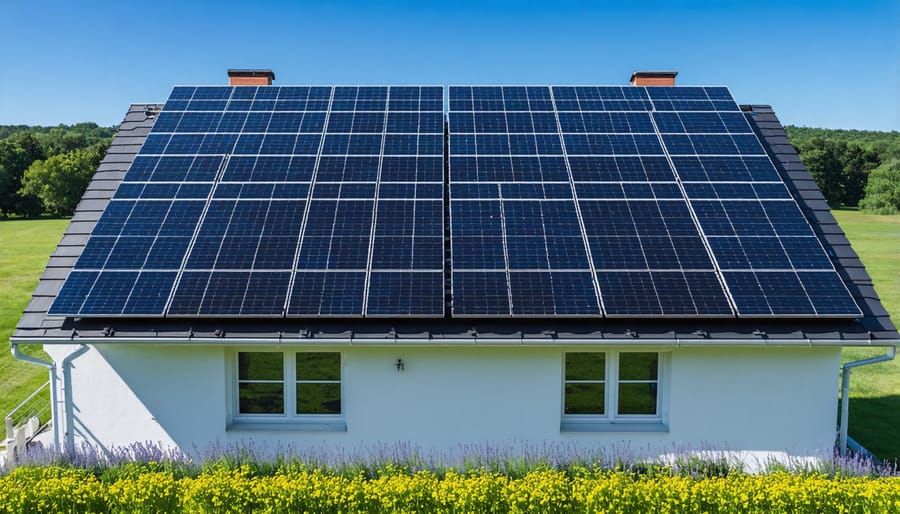
Mono PERC (Passivated Emitter and Rear Cell) technology represents a significant advancement for off-grid communities facing challenging environmental conditions. These solar panels incorporate an additional passivation layer on the rear surface, enabling them to capture and convert light more effectively than conventional modules. This enhanced design proves particularly valuable in climate-affected regions where optimal conditions are rare.
In low-light scenarios—common during monsoon seasons, dust storms, or extended cloud cover—mono PERC panels maintain superior energy conversion rates compared to traditional polycrystalline alternatives. The technology’s reflective rear surface recaptures photons that would otherwise pass through the cell, increasing overall efficiency by 1-3% under diffuse light conditions. This improvement translates directly into more consistent power generation for essential community services.
Temperature resilience represents another critical advantage. Mono PERC panels demonstrate lower temperature coefficients, meaning they lose less efficiency during extreme heat events that increasingly affect vulnerable regions. While standard panels might experience 15-20% output reduction at elevated temperatures, mono PERC technology mitigates these losses significantly.
For off-grid communities, these performance characteristics mean more reliable electricity access during precisely the climate events that threaten grid-connected infrastructure. Implementing strategies to maximize panel efficiency through proper installation angles and maintenance schedules further enhances mono PERC’s reliability in demanding environments, ensuring sustainable energy independence.
Real-World Off-Grid Communities Leading the Resilience Revolution
Island Communities: Frontline Climate Adaptation
Island nations face disproportionate climate risks, making resilient off-grid photovoltaic systems essential infrastructure rather than luxury alternatives. In the Caribbean, microgrid deployments have demonstrated remarkable durability, with systems in Puerto Rico maintaining 87% operational capacity during Category 4 hurricane conditions when traditional grid infrastructure failed completely. The Bahamas’ Family Islands initiative deployed 2.5 MW of distributed solar capacity across remote settlements, incorporating hurricane-proof solar installations with wind-rated mounting systems exceeding 180 mph thresholds.
Pacific island nations like Fiji have implemented hybrid solar-diesel systems achieving 65-75% renewable penetration while maintaining grid stability during cyclone seasons. Battery storage capacity of 4-6 hours enables continuous operation during extended outages, with lithium iron phosphate chemistry demonstrating superior performance in high-humidity coastal environments. Research collaborations between the University of the South Pacific and regional utilities document system resilience metrics, showing 99.2% availability rates post-storm compared to 34% for conventional diesel generators. These deployments prove that properly engineered PV infrastructure enhances energy security precisely when communities need it most.
Mountain and Rural Settlements: Energy Independence in Isolated Regions
Mountain communities in California’s Sierra Nevada and Colorado’s Rocky Mountain regions demonstrate successful transitions to off-grid photovoltaic systems, driven by increasing wildfire threats and grid infrastructure vulnerabilities. The town of Blue Lake, California, operating a community-scale microgrid since 2017, maintained power continuity during the 2020 wildfire season when surrounding grid-connected areas experienced prolonged outages. Their 175 kW solar array paired with 500 kWh battery storage serves critical facilities and residential clusters.
In Montana’s Bitterroot Valley, ranching operations have adopted high-altitude solar solutions to ensure livestock water pumping and refrigeration reliability during severe winter storms. Research conducted through partnerships with Montana State University quantifies system performance under extreme temperature variations, documenting 15-20% efficiency gains from snow reflection and cooler panel operating temperatures.
These installations typically incorporate robust mounting systems engineered for 150+ mph wind loads and heavy snow accumulation. Backup generator integration remains common, though battery capacity improvements reduce fossil fuel dependence by 70-85% compared to diesel-only configurations. Implementation barriers include higher equipment transport costs and specialized installation expertise requirements in remote terrain.
Indigenous Communities Reclaiming Energy Sovereignty
Indigenous communities worldwide are pioneering off-grid photovoltaic installations that simultaneously address climate vulnerability and advance self-determination. The Navajo Nation’s Kayenta Solar Project, developed through partnerships with tribal authorities and academic institutions, demonstrates how utility-scale solar can provide economic benefits while reducing dependence on external energy sources. In Alaska, remote indigenous villages have implemented hybrid PV-diesel systems that decrease fuel costs by up to 40% while enhancing energy security against increasingly unpredictable weather patterns.
These initiatives extend beyond technical implementation. The T’Sou-ke Nation in British Columbia operates a community-owned solar farm that generates revenue for education programs while training tribal members in photovoltaic system maintenance and design. Research collaborations with universities have documented how indigenous-led renewable energy projects preserve cultural practices by reducing environmental degradation from fossil fuel transportation and supporting traditional land use patterns.
Economic sovereignty accompanies energy independence—communities retain control over energy revenues, create local employment, and develop technical expertise. These projects prove that climate resilience solutions must honor indigenous knowledge systems while incorporating modern photovoltaic technology, creating models applicable to vulnerable populations globally.
Designing Off-Grid Systems for Maximum Climate Resilience
Sizing Systems for Reliability: Load Assessment and Storage Capacity
Accurate load assessment forms the foundation of reliable off-grid system design. Begin by conducting comprehensive energy audits that document all community electrical loads, including residential, commercial, and critical infrastructure such as water pumping, refrigeration for medical supplies, and communication systems. Calculate daily energy consumption in kilowatt-hours (kWh), accounting for seasonal variations and peak demand periods.
Storage capacity must provide multi-day autonomy to ensure continuous power during extended periods of low solar irradiance. Industry best practices recommend three to five days of battery storage for off-grid communities, calculated by multiplying daily consumption by autonomy days and adjusting for depth of discharge limitations. Lithium-ion batteries typically allow 80% depth of discharge, while lead-acid systems require conservative 50% cycling to maintain longevity.
Future expansion planning requires installing oversized inverters and charge controllers—typically 25-30% above current requirements—to accommodate load growth without complete system redesign. Universities collaborating with off-grid projects emphasize modular approaches, where battery banks and PV arrays can expand incrementally as communities grow. This methodology balances immediate affordability with long-term scalability, ensuring systems remain cost-effective while meeting evolving energy demands throughout their 20-25 year operational lifespan.
Weatherproofing and Physical Resilience Strategies
Off-grid photovoltaic installations in remote communities face unique environmental challenges that demand robust design considerations. Implementing comprehensive weatherproofing strategies ensures system longevity and consistent power generation under extreme conditions.
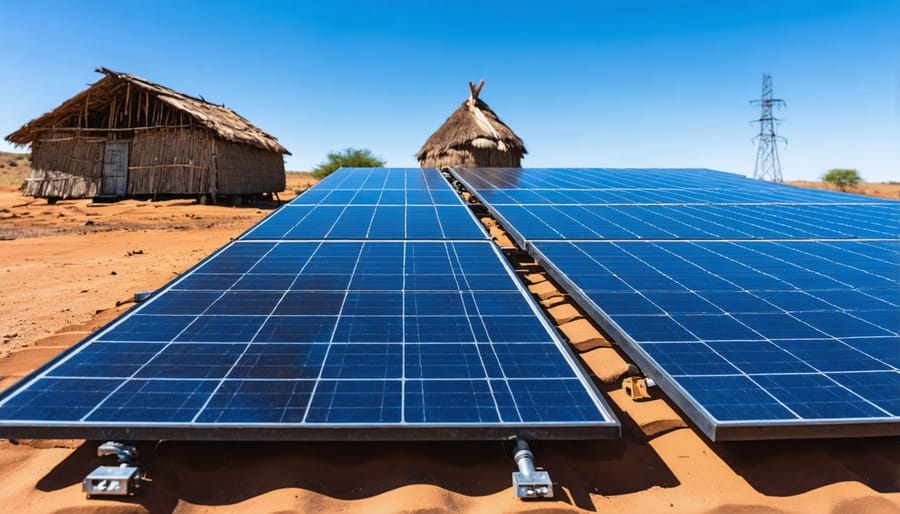
Wind resistance begins with proper mounting infrastructure. Ground-mounted arrays require concrete foundations engineered to local wind load specifications, typically designed for sustained winds of 120-150 mph in hurricane-prone regions. Ballasted systems offer flexibility for rocky terrain where traditional footings prove impractical, though they require careful weight calculations to prevent uplift.
Flood mitigation strategies include elevating inverters and battery banks above historical flood levels, ideally 2-3 feet beyond recorded maximums to account for climate change projections. Waterproof enclosures with IP67 ratings protect critical electrical components, while drainage systems prevent water accumulation around equipment.
Temperature extremes demand thoughtful component selection. Panels with low temperature coefficients maintain efficiency during heat waves, while cold-weather installations benefit from battery chemistries that function reliably below freezing. Adequate ventilation prevents thermal degradation of inverters and charge controllers, extending equipment lifespan significantly.
University partnerships have advanced testing protocols that simulate decades of environmental stress, enabling communities to select appropriately rated equipment. These collaborative research initiatives provide valuable performance data that informs installation standards for challenging climates.
Economic and Social Benefits Beyond Energy Access
Cost Savings and Economic Empowerment
Off-grid photovoltaic systems deliver substantial economic advantages compared to traditional energy alternatives. While diesel generators incur ongoing fuel costs averaging $0.50-$1.00 per kilowatt-hour in remote locations, solar installations typically achieve levelized costs below $0.20 per kilowatt-hour over their 25-year lifespan. Grid extension to isolated communities often exceeds $30,000 per kilometer, making distributed solar economically superior for settlements beyond 10-15 kilometers from existing infrastructure.
Beyond direct cost savings, photovoltaic deployment catalyzes local economic development through job creation in system installation, maintenance, and component distribution. Communities participating in university-affiliated training programs develop technical expertise that generates sustained employment opportunities. Research from the International Renewable Energy Agency indicates that solar projects create 25% more jobs per dollar invested than fossil fuel alternatives.
Energy access fundamentally transforms local economies by enabling small business development. Reliable electricity supports refrigeration for food preservation, extends productive hours through lighting, and powers telecommunications equipment essential for market participation. Agricultural cooperatives utilize solar-powered irrigation and processing equipment, increasing crop yields by 30-40% while reducing post-harvest losses, demonstrating how energy independence directly enhances community resilience and prosperity.
Improved Quality of Life and Essential Services
Reliable electricity from photovoltaic systems transforms daily life in off-grid communities by enabling essential services previously inaccessible to remote populations. Refrigeration systems powered by solar energy preserve vaccines, insulin, and critical medications at proper temperatures, significantly reducing mortality rates from preventable diseases. These same systems extend food storage capabilities, minimizing spoilage and improving nutritional security for families who previously relied solely on preserved or dried foods.
Solar-powered water pumping systems eliminate the labor-intensive manual collection process, particularly benefiting women and children who traditionally spend hours retrieving water from distant sources. Automated pumping enables agricultural irrigation and consistent access to clean drinking water, reducing waterborne illnesses while freeing time for education and economic activities.
Communication infrastructure powered by photovoltaic arrays connects isolated communities to emergency services, telemedicine consultations, and market information for agricultural products. Educational opportunities expand dramatically when schools gain reliable lighting and power for computers, enabling evening classes and digital learning resources. Research from collaborative university programs demonstrates that electrified schools experience improved attendance rates and academic performance, particularly among female students who can study safely after dark. These fundamental improvements create cascading benefits throughout the community, establishing foundations for economic development and climate resilience.
Overcoming Barriers to Implementation
Funding and Financial Models for Community Projects
Securing adequate financing remains a critical barrier for off-grid community projects, yet diverse funding mechanisms have emerged to address this challenge. Federal and state grant programs, including those administered by the U.S. Department of Energy and Rural Utilities Service, provide non-repayable capital for qualifying installations. Community financing models such as solar cooperatives and crowdfunding platforms enable collective investment, distributing both costs and benefits among residents.
Public-private partnerships have proven particularly effective, combining government incentives with private sector expertise and capital. These arrangements often leverage power purchase agreements where third-party developers own and maintain systems while communities pay only for electricity consumed. Innovative mechanisms include green bonds, climate resilience funds, and results-based financing that ties disbursements to verified performance metrics.
Universities increasingly collaborate with communities to establish demonstration projects that serve dual purposes: providing reliable power while generating research data on system performance and socioeconomic impacts. Microfinance institutions now offer specialized loan products with flexible repayment structures aligned to seasonal income patterns, making photovoltaic systems accessible to underserved populations.
Training Local Technicians for Long-Term Sustainability
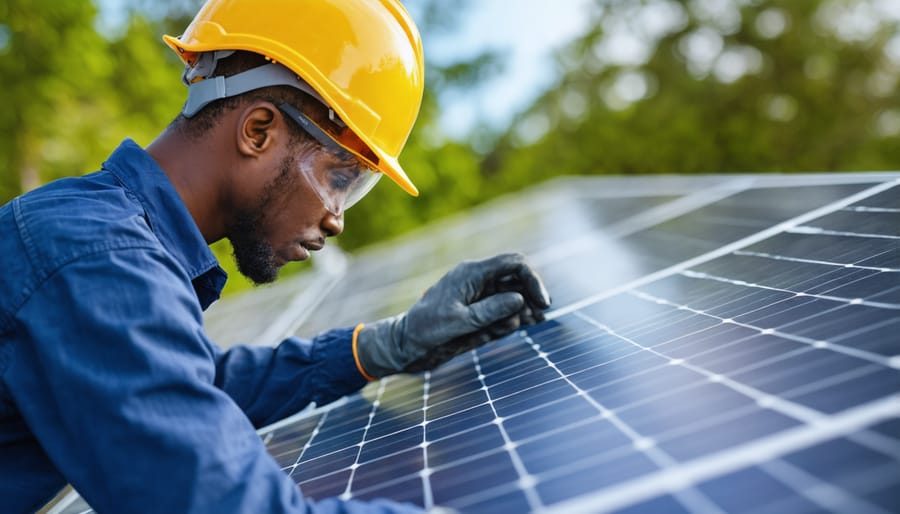
Sustainable off-grid photovoltaic systems require more than initial installation—they demand local expertise for ongoing operation and maintenance. Capacity building programs that train community members in system diagnostics, component replacement, and troubleshooting ensure energy independence extends beyond the technology itself. Educational initiatives, including partnerships between solar providers and academic institutions, create structured learning pathways for local technicians. These collaborations develop curricula covering electrical fundamentals, safety protocols, battery management, and preventive maintenance schedules tailored to specific environmental conditions.
Effective training programs incorporate hands-on workshops, mentorship arrangements with experienced installers, and certification tracks that validate competencies. Documentation in local languages, visual maintenance guides, and simplified troubleshooting flowcharts empower communities to address common issues independently. Establishing local supply chains for replacement components—inverters, charge controllers, and mounting hardware—further reduces dependency on external support. By investing in human capital alongside physical infrastructure, off-grid communities transform from passive technology recipients into active stewards of their energy systems, ensuring resilience spans generations rather than equipment lifecycles.
The Future of Off-Grid Communities in a Changing Climate
Emerging Technologies: Improved Storage and Smart Microgrids
Recent innovations in energy storage and intelligent grid management are revolutionizing off-grid community resilience. Next-generation lithium-ion batteries and emerging solid-state technologies now offer energy densities exceeding 300 Wh/kg, enabling communities to store solar power for extended periods during climate disruptions. Flow batteries provide scalable, long-duration storage solutions particularly suited for community-scale installations.
Artificial intelligence-driven energy management systems optimize power distribution by predicting weather patterns, analyzing consumption data, and automatically balancing loads across microgrids. These systems reduce energy waste by up to 30% while ensuring critical infrastructure maintains power during extreme events.
Smart microgrid coordination allows multiple off-grid communities to share resources and knowledge through cloud-based platforms. Universities partnering with renewable energy developers are advancing these technologies through research programs, while educational initiatives train local technicians in system maintenance. Community microgrids incorporating peer-to-peer energy trading mechanisms further enhance economic viability, creating self-sustaining energy ecosystems that strengthen climate adaptation capabilities for vulnerable populations.
Policy Support and Scaling Best Practices
Governments worldwide are increasingly integrating off-grid photovoltaic solutions into national climate adaptation strategies and development frameworks. The United Nations Sustainable Development Goal 7 has catalyzed policy momentum, with countries like India, Kenya, and Bangladesh establishing dedicated off-grid electrification programs supported by regulatory frameworks that streamline permitting and provide financial incentives. Successful replication models emphasize community ownership structures, standardized technical specifications, and localized maintenance training programs developed through university partnerships. International development agencies now prioritize scalable microgrid templates that can be adapted across diverse geographic contexts while maintaining technical performance standards. Key scaling factors include establishing regional training centers for photovoltaic technicians, creating accessible financing mechanisms through microfinance institutions, and implementing monitoring systems that verify long-term system reliability. Best practices demonstrate that combining policy support with community engagement and technical education creates sustainable pathways for expanding climate-resilient energy access to underserved populations globally.
Off-grid photovoltaic communities represent far more than an alternative energy configuration—they embody a fundamental transformation in how societies approach energy independence, climate resilience, and community empowerment. These systems demonstrate that decentralized, renewable energy infrastructure can effectively address the dual challenges of expanding energy access while reducing carbon emissions, particularly in regions most vulnerable to climate disruptions.
The technical innovations emerging from off-grid installations—from advanced battery storage systems to intelligent microgrids—are reshaping the broader renewable energy landscape. These communities serve as living laboratories where practical solutions to intermittency, load management, and system optimization are tested and refined. The lessons learned translate directly into improved resilience for grid-connected populations facing increasing climate-related outages.
For aspiring photovoltaic professionals, this field offers exceptional opportunities to apply technical expertise toward meaningful social and environmental impact. Universities are increasingly incorporating off-grid system design into their curricula, recognizing the sector’s growth potential and relevance to global sustainability goals. Engaging with community-led projects provides invaluable experience in stakeholder collaboration, cultural sensitivity, and adaptive engineering.
The path forward requires coordinated action. Policy makers must create supportive regulatory frameworks, financial institutions should develop accessible funding mechanisms for community energy projects, and industry stakeholders need to prioritize knowledge transfer and capacity building. By supporting these initiatives, we collectively advance toward a more equitable, sustainable energy future where resilience and self-sufficiency become accessible to all communities, regardless of geographic or economic constraints.