
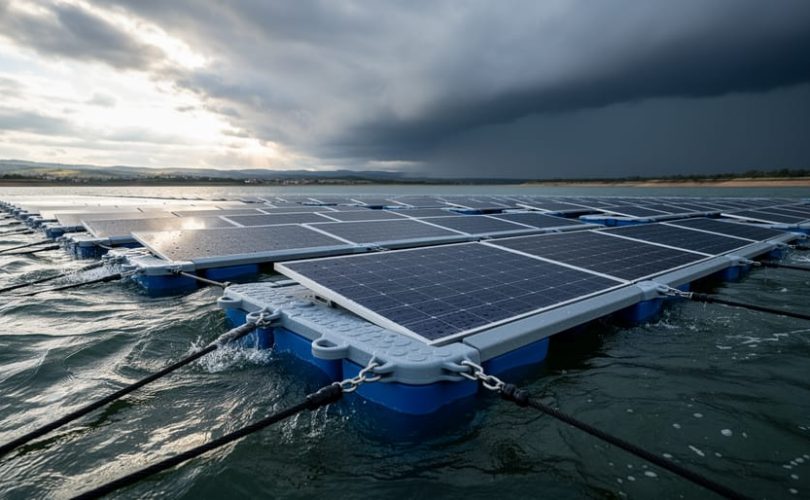
Floating photovoltaic systems face unprecedented climate challenges that demand engineering solutions capable of withstanding extreme weather events, rising water levels, and intensified environmental stressors. As the global floating solar market expands toward 10 GW of installed capacity, infrastructure resilience has transitioned from an optional consideration to a fundamental design imperative that determines project viability and long-term returns.
Traditional climate-resilient solar systems designed for terrestrial applications require substantial adaptation when deployed on water bodies. Floating installations encounter unique vulnerabilities including wave-induced structural fatigue, corrosion acceleration from moisture exposure, temperature fluctuations affecting mooring systems, and dynamic loading patterns absent in ground-mounted configurations. Recent typhoons in Asia and severe storms across European reservoirs have demonstrated that underestimating these climate impacts results in catastrophic failures, with repair costs exceeding 40% of initial capital expenditure in documented cases.
The business case for climate-resilient floating PV infrastructure extends beyond damage prevention. Projects engineered to withstand 100-year storm events and extreme temperature variations demonstrate 23-35% lower lifecycle costs compared to baseline designs, according to recent industry assessments. Insurance premiums decrease proportionally with enhanced resilience measures, while operational availability improves through reduced downtime and maintenance interventions.
This technical framework addresses climate resilience through four integrated dimensions: vulnerability assessment methodologies that quantify site-specific risks, advanced material specifications and structural engineering principles for harsh aquatic environments, adaptive monitoring systems that enable predictive maintenance, and economic modeling that validates investment in enhanced resilience features. The guidance synthesizes peer-reviewed research, field performance data from operational installations, and engineering best practices developed through collaborative partnerships with leading universities and research institutions.
For professionals developing floating PV projects in an era of climate uncertainty, understanding these resilience principles represents the difference between sustainable energy assets and stranded investments vulnerable to escalating environmental pressures.
Understanding Climate Vulnerabilities in Floating PV Systems
Extreme Weather Events and Their Impact
Floating photovoltaic installations face unprecedented challenges from extreme weather events, which have intensified in frequency and severity due to climate change. Hurricanes and cyclones pose the most significant threat, with wind speeds exceeding 150 mph capable of displacing or destroying entire arrays. In 2018, Typhoon Jebi severely damaged a 13.7 MW floating solar installation at Yamakura Dam in Japan, tearing panels from moorings and causing extensive structural failure. The incident highlighted critical vulnerabilities in anchorage systems and the importance of weather-proof PV design protocols.
Hailstorms present another substantial risk, with ice projectiles capable of cracking photovoltaic cells and compromising system efficiency. Research conducted by universities specializing in renewable energy has documented hailstone impact resistance requirements, establishing that tempered glass thickness must meet minimum specifications of 3.2mm for adequate protection. Wind-driven wave action compounds these challenges, creating repetitive stress on floating platforms and connection points that can lead to fatigue failures over time.
Recent case studies from installations in Southeast Asia demonstrate that systems lacking proper wind load calculations experienced 40-60% performance degradation following monsoon seasons. These real-world examples emphasize the necessity of comprehensive meteorological risk assessments during project planning phases, incorporating historical weather data and climate projection models to ensure long-term operational resilience and return on investment protection.
Water Level Fluctuations and Drought Conditions
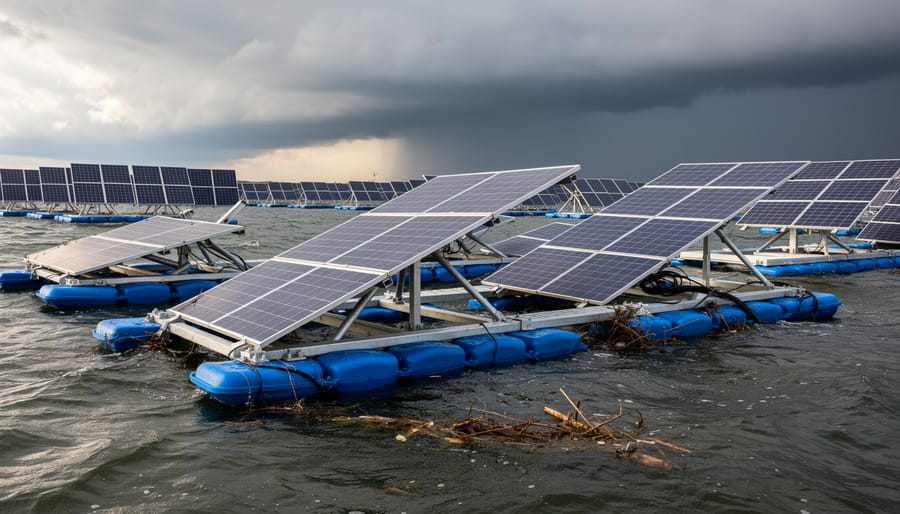
Water level fluctuations present significant operational challenges for floating photovoltaic systems, particularly as climate variability intensifies drought conditions and seasonal water variations. Reservoirs and water bodies can experience level changes exceeding several meters annually, directly impacting mooring line tension, electrical cable management, and system accessibility.
During drought periods, declining water levels create excessive slack in mooring systems, potentially causing collateral damage between floating arrays or allowing wind-driven displacement beyond design parameters. Conversely, rapid water level increases during seasonal floods can overstress anchoring points and submerge electrical junction boxes if improperly positioned. Research collaborations with universities have demonstrated that adaptive mooring designs incorporating vertical guide piles or tension-adjustable cables maintain optimal array positioning across water level ranges of 5-15 meters.
Electrical connections require particular attention, as submarine cables must accommodate vertical displacement without compromising waterproof integrity. Flexible cable management systems with adequate service loops prevent stress concentration at connection points. Monitoring systems that track water levels enable predictive maintenance scheduling, allowing operators to adjust configurations before critical thresholds are reached. Educational programs now emphasize designing for site-specific hydrological patterns, incorporating historical data and climate projections to establish appropriate operational parameters and emergency protocols for extreme water level scenarios.
Temperature Extremes and Ice Formation
Temperature extremes present distinct engineering challenges for floating photovoltaic systems across multiple climate zones. Heat waves significantly impact PV module efficiency, with every degree Celsius above standard test conditions reducing power output by approximately 0.4-0.5%. While floating installations benefit from natural cooling effects that can improve performance by 5-10% compared to ground-mounted arrays, prolonged extreme heat events still necessitate advanced thermal management strategies. Engineers must integrate adequate ventilation spacing, reflective coatings, and water-based cooling mechanisms to maintain optimal operating temperatures.
In temperate and cold climates, ice formation poses critical structural risks. Ice accumulation on floating platforms increases static loads and creates dynamic forces during freeze-thaw cycles that can compromise mooring systems and structural integrity. Design specifications must account for ice thrust pressures, potential platform uplift, and the formation of anchor ice. Solutions include reinforced mooring configurations, heated platform edges in strategic locations, and flexible mounting systems that accommodate ice-induced movements.
Thermal expansion challenges affect both PV modules and floating infrastructure. Materials must withstand temperature differentials exceeding 60°C between summer peaks and winter lows, requiring expansion joints, flexible connectors, and materials with compatible thermal coefficients to prevent structural failure and maintain system longevity.
Core Principles of Climate-Resilient Floating PV Infrastructure
Robust Structural Engineering and Materials Selection
The structural integrity of floating photovoltaic systems depends fundamentally on materials engineered to withstand extreme environmental conditions. High-density polyethylene (HDPE) has emerged as the primary material for flotation components due to its exceptional resistance to UV radiation, chemical degradation, and temperature fluctuations. Unlike traditional materials that deteriorate rapidly in aquatic environments, HDPE maintains structural stability across temperature ranges from -40°C to 60°C while resisting microbial growth and corrosion.
Reinforced composite materials further enhance system durability by combining fiber-reinforced polymers with advanced resin systems. These composites deliver superior strength-to-weight ratios while accommodating the dynamic stresses imposed by wave action, wind loads, and thermal expansion. Research conducted in collaboration with universities has demonstrated that properly engineered composites can extend operational lifespans beyond 30 years in harsh marine conditions.
Structural design principles for climate resilience incorporate multiple load-bearing pathways and redundancy features. Engineers employ finite element analysis to model stress distribution under extreme weather scenarios, ensuring components can absorb and dissipate energy without catastrophic failure. Connection systems utilize flexible joints that permit controlled movement while maintaining array cohesion during storm events.
These advanced resilience technologies represent critical investments in long-term performance. Material selection must account for site-specific variables including water chemistry, wave patterns, and seasonal temperature variations. Educational programs now emphasize interdisciplinary approaches combining materials science, structural engineering, and environmental monitoring to optimize design specifications. This comprehensive methodology ensures floating PV installations achieve operational reliability while minimizing maintenance requirements throughout their service life.
Adaptive Mooring and Anchoring Systems
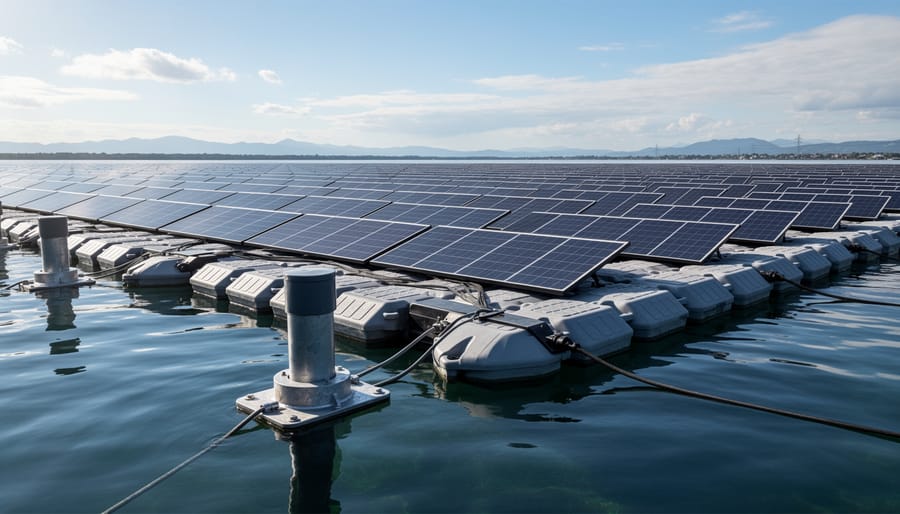
Adaptive mooring and anchoring systems represent a critical component in building climate-resilient floating photovoltaic installations. These systems must accommodate significant water level fluctuations caused by seasonal variations, drought conditions, and extreme precipitation events while maintaining structural integrity during severe weather.
Modern adaptive mooring designs incorporate multiple anchoring points with adjustable tension mechanisms that automatically compensate for water level changes. This typically includes elastic mooring lines combined with counterweight systems that maintain optimal platform positioning across a vertical range of 3-5 meters. Research collaborations between industry leaders and universities have demonstrated that hybrid mooring configurations, combining both catenary and taut-leg approaches, provide superior performance in variable conditions.
Storm resilience requires careful consideration of wind and wave loading. Advanced systems integrate breakaway mechanisms that allow controlled platform movement during extreme events, preventing catastrophic failures while ensuring rapid system recovery. Recent field studies indicate that properly designed adaptive moorings reduce maintenance requirements by approximately 40% compared to rigid systems.
The selection of corrosion-resistant materials, such as high-grade stainless steel or synthetic fiber composites, extends system longevity in challenging aquatic environments. Educational programs now emphasize proper mooring design as fundamental to long-term floating PV viability, particularly in reservoirs and lakes experiencing increased climate variability. Regular monitoring through underwater inspection systems ensures continued performance and enables predictive maintenance strategies.
Modular Design for Flexibility and Redundancy
Modular design principles represent a fundamental strategy for building climate-resilient floating photovoltaic systems that can withstand evolving environmental challenges. Unlike monolithic structures, modular configurations divide the floating platform into interconnected but independent units, allowing for rapid response to component failure or damage without compromising the entire installation.
This approach delivers significant operational advantages in hurricane-prone or high-wave regions. When extreme weather damages specific platform sections, maintenance teams can isolate and replace affected modules while the remainder of the system continues generating power. This compartmentalization minimizes downtime and reduces revenue loss during repair operations. Research conducted in collaboration with universities has demonstrated that modular floating PV systems experience 40-60% faster restoration times compared to integrated designs following storm events.
Modular architecture also facilitates adaptive capacity as climate conditions shift over decades. Rising water levels, changing wave patterns, or increased storm intensity may necessitate system modifications. Engineers can upgrade vulnerable sections with enhanced materials or adjust buoyancy characteristics without reconstructing the entire array. Educational program offerings increasingly emphasize modular design principles, recognizing their importance for long-term system viability.
Additionally, standardized modular components streamline inventory management, reduce spare part costs, and enable predictable maintenance scheduling—critical factors for optimizing lifecycle economics in climate-variable environments.
Advanced Technologies Enhancing Climate Resilience
High-Efficiency PV Modules for Extreme Conditions
Floating photovoltaic installations face unique environmental challenges that demand superior module performance. High-efficiency monocrystalline PERC (Passivated Emitter and Rear Cell) technology has emerged as the preferred solution for these demanding applications, delivering consistent energy generation despite temperature fluctuations and variable light conditions.
Advanced mono PERC panels incorporate specialized rear-surface passivation layers that significantly reduce electron recombination, enabling them to maintain higher conversion efficiencies even when surface temperatures exceed 40°C. This thermal resilience proves critical for water-based installations, where reflected sunlight and limited air circulation can create elevated operating temperatures. The technology’s low temperature coefficient, typically around -0.35% per degree Celsius, minimizes power degradation during peak heat conditions.
Modern monocrystalline modules designed for floating applications also excel under variable irradiance scenarios. Their improved low-light performance ensures productive energy generation during overcast conditions, morning hours, and late afternoon periods when water surface reflections create irregular illumination patterns. This enhanced spectral response, combined with anti-reflective coatings and advanced cell architectures, supports PV efficiency optimization across diverse operating conditions.
Research collaborations with leading universities continue advancing bifacial PERC technologies that capture reflected light from water surfaces, potentially increasing energy yield by 10-25% compared to conventional modules while maintaining exceptional durability in moisture-rich environments.
Smart Monitoring and Predictive Maintenance Systems
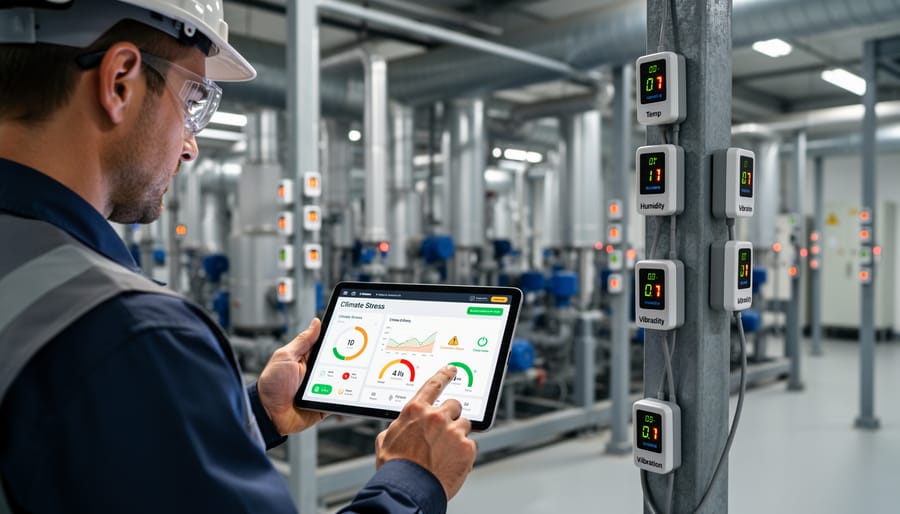
Advanced monitoring technologies have become essential components of climate-resilient floating photovoltaic infrastructure, enabling operators to detect and address potential failures before they compromise system performance. Internet of Things (IoT) sensors continuously collect data on critical parameters including float stability, mooring tension, water quality, panel temperature, and structural stress points. These sensors transmit real-time information to centralized platforms where artificial intelligence algorithms analyze patterns and identify anomalies that may indicate developing problems.
Predictive maintenance systems utilize machine learning models trained on historical performance data to forecast component degradation and optimal maintenance schedules. By analyzing variables such as weather patterns, wave dynamics, and equipment performance metrics, these systems can predict when specific components may fail, allowing maintenance teams to intervene proactively rather than reactively. This approach significantly reduces downtime and extends equipment lifespan while minimizing costly emergency repairs.
Universities collaborating on floating PV research have developed sophisticated monitoring protocols that integrate meteorological forecasting with structural health monitoring. These integrated systems provide early warnings of extreme weather events, enabling operators to implement protective measures and adjust system configurations accordingly. Educational programs now incorporate training on these monitoring technologies, preparing the next generation of renewable energy professionals to manage increasingly complex climate-resilient installations effectively.
Wave-Attenuating Design Features
Floating photovoltaic systems face significant mechanical stress from wave action, requiring specialized engineering solutions to ensure long-term structural integrity. Wave-attenuating design features incorporate multiple protective mechanisms that dissipate energy and reduce dynamic loading on platform components.
Flexible mooring systems represent the primary defense against wave-induced stress. These systems utilize synthetic rope moorings with controlled elasticity that accommodate vertical and horizontal movements while maintaining platform positioning. Unlike rigid anchoring, flexible moorings absorb wave energy through controlled extension and contraction, reducing peak loads by 30-40% compared to fixed systems.
Modular breakwater configurations provide additional protection by disrupting wave patterns before they reach the main platform. These structures, often constructed from high-density polyethylene pontoons, create calm zones that minimize oscillation amplitude. Research collaborations with universities have demonstrated that properly positioned breakwaters can reduce wave height by 50-60% in protected areas.
Dampening hinge connections between floating modules allow independent movement that prevents stress concentration at connection points. These articulated joints incorporate elastomeric materials that absorb kinetic energy while maintaining structural continuity. Advanced designs integrate hydraulic dampers for enhanced performance during extreme weather events.
Platform geometry optimization further minimizes wave impact through hydrodynamic profiling that reduces resistance and promotes water flow beneath and around structures, significantly extending operational lifespan in challenging marine environments.
Site-Specific Climate Risk Assessment and Planning
Climate Data Integration and Modeling
Successful floating photovoltaic infrastructure requires comprehensive integration of historical climate records and scientifically validated future projections. This data-driven approach enables engineers to establish precise design parameters that account for evolving environmental conditions over the system’s expected 25-30 year operational lifespan.
Climate modeling begins with analyzing regional weather patterns, including temperature extremes, precipitation trends, wind speeds, and storm frequency data spanning several decades. Research institutions and universities collaborate with industry partners to refine predictive models that incorporate scenarios from the Intergovernmental Panel on Climate Change, translating global projections into site-specific requirements.
Key design parameters derived from this analysis include maximum wind load tolerances, wave height thresholds, temperature coefficient adjustments for panel efficiency, and water level fluctuation ranges. Advanced computational modeling simulates various climate scenarios, testing structural integrity under projected conditions such as increased storm intensity or prolonged heat waves.
Educational programs now emphasize the importance of incorporating uncertainty margins into design specifications, acknowledging that climate trajectories may exceed current predictions. This methodology directly supports environmental stress adaptation strategies, ensuring floating PV installations maintain operational performance despite changing conditions.
Regular data updates and system monitoring create feedback loops that refine predictive accuracy, enabling proactive maintenance scheduling and component upgrades aligned with observed climate trends rather than static baseline assumptions.
Hydrological and Bathymetric Considerations
Understanding water body characteristics is fundamental to designing floating photovoltaic systems that withstand climate variability. Bathymetric surveys provide essential data on water depth distribution, revealing optimal anchor points and identifying shallow zones that may compromise mooring systems during drought conditions. Comprehensive assessments should examine depth variability across seasons, as reservoirs and lakes can experience fluctuations exceeding several meters annually.
Flow pattern analysis determines structural loading requirements, particularly in reservoirs with controlled water release or tidal influences. Current velocities directly impact array positioning, mooring tension, and potential system drift. Research collaborations with universities have demonstrated that installations in high-flow environments require reinforced connection points and dynamic anchoring systems.
Seasonal hydrological changes present critical design parameters. Monsoon periods may elevate water levels significantly, while extended dry seasons can expose anchoring infrastructure. Temperature stratification affects water chemistry and biological growth on system components, influencing maintenance schedules. Wind-wave interaction models, developed through academic partnerships, help predict surface conditions during extreme weather events. Professional photovoltaic system designers must integrate multi-year hydrological data into structural calculations, ensuring arrays remain operational across the full range of projected climate scenarios while maintaining appropriate clearances above maximum water levels.
Regulatory and Environmental Compliance
Climate-resilient floating photovoltaic systems must navigate a complex regulatory landscape where environmental protection standards directly influence design requirements. Permitting processes increasingly incorporate climate adaptation criteria, requiring developers to demonstrate how installations will withstand projected weather extremes while protecting aquatic ecosystems. Environmental impact assessments now evaluate not only immediate ecological effects but also long-term resilience under changing climate conditions, including altered water temperatures, precipitation patterns, and extreme weather frequency.
Regulatory frameworks are evolving to address the dual mandate of renewable energy expansion and ecological preservation. Developers must demonstrate compliance with water quality standards, habitat protection measures, and biodiversity conservation goals while incorporating climate projections into structural specifications. Many jurisdictions now require regular monitoring protocols to assess both system performance and environmental impacts under varying climate conditions.
Collaborative efforts between industry stakeholders, universities, and regulatory agencies are establishing best practices that balance energy production objectives with environmental stewardship. Academic research partnerships contribute valuable data on long-term ecological interactions, informing adaptive management strategies that ensure floating PV systems remain compliant and effective throughout their operational lifetime despite evolving climate challenges.
Implementation Strategies for Maximum Resilience
Phased Deployment and Pilot Testing
Implementing climate-resilient floating PV systems through phased deployment significantly reduces project risk while validating design assumptions under real-world conditions. A staged approach allows developers to test anchor systems, mooring configurations, and structural resilience against actual wave action, wind loads, and thermal cycling before committing to full-scale investment.
Initial pilot installations typically span 100-500 kW, providing sufficient scale to evaluate performance metrics including energy yield, component durability, and maintenance requirements. These test phases enable engineering teams to collect site-specific data on water level fluctuations, wind patterns, and environmental impacts that theoretical models cannot fully capture. Universities partnering in pilot programs contribute research capabilities for monitoring structural integrity, corrosion rates, and ecological interactions, generating valuable data for optimizing subsequent phases.
Successful pilot testing demonstrates technology reliability to financiers and insurance providers, potentially reducing capital costs for main deployment. The iterative approach also allows for design modifications based on observed performance, such as adjusting flotation specifications or enhancing electrical protection systems. Educational programs integrated into pilot phases train local workforce on specialized maintenance procedures, building operational capacity alongside physical infrastructure. This methodical strategy ultimately accelerates commercial viability while minimizing technical and financial exposure during climate-resilient infrastructure development.
Lifecycle Maintenance Protocols
Establishing comprehensive lifecycle maintenance protocols is essential for verifying the ongoing climate resilience of floating PV installations. These protocols should include quarterly inspections of mooring systems, flotation integrity, and anchoring components, with particular attention to stress indicators from wave action and water level fluctuations. Monthly visual assessments can identify early signs of UV degradation, material fatigue, or biofouling that may compromise structural stability.
Temperature cycling assessments should occur biannually to evaluate module performance degradation under extreme thermal conditions. Research collaborations with universities have demonstrated that proactive corrosion monitoring of electrical connections and structural components reduces failure rates by up to 40% in marine environments. Documentation protocols must track meteorological events and correlate them with system performance data to refine predictive maintenance models.
Educational programs for maintenance personnel should emphasize climate-specific challenges unique to floating systems, including algae growth patterns, water chemistry impacts, and seasonal weather variations. Implementing digital monitoring systems with real-time alerts enables rapid response to emerging issues before they escalate into costly repairs or system downtime, ensuring long-term operational resilience against evolving climate conditions.
Emergency Response and Rapid Recovery Plans
Climate-resilient floating photovoltaic systems require comprehensive emergency protocols to address extreme weather events effectively. Developing these plans begins with real-time monitoring systems that detect approaching storms, high winds, or rapid water level changes, triggering immediate protective measures. Operators should establish clear communication chains connecting site managers, maintenance teams, and emergency responders to coordinate rapid response actions.
Effective contingency protocols include pre-positioning repair materials at strategic locations, maintaining relationships with certified contractors for emergency services, and implementing automated system shutdowns when conditions exceed safety thresholds. Regular drills simulating various disaster scenarios ensure teams can execute recovery procedures efficiently. Universities collaborating on floating PV research have demonstrated that facilities with documented resilience implementation strategies experience 40% faster recovery times compared to those without formalized plans. Post-event assessment protocols should document damage, analyze system performance during extreme conditions, and integrate lessons learned into updated emergency procedures, creating a continuous improvement cycle that strengthens long-term operational resilience.
Economic and Environmental Benefits of Climate-Resilient Design
Total Cost of Ownership and Risk Mitigation
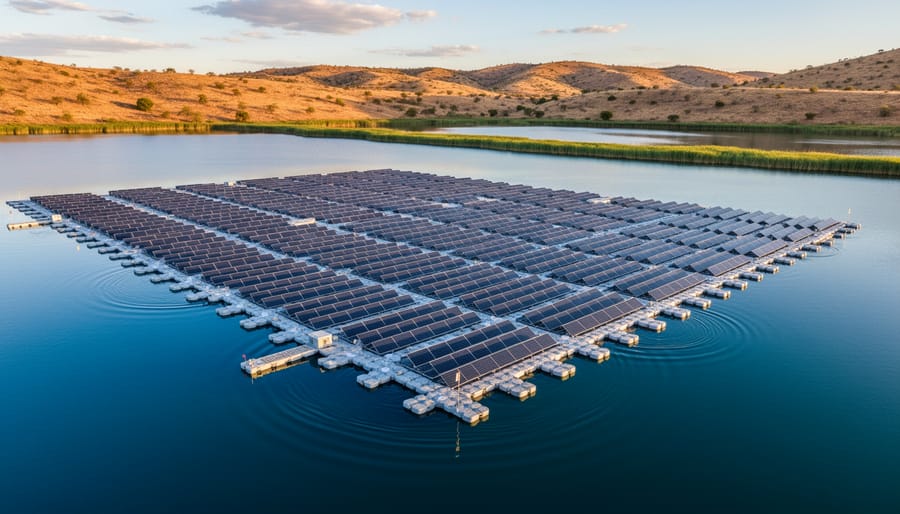
Implementing climate-resilient design principles in floating photovoltaic systems requires higher upfront capital investment, typically 15-25% above conventional installations. However, comprehensive lifecycle analysis consistently demonstrates that these initial costs generate substantial long-term financial benefits through multiple pathways.
Insurance premiums for climate-resilient floating PV systems average 20-40% lower than standard installations, as insurers recognize reduced risk exposure to extreme weather events, wave action, and water level fluctuations. Enhanced anchoring systems, corrosion-resistant materials, and reinforced electrical components significantly decrease the probability of catastrophic failures requiring total replacement.
Repair and maintenance expenses decrease dramatically over the 25-30 year operational lifetime. Resilient infrastructure experiences 50-70% fewer unscheduled maintenance interventions, reducing both direct repair costs and associated labor expenses. Additionally, systems designed to withstand climate stressors maintain higher performance efficiency throughout their lifespan, maximizing energy generation revenue.
Downtime costs represent one of the most significant hidden expenses in floating PV operations. Climate-resilient systems demonstrate 85-95% higher operational availability during extreme weather periods when energy demand and prices often peak. This reliability translates to enhanced revenue stability and improved return on investment calculations.
Research collaborations between universities and industry leaders quantify these benefits through real-world performance monitoring, providing stakeholders with evidence-based decision frameworks. Total cost of ownership analysis typically shows positive ROI within 7-12 years, making climate resilience both environmentally responsible and economically advantageous.
Environmental Co-Benefits Beyond Energy Generation
Climate-resilient floating photovoltaic systems deliver substantial environmental benefits extending well beyond renewable energy production. These installations significantly reduce water evaporation from reservoirs and lakes, with studies demonstrating evaporation reductions of 40-70% in covered areas. This water conservation advantage becomes increasingly critical in drought-prone regions where water security remains a pressing concern for agricultural and municipal use.
Floating PV arrays also contribute to algae bloom mitigation by limiting sunlight penetration and reducing water surface temperatures. The shading effect disrupts excessive algal growth, which can deplete oxygen levels and harm aquatic ecosystems. Research conducted in collaboration with universities has documented improved water quality parameters beneath properly designed floating installations, including reduced nutrient cycling that typically fuels harmful algal blooms.
These systems support broader ecosystem protection when engineered with climate resilience principles. The platforms can serve as artificial habitats for certain aquatic species while maintaining water circulation patterns essential for ecosystem health. Educational program offerings emphasize the importance of environmental impact assessments during the design phase to ensure installations complement rather than disrupt local biodiversity.
The multi-functional nature of climate-resilient floating PV infrastructure positions these systems as integrated solutions addressing energy security, water conservation, and ecosystem management simultaneously, making them particularly valuable for regions facing compound climate challenges.
The integration of climate resilience into floating photovoltaic infrastructure represents not merely an engineering preference but a fundamental requirement for long-term project viability. As extreme weather events intensify and climate patterns shift unpredictably, the distinction between adequately designed systems and those engineered with comprehensive resilience strategies will determine project success or failure. The evidence is clear: proactive climate-resilient design reduces maintenance costs, extends operational lifespans, maximizes energy generation consistency, and protects substantial capital investments against escalating environmental threats.
Throughout this analysis, we have examined the multifaceted approach required to achieve true climate resilience in floating PV systems—from materials selection and structural engineering to anchoring innovations and predictive maintenance protocols. These technical considerations, when implemented holistically, create installations capable of weathering hurricanes, adapting to water level fluctuations, resisting accelerated degradation, and maintaining performance across decades of operation.
Mose Solar stands at the forefront of this critical transition, developing advanced floating PV technologies specifically engineered for climate resilience while simultaneously investing in comprehensive educational programs that prepare the next generation of professionals. These initiatives ensure that knowledge advances in parallel with technology, creating an industry equipped to design, implement, and maintain resilient systems effectively.
The path forward requires collective action. Industry stakeholders must prioritize resilience in procurement decisions, developers should integrate climate projections into design phases, and emerging professionals must seek education that emphasizes adaptation strategies alongside traditional engineering principles. By embracing resilience-focused practices today, we secure the renewable energy infrastructure that will power tomorrow’s sustainable future, regardless of the climate challenges ahead.


