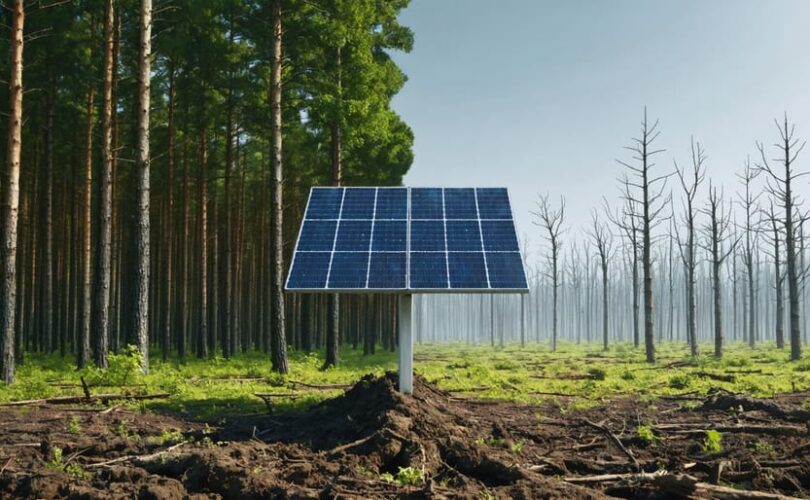
Climate change is creating an unprecedented phenomenon in forest ecosystems worldwide – “zombie forests,” where existing trees persist in locations that can no longer support their natural regeneration. These ecological specters, unable to adapt and thrive through environmental stress, represent a critical challenge for both environmental sustainability and renewable energy infrastructure.
As temperatures rise and precipitation patterns shift, many forest species find themselves trapped in climate conditions that have become unsuitable for seedling establishment and growth. Unlike their ability to migrate during previous climate transitions, today’s rapid environmental changes outpace natural adaptation processes. This mismatch creates “zombie forests” – living stands of mature trees that mark the last generation of their species in that location.
For solar energy developers and environmental planners, understanding zombie forests is crucial. These declining ecosystems affect everything from local temperature patterns and soil stability to wildlife corridors and carbon sequestration capabilities. Their presence – or eventual absence – has significant implications for solar PV installation planning, environmental impact assessments, and long-term project sustainability.
This comprehensive analysis explores the intersection of zombie forests and solar energy development, offering evidence-based strategies for adaptation and resilience in an era of accelerating climate change.
Understanding Zombie Forests in a Changing Climate
The Science Behind Zombie Forests
The phenomenon of zombie forests stems from a critical mismatch between current climate conditions and the ecosystem’s historical composition. As global temperatures rise and climate zones shift, many forest communities persist in locations that no longer support their natural regeneration. This ecological lag creates a situation where mature trees continue surviving in areas that have become too warm or dry for their seedlings to establish themselves.
Research indicates that this misalignment occurs because adult trees can often tolerate conditions beyond their optimal growing range, while seedlings require specific environmental parameters for successful germination and early growth. Studies estimate that 20-40% of existing forests globally may already be living in climatic conditions that differ significantly from their historical norms.
The scientific process behind this phenomenon involves several key factors: changes in precipitation patterns, temperature increases, altered soil moisture levels, and shifts in seasonal timing. These changes disrupt the delicate balance of forest ecosystems, affecting not only tree species but also the complex network of organisms that depend on them.
Climate modeling suggests that as these conditions persist, zombie forests become increasingly vulnerable to various stressors, including drought, disease, and pest infestations. This vulnerability ultimately leads to forest die-off events, fundamentally altering landscape composition and ecosystem services.
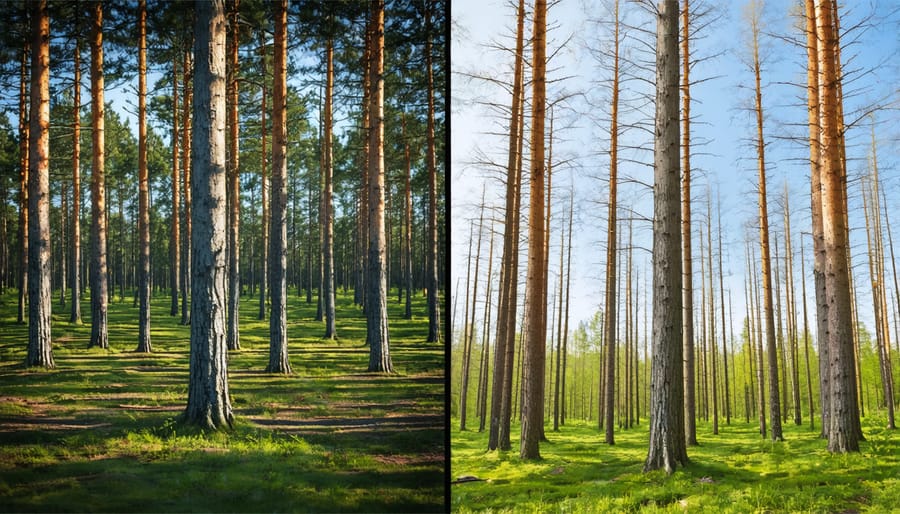
Identifying Vulnerable Forest Ecosystems
Several key indicators help identify vulnerable forest ecosystems that may be transitioning into zombie forests. These indicators include persistent regeneration failure, where seedlings struggle to establish themselves despite favorable conditions, and changes in species composition that deviate from historical patterns. Scientists monitor tree mortality rates, particularly focusing on mature trees that show signs of stress or death without corresponding regeneration.
Geographical location plays a crucial role, with forests at the edge of their natural range being particularly susceptible. Areas experiencing rapid climate change, especially those with increasing temperatures and altered precipitation patterns, require careful monitoring. Soil moisture levels, understory vegetation health, and the presence of climate-adapted species serve as important markers for assessment.
Remote sensing technology and satellite imagery enable researchers to track canopy density changes and identify areas of declining forest health. Ground-level surveys complement this data by examining root systems, soil conditions, and seedling establishment rates. The presence of invasive species, increased pest activity, and changes in natural fire regimes can also indicate vulnerability.
Forest managers use these indicators to develop vulnerability assessments and identify areas requiring intervention. This systematic approach helps prioritize conservation efforts and guides the development of climate-adaptive management strategies, ensuring more effective resource allocation in forest preservation efforts.
Impact on Solar PV System Planning
Site Assessment Challenges
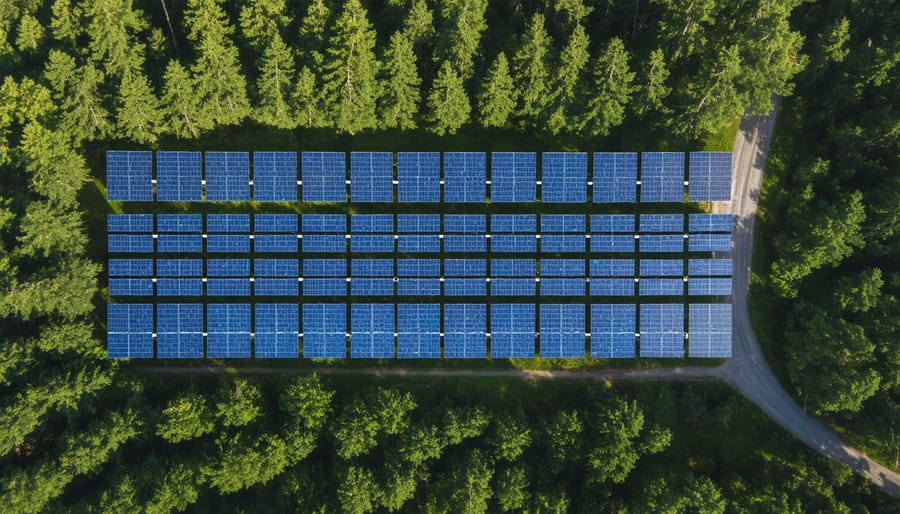
The presence of zombie forests presents unique challenges for solar site assessment professionals and project developers. These ecological anomalies require additional consideration during the initial evaluation phases, as their unstable nature can significantly impact both immediate and long-term project viability.
Traditional site assessment methods must be adapted when dealing with zombie forest areas. The conventional vegetation analysis may not accurately reflect future conditions, as these forests are already in a state of ecological mismatch with their environment. This discrepancy can lead to miscalculations in shading studies, ground stability evaluations, and wildlife impact assessments.
Project developers must consider the gradual die-off patterns of zombie forests, which can occur unpredictably over time. This uncertainty affects multiple aspects of site planning, including:
– Shadow forecasting and array placement optimization
– Soil erosion potential as tree systems fail
– Changes in local microclimate conditions
– Potential hazards from falling dead trees
– Altered watershed dynamics
Environmental impact studies become more complex when zombie forests are present, as these ecosystems often harbor species that will need to migrate or adapt as the forest changes. Solar developers must account for both current biodiversity and projected ecosystem transitions in their planning documents.
Additionally, permitting processes may require special considerations when dealing with zombie forest sites. Local authorities and environmental agencies might require detailed adaptation plans that address the gradual transformation of these landscapes. This can include provisions for managed retreat of failing vegetation and establishment of climate-appropriate species that won’t interfere with solar operations.
Long-term Performance Considerations
The presence of zombie forests presents significant long-term challenges for photovoltaic system performance and maintenance strategies. As these declining ecosystems continue to transform, solar facility operators must adapt their approaches to ensure sustained energy production and system longevity.
Research indicates that zombie forests can create unpredictable shading patterns as trees gradually die off and fall, potentially affecting solar array output. To boost solar panel efficiency, operators need to implement robust monitoring systems that can detect and respond to these changing environmental conditions.
Environmental modeling suggests that areas currently hosting zombie forests may experience significant landscape alterations over the next 20-30 years. This transformation could impact soil stability, drainage patterns, and local microclimate conditions – all crucial factors for PV system performance. Solar developers must consider these evolving conditions when designing system foundations and selecting equipment specifications.
Future-proofing solar installations in these regions requires comprehensive site assessments that account for forest transition scenarios. This includes evaluating potential changes in wind patterns, soil erosion risks, and altered precipitation dynamics that may emerge as the forest ecosystem shifts. Additionally, incorporating adaptive management strategies and flexible system designs can help mitigate potential performance impacts.
Regular reassessment of system parameters and environmental conditions will become increasingly important. Operators should establish baseline performance metrics and implement continuous monitoring protocols to track changes in system efficiency as the surrounding forest ecosystem evolves. This data-driven approach enables proactive maintenance and necessary adjustments to optimize long-term system performance.
Adaptation Strategies for PV Installations
Technical Solutions
Several engineering approaches have emerged to address the challenges posed by zombie forests in solar PV installations. These resilience strategies combine ecological management with advanced technology to minimize risks and optimize system performance.
Adaptive vegetation management systems utilize satellite imagery and machine learning algorithms to identify early signs of forest decline and potential hazard zones. These systems enable proactive intervention before compromised trees become threats to solar infrastructure.
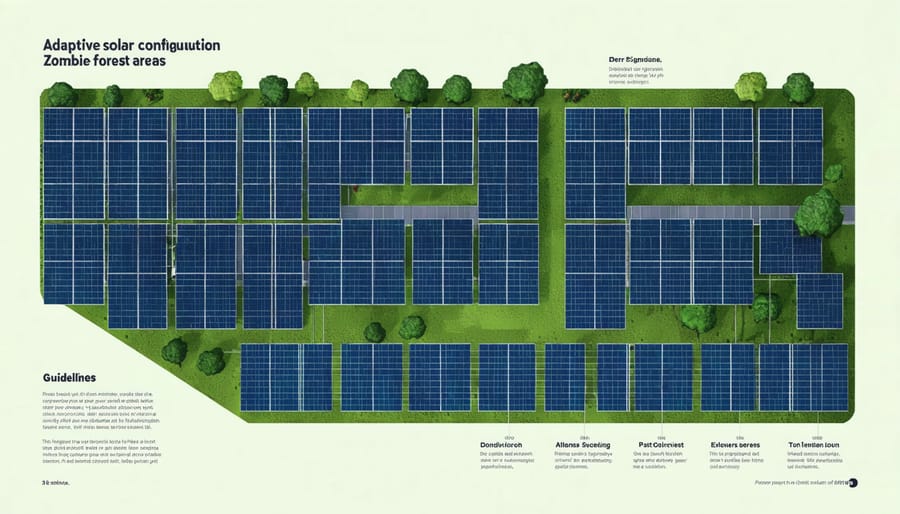
Strategic buffer zone implementation has proven effective in creating defensive perimeters around solar installations. This involves selective clearing and maintaining specific distances between PV arrays and forest edges based on tree height, soil conditions, and prevailing wind patterns.
Advanced monitoring systems incorporating LiDAR technology and thermal imaging help detect structural weaknesses in trees and assess their potential impact on solar installations. These systems can track changes in canopy density and tree health, providing early warning signals for necessary interventions.
Engineered windbreaks and reinforced mounting systems offer additional protection against falling trees and wind-thrown debris. These structures are designed to withstand specific impact forces while maintaining optimal solar panel positioning.
Soil stabilization techniques, including deep root barriers and enhanced drainage systems, help manage the risk of soil erosion and tree destabilization near solar installations. These methods often incorporate geotextile materials and engineered soil compositions to maintain ground stability.
Integration of smart grid technologies allows for rapid system isolation and protection in case of physical damage from failing trees. Automated shutdown mechanisms and bypass circuits help minimize equipment damage and maintain partial system functionality during adverse events.
These technical solutions require regular assessment and updating as climate conditions continue to evolve. Successful implementation depends on careful site-specific analysis and coordination between forestry experts, solar engineers, and environmental scientists.
Environmental Management Practices
Managing zombie forests requires a comprehensive approach that balances ecological restoration with climate adaptation strategies. Forest managers and environmental scientists recommend several key practices to address these transitional ecosystems effectively.
Selective thinning serves as a primary intervention method, removing stressed and dying trees to reduce competition for resources and create space for climate-adapted species. This process must be carefully monitored to maintain forest structure while promoting natural regeneration of more resilient species.
Assisted migration programs have emerged as a crucial strategy, involving the intentional relocation of tree species better suited to warmer conditions. These programs require careful species selection based on climate projections and local ecosystem characteristics to ensure successful establishment and minimal disruption to existing biodiversity.
Regular monitoring and assessment protocols help track forest health indicators, including soil moisture levels, tree mortality rates, and species composition changes. This data-driven approach enables adaptive management strategies and early intervention when necessary.
Fire management practices play a vital role, particularly in areas where zombie forests create increased fire risks. This includes establishing fuel breaks, conducting prescribed burns when appropriate, and maintaining emergency access routes.
Stakeholder engagement and community education form essential components of successful management strategies. Local communities, landowners, and forest managers must collaborate to implement long-term solutions and ensure sustainable forest transition.
Conservation easements and land-use planning tools help protect vulnerable areas while facilitating natural ecosystem adaptation processes. These legal frameworks provide stability for long-term management strategies and help secure necessary resources for implementation.
The integration of climate modeling with forest management decisions enables proactive rather than reactive approaches. This scientific foundation helps managers anticipate and prepare for continued ecosystem changes while maintaining essential forest services and functions.
The phenomenon of zombie forests presents significant challenges and opportunities for both ecosystem management and renewable energy development. As climate change continues to accelerate, understanding and addressing these misaligned forest ecosystems becomes increasingly critical for sustainable development and efficient solar PV installations.
Research indicates that proactive forest management strategies, combined with careful site selection for solar projects, can help mitigate the risks associated with zombie forests. By incorporating climate projection models and forest vulnerability assessments into planning processes, stakeholders can better anticipate and prepare for ecosystem transitions while optimizing solar energy production.
The integration of adaptive management practices will be essential moving forward. This includes regular monitoring of forest health indicators, implementing strategic thinning operations where necessary, and considering assisted migration of climate-adapted species. For solar industry professionals, this means developing more robust site assessment protocols and maintaining flexible approaches to project design that account for changing forest dynamics.
Looking ahead, collaboration between forest ecologists, climate scientists, and renewable energy developers will be crucial. Emerging technologies for forest monitoring and predictive modeling offer promising tools for identifying and managing zombie forests while supporting sustainable solar deployment. Additionally, policy frameworks are evolving to better address these challenges, though continued refinement will be necessary.
The future of forest management and solar energy development will depend on our ability to understand and adapt to these changing ecosystems. By remaining vigilant and responsive to forest transition signals, while implementing evidence-based management strategies, we can work toward more resilient and productive landscapes that support both healthy forests and clean energy generation.