
Solar microgrid design represents a transformative approach to energy independence, combining advanced photovoltaic technology with intelligent power management systems to create resilient local energy distribution networks. These sophisticated systems integrate renewable energy generation, storage solutions, and smart controls to power communities, industrial facilities, and remote installations with unprecedented reliability and efficiency.
Modern microgrid architecture has evolved beyond simple off-grid solutions, incorporating artificial intelligence, predictive analytics, and adaptive load management to optimize energy flow and system performance. By leveraging advanced battery technology and distributed energy resources, these systems can seamlessly transition between grid-connected and island modes, ensuring continuous power availability while maximizing renewable energy utilization.
The strategic implementation of solar microgrids represents a critical advancement in sustainable infrastructure development, offering communities and organizations a pathway to energy autonomy while supporting broader grid stability and resilience. As climate change concerns intensify and energy security becomes paramount, well-designed solar microgrids emerge as essential components of future-ready power systems, capable of delivering reliable, clean energy while reducing carbon emissions and operating costs.
This comprehensive approach to distributed energy generation not only addresses immediate power needs but also establishes a foundation for scalable, sustainable energy solutions that can adapt to evolving technological capabilities and community requirements. Through careful integration of advanced components and intelligent control systems, solar microgrids are reshaping the landscape of modern power distribution and energy independence.
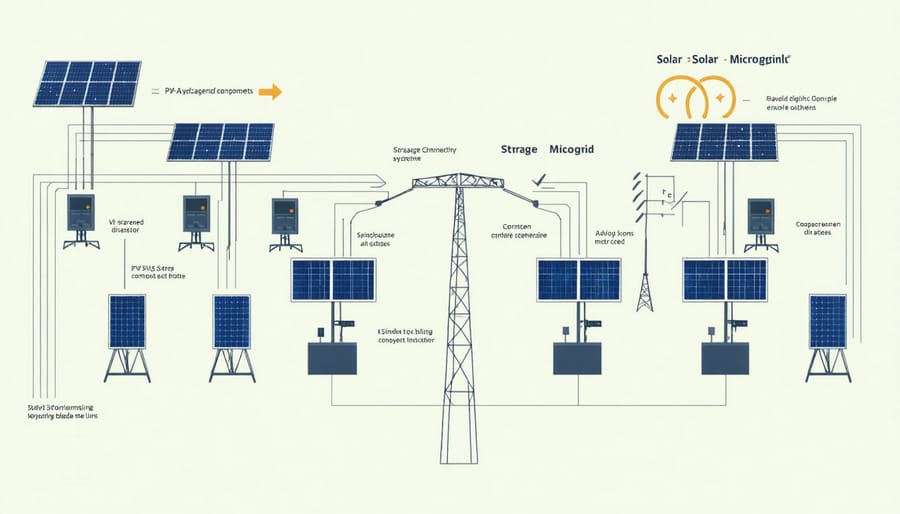
Core Components of Modern Solar Microgrids
Solar PV Array Configuration
The configuration of solar PV arrays in microgrids requires careful consideration of multiple factors to optimize power generation and system reliability. Module selection begins with evaluating the site’s specific energy requirements, available space, and environmental conditions. High-efficiency monocrystalline panels are often preferred for space-constrained installations, while polycrystalline modules may offer better cost-effectiveness for larger areas.
Array layout design focuses on maximizing energy yield while minimizing shading effects and maintenance requirements. Modules are typically arranged in series strings to achieve desired voltage levels, with multiple strings connected in parallel to meet current requirements. The orientation and tilt angles are optimized based on geographical location, with adjustable mounting systems offering enhanced performance in some cases.
System designers must also consider the impact of temperature on module performance, incorporating adequate spacing for ventilation and thermal management. String sizing calculations must account for voltage windows of connected inverters and environmental factors such as extreme temperatures and irradiance variations.
For optimal reliability, arrays should incorporate string monitoring capabilities and protective devices such as blocking diodes and surge protection. The physical layout should facilitate easy access for maintenance while ensuring structural integrity under local weather conditions. Modern configurations often include smart junction boxes and module-level power electronics to enhance system performance and monitoring capabilities.

Energy Storage Solutions
Energy storage systems are crucial components in solar microgrid design, serving as the backbone for reliable power distribution and system stability. Battery technology selection directly impacts system performance, cost-effectiveness, and long-term sustainability.
Lithium-ion batteries remain the predominant choice for solar microgrids due to their high energy density, extended cycle life, and decreasing costs. These systems typically achieve 85-95% round-trip efficiency and can operate for 10-15 years under proper maintenance conditions. Alternative technologies include flow batteries, which offer longer duration storage and easier scalability, though at higher initial costs.
System designers must consider several key factors when selecting storage solutions:
1. Energy capacity requirements based on peak load demands
2. Power rating to meet instantaneous load requirements
3. Depth of discharge limitations to maximize battery life
4. Environmental conditions affecting battery performance
5. Integration with power conversion systems
6. Temperature management and safety systems
The storage system architecture should incorporate redundancy and modularity to ensure system reliability. Modern battery management systems (BMS) monitor cell voltage, temperature, and state of charge while providing protection against overcharging and deep discharge conditions.
Cost optimization involves balancing initial capital expenditure against lifetime operational expenses. While larger storage capacity provides greater energy security, oversizing can lead to unnecessary costs. Regular maintenance schedules and performance monitoring help maximize system longevity and maintain optimal operation throughout the storage system’s lifecycle.
Collaborative Design Strategies
Stakeholder Integration Framework
The successful implementation of solar microgrid projects requires a structured approach to integrating diverse stakeholder interests and requirements. A comprehensive stakeholder integration framework begins with identifying key participants, including utility companies, local governments, community representatives, financial institutions, and technical experts. This multi-stakeholder approach ensures that project designs address both technical specifications and social considerations.
Central to this framework is the establishment of clear communication channels and decision-making protocols. Regular stakeholder meetings and workshops facilitate the exchange of perspectives and help align project objectives with community needs. These discussions often reveal opportunities to leverage community power project incentives and maximize social benefits.
The framework typically incorporates three core components: technical assessment, social impact evaluation, and economic feasibility analysis. Technical assessment involves engineering specifications and system requirements. Social impact evaluation examines community acceptance, environmental considerations, and local employment opportunities. Economic feasibility analysis addresses funding mechanisms, return on investment, and long-term sustainability.
Documentation and tracking of stakeholder inputs through specialized software tools ensure transparent decision-making and accountability. This systematic approach helps prioritize requirements based on technical feasibility, economic constraints, and community impact. Regular review cycles allow for adjustments as project conditions evolve.
Success metrics should be established early, incorporating both quantitative measures (system performance, cost savings) and qualitative indicators (community satisfaction, environmental benefits). This balanced approach ensures that the final microgrid design meets technical specifications while delivering meaningful value to all stakeholders involved.
Community Engagement Protocols
Effective community engagement is crucial for the successful implementation of solar microgrid projects. The process begins with early stakeholder identification and outreach, ensuring all affected community members have a voice in the planning process. This includes residents, local businesses, utility providers, and municipal authorities.
A structured engagement framework typically involves three key phases: initial consultation, collaborative planning, and ongoing communication. During the initial consultation, project developers should organize town halls and workshops to present the proposed microgrid concept and gather community feedback. These sessions help identify local needs, concerns, and preferences that can be incorporated into the design.
Successful microgrid projects often incorporate community education initiatives that explain technical aspects, economic benefits, and environmental impacts in accessible terms. This educational component builds local capacity and ensures long-term community support for the project.
Establishing a dedicated community advisory board can facilitate ongoing dialogue between developers and residents. This board should meet regularly to review project progress, address concerns, and make recommendations for improvements. Documentation of all community engagement activities, including meeting minutes and feedback logs, helps maintain transparency and accountability.
For project sustainability, it’s essential to develop clear protocols for community participation in operation and maintenance decisions. This may include creating local employment opportunities, establishing maintenance training programs, and implementing feedback mechanisms for continuous improvement. Regular updates through newsletters, social media, and community meetings help maintain engagement throughout the project lifecycle.

Technical Design Considerations
Load Analysis and Sizing
Load analysis and system sizing are crucial steps in developing an effective solar microgrid. The process begins with a detailed assessment of energy consumption patterns, including daily and seasonal variations, peak demands, and critical loads that require uninterrupted power supply. Engineers typically collect historical load data over 12-24 months to establish accurate usage profiles and identify trends.
The sizing calculation incorporates several key factors: average daily energy consumption, system efficiency losses, battery storage requirements, and solar resource availability at the installation site. A comprehensive analysis must account for future load growth, typically projecting 5-10 years ahead to ensure system longevity and scalability.
Essential components for accurate sizing include:
– Peak load determination
– Load factor calculation
– Diversity factor assessment
– Coincidence factor evaluation
– Solar resource assessment
– Storage capacity requirements
Modern load analysis utilizes sophisticated software tools that simulate various scenarios and optimize system configurations. These tools consider multiple variables simultaneously, including weather patterns, equipment specifications, and economic constraints. The final sizing should provide a balance between system reliability and cost-effectiveness, typically incorporating a safety factor of 10-15% to account for unforeseen circumstances.
For critical installations, redundancy requirements must be carefully evaluated to maintain system reliability. This often involves implementing N+1 configurations for crucial components and establishing clear protocols for load shedding during resource-constrained periods.
Control Systems Integration
Control systems integration forms the backbone of an efficient solar microgrid, enabling seamless operation and optimal resource utilization. The primary components include supervisory control and data acquisition (SCADA) systems, power management systems (PMS), and advanced metering infrastructure (AMI).
The SCADA system monitors and controls critical parameters such as voltage levels, power flow, and system frequency in real-time. It processes data from various sensors and measurement devices distributed throughout the microgrid, providing operators with comprehensive visibility into system performance and potential issues.
Power management systems orchestrate the interaction between different energy sources, storage systems, and loads. These systems implement sophisticated algorithms to optimize power distribution, manage peak loads, and ensure system stability. They also facilitate seamless transitions between grid-connected and islanded modes of operation.
Advanced metering infrastructure enables bi-directional communication between utility providers and consumers, supporting dynamic pricing mechanisms and demand response programs. Smart meters collect granular consumption data, helping operators identify patterns and optimize system performance.
Modern control systems also incorporate cybersecurity measures to protect against potential threats and ensure reliable operation. Regular software updates and security protocols are essential components of the control architecture. Remote monitoring capabilities allow operators to manage the microgrid efficiently, while automated fault detection and isolation mechanisms help maintain system reliability and minimize downtime.

Grid Connection Protocols
Grid connection protocols for solar microgrids must adhere to strict standards and requirements to ensure seamless integration with the main utility grid. These protocols primarily focus on safety, power quality, and system reliability. IEEE 1547 serves as the fundamental standard governing interconnection requirements, establishing guidelines for voltage regulation, frequency control, and fault protection.
Essential components include grid-tie inverters that meet UL 1741 certification requirements, ensuring proper synchronization with grid frequency and voltage. Protection systems must incorporate anti-islanding capabilities to prevent unintentional islanding during grid outages, while maintaining the ability to transition smoothly between grid-connected and island modes.
Modern microgrids often integrate with community power sharing systems, requiring additional consideration for bi-directional power flow management. Power quality monitoring equipment must continuously assess harmonics, voltage fluctuations, and power factor to maintain compliance with utility requirements.
Key interconnection requirements typically include:
– Voltage and frequency ride-through capabilities
– Power factor correction within specified limits
– Rapid disconnect functionality during grid disturbances
– Synchronization verification systems
– Remote monitoring and control capabilities
Successful grid connection requires coordination with local utilities, adherence to regional codes, and proper documentation of system specifications and testing procedures. Regular maintenance and compliance verification ensure continued safe operation and optimal performance of the microgrid system.
Implementation Best Practices
Project Management Framework
Effective project management is crucial for successful solar microgrid implementation, requiring a structured approach that encompasses planning, execution, and monitoring phases. The process begins with stakeholder identification and engagement, including community members, technical experts, and funding partners. Similar to successful solar cooperative models, this collaborative framework ensures all parties understand their roles and responsibilities.
The project lifecycle follows five key stages: initiation, planning, execution, monitoring, and closure. During initiation, project objectives are defined, feasibility studies conducted, and preliminary budgets established. The planning phase involves detailed system design, resource allocation, and risk assessment, culminating in a comprehensive project schedule.
Execution requires careful coordination of equipment procurement, site preparation, and installation activities. A qualified project manager oversees contractors, ensures compliance with technical specifications, and maintains communication channels between stakeholders. Regular progress meetings and documentation help track milestones and address challenges promptly.
Quality control measures are implemented throughout construction, including equipment testing and system commissioning. The monitoring phase involves performance verification, data collection, and adjustment of operational parameters as needed. Project closure includes formal handover procedures, training for maintenance personnel, and documentation of lessons learned.
Success metrics should be clearly defined and monitored, incorporating both technical performance indicators and social impact measures. Regular reporting keeps stakeholders informed and maintains transparency throughout the project lifecycle. This systematic approach helps ensure the microgrid meets its intended objectives while maintaining schedule and budget constraints.
Quality Assurance Protocols
Quality assurance in solar microgrid design requires rigorous testing and validation procedures to ensure system reliability, safety, and performance. The protocols typically follow international standards such as IEEE 1547 for interconnection requirements and IEC 62446 for grid-connected photovoltaic systems.
The validation process begins with factory acceptance testing (FAT) of individual components, including solar panels, inverters, and battery storage systems. Each component undergoes performance testing under standardized conditions to verify compliance with manufacturer specifications and industry standards.
Site acceptance testing (SAT) follows installation, encompassing comprehensive system checks:
– Power quality measurements
– Grid synchronization verification
– Protection system functionality
– Communication system reliability
– Battery charging and discharging cycles
– Islanding capability assessment
Continuous monitoring protocols must be established using advanced metering infrastructure (AMI) to track key performance indicators:
– System availability
– Power output efficiency
– Energy conversion rates
– Grid stability parameters
– Response times during switching events
Documentation and reporting procedures are essential components of quality assurance. This includes maintaining detailed records of:
– Test results and certification documents
– Calibration certificates for measuring instruments
– System performance data
– Maintenance schedules and reports
– Incident logs and corrective actions
Regular third-party audits are recommended to ensure ongoing compliance with standards and identify potential areas for improvement. These audits should assess both technical performance and safety protocols, with findings incorporated into system optimization strategies.
Quality assurance protocols should be regularly updated to reflect technological advances and evolving industry standards, ensuring the microgrid maintains optimal performance throughout its operational lifetime.
The collaborative development of solar microgrids represents a crucial advancement in sustainable energy infrastructure, combining technical innovation with community engagement. Through the integration of smart technologies, renewable energy sources, and sophisticated control systems, these microgrids demonstrate remarkable potential for enhancing grid resilience and energy independence. The successful implementation of microgrid projects relies heavily on effective partnerships between utilities, academic institutions, private sector entities, and local communities.
Looking ahead, the future of solar microgrid design appears particularly promising. Emerging technologies in energy storage, artificial intelligence-driven control systems, and advanced power electronics are set to further optimize microgrid performance and reliability. The increasing focus on standardization and modular design approaches will likely accelerate deployment while reducing implementation costs.
The industry continues to evolve toward more collaborative models, with stakeholders sharing expertise and resources to overcome technical and regulatory challenges. Educational institutions are playing an increasingly vital role by providing specialized training programs and conducting applied research. This collaborative ecosystem supports both innovation and knowledge transfer, ensuring the continued advancement of microgrid technologies.
As climate change concerns intensify and grid resilience becomes more critical, solar microgrids will undoubtedly play an essential role in our energy future. Success will depend on maintaining strong partnerships, investing in workforce development, and fostering an environment of continuous learning and innovation among all stakeholders involved in microgrid development.