

7V solar panels represent a crucial breakthrough in small-scale photovoltaic technology, offering an optimal voltage output for charging portable devices and powering IoT applications. By leveraging advanced semiconductor materials and precision engineering, these panels deliver consistent performance while maintaining compact dimensions. The integration of digital twin technology in solar systems has further enhanced their efficiency, enabling real-time monitoring and predictive maintenance capabilities.
Recent advancements in crystalline silicon technology have improved the voltage regulation and conversion efficiency of 7V panels, making them increasingly viable for both consumer electronics and industrial applications. Their standardized voltage output eliminates the need for complex voltage regulation circuits in many applications, reducing system complexity and cost while improving overall reliability.
As renewable energy continues to shape our technological landscape, 7V solar panels emerge as a vital component in the transition toward sustainable power solutions. Their precise voltage characteristics, combined with modern manufacturing techniques, provide an ideal power source for a growing range of applications, from smart home devices to environmental monitoring systems.
Understanding 7V Solar Panel Architecture
Technical Specifications and Design Features
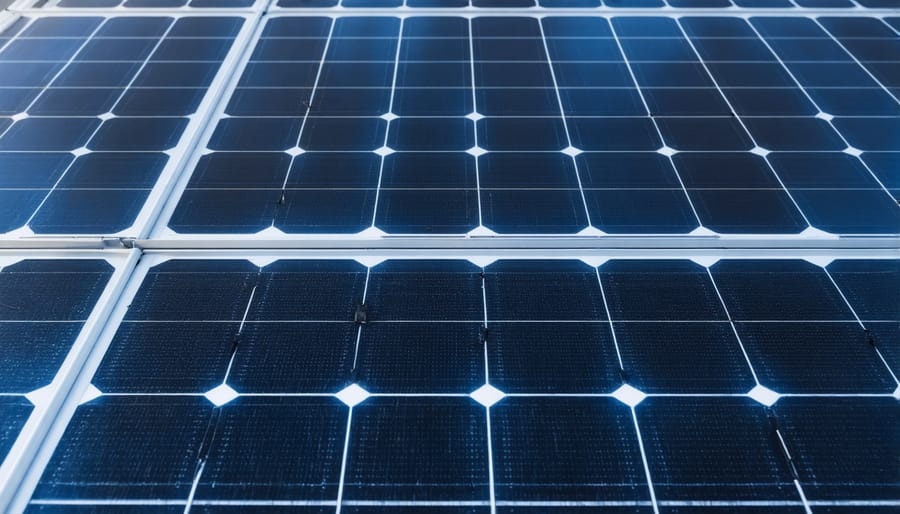
The 7V solar panel integrates advanced solar panel construction technologies to deliver optimal performance in compact applications. These panels typically feature a nominal voltage output of 7 volts under standard test conditions (STC), with power ratings ranging from 2W to 10W depending on the specific model and surface area. The photovoltaic cells are arranged in series-parallel configurations, utilizing monocrystalline or polycrystalline silicon technology with conversion efficiencies between 15% and 21%.
Key design features include a tempered glass front cover (3.2mm thickness), EVA encapsulation layers, and a weather-resistant backsheet that ensures durability in various environmental conditions. The aluminum frame construction provides structural integrity while maintaining a lightweight profile, typically weighing between 0.2 to 0.5 kg depending on panel dimensions.
Most 7V panels incorporate bypass diodes to minimize power losses from partial shading and feature IP65-rated junction boxes for reliable performance in outdoor installations. Operating temperature ranges from -40°C to +85°C, with temperature coefficients averaging -0.45%/°C for power output, ensuring stable performance across diverse environmental conditions.
Performance Characteristics
A 7V solar panel typically operates with an efficiency rating between 15-20% under standard test conditions (STC), which includes an irradiance of 1000W/m² at 25°C. These panels deliver a nominal voltage output of 7 volts, with actual operating voltages ranging from 6.5V to 7.5V depending on environmental conditions and load requirements.
The power output of 7V panels generally ranges from 1W to 5W, making them suitable for small-scale applications and charging systems. Performance is optimized when the panel receives direct sunlight, though modern panels incorporate anti-reflective coatings and advanced cell structures to maintain reasonable efficiency even in diffuse light conditions.
Operating temperature significantly impacts performance, with efficiency decreasing approximately 0.4% for every degree Celsius above 25°C. These panels maintain stable operation between -40°C and 85°C, though peak performance occurs at cooler temperatures. The fill factor, typically ranging from 0.75 to 0.80, indicates good power conversion efficiency under optimal conditions.
Most 7V panels achieve maximum power point (MPP) operation at around 80-85% of their open-circuit voltage, ensuring reliable power delivery to connected devices while maintaining voltage stability.
Digital Twin Implementation for 7V Panels
Sensor Integration and Data Collection
Modern 7V solar panel installations leverage sophisticated IoT-enabled monitoring systems to collect and analyze critical performance data. These systems typically incorporate multiple sensor types, including irradiance meters, temperature sensors, and voltage monitors, working in concert to provide comprehensive performance metrics.
Data acquisition occurs through strategically placed sensors that measure key parameters such as solar irradiance levels, panel surface temperature, ambient conditions, and electrical output. Advanced monitoring solutions utilize high-precision analog-to-digital converters to ensure accurate readings across all parameters. This data is typically sampled at predetermined intervals, ranging from seconds to minutes, depending on the application requirements.
The integration architecture employs robust communication protocols, often utilizing wireless technologies like ZigBee or LoRaWAN for reliable data transmission. These protocols are specifically chosen for their low power consumption and ability to maintain stable connections across varying environmental conditions.
Real-time data processing occurs through edge computing devices, which filter and consolidate raw sensor data before transmission to central monitoring stations. This approach optimizes bandwidth usage while ensuring the preservation of critical performance indicators. The collected data serves multiple purposes, including performance optimization, predictive maintenance, and efficiency analysis, enabling system operators to maximize the solar panel’s energy yield potential.
Real-time Performance Modeling
Digital simulation and real-time analysis capabilities have revolutionized the way we understand and optimize 7V solar panel performance. Modern modeling software enables engineers and researchers to create detailed virtual representations that account for various environmental factors, including solar irradiance, temperature fluctuations, and shading effects.
These sophisticated models utilize advanced algorithms to process data from multiple sensors, providing instantaneous feedback on panel efficiency and power output. By incorporating machine learning techniques, the systems can predict performance patterns and identify potential issues before they impact energy generation.
Real-time monitoring platforms integrate weather forecasting data with historical performance metrics, enabling precise yield predictions and maintenance scheduling. This predictive capability helps operators maximize energy harvesting by adjusting panel positioning and cleaning schedules based on data-driven insights.
The modeling systems also facilitate comparative analysis between theoretical and actual performance metrics, helping identify efficiency gaps and optimization opportunities. Engineers can simulate various scenarios, such as different mounting configurations or environmental conditions, without physical modifications to the installation.
Performance modeling has proven particularly valuable for large-scale installations, where even minor improvements in individual panel efficiency can result in significant overall gains. The technology also supports research and development efforts by providing a controlled environment for testing new panel designs and configurations before physical implementation.
Predictive Maintenance Applications
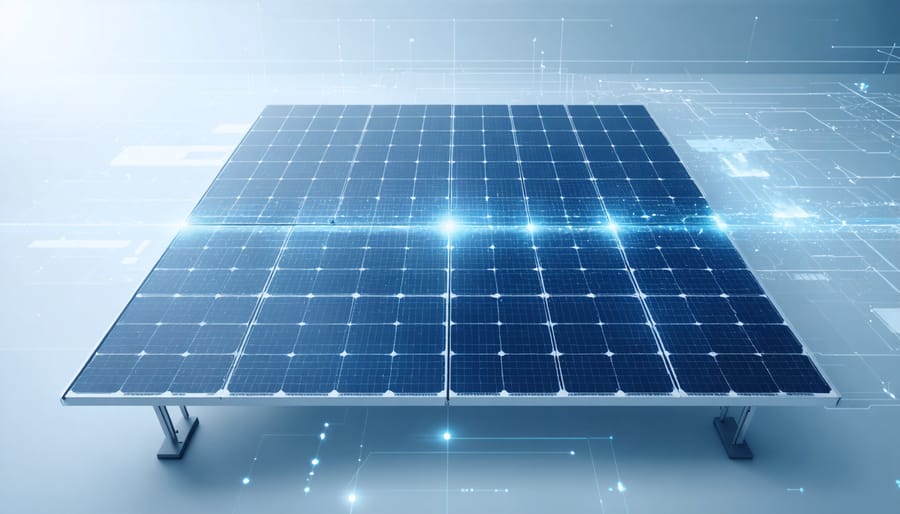
Digital twin technology has revolutionized predictive maintenance for 7V solar panel systems by creating virtual replicas that enable real-time monitoring and performance optimization. These digital models integrate sensor data, weather patterns, and operational parameters to predict potential failures and maintenance requirements before they occur.
Through advanced machine learning algorithms, digital twins analyze historical performance data and current operating conditions to identify patterns that may indicate emerging issues. This proactive approach allows maintenance teams to schedule interventions at optimal times, reducing downtime and maximizing energy production efficiency.
The implementation of digital twin technology in 7V solar panel maintenance includes continuous monitoring of key parameters such as voltage output, temperature variations, and degradation rates. The system generates detailed performance reports and maintenance recommendations based on actual operating conditions rather than fixed schedules.
Key benefits of this predictive maintenance approach include:
– Reduced maintenance costs through targeted interventions
– Extended panel lifespan through early problem detection
– Optimized cleaning schedules based on environmental conditions
– Improved energy yield through performance optimization
– Enhanced reliability through predictive fault detection
Research collaborations with universities have demonstrated that digital twin-enabled maintenance can increase system efficiency by up to 15% while reducing maintenance costs by 25%. These improvements make predictive maintenance an essential component of modern solar panel installation and operation strategies.
Optimization and Performance Enhancement
Energy Output Optimization
Digital twin technology has revolutionized the way we optimize 7V solar panel performance, offering unprecedented insights into energy output maximization. By creating virtual replicas of physical solar installations, engineers can implement sophisticated AI-driven performance optimization strategies that significantly enhance power generation efficiency.
Real-time monitoring through digital twins enables precise adjustment of panel positioning, tracking environmental conditions, and predicting maintenance requirements. This data-driven approach allows operators to optimize tilt angles and orientation based on seasonal variations, weather patterns, and local geographical factors. The system continuously analyzes performance metrics, identifying potential inefficiencies and suggesting corrective measures before they impact output.
Advanced simulation capabilities enable operators to test various scenarios without risking physical hardware. This includes evaluating different cleaning schedules, assessing the impact of shading patterns, and optimizing inverter settings for maximum power point tracking (MPPT). The digital twin platform also facilitates predictive maintenance by monitoring key performance indicators and detecting early signs of degradation.
Integration with weather forecasting systems allows for proactive adjustment of panel parameters, ensuring optimal performance under varying conditions. The platform’s machine learning algorithms analyze historical data to develop customized optimization strategies, considering factors such as temperature coefficients, solar irradiance levels, and panel degradation rates.
By implementing these digital twin insights, organizations can achieve up to 15% improvement in energy yield while reducing operational costs through preventive maintenance and enhanced system reliability. This technology-driven approach represents a significant advancement in solar panel optimization, making it an essential tool for modern photovoltaic installations.

System Integration Benefits
The integration of 7V solar panels into existing power systems offers numerous operational advantages and efficiency improvements. These panels serve as an optimal bridge between lower-voltage consumer electronics and higher-voltage solar installations, creating a more versatile and adaptable energy infrastructure.
When incorporated into hybrid systems, 7V panels demonstrate exceptional compatibility with various charge controllers and power management units. This compatibility reduces the need for additional voltage conversion equipment, thereby minimizing energy losses and system complexity. The panels’ voltage output aligns well with many battery charging requirements, particularly in 6V systems with allowance for voltage drop and charging overhead.
System designers benefit from simplified wiring configurations when using 7V panels, as these units can be connected in series or parallel arrangements with minimal voltage matching concerns. This flexibility enables more efficient system scaling and easier maintenance procedures. The panels also demonstrate superior performance in partial shading conditions, as their voltage output remains more stable compared to higher-voltage alternatives.
In terms of monitoring and control integration, 7V panels readily interface with standard solar charge controllers and energy management systems. This seamless integration facilitates accurate performance tracking and system optimization. The moderate voltage level also enhances safety during installation and maintenance procedures, reducing the risk of electrical hazards while maintaining effective power generation capabilities.
For off-grid applications, 7V panels provide an excellent balance between power output and system complexity. Their voltage characteristics make them particularly suitable for small-scale renewable energy systems, where they can be efficiently combined with energy storage solutions and load management systems without requiring sophisticated voltage regulation equipment.
Future Implications and Industry Impact
The evolution of 7V solar panel technology is poised to significantly impact the renewable energy landscape in the coming years. Industry analysts project substantial growth in the adoption of these panels, particularly in specialized applications and integrated solar solutions. The increasing demand for efficient, compact solar solutions is driving manufacturers to invest in research and development, focusing on improving conversion efficiency and reducing production costs.
Recent technological breakthroughs in semiconductor materials and manufacturing processes suggest that next-generation 7V panels could achieve efficiency rates exceeding current standards by 15-20%. This advancement would make them increasingly attractive for both residential and commercial applications, especially in space-constrained environments where maximum power output per square meter is crucial.
The integration of smart monitoring systems and IoT capabilities with 7V solar panels is expected to enhance their performance optimization and maintenance protocols. This convergence of solar technology with digital solutions will enable more precise power management and predictive maintenance, ultimately increasing the overall system reliability and longevity.
From an industry perspective, the standardization of 7V solar panel specifications is likely to facilitate broader market adoption and streamline manufacturing processes. This standardization could lead to reduced production costs and more competitive pricing, making the technology more accessible to a wider range of applications and markets.
Environmental considerations are also driving innovation in this sector. Manufacturers are developing more sustainable production methods and exploring recyclable materials for panel construction. These initiatives align with global sustainability goals and are expected to strengthen the position of 7V solar panels in the renewable energy market.
Looking ahead, the integration of 7V panels with emerging energy storage solutions and smart grid systems presents promising opportunities for enhanced grid stability and energy management. This integration could play a crucial role in addressing intermittency challenges and supporting the broader transition to renewable energy sources.
The implementation of digital twin technology for 7V solar panels represents a significant advancement in renewable energy optimization. By creating virtual replicas of physical solar installations, organizations can achieve enhanced monitoring capabilities, predictive maintenance, and improved operational efficiency. The technology enables real-time performance analysis, reduces maintenance costs, and extends the lifespan of solar panel systems through data-driven decision-making. As the renewable energy sector continues to evolve, digital twin integration offers a promising path toward maximizing solar panel output and reliability. Industry stakeholders are encouraged to explore this innovative solution, as it provides a comprehensive framework for optimizing solar installations while contributing to sustainable energy goals. The investment in digital twin technology today paves the way for more efficient, reliable, and cost-effective solar energy systems tomorrow.


