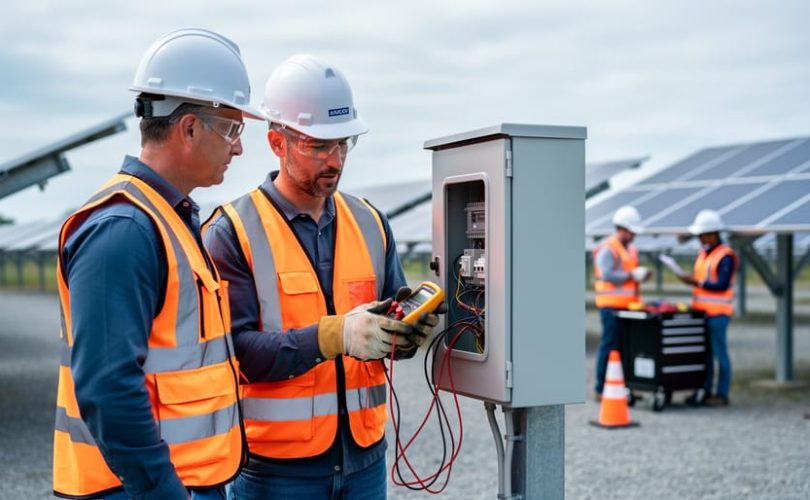
Certification operations management in photovoltaic systems represents the systematic framework that ensures training programs deliver measurable competencies aligned with industry standards and regulatory requirements. This operational discipline encompasses curriculum development, assessment protocols, quality assurance mechanisms, and credential verification processes that transform aspiring technicians into qualified solar professionals.
The photovoltaic industry faces a critical skills gap as installation capacity expands exponentially worldwide. Effective certification operations bridge this divide by establishing standardized benchmarks for technical proficiency, safety compliance, and maintenance expertise. Programs that integrate robust operational management systems produce graduates capable of performing module diagnostics, conducting preventive maintenance, troubleshooting inverter malfunctions, and implementing safety protocols that meet OSHA and National Electrical Code requirements.
Understanding certification operations management empowers prospective students to evaluate program quality through concrete criteria: accreditation status, hands-on training ratios, assessment rigor, and industry partnership depth. For current trainees, this knowledge illuminates the infrastructure supporting their professional development, from competency matrices to performance tracking systems. Industry professionals seeking advancement benefit from recognizing how certification operations validate expertise and enhance career mobility within renewable energy sectors.
Educational institutions collaborating with universities and industry stakeholders establish certification frameworks that balance theoretical foundations with practical application. These partnerships ensure operational protocols remain current with technological advancements in solar panel efficiency, energy storage integration, and grid interconnection standards, ultimately producing workforce-ready professionals equipped to advance the global renewable energy transition.
What Certification Operations Management Actually Means in PV Training

The Three Pillars of PV Certification Operations
Effective certification operations management in photovoltaic O&M training rests on three interconnected pillars that work together to produce highly competent professionals ready for industry demands.
The first pillar, training delivery management, encompasses the strategic coordination of educational content, instructor resources, and learning methodologies. This component ensures that comprehensive PV training programs are delivered consistently across different cohorts and locations. It involves scheduling practical lab sessions, managing equipment availability, coordinating field training opportunities, and maintaining updated curriculum materials that reflect current industry standards and technological advancements. Effective delivery management also incorporates diverse learning formats—including hands-on workshops, virtual simulations, and real-world project exposure—to accommodate different learning styles and maximize knowledge retention.
The second pillar, performance assessment systems, establishes rigorous evaluation frameworks that accurately measure trainee competency. These systems combine written examinations testing theoretical knowledge with practical skills assessments that evaluate hands-on capabilities in real-world scenarios. Assessment protocols must align with industry benchmarks and certification standards, providing objective measurements of competency across critical areas such as system troubleshooting, safety compliance, preventive maintenance execution, and diagnostic analysis. Regular calibration of assessment tools ensures consistency and fairness in evaluating candidate readiness for professional practice.
The third pillar, certification quality assurance, maintains program integrity through continuous monitoring, feedback integration, and compliance verification. This includes regular audits of training materials, instructor qualifications review, graduate performance tracking, and industry feedback collection. Quality assurance processes identify improvement opportunities, ensure alignment with evolving industry requirements, and validate that certified professionals consistently meet employer expectations. Together, these three pillars create a robust operational framework that transforms aspiring professionals into qualified PV O&M experts.
How Operations Management Differs from Technical Training
Understanding certification operations management requires distinguishing it from hands-on technical training. While technical training focuses on developing practical skills—such as installing solar panels, troubleshooting inverters, or performing electrical testing—operations management addresses the systematic framework that validates and verifies these competencies through formal certification processes.
Technical training teaches you what to do in the field. You learn wiring diagrams, safety protocols, equipment specifications, and maintenance procedures. Operations management, conversely, establishes how your mastery of these skills gets assessed, documented, and recognized within the broader industry ecosystem.
This distinction matters because competence alone doesn’t guarantee professional recognition. Certification operations management creates the infrastructure that translates your technical abilities into credentials employers trust and regulatory bodies accept. It encompasses standardized evaluation criteria, quality assurance mechanisms, record-keeping systems, and compliance protocols that ensure certification outcomes meet industry benchmarks.
For aspiring photovoltaic professionals, understanding this difference clarifies why reputable training programs invest heavily in operational frameworks beyond curriculum delivery. A certification program’s operational excellence determines whether your credential will carry weight in the marketplace, influence hiring decisions, and withstand regulatory scrutiny throughout your career trajectory.
The Operational Framework Behind Effective PV O&M Certification
Curriculum Delivery and Resource Coordination
Effective curriculum delivery forms the backbone of high-quality certification programs in photovoltaic operations and maintenance. Certification bodies must establish robust systems to coordinate educational content across multiple training locations while maintaining consistent quality standards. This involves developing standardized learning materials, assessment tools, and practical exercises that align with industry competencies and safety requirements.
Resource coordination encompasses several critical elements. Programs must maintain a pool of qualified instructors who possess both technical expertise and teaching capabilities. Many leading certification providers collaborate with universities and technical colleges to access experienced faculty while ensuring instructors receive regular updates on evolving PV technologies and maintenance protocols. Equipment management presents another operational challenge, as programs need sufficient solar panels, inverters, monitoring systems, and diagnostic tools to provide hands-on training experiences that mirror real-world conditions.
Facility scheduling requires careful planning to accommodate multiple cohorts throughout the year. Certification administrators must balance classroom availability, laboratory access, and outdoor training areas while considering weather dependencies for practical sessions. Quality assurance mechanisms include regular curriculum reviews, student performance analytics, and feedback loops that identify areas requiring improvement.
Educational program offerings increasingly incorporate flexible delivery methods, combining in-person instruction with online modules to accommodate working professionals. This hybrid approach demands additional coordination of learning management systems, virtual laboratories, and remote assessment capabilities. Successful certification operations maintain detailed documentation of all resource allocations, instructor assignments, and training outcomes to ensure accountability and continuous improvement across all program iterations.

Assessment Protocol Management
Assessment protocol management establishes the operational framework for evaluating candidate competency through systematic testing and verification procedures. Effective PV certification programs integrate multiple assessment methodologies to ensure comprehensive skill validation.
Practical evaluations form the cornerstone of competency verification, requiring candidates to demonstrate hands-on proficiency in equipment installation, system troubleshooting, and maintenance procedures. These assessments typically occur in controlled laboratory environments or simulated field conditions, allowing evaluators to observe technical execution while maintaining safety standards.
Written examinations test theoretical knowledge across electrical principles, system design fundamentals, regulatory compliance, and industry best practices. Question banks are regularly updated to reflect evolving technologies and current National Electrical Code requirements, ensuring assessment relevance.
Safety assessments evaluate candidates’ understanding of hazard identification, lockout-tagout procedures, personal protective equipment usage, and emergency response protocols. This critical component verifies that professionals can maintain safe working environments while performing system operations.
Performance verification combines observational scoring rubrics with objective measurement criteria, creating transparent evaluation standards. Many programs partner with universities to validate assessment methodologies, ensuring academic rigor and industry alignment. Documentation systems track individual progress, maintain assessment records, and generate detailed performance reports that support continuous improvement initiatives.
Documentation and Compliance Tracking
Effective certification operations management requires robust systems for documentation and compliance tracking throughout the credentialing lifecycle. Training organizations must maintain comprehensive records of each participant’s course completion, assessment scores, hands-on competency demonstrations, and continuing education activities. Digital learning management systems streamline this process by automatically capturing attendance data, quiz results, and practical skill evaluations while generating audit trails for regulatory review.
Tracking certification progress involves monitoring individual learners against program milestones, identifying those requiring additional support, and ensuring timely completion of prerequisites before credential issuance. Universities collaborating with solar training providers often integrate these tracking systems with academic transcripts to provide seamless documentation for students pursuing dual credentials.
Regulatory compliance demands adherence to standards set by accrediting bodies, industry associations, and governmental agencies overseeing renewable energy workforce development. Operations teams must verify instructor qualifications, ensure curriculum alignment with current National Electrical Code standards, and maintain updated safety protocols. Credential issuance processes include identity verification, final competency validation, and secure certificate generation with tamper-proof features, establishing trust with employers who rely on these certifications to validate workforce capabilities.
Why Operations Management Skills Matter for PV Professionals

From Technician to Operations Leader
Understanding career advancement pathways in photovoltaic operations begins with recognizing how operational competencies expand professional opportunities beyond installation work. Field technicians who develop strong operations management skills position themselves for meaningful advancement into leadership roles that shape organizational success.
The transition from hands-on technical work to supervisory positions requires mastering workforce coordination, quality assurance protocols, and performance monitoring systems. Technicians who demonstrate proficiency in scheduling optimization, resource allocation, and safety compliance naturally emerge as candidates for team leadership roles. These supervisory positions involve overseeing multiple installation crews, ensuring adherence to operational standards, and serving as the critical link between field teams and management.
Project management represents another significant advancement opportunity for operations-savvy professionals. This role demands comprehensive understanding of timelines, budgets, stakeholder communication, and multi-site coordination. Operations management certification provides the foundational knowledge in process optimization, risk mitigation, and strategic planning that project managers utilize daily. Universities partnering with industry leaders increasingly incorporate these competencies into their renewable energy curricula, recognizing the sector’s need for qualified project coordinators.
Training coordinator positions offer yet another pathway, where experienced professionals leverage their operational expertise to develop educational programs and mentor emerging technicians. These roles combine technical knowledge with instructional design, curriculum development, and assessment strategies. As the photovoltaic industry expands globally, demand continues growing for qualified individuals who can systematically transfer operational best practices to the next generation of solar professionals.
Enhanced Workplace Performance Through Operational Awareness
Mastery of certification operations management directly elevates daily workplace performance in photovoltaic operations and maintenance environments. When technicians understand the systematic frameworks behind certification standards, they naturally apply these principles to safety protocols, quality assurance procedures, and troubleshooting methodologies. This operational awareness transforms routine tasks into opportunities for continuous improvement.
Safety compliance becomes second nature when professionals recognize how certification operations establish protective guardrails for high-voltage work environments. Rather than viewing safety checklists as bureaucratic requirements, trained technicians understand the risk mitigation logic underlying each procedure, leading to more conscientious adherence and proactive hazard identification.
Quality control similarly benefits from this comprehensive understanding. Technicians familiar with certification operational standards can identify performance deviations earlier, implement corrective measures more effectively, and document outcomes with greater precision. This systematic approach reduces system downtime and extends equipment lifespan.
Problem-solving capabilities also advance significantly. When faced with complex technical challenges, professionals with certification operations knowledge apply structured diagnostic methodologies rather than relying solely on trial-and-error approaches. This results in faster issue resolution, reduced equipment damage, and more efficient resource allocation. Universities collaborating with industry-recognized training providers increasingly emphasize these operational competencies, recognizing that theoretical knowledge must translate into measurable workplace improvements for the renewable energy sector’s continued growth.
Key Operational Competencies Covered in PV Certification Training
Safety Protocol Management
Effective safety protocol management forms the operational backbone of professional photovoltaic installations, ensuring worker protection and system reliability throughout the project lifecycle. This critical competency encompasses developing comprehensive safety documentation, implementing lockout-tagout procedures, and maintaining personal protective equipment standards specific to electrical work at elevated heights.
Operational implementation begins with establishing site-specific safety plans that address arc flash hazards, DC voltage risks, and rooftop fall protection requirements. Certification programs train professionals to conduct systematic pre-installation safety assessments, identify potential hazards including electrical faults and structural limitations, and implement appropriate mitigation measures. Regular safety audits verify compliance with OSHA regulations and National Electrical Code requirements while identifying areas for continuous improvement.
Emergency response procedures constitute another essential operational component, requiring documented protocols for electrical fires, equipment failures, and personnel injuries. Trained operators must maintain updated emergency contact lists, ensure first aid equipment accessibility, and conduct regular response drills. Additionally, incident reporting systems track safety metrics, analyze near-miss events, and drive proactive improvements to existing protocols.
Universities collaborating with certification programs increasingly emphasize hands-on safety training, utilizing simulation exercises that replicate real-world scenarios without exposing trainees to actual risks, thereby building competence before field deployment.
Performance Monitoring and Data Management
Effective performance monitoring forms the backbone of professional photovoltaic operations management. Modern certification programs emphasize comprehensive data management systems that enable operators to track energy production metrics, identify performance deviations, and optimize system efficiency. Operators learn to utilize supervisory control and data acquisition (SCADA) systems, remote monitoring platforms, and analytics software to evaluate key performance indicators such as capacity factor, performance ratio, and system availability.
Maintenance scheduling represents a critical operational competency covered in certification training. Professionals develop expertise in creating preventive maintenance calendars, managing work order systems, and coordinating corrective actions based on real-time performance data. This includes understanding how to prioritize maintenance tasks, allocate resources efficiently, and document all operational activities for compliance and warranty purposes.
Data-driven decision-making capabilities distinguish certified operations managers from basic technicians. Training programs teach professionals to interpret trending data, generate performance reports for stakeholders, and implement continuous improvement strategies. Participants gain hands-on experience with industry-standard data management platforms, learning to transform raw operational data into actionable insights that enhance system reliability, extend equipment lifespan, and maximize return on investment for solar installations.
Quality Control and Standard Operating Procedures
Certification programs in photovoltaic operations and maintenance emphasize quality control methodologies that ensure consistent performance across solar installations. Training modules teach professionals how to develop comprehensive Standard Operating Procedures (SOPs) that document every critical maintenance task, from panel cleaning protocols to inverter diagnostics. These standardized procedures minimize variability, reduce human error, and create reproducible outcomes that meet industry benchmarks.
Quality checkpoint implementation forms a cornerstone of operational excellence. Certification curricula guide learners through establishing inspection schedules, defining acceptance criteria, and creating documentation systems that track system performance over time. Participants learn to identify key performance indicators specific to photovoltaic systems, including capacity factor measurements, degradation rates, and availability metrics. This systematic approach enables operators to detect anomalies early and implement corrective actions before minor issues escalate into costly failures.
Continuous improvement processes taught in certification programs draw from established frameworks like Plan-Do-Check-Act cycles and Six Sigma methodologies. Universities collaborating with industry partners integrate real-world case studies demonstrating how iterative refinement of maintenance procedures leads to enhanced system reliability and extended equipment lifespan. By mastering these quality management principles, certified professionals contribute to the operational integrity that renewable energy stakeholders demand.
How University Collaboration Enhances Certification Operations
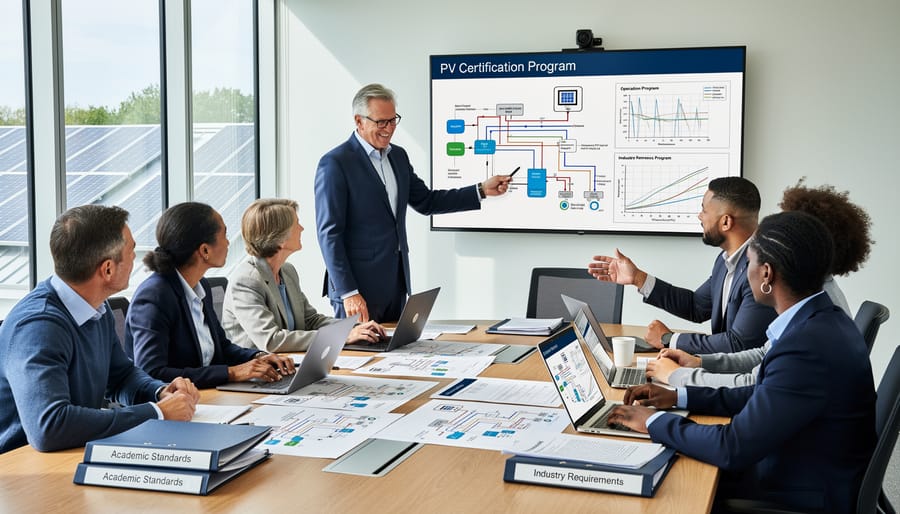
Academic Standards Meet Industry Requirements
Effective certification operations in photovoltaic maintenance training require a delicate balance between rigorous academic standards and practical industry relevance. Through strategic university collaboration, certification programs ensure that their curriculum, assessment methods, and competency frameworks meet both educational excellence benchmarks and real-world employer expectations.
Universities contribute pedagogical expertise, research-backed methodologies, and quality assurance mechanisms that elevate certification programs beyond basic skill training. This partnership ensures standardized learning outcomes, validated assessment tools, and credentialing processes that employers recognize and value. Academic institutions also provide access to cutting-edge research in solar technology, allowing certification content to reflect the latest industry innovations and best practices.
Simultaneously, industry input through advisory boards and employer feedback loops keeps certification operations aligned with current workforce demands. This dual approach guarantees that graduates possess both theoretical knowledge validated by academic standards and practical competencies that installation companies, maintenance providers, and solar facilities actively seek. The result is a certification framework that commands respect in both educational and professional spheres, enhancing career prospects for certified professionals while meeting the photovoltaic industry’s evolving talent requirements.
Continuous Improvement Through Research-Based Operations
Academic partnerships between certification bodies and research institutions create dynamic feedback mechanisms that continuously enhance photovoltaic operations management training. These collaborations allow certification programs to integrate the latest educational research methodologies while incorporating real-world industry data from operational solar installations. Universities contribute pedagogical expertise and rigorous assessment frameworks, ensuring that certification standards remain both academically credible and practically relevant. Industry stakeholders provide crucial feedback through surveys, performance metrics, and employer satisfaction data, revealing which competencies translate most effectively to workplace success. This bidirectional information flow enables certification administrators to refine curriculum content, update technical modules reflecting emerging technologies, and adjust assessment criteria based on actual field requirements. Educational research informs optimal learning pathways, while operational data from certified professionals validates training effectiveness. The result is a living certification framework that evolves with technological advancements and workforce demands, ensuring that graduates possess current, market-aligned skills rather than outdated knowledge. This research-based approach distinguishes quality certification programs from static alternatives, offering aspiring professionals confidence that their training investment reflects contemporary industry standards.
Choosing a PV Certification Program with Strong Operational Management
Questions to Ask Before Enrolling
Before committing to a certification program in operations management for photovoltaic systems, prospective students should thoroughly evaluate the program’s infrastructure. Start by asking how the program tracks student progress throughout the certification journey and what assessment methods determine competency. Inquire about the specific operational systems used for scheduling maintenance activities, managing inventory records, and documenting performance data, as these reflect real-world industry practices.
Understanding support structures is equally critical. Ask whether the program provides access to instructors or mentors beyond scheduled class times, and what resources are available for students who need additional guidance on technical concepts. Questions about alumni success rates and post-certification job placement support reveal the program’s commitment to long-term student outcomes.
Additionally, examine how the certification body maintains relevance with evolving industry standards. Request information about curriculum update frequency, partnerships with solar equipment manufacturers, and whether the program incorporates emerging technologies like artificial intelligence for predictive maintenance. Finally, clarify whether the certification includes ongoing professional development opportunities or requires periodic renewal, ensuring your credentials remain current in this rapidly advancing field.
Recognition and Industry Acceptance
Operational excellence in certification management directly influences how the industry perceives program graduates. Employers in the photovoltaic sector actively seek candidates from quality certification programs that demonstrate rigorous operational standards, comprehensive curriculum delivery, and alignment with current industry practices. Well-managed certification programs establish partnerships with leading solar companies, utilities, and energy organizations, creating pathways for graduate employment and professional advancement.
Recognition extends beyond individual job placements to broader industry acceptance. Certification bodies that maintain operational transparency, regularly update training content to reflect technological advancements, and enforce consistent evaluation standards earn accreditation from professional organizations and regulatory authorities. This institutional credibility translates to enhanced career mobility for graduates, with their credentials recognized across different markets and jurisdictions.
Furthermore, programs demonstrating operational excellence often collaborate with universities and research institutions, offering graduates access to continuing education opportunities and professional networks. This integration between certification operations and academic partnerships strengthens the overall value proposition, positioning certified professionals as qualified contributors to the renewable energy transition while opening doors to specialized roles in system design, performance analysis, and project management.
Certification operations management represents the invisible infrastructure that separates credible professional development from superficial credential programs. Throughout the photovoltaic industry, where technical competency directly impacts system performance, safety outcomes, and career trajectories, this operational framework ensures that certifications deliver genuine value rather than empty promises.
The difference between programs with robust operational management and those without becomes evident in graduate outcomes. Professionals who complete well-managed certification programs demonstrate higher competency retention, faster career progression, and greater confidence when facing real-world installation and maintenance challenges. These tangible benefits stem from systematic quality assurance, continuous curriculum refinement, expert instructor coordination, and responsive support systems working seamlessly behind the scenes.
As you evaluate certification programs for your professional development, prioritize those demonstrating operational excellence through transparent assessment methods, accessible learning resources, and institutional credibility. Look for evidence of systematic quality control, established partnerships with recognized organizations, and verifiable graduate success metrics. Programs lacking these operational foundations may offer certificates but rarely deliver career-transforming education.
At Mose Solar, our certification operations management benefits from university collaboration, combining academic rigor with industry relevance. This partnership ensures our photovoltaic training programs maintain the operational standards that translate classroom learning into workplace competency. We invite you to explore our comprehensive certification offerings, designed with the operational infrastructure necessary to support your journey from aspiring professional to accomplished photovoltaic expert. Your career success begins with choosing programs built on operational excellence.