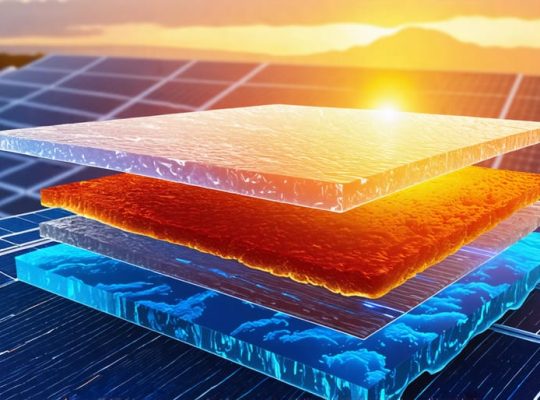
As photovoltaic technology advances, bifacial solar panels represent a significant leap forward in solar energy efficiency. These innovative modules, capable of capturing sunlight from both sides, promise up to 30% higher energy yields compared to traditional monofacial panels. Their unique design allows them to harness direct sunlight on the front surface while simultaneously capturing reflected light on the rear, maximizing power generation in various installation environments.
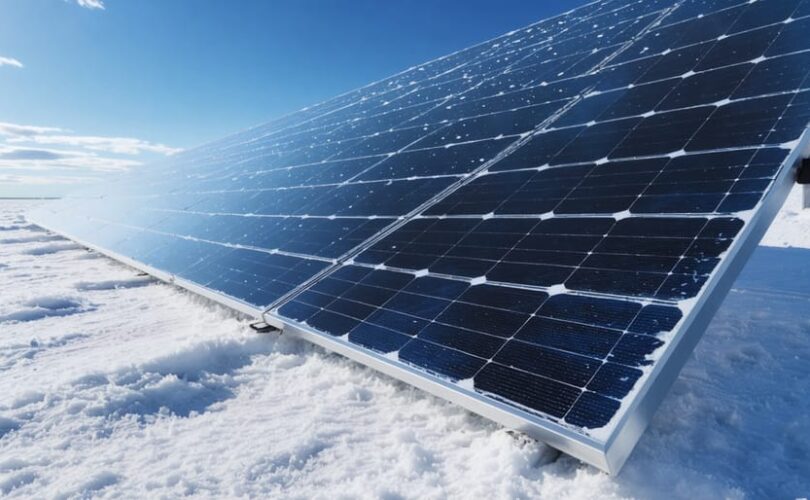
Recent studies from the National Renewable Energy Laboratory (NREL) demonstrate that bifacial panels consistently outperform conventional models, particularly in snow-covered regions or areas with highly reflective surfaces. This dual-sided approach to solar harvesting not only enhances overall system efficiency but also reduces the levelized cost of electricity (LCOE), making solar power more economically viable for both commercial and utility-scale installations.
However, the decision to invest in bifacial technology requires careful consideration of specific site conditions, installation requirements, and cost-benefit analysis. Understanding these factors is crucial for determining whether bifacial panels represent the optimal solution for your solar energy needs.
How Bifacial Solar Panels Work
Front and Back Power Generation
Bifacial solar panels generate electricity through photovoltaic cells on both their front and rear surfaces, maximizing energy capture from available light. The front side functions similarly to traditional monofacial panels, directly converting sunlight into electrical energy through the photovoltaic effect. The rear side captures reflected light (albedo) from surrounding surfaces such as ground cover, snow, or nearby structures.
The front surface typically achieves 100% of its rated power capacity under standard test conditions, while the rear surface can generate an additional 5-30% of power depending on installation conditions and environmental factors. This dual-sided power generation is made possible by transparent back sheets or glass-glass construction that allows light to reach the rear cells.
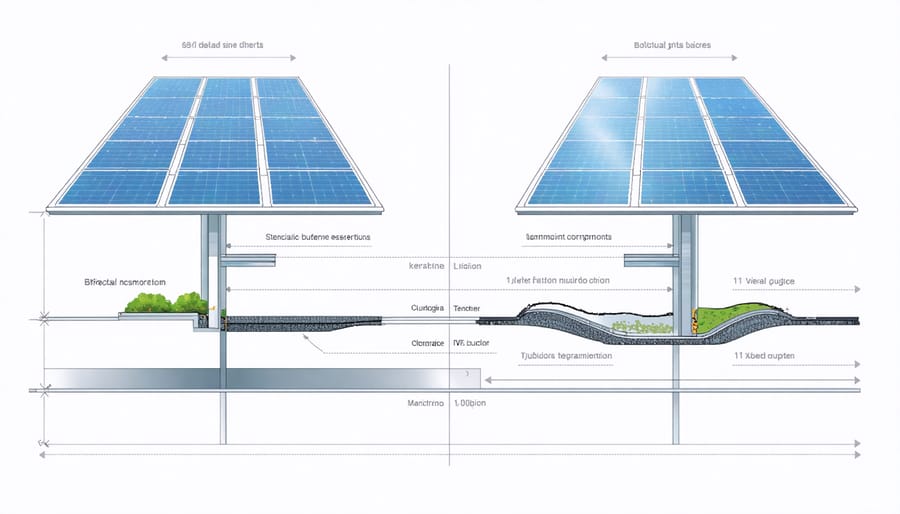
The effectiveness of rear-side power generation depends on several factors, including mounting height, tilt angle, and surface reflectivity beneath the panels. For example, white gravel or snow can reflect up to 80% of incident light, while grass typically reflects 20-30%. The spacing between panels and row configuration also significantly impacts rear-side performance by affecting the amount of reflected light reaching the back surface.
Cell Technology and Design
Bifacial solar panels employ advanced cell technology that enables light absorption and power generation from both sides of the panel. The construction typically features high-quality solar cells sandwiched between two layers of highly transparent glass or specialized backsheet materials. Unlike traditional panels with opaque backings, bifacial modules utilize transparent or translucent materials that allow reflected light to reach the rear surface.
The cells themselves are typically made from premium N-type silicon, which offers superior solar cell efficiency and reduced light-induced degradation compared to conventional P-type cells. Most bifacial panels incorporate Passive Emitter Rear Contact (PERC) or heterojunction technology, which enhances light capture and conversion on both sides.
The transparent backsheet or glass construction necessitates robust edge sealing and enhanced mechanical strength to protect the cells from environmental factors while maintaining optimal performance. Advanced anti-reflective coatings are applied to both surfaces to maximize light absorption and minimize losses, ensuring optimal energy conversion from both direct and reflected light sources.
Performance Comparison
Energy Yield Advantages
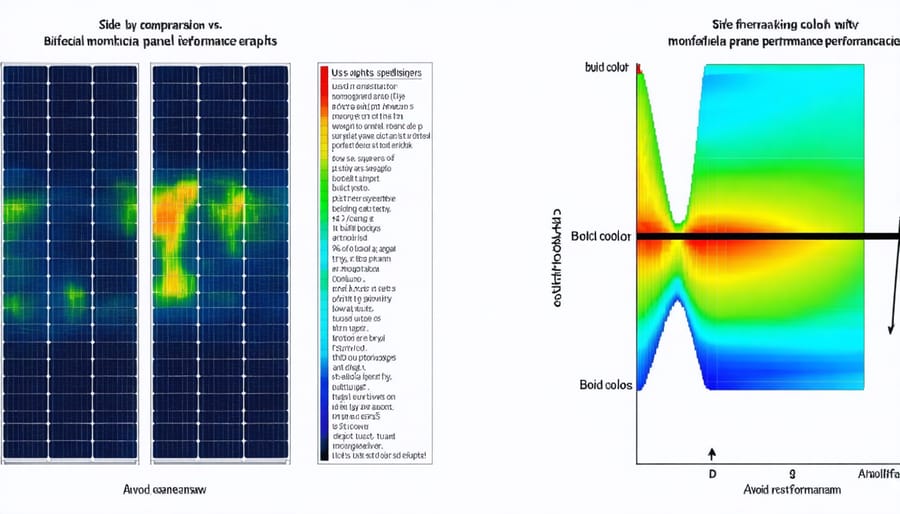
Bifacial solar panels demonstrate significant energy yield advantages over their monofacial counterparts, primarily due to their ability to capture light on both surfaces. Research conducted by the National Renewable Energy Laboratory (NREL) indicates that bifacial modules can achieve energy gains ranging from 5% to 30% compared to traditional panels, depending on installation conditions and environmental factors.
The enhanced power generation capabilities stem from several key mechanisms. First, the rear side of bifacial panels can capture albedo radiation – light reflected from the ground surface. This additional energy collection is particularly effective when panels are installed over highly reflective surfaces such as white gravel, snow, or light-colored roofing materials.
Installation height also plays a crucial role in energy yield optimization. Elevating bifacial panels allows more diffuse light to reach the rear surface, with studies showing optimal height ranges between 1 to 2 meters above the ground. This configuration maximizes the panels’ exposure to reflected light while maintaining practical installation parameters.
Geographic location and seasonal variations influence bifacial gain potential. Regions with high ambient light reflection, such as areas with frequent snow cover or sandy terrain, typically experience higher energy yields. Additionally, bifacial panels perform exceptionally well in vertical installations, making them ideal for east-west oriented systems and building-integrated photovoltaic applications where they can capture morning and afternoon sun effectively.
Cost-Benefit Analysis
The economic viability of bifacial solar panels requires careful consideration of both initial costs and long-term benefits. While bifacial modules typically command a 5-10% premium over traditional monofacial panels, their potential for increased energy yield can offset this higher upfront investment.
Studies indicate that bifacial systems can generate 5-30% more electricity compared to conventional panels, depending on installation conditions and environmental factors. This enhanced production capability directly impacts the return on investment (ROI) timeline. In optimal conditions, with proper ground reflectivity and mounting height, the additional energy generation can reduce the payback period by 1-2 years compared to traditional systems.
However, the cost-benefit equation varies significantly based on several factors. Installation location, ground albedo, mounting system requirements, and local electricity rates all influence the financial outcomes. For instance, installations over highly reflective surfaces like white gravel or snow-covered terrain typically demonstrate better ROI than those over darker surfaces.
The declining manufacturing costs of bifacial technology, coupled with improving efficiency rates, are making these systems increasingly competitive. When factoring in the longer operational lifespan and enhanced durability of bifacial panels, the total lifetime value often exceeds that of monofacial alternatives. For large-scale installations, particularly in areas with high electricity costs, the additional energy harvest can translate into substantial financial benefits despite the higher initial investment.
Optimal Installation Conditions
Ground Albedo Effects
Ground albedo, or surface reflectivity, plays a crucial role in determining the performance advantage of bifacial solar panels over their monofacial counterparts. The reflective properties of different ground surfaces significantly impact the amount of light reaching the rear side of bifacial modules, directly affecting their energy yield potential.
High-albedo surfaces such as white concrete, snow, or light-colored gravel can reflect up to 80% of incident sunlight, maximizing the bifacial gain. In contrast, darker surfaces like asphalt or grass typically reflect only 10-30% of incoming light, resulting in lower rear-side energy generation. This variation in ground reflectivity can lead to performance differences ranging from 5% to 30% in bifacial energy yield compared to traditional panels.
Installation height also influences how ground albedo affects performance. Optimal mounting heights of 1-2 meters allow for better light distribution and increased rear-side exposure. Site designers must carefully consider ground surface treatments and maintain reflective properties throughout the system’s lifetime to maximize bifacial advantages.
For large-scale installations, some developers incorporate artificial high-albedo materials or ground treatments to enhance rear-side performance, though this requires careful cost-benefit analysis considering installation and maintenance expenses.
Mounting and Orientation
The installation and positioning of bifacial solar panels require careful consideration to maximize their unique dual-sided power generation capabilities. Optimal mounting height typically ranges between 1 to 2 meters above the reflective surface, allowing sufficient diffused light to reach the rear side. This elevation also facilitates maintenance and reduces shading from surrounding vegetation.
For maximum efficiency, bifacial panels should be installed at a tilt angle between 20 and 30 degrees, depending on geographical location and latitude. Vertical mounting at 90 degrees can also be effective, particularly in snow-prone regions or building-integrated applications where space is limited.
The underlying surface significantly impacts rear-side generation. Light-colored materials such as white gravel, concrete, or specialized reflective membranes can increase albedo values and enhance overall power output. Regular maintenance of these surfaces is essential to maintain their reflective properties.
East-west orientation, known as vertical bifacial installation, has gained popularity in commercial applications. This configuration captures morning and afternoon sun effectively while requiring less land area compared to traditional south-facing installations. However, site-specific factors such as local weather patterns, shading obstacles, and ground conditions should always guide the final mounting decision.
Real-World Applications
Commercial Installations
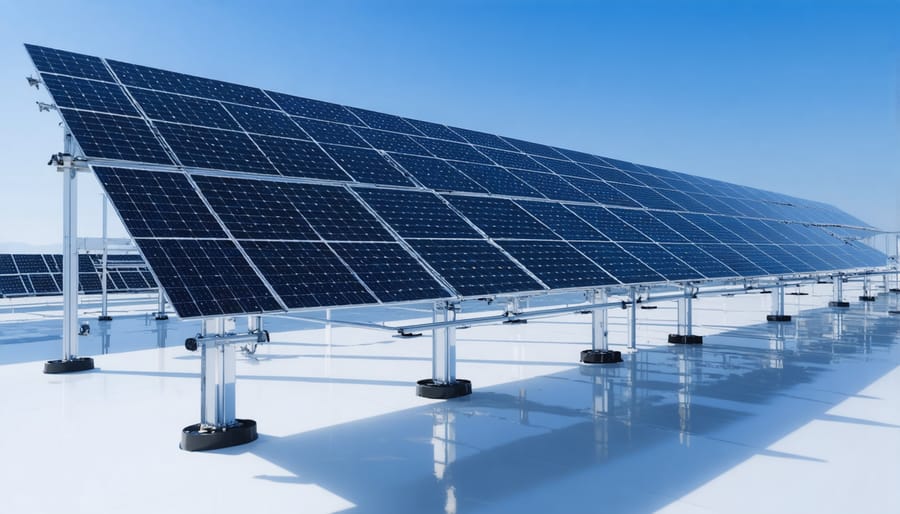
Commercial installations of bifacial solar panels have demonstrated remarkable success across various large-scale projects worldwide. These installations have consistently shown performance gains of 5-30% compared to monofacial systems, depending on ground conditions and system design. Major solar farms implementing bifacial technology have reported significant improvements in energy yield, particularly in locations with high albedo surfaces.
For instance, utility-scale installations in the American Southwest have documented annual energy gains exceeding 15% when combined with light-colored ground covers. Similar results have been observed in large commercial rooftop installations, where specialized reflective membranes maximize the bifacial advantage. These installations, functioning as distributed solar PV systems, demonstrate enhanced reliability and improved power density per square meter.
Several commercial projects have also reported reduced levelized cost of electricity (LCOE) despite higher initial investment costs. The increased energy yield typically offsets the additional expenses within 2-3 years of operation. Notable examples include desert installations in the Middle East, where bifacial systems have achieved up to 20% higher energy production compared to traditional panels, particularly during peak demand hours.
Residential Projects
Bifacial solar panels are increasingly finding their way into residential applications, offering homeowners new opportunities for enhanced energy production. When properly installed on residential rooftops, these panels can capture reflected light from light-colored roofing materials, snow accumulation, or adjacent surfaces, potentially increasing energy yield by 5-15% compared to traditional modules.
The effectiveness of bifacial panels in residential settings largely depends on installation height, roof albedo, and surrounding environmental conditions. Optimal performance requires careful consideration of mounting systems, with elevated installations typically yielding better results due to improved backside exposure. Light-colored or reflective roofing materials can significantly enhance bifacial gain, making them particularly effective for homes with white or light-gray roofs.
However, homeowners should consider several factors before choosing bifacial panels. The initial cost is typically 5-10% higher than conventional panels, and installation may require specialized mounting systems. The return on investment varies based on local conditions, roof characteristics, and energy consumption patterns. Additionally, proper spacing between panels becomes more critical to maximize rear-side production, which may affect the total number of panels that can be installed in limited roof spaces.
Future Outlook
The future of bifacial solar technology appears promising, with significant technological advancements and market growth projected over the next decade. Industry analysts predict that bifacial modules could capture up to 40% of the global solar market by 2028, driven by improving efficiency rates and declining production costs.
Emerging solar innovations are enhancing bifacial panel performance through advanced cell architectures and improved light-capturing technologies. Research institutions are developing new anti-reflective coatings and transparent backsheet materials that could increase bifacial gain by an additional 5-10% within the next five years.
Manufacturing processes are becoming more streamlined, with automated production lines and improved quality control systems reducing costs while maintaining high performance standards. Industry experts anticipate a 20-30% reduction in production costs by 2025, making bifacial technology increasingly competitive with traditional monofacial panels.
The integration of artificial intelligence and machine learning algorithms is optimizing bifacial system design and performance prediction, enabling more accurate energy yield forecasts and better system planning. Smart tracking systems specifically designed for bifacial applications are also under development, promising to maximize energy capture throughout the day.
As environmental regulations become more stringent worldwide, bifacial panels’ higher energy yield per installed area makes them increasingly attractive for large-scale solar projects. Their improved land-use efficiency and reduced carbon footprint align well with global sustainability goals, suggesting strong market growth potential in both utility-scale and commercial applications.
Bifacial solar panels demonstrate significant advantages over traditional monofacial panels, particularly in specific installation scenarios that maximize their unique capabilities. The evidence shows that these modules can achieve energy yield gains ranging from 5% to 30%, depending on various environmental factors, mounting configurations, and surface albedo conditions. While the initial investment costs are typically higher, the enhanced power generation potential often justifies the premium, especially in large-scale installations with optimized ground conditions.
However, the decision to implement bifacial technology should be based on a thorough assessment of site-specific conditions. Installations with high-reflectivity surfaces, elevated mounting systems, and proper row spacing consistently deliver the best performance outcomes. For commercial and utility-scale projects, bifacial panels present a compelling value proposition, offering improved energy density and potentially lower levelized cost of electricity (LCOE).
As the technology continues to mature and manufacturing costs decrease, bifacial panels are positioned to become increasingly competitive in the solar market. Organizations considering solar installations should carefully evaluate their specific requirements, site conditions, and long-term economic objectives when deciding between bifacial and traditional solar panels.