
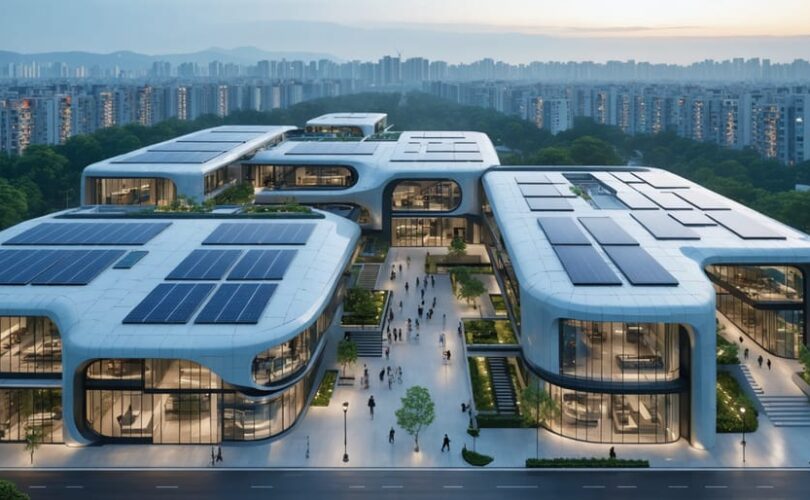
Building-integrated photovoltaics (BIPV) represents a revolutionary convergence of architectural design and renewable energy technology, transforming conventional building elements into power-generating assets. This innovative approach seamlessly integrates solar cells into building materials – from windows and façades to roofing tiles – creating structures that not only shelter but actively contribute to sustainable energy production. As cities worldwide push toward carbon neutrality and net-zero building standards, BIPV systems have emerged as a crucial solution, offering both aesthetic appeal and significant energy generation capabilities without sacrificing valuable real estate.
The global BIPV market is experiencing unprecedented growth, driven by advancing technology, decreasing costs, and increasingly stringent environmental regulations. Modern BIPV solutions achieve remarkable efficiency rates while serving multiple functions: they generate clean electricity, provide thermal insulation, and can even enhance building aesthetics through customizable designs. For architects, developers, and property owners, BIPV represents more than just an energy solution – it’s a pathway to future-proof construction that meets both sustainability goals and economic objectives.
This transformative technology has moved beyond simple solar panel installation to become an integral part of smart building design, promising to revolutionize how we conceptualize and construct the built environment of tomorrow.
The Evolution of Building-Integrated Photovoltaics
From Traditional Panels to Architectural Elements
The technological advancement of solar panels has facilitated a remarkable shift from conventional rooftop installations to seamlessly integrated building components. This evolution represents a fundamental change in how we perceive and implement solar technology in construction. Traditional solar panels, while effective, often appear as conspicuous additions to existing structures. In contrast, modern building-integrated photovoltaics (BIPV) serve dual purposes: they generate clean energy while functioning as integral building materials.
These innovative solutions now encompass solar roof tiles, photovoltaic glass windows, solar facades, and even semi-transparent modules that can replace conventional building materials. The integration process has become increasingly sophisticated, with manufacturers developing products that match standard construction materials in both appearance and functionality. This transformation not only enhances aesthetic appeal but also reduces overall construction costs by eliminating the need for separate mounting systems and additional structural support.
The shift toward integrated solutions has also sparked new architectural possibilities, enabling designers to incorporate sustainable energy generation without compromising building aesthetics. This advancement marks a significant step toward making solar technology an inherent part of modern architecture rather than an afterthought.
Modern BIPV Technologies
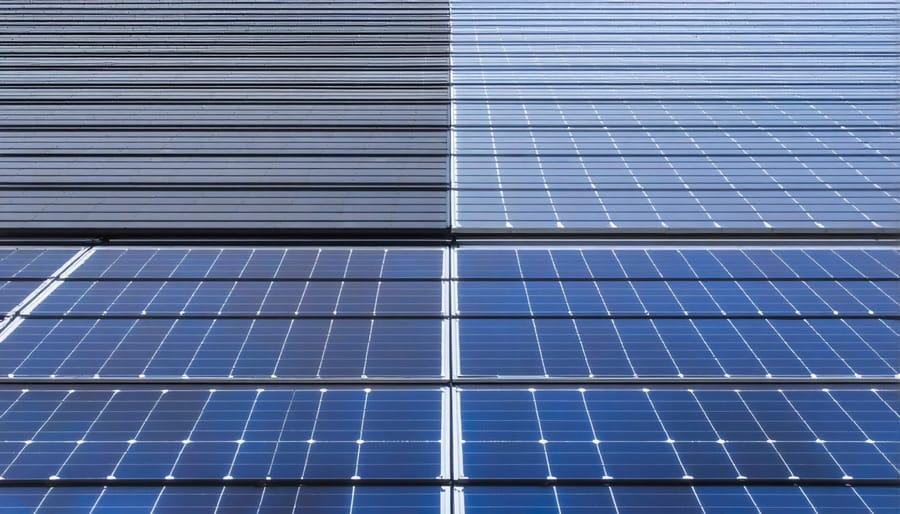
Modern BIPV technologies encompass a diverse range of solutions that seamlessly integrate photovoltaic functionality into building materials. Crystalline silicon modules remain the most widely implemented option, offering high efficiency and reliability while being incorporated into glass facades, roofing tiles, and curtain walls. These modules now achieve conversion efficiencies exceeding 20% while maintaining architectural aesthetics.
Thin-film technologies, including amorphous silicon, CIGS, and CdTe, provide flexible integration options and perform well in diffuse light conditions. These solutions are particularly suitable for curved surfaces and lightweight applications. Recent innovations include semi-transparent solar cells that maintain natural daylighting while generating power, and colored solar panels that match architectural designs without significantly compromising efficiency.
Emerging technologies such as perovskite solar cells and organic photovoltaics show promising potential for BIPV applications, offering improved flexibility and lower production costs. Manufacturers now produce specialized BIPV products like solar skylights, photovoltaic windows, and solar shingles that function as both building elements and power generators. These advancements are supported by improved manufacturing processes and enhanced durability standards, ensuring long-term performance in various environmental conditions.
Core Components of BIPV Systems
Solar Tiles and Shingles
Solar tiles and shingles represent a sophisticated evolution in building-integrated photovoltaics, offering seamless integration of solar technology with traditional roofing materials. These systems combine the functionality of conventional roof coverings with power generation capabilities, addressing both aesthetic and practical concerns in modern architecture.
Unlike traditional rack-mounted solar panels, these integrated solutions maintain the visual appeal of residential and commercial buildings while achieving comparable solar panel efficiency. Modern solar tiles typically incorporate monocrystalline or polycrystalline silicon cells, protected by tempered glass and engineered to withstand various weather conditions.
These systems come in multiple designs, including direct-replacement tiles that mirror conventional roofing materials and overlay systems that install above existing roof structures. Installation requires specialized expertise, as the components must function both as weatherproof roofing elements and power-generating units. Manufacturers have developed sophisticated interlocking mechanisms to ensure water-tightness while maintaining electrical connectivity.
Recent technological advances have improved power density and thermal management, addressing earlier concerns about heat dissipation in building-integrated applications. Current generations of solar tiles can achieve power outputs ranging from 50 to 115 watts per square meter, depending on the specific product and installation conditions. This performance, combined with their architectural integration capabilities, makes them increasingly viable for both new construction and renovation projects.

Facade Integration Solutions
Facade integration solutions represent a significant advancement in building-integrated photovoltaics, offering dual functionality as both power generators and architectural elements. These systems primarily consist of two main categories: wall-mounted PV panels and window-integrated photovoltaic units.
Wall-mounted PV systems can be installed as ventilated facades, featuring an air gap between the building wall and the photovoltaic panels. This design not only generates electricity but also provides thermal insulation and weather protection. Modern wall-mounted solutions utilize both crystalline and thin-film technologies, with mounting systems designed to maximize energy yield while maintaining architectural aesthetics.
Window-integrated photovoltaic systems, also known as photovoltaic glazing, incorporate semi-transparent solar cells within the window structure. These systems achieve a balance between natural daylighting, solar power generation, and thermal management. Advanced glazing technologies can now achieve transparency levels between 10% and 50% while maintaining reasonable power output, typically ranging from 50 to 100 watts per square meter.
Recent technological developments have introduced smart facade systems that automatically adjust their properties based on environmental conditions. These adaptive solutions can modify their transparency or angle to optimize energy generation and indoor comfort simultaneously. Installation methods have also evolved, with modular systems allowing for easier integration during both new construction and retrofitting projects, reducing overall implementation costs and complexity.
Energy Management Integration
Smart Control Systems
Building-integrated photovoltaics (BIPV) systems are increasingly being enhanced through integration with smart energy management systems that optimize performance and energy utilization. These control systems continuously monitor power generation, consumption patterns, and environmental conditions to maximize system efficiency.
Modern BIPV installations utilize sophisticated sensors and monitoring equipment to collect real-time data on solar irradiance, temperature, power output, and building energy demand. This information is processed by intelligent algorithms that automatically adjust system parameters and energy distribution to achieve optimal performance.
The integration with building management systems (BMS) enables coordinated control of BIPV components alongside other building systems such as HVAC, lighting, and energy storage. This synchronized approach ensures that solar energy is utilized effectively, either through direct consumption, storage, or grid export, depending on current building needs and energy prices.
Advanced monitoring interfaces provide facility managers with detailed analytics and performance metrics, enabling data-driven decisions about energy usage. These systems can predict energy generation based on weather forecasts, automatically manage load distribution, and identify potential maintenance issues before they impact system performance.
Furthermore, smart control systems facilitate compliance with grid requirements and enable participation in demand response programs, adding value beyond simple energy generation. They can also integrate with building automation protocols such as BACnet and Modbus, ensuring seamless operation within existing building infrastructure.

Performance Optimization
The optimization of BIPV systems requires a strategic approach to maximizing system efficiency through multiple design and operational considerations. Key factors include optimal panel orientation, temperature management, and shading mitigation. Designers must carefully analyze building geometry and local climate conditions to determine the most effective panel placement and tilt angles.
Temperature control plays a crucial role in BIPV performance, as elevated temperatures can significantly reduce efficiency. Advanced ventilation systems and thermal management solutions, such as air gaps behind panels and heat-dissipating materials, help maintain optimal operating temperatures. Some systems incorporate phase change materials to regulate temperature fluctuations throughout the day.
Shading analysis tools and sophisticated modeling software enable designers to predict and minimize shadow impacts from surrounding structures, vegetation, and architectural elements. Modern BIPV systems often utilize micro-inverters or power optimizers to reduce the effects of partial shading on overall system performance.
Regular maintenance protocols, including cleaning schedules and performance monitoring systems, ensure sustained efficiency. Smart monitoring solutions provide real-time data on system performance, enabling quick identification and resolution of issues. Integration with building management systems allows for automated adjustment of parameters to optimize energy generation based on environmental conditions and building energy demands.
The implementation of these optimization strategies typically results in 15-25% improvement in system efficiency compared to non-optimized installations.
Implementation Challenges and Solutions
Design and Aesthetic Considerations
Building-integrated photovoltaics (BIPV) must strike a delicate balance between energy generation efficiency and architectural design integrity. Modern BIPV solutions offer architects and designers numerous options to seamlessly incorporate solar technology into building elements while maintaining aesthetic appeal. These solutions include various colors, textures, and transparency levels that can complement or enhance a building’s visual character.
Solar cells can now be integrated into multiple building components, including facades, windows, and roofing materials, with customizable appearances that match traditional building materials. For instance, solar glass can be manufactured with different opacity levels, allowing natural light transmission while generating electricity. Similarly, solar tiles and shingles can mimic conventional roofing materials in both color and texture, preserving the building’s architectural style.
The orientation and placement of BIPV elements significantly influence both energy production and visual impact. Designers must consider factors such as sun exposure, shading patterns, and viewing angles when determining optimal installation locations. Advanced modeling software helps architects visualize different BIPV configurations and their impact on building aesthetics before implementation.
Color variations in BIPV modules, achieved through innovative manufacturing processes, enable better integration with existing architectural elements. While colored solar cells typically result in slightly lower efficiency compared to traditional blue or black panels, the trade-off often proves worthwhile for projects prioritizing visual harmony.
Recent technological advancements have also introduced dynamic BIPV solutions, such as electrochromic glass, which can adjust its transparency based on environmental conditions or user preferences. These smart features enhance both the functional and aesthetic aspects of building integration, contributing to more sophisticated architectural designs while maintaining energy production capabilities.
Technical Integration Challenges
The integration of photovoltaic systems into building structures presents several technical challenges that require careful consideration during both installation and maintenance phases. One primary concern is the structural integrity of the building, as BIPV systems must be properly secured while maintaining weatherproofing and avoiding thermal bridges. Engineers must ensure that the additional weight of solar components doesn’t compromise the building’s structural capacity.
Electrical integration poses another significant challenge, particularly in retrofitting existing buildings. The installation team must carefully plan cable routing, inverter placement, and connection points to minimize energy losses and maintain aesthetic appeal. Protection against moisture infiltration and thermal expansion requires specialized mounting systems and weatherproof connections.
Maintenance accessibility is a crucial consideration often overlooked during initial installation. BIPV systems must be designed with serviceable components that can be reached safely for regular cleaning, inspection, and repairs. This includes establishing clear access paths and incorporating safety anchor points for maintenance personnel.
Temperature management represents another technical hurdle, as photovoltaic efficiency decreases with rising temperatures. Proper ventilation behind panels must be designed to prevent overheating while maintaining building insulation properties. This often requires careful balance between energy production and thermal performance.
Installation teams must also address potential shading issues from surrounding structures or architectural features, which can significantly impact system performance. Advanced power optimization techniques, such as micro-inverters or power optimizers, may be necessary to mitigate partial shading effects.
Quality control during installation is essential to prevent future problems. This includes thorough testing of electrical connections, verification of weatherproofing measures, and documentation of system components for future maintenance reference.
Building-integrated photovoltaics are poised to play a transformative role in future energy management systems, offering a convergence of sustainable architecture and smart energy solutions. As technological advances continue to improve efficiency and reduce costs, BIPV systems are becoming increasingly viable for widespread adoption across commercial, residential, and industrial sectors.
The integration of artificial intelligence and IoT capabilities with BIPV systems is expected to enhance their performance optimization and maintenance protocols significantly. Smart building management systems will leverage real-time data from BIPV installations to make intelligent decisions about energy distribution, storage, and consumption patterns.
Market projections indicate substantial growth in the BIPV sector, driven by stringent environmental regulations, rising energy costs, and increasing awareness of sustainable building practices. The development of more aesthetically pleasing and architecturally versatile BIPV products is likely to accelerate market penetration, particularly in premium construction projects and urban developments.
Research collaborations between industry leaders and academic institutions continue to push the boundaries of BIPV technology, focusing on improved efficiency, durability, and cost-effectiveness. These innovations, combined with evolving energy storage solutions and smart grid integration capabilities, position BIPV as a cornerstone of future zero-energy buildings and sustainable urban development.
As we move toward a more sustainable future, BIPV systems will become increasingly integral to comprehensive energy management strategies, offering both environmental benefits and economic advantages for building owners and operators.


