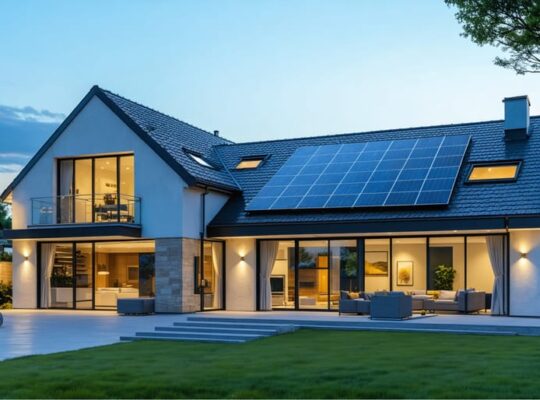
Grid-connected PV systems with battery storage represent a pivotal advancement in renewable energy technology, seamlessly combining solar power generation with energy storage capabilities to maximize efficiency and reliability. Understanding how solar panels store energy through integrated battery systems has become crucial as the world transitions toward sustainable energy solutions. These hybrid systems overcome traditional solar power limitations by enabling continuous power supply during grid outages and peak demand periods, while maintaining bidirectional power flow with the utility grid.
Modern grid-tied solar-plus-storage configurations incorporate advanced battery management systems, smart inverters, and sophisticated control algorithms to optimize energy harvest, storage, and distribution. This integration not only enhances system resilience but also provides significant economic benefits through peak shaving, time-of-use optimization, and potential grid services participation. As regulatory frameworks evolve and battery technology advances, these systems are increasingly becoming the standard for both residential and commercial solar installations, marking a significant step toward a more sustainable and reliable energy future.
Components of Grid-Connected PV Storage Systems
Solar PV Array and Inverters
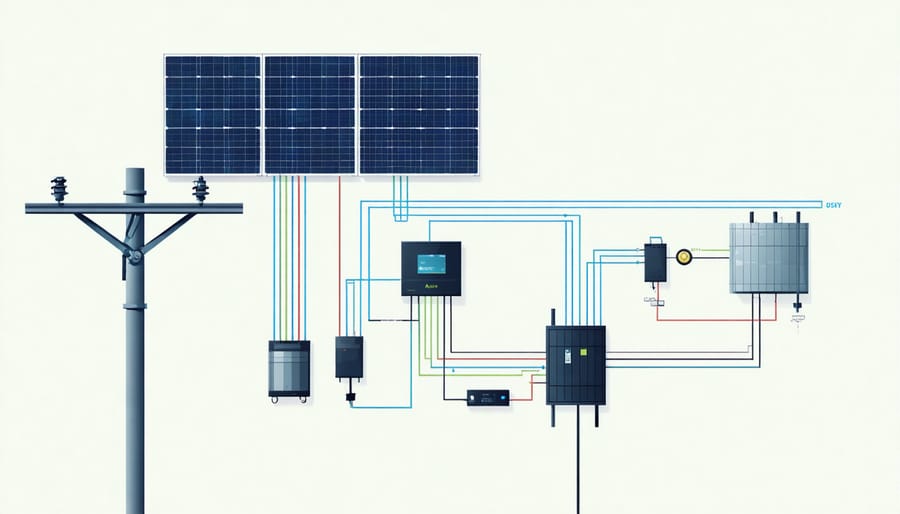
In grid-connected PV systems with battery storage, the solar array and inverter configuration plays a crucial role in system performance and efficiency. Modern solar PV arrays typically consist of high-efficiency monocrystalline or polycrystalline panels, arranged in series and parallel combinations to achieve optimal voltage and current outputs. These arrays must be sized appropriately to meet both immediate power demands and battery charging requirements.
The inverter system in battery-integrated setups is more sophisticated than traditional grid-tied systems. Advanced energy inverters often incorporate multiple power conversion stages to manage various energy flows: from solar panels to batteries, from batteries to loads, and from both sources to the grid. Hybrid inverters, specifically designed for battery storage systems, can simultaneously handle DC power from solar panels, manage battery charging/discharging, and convert power to AC for grid export or home consumption.
Modern inverter technologies include features like maximum power point tracking (MPPT), smart grid integration capabilities, and sophisticated monitoring systems. These components work together to optimize energy harvest, extend battery life, and maintain grid stability. The inverter’s ability to seamlessly switch between different operating modes – solar direct, battery charging, grid export, and backup power – ensures reliable system operation under varying conditions.
Battery Storage Technology
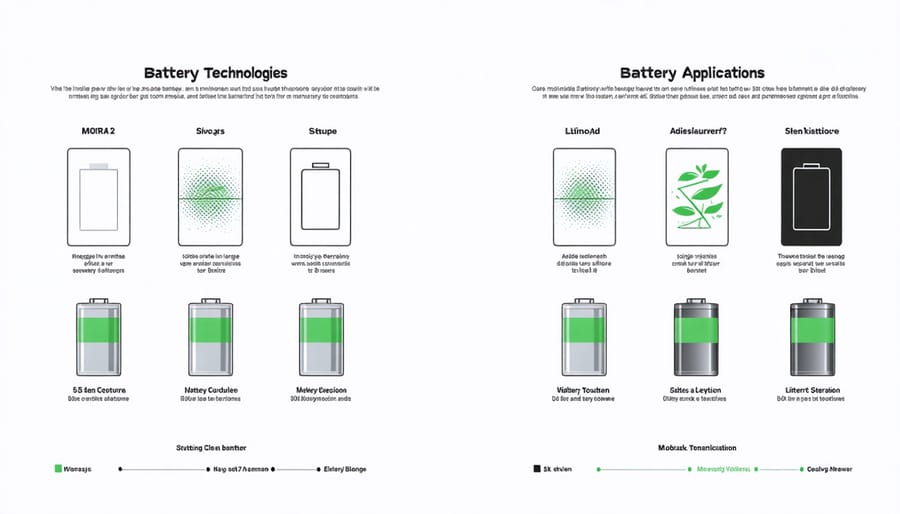
Battery storage technology plays a crucial role in modern grid-connected PV systems, offering various solutions to address intermittency and power management challenges. The selection of appropriate battery technology depends on multiple factors, including capacity requirements, cycle life, and cost considerations. Among the most widely implemented options, lithium-ion batteries dominate the market due to their high energy density, extended lifespan, and decreasing costs.
As latest battery storage innovations continue to emerge, other technologies such as flow batteries and advanced lead-acid systems are gaining traction. Flow batteries excel in large-scale applications, offering independent scaling of power and energy capacity, while advanced lead-acid batteries provide a cost-effective solution for smaller installations.
For grid-connected applications, the battery management system (BMS) is essential, monitoring parameters such as state of charge, temperature, and voltage levels to ensure optimal performance and longevity. Modern systems typically incorporate smart charging algorithms that maximize battery life while maintaining system efficiency.
When selecting battery storage technology, considerations include depth of discharge capabilities, round-trip efficiency, and operating temperature requirements. The integration of these systems must comply with relevant safety standards and grid connection requirements, ensuring reliable operation and grid stability.
System Operation and Energy Flow
Day-Time Operation
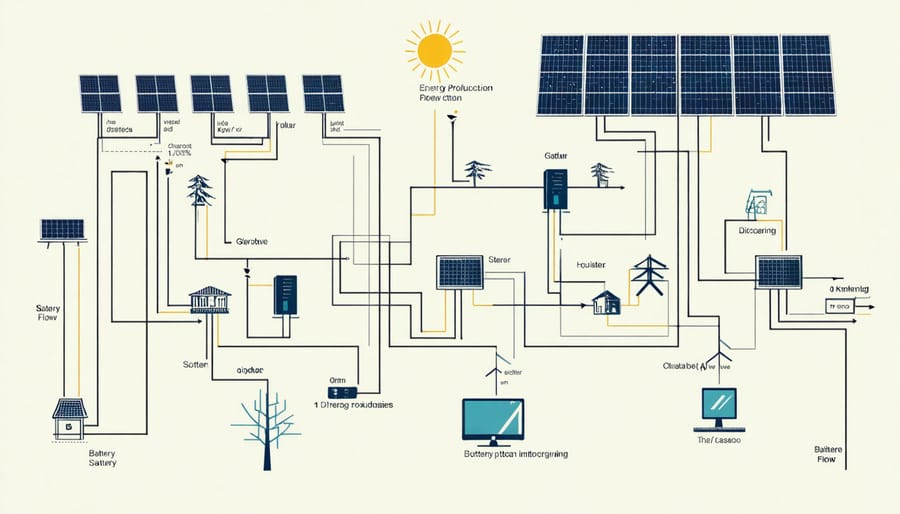
During daylight hours, grid-connected PV systems with battery storage operate in a dynamic and efficient manner to maximize solar energy utilization. As sunlight strikes the photovoltaic panels, they generate DC electricity which is converted to AC power through the inverter. The system’s intelligent control unit continuously monitors power production, household consumption, and battery state of charge to optimize energy flow.
The primary operational principle during daytime is to first satisfy immediate household power demands directly from solar production. Any excess electricity generated is then directed to charge the battery storage system until it reaches its optimal capacity. Once the batteries are fully charged, surplus power is exported to the utility grid, often earning credits through net metering arrangements.
When daytime energy consumption temporarily exceeds solar production, such as during cloud cover or high-demand periods, the system can simultaneously draw power from both the solar panels and the grid to meet the demand. This hybrid operation ensures uninterrupted power supply while maintaining optimal battery charge levels for evening use.
Modern systems employ sophisticated power management algorithms that consider factors such as weather forecasts, historical consumption patterns, and time-of-use electricity rates to make intelligent decisions about energy storage and distribution. Some advanced systems can even prioritize battery charging during periods of peak solar production or when grid electricity costs are highest, maximizing both environmental and economic benefits.
This intelligent daytime operation not only ensures efficient energy utilization but also helps reduce strain on the utility grid during peak consumption hours, contributing to overall grid stability and reliability.
Night-Time and Grid Integration
During non-production hours, particularly at night, grid-connected PV systems with battery storage operate in a distinct pattern to maintain power supply reliability. The battery discharge cycle typically initiates when solar generation ceases, providing stored energy to meet household or facility demands. This process is managed by sophisticated battery management systems that optimize discharge rates based on current power requirements and predicted usage patterns.
The interaction between batteries and the grid during nighttime hours follows a strategic approach. When battery charge levels are sufficient, the system draws power primarily from the storage unit, reducing dependence on grid electricity during peak evening rates. As battery levels decrease, the system gradually transitions to grid power, ensuring a seamless power supply while maintaining battery health through controlled depth of discharge parameters.
Smart inverter technology plays a crucial role in this nighttime operation, facilitating smooth transitions between battery and grid power sources. These systems continuously monitor power quality and automatically adjust to maintain stable voltage and frequency levels. During periods of low demand, batteries can also provide ancillary services to the grid, such as frequency regulation or voltage support, contributing to overall grid stability.
The discharge patterns are typically programmed to align with time-of-use electricity rates, maximizing economic benefits by utilizing stored energy during high-cost periods. This strategic integration helps balance grid loads during evening peak hours, reducing strain on utility infrastructure while providing cost savings for system owners. Advanced monitoring systems track these discharge cycles, enabling users to analyze performance data and optimize their energy consumption patterns for maximum efficiency.
Benefits and Applications
Energy Independence and Security
Grid-connected PV systems with battery storage represent a significant advancement in achieving energy independence while maintaining the security of a reliable power supply. These hybrid systems enable households and businesses to reduce their reliance on the utility grid while ensuring continuous power availability during outages or periods of peak demand.
The integration of battery storage allows system owners to store excess solar energy generated during daylight hours for use during evenings or cloudy periods. This capability dramatically reduces dependency on grid power, potentially lowering electricity costs and providing protection against utility rate increases. During normal operation, the system can intelligently manage power flow between the solar panels, batteries, and grid to optimize energy consumption and savings.
In the event of grid failures or blackouts, these systems automatically switch to backup power mode, ensuring critical loads remain operational. This feature is particularly valuable for maintaining essential services such as refrigeration, medical equipment, and security systems. The backup capability can be sized according to specific needs, from supporting critical loads for several hours to powering entire facilities for extended periods.
Modern battery systems also incorporate smart energy management features that can predict consumption patterns, weather conditions, and grid status to optimize charging and discharging cycles. This intelligence helps maximize self-consumption of solar energy while maintaining sufficient backup capacity for unexpected events.
Economic and Environmental Impact
Grid-connected PV systems with battery storage offer significant economic advantages through reduced electricity bills and enhanced energy independence. By implementing cost-effective storage solutions, property owners can maximize self-consumption of solar energy and minimize reliance on grid power during peak pricing periods.
The financial benefits include lower energy costs through peak shaving, time-of-use optimization, and reduced demand charges. Studies indicate that properly sized systems can achieve payback periods of 5-8 years, depending on local electricity rates and incentive programs. Additionally, battery storage systems help protect against future utility rate increases and provide valuable backup power during outages.
From an environmental perspective, these systems contribute substantially to reducing carbon emissions. By optimizing solar energy utilization and minimizing grid dependency, they help decrease reliance on fossil fuel-based power generation. A typical residential system can offset 5-7 metric tons of CO2 emissions annually, equivalent to removing one car from the road.
The systems also support grid stability and reduce transmission losses, contributing to overall power infrastructure efficiency. As battery technology continues to advance and prices decline, the economic and environmental benefits of integrated PV storage systems become increasingly attractive for both residential and commercial applications.
System Design Considerations
The successful implementation of grid-connected PV systems with battery storage requires careful consideration of several critical design factors. System sizing stands as a fundamental consideration, requiring precise calculations of both energy generation capacity and storage requirements based on specific load profiles and consumption patterns.
Battery selection demands thorough evaluation of various parameters including depth of discharge (DoD), cycle life, round-trip efficiency, and temperature tolerance. Lithium-ion batteries have emerged as a popular choice due to their high energy density and longer lifespan, though other technologies may be more suitable depending on specific application requirements.
The integration of power conversion systems plays a vital role in system performance. Hybrid inverters must be carefully selected to ensure compatibility with both the PV array and battery storage system while maintaining high conversion efficiency. These inverters should incorporate sophisticated energy management capabilities to optimize power flow between the grid, PV system, and battery storage.
Physical installation considerations include proper ventilation, temperature control, and safety measures for battery placement. The installation space must provide adequate protection from environmental factors while ensuring easy access for maintenance and potential future upgrades.
System control and monitoring infrastructure requires robust communication protocols and advanced battery management systems (BMS) to maintain optimal performance and protect battery health. The BMS should effectively monitor cell voltage, temperature, and state of charge while implementing protective measures against overcharging and deep discharge.
Grid interconnection requirements must comply with local utility regulations and technical standards. This includes appropriate protection mechanisms, power quality maintenance, and anti-islanding capabilities. The system should seamlessly transition between different operating modes while maintaining grid stability and power quality.
Regular maintenance protocols should be established during the design phase, considering battery replacement schedules, performance monitoring requirements, and preventive maintenance procedures. This ensures long-term system reliability and optimal return on investment.
Grid-connected PV systems with battery storage represent a pivotal advancement in renewable energy technology, offering a robust solution for sustainable power generation and management. Throughout this exploration, we’ve seen how these systems effectively address intermittency challenges while providing enhanced energy independence and grid stability benefits.
The integration of battery storage with grid-connected PV systems has proven to be economically viable, with continuing improvements in battery technology driving costs down and increasing system efficiency. The ability to store excess solar energy for later use, participate in demand response programs, and provide backup power during outages makes these systems increasingly attractive for both residential and commercial applications.
Looking ahead, the future of grid-connected PV storage systems appears promising. Technological advances in battery chemistry, smart grid integration, and power electronics are expected to further improve system performance and reduce costs. The growing emphasis on grid resilience and renewable energy adoption worldwide will likely accelerate the deployment of these systems.
Key developments to watch include the emergence of virtual power plants, advanced energy management systems, and innovative storage technologies. As regulatory frameworks evolve to support distributed energy resources, grid-connected PV systems with battery storage will play an increasingly crucial role in the global transition to sustainable energy infrastructure.
For the industry to reach its full potential, continued collaboration between manufacturers, utilities, regulators, and researchers remains essential. This cooperation will drive innovation, standardization, and best practices, ensuring these systems deliver maximum value to both users and the broader energy ecosystem.