Optimize solar panel orientation by adjusting tilt angles seasonally – 30° in winter and 15° in summer for most latitudes – to maximize energy production. Install sophisticated monitoring systems with real-time performance analytics to detect efficiency drops and maintenance needs before they impact output. Implement automatic cleaning systems and anti-soiling coatings to maintain peak conversion rates, reducing power losses by up to 15% annually. Deploy smart inverter technology with Maximum Power Point Tracking (MPPT) to dynamically adjust voltage and current outputs, ensuring optimal performance across varying environmental conditions. Advanced energy storage solutions, coupled with predictive load management algorithms, can increase system efficiency by 20-30% through intelligent power distribution and peak demand optimization.
These research-backed optimization techniques have demonstrated consistent performance improvements across diverse geographical locations and system configurations, offering measurable returns on investment for both residential and commercial solar installations. The integration of these methods, supported by continuous monitoring and data-driven adjustments, creates a robust framework for maximizing solar energy system efficiency.
System Design Optimization
Panel Orientation and Tilt
The orientation and tilt of solar panels significantly impact their energy production capacity, with optimal positioning potentially increasing efficiency by 25-35%. In the Northern Hemisphere, panels should generally face true south (not magnetic south) to maximize solar exposure throughout the day. The optimal tilt angle varies based on geographical latitude, typically calculated as the site’s latitude minus 10-15 degrees for summer optimization, or plus 10-15 degrees for winter optimization.
For fixed installations, the year-round optimal tilt angle is approximately equal to the installation site’s latitude. This configuration ensures balanced energy production across seasons. However, locations with distinct seasonal weather patterns may benefit from adjustable mounting systems that allow for seasonal tilt modifications.
Advanced solar tracking systems can further enhance energy capture by following the sun’s path throughout the day. Single-axis trackers, which adjust the panels’ east-to-west orientation, can increase energy yield by 25-35%. Dual-axis systems, which also optimize tilt angle, can improve performance by up to 40%, though their additional complexity and maintenance requirements must be considered in the cost-benefit analysis.
Local factors such as shading patterns, weather conditions, and site-specific constraints should inform the final orientation decision. Professional solar designers often use sophisticated modeling software to simulate annual production patterns and determine the most efficient panel positioning for specific installations.

Array Configuration
Optimal array configuration is fundamental to maximizing solar energy production. The layout of solar panels must consider several critical factors, including azimuth angle, tilt angle, and inter-row spacing. For maximum energy yield in the Northern Hemisphere, panels should typically face true south with a tilt angle approximately equal to the installation site’s latitude.
String design requires careful consideration of voltage and current parameters. Multiple panels connected in series form strings that must operate within the inverter’s voltage window while maintaining optimal power point tracking. Parallel connections between strings should be balanced to prevent mismatch losses and ensure uniform current flow.
Shadow analysis plays a crucial role in array configuration. Implementing east-west spacing of 2.5 to 3 times the panel height helps minimize inter-row shading, particularly during morning and afternoon hours. Advanced optimization techniques include the use of half-cut cell modules and smart module technology to reduce the impact of partial shading.
For large-scale installations, sub-array segmentation enables more efficient maintenance and monitoring while reducing the impact of potential system failures. Modern design software can simulate various configuration scenarios, accounting for local weather patterns and site-specific constraints to determine the most efficient layout.
The integration of bypass diodes and module-level power electronics (MLPEs) further enhances array performance by mitigating the effects of shading and panel mismatch. These components should be strategically incorporated into the initial design phase to ensure optimal system operation throughout its lifetime.
Hardware Selection and Integration

High-Efficiency Panels
Modern high-efficiency solar panels have revolutionized photovoltaic technology, with mono PERC (Passivated Emitter and Rear Cell) panels leading the charge in performance optimization. These advanced panels achieve conversion efficiencies exceeding 22%, representing a significant improvement over traditional polycrystalline modules that typically operate at 15-17% efficiency.
Mono PERC technology incorporates several key innovations that enhance power generation. The additional passivation layer on the rear surface reduces electron recombination, while the enhanced light-trapping properties capture previously lost photons. This sophisticated design allows for better performance in low-light conditions and higher temperature tolerance, making them ideal for diverse environmental conditions.
Current market leaders in mono PERC manufacturing have achieved cell efficiencies approaching 24% in laboratory conditions, with commercial modules consistently delivering 20-22% efficiency in real-world applications. The technology’s superior temperature coefficient (-0.35%/°C compared to -0.40%/°C for standard panels) ensures better performance during hot weather operations.
Cost considerations have become increasingly favorable as manufacturing processes mature. While mono PERC panels command a premium over standard modules, their enhanced power output and longer operational lifespan typically result in a lower levelized cost of electricity (LCOE). This improved economic proposition, combined with their smaller footprint requirements for equivalent power output, makes them particularly attractive for space-constrained installations.
When selecting high-efficiency panels, factors such as bifacial capability, half-cell technology, and multi-busbar designs should be considered to maximize system performance. These features, when properly implemented, can provide additional gains of 5-15% in overall energy yield.
Inverter Technology
The selection of an appropriate inverter plays a crucial role in maximizing the efficiency of your solar energy system. Modern inverters convert direct current (DC) generated by solar panels into alternating current (AC) with remarkable efficiency rates of up to 98%. This conversion process directly impacts the overall system performance and energy yield.
String inverters, microinverters, and power optimizers each offer distinct advantages for different applications. String inverters are cost-effective for uniform arrays with minimal shading, while microinverters excel in installations with varying panel orientations or partial shading conditions. Power optimizers represent a hybrid solution, combining the benefits of both technologies.
Advanced inverter features such as Maximum Power Point Tracking (MPPT) continuously adjust the operating parameters to extract optimal power from your solar array. Multiple MPPT channels allow for independent optimization of different solar panel strings, compensating for variations in performance due to shading, orientation, or panel mismatch.
Smart monitoring capabilities in modern inverters provide real-time performance data and early detection of potential issues. This functionality enables proactive maintenance and rapid troubleshooting, ensuring consistent system operation. Additionally, grid-interactive features allow inverters to support grid stability through reactive power control and voltage regulation.
When selecting an inverter, consider factors such as system size, installation environment, shading conditions, and future expansion plans. The inverter’s efficiency curve should match your typical operating conditions, and its power rating should be appropriately sized to your solar array capacity. Proper inverter selection and configuration can significantly improve system reliability and energy harvest, ultimately maximizing your return on investment.
Monitoring and Maintenance
Performance Monitoring Systems
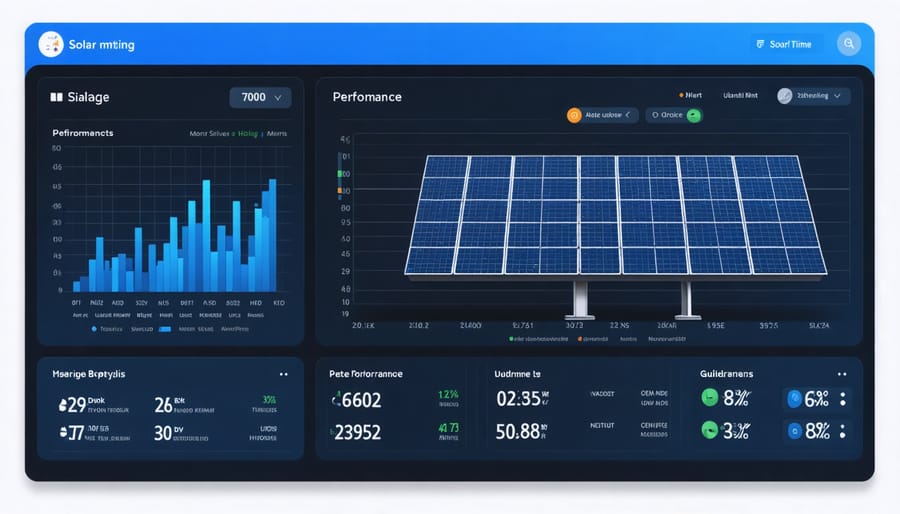
Performance monitoring systems are essential tools for maintaining optimal solar energy production and identifying potential issues before they impact system efficiency. Modern monitoring solutions utilize advanced sensors and data analytics to track key performance indicators (KPIs) in real-time, enabling proactive maintenance and system optimization.
These systems typically monitor parameters such as power output, voltage levels, current flow, and environmental conditions. Data loggers collect this information at regular intervals, while sophisticated software platforms analyze trends and patterns to detect anomalies. Remote monitoring capabilities allow system operators to access performance data through web-based dashboards or mobile applications, facilitating immediate response to performance issues.
String-level monitoring provides detailed insights into individual solar panel arrays, while module-level monitoring offers even more granular data about each panel’s performance. Weather stations integrated into monitoring systems help correlate environmental conditions with system output, enabling more accurate performance predictions and maintenance scheduling.
Advanced monitoring platforms also incorporate predictive analytics and machine learning algorithms to forecast potential equipment failures and optimize maintenance schedules. These systems can automatically generate performance reports, calculate energy yield ratios, and compare actual production against theoretical maximums.
For maximum effectiveness, monitoring systems should be calibrated regularly and integrated with existing building management systems. This integration enables comprehensive energy management and ensures optimal coordination between solar production and facility energy consumption.
Preventive Maintenance
Regular preventive maintenance is crucial for maximizing solar energy system efficiency and extending equipment lifespan. A comprehensive maintenance schedule should include monthly visual inspections of solar panels for physical damage, debris accumulation, and potential shading issues. Clean panels quarterly using deionized water and appropriate cleaning solutions to remove dust, bird droppings, and other contaminants that can reduce energy absorption.
Monitor inverter performance through daily output readings and conduct bi-annual inspections of electrical connections, ensuring all components are properly secured and free from corrosion. Check mounting hardware annually for structural integrity and tighten any loose bolts or brackets. Thermal imaging assessments should be performed annually to identify potential hot spots or malfunctioning cells.
Documentation is essential – maintain detailed records of all maintenance activities, including cleaning dates, component replacements, and performance measurements. This data helps track system degradation and predict maintenance needs. For roof-mounted systems, ensure proper drainage and verify that roof penetrations remain properly sealed.
Professional inspection is recommended annually to assess system health comprehensively. Technicians should verify proper functioning of monitoring systems, test ground fault protection devices, and evaluate overall system performance against expected output levels. Address any identified issues promptly to prevent cascade failures and maintain optimal energy production throughout the system’s operational life.
Advanced Optimization Techniques
Smart Control Systems
Modern smart control systems leverage artificial intelligence and Internet of Things (IoT) technology to revolutionize solar energy optimization. These integrated systems continuously monitor performance metrics, weather conditions, and energy consumption patterns to automatically adjust system parameters for maximum efficiency.
Advanced algorithms analyze real-time data from multiple sensors, enabling predictive maintenance and automated responses to changing environmental conditions. Machine learning capabilities allow these systems to adapt and improve their optimization strategies over time, learning from historical performance data and usage patterns.
IoT sensors provide granular monitoring of individual panel performance, inverter efficiency, and energy flow, while AI-powered analytics identify potential issues before they impact system output. These systems can automatically adjust panel angles, optimize inverter settings, and manage energy storage systems to maximize energy yield and minimize waste.
The integration of smart controls also enables sophisticated load management, allowing systems to prioritize energy distribution based on user preferences and peak demand periods. This intelligent automation reduces human intervention while ensuring consistent, optimal performance throughout the system’s lifecycle.
Energy Storage Integration
Battery storage integration plays a crucial role in maximizing solar energy system efficiency. Modern energy storage solutions enable systems to maintain consistent power output despite varying weather conditions and peak demand periods. The integration process requires careful consideration of several key factors, including battery capacity, charge/discharge cycles, and system compatibility.
To optimize storage integration, implement a robust battery management system (BMS) that monitors state of charge, temperature, and overall battery health. This system should incorporate smart charging algorithms that adjust charging patterns based on energy production and consumption data. Consider implementing time-of-use scheduling to maximize storage utilization during peak rate periods.
For optimal performance, size the battery bank according to daily energy consumption patterns and backup power requirements. Modern lithium-ion batteries typically offer higher efficiency and longer cycle life compared to traditional lead-acid alternatives. Regular monitoring and maintenance of storage systems ensure optimal performance and extended battery life, while proper thermal management prevents capacity degradation and maintains system efficiency.
The optimization of solar energy systems requires a multi-faceted approach that combines technical excellence with strategic implementation. Through careful attention to panel positioning, regular maintenance protocols, and advanced monitoring systems, solar installations can achieve peak performance levels. The integration of smart inverter technology, coupled with sophisticated energy storage solutions, has emerged as a crucial factor in maximizing solar energy capture and utilization.
Looking ahead, the future of solar optimization appears increasingly promising with emerging technologies on the horizon. Machine learning algorithms are revolutionizing predictive maintenance capabilities, while bifacial panels and concentrated photovoltaic systems are pushing the boundaries of energy conversion efficiency. The continued development of more efficient energy storage solutions and grid integration technologies will further enhance the viability of solar power as a primary energy source.
Success in solar optimization ultimately depends on implementing a comprehensive strategy that encompasses proper system design, cutting-edge technology adoption, and rigorous maintenance practices. By following industry best practices and staying informed about technological advancements, stakeholders can ensure their solar installations operate at maximum efficiency while contributing to a more sustainable energy future. As the industry continues to evolve, the combination of technological innovation and operational excellence will remain key drivers in achieving optimal solar energy performance and return on investment.