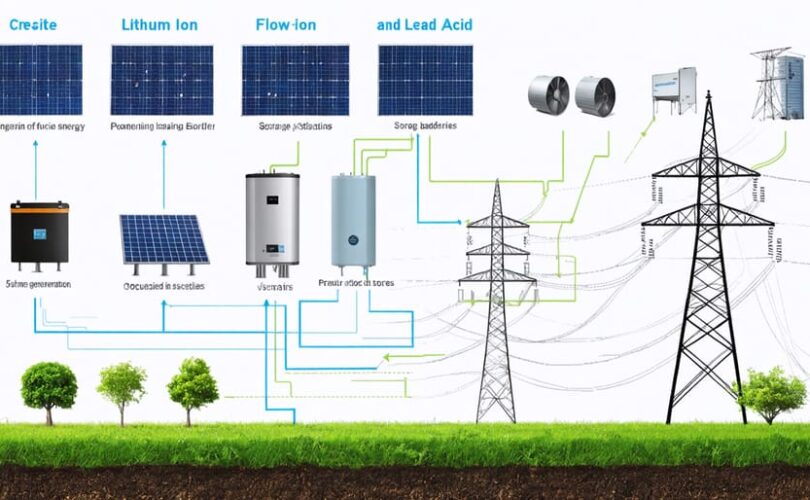
Energy storage systems have become the critical backbone of modern solar power installations, transforming intermittent renewable energy into a reliable, round-the-clock power source. As global renewable energy adoption accelerates, understanding solar energy storage fundamentals has never been more crucial for energy independence and grid stability. Advanced battery technologies, particularly lithium-ion systems, now enable households and businesses to capture excess solar production during peak hours and deploy it strategically during high-demand periods or nighttime use. This technological convergence of solar generation and energy storage represents a fundamental shift in how we harness and utilize renewable energy, offering unprecedented control over power consumption patterns while significantly reducing carbon footprints. Recent innovations in battery chemistry, smart energy management systems, and declining implementation costs have positioned energy storage as an indispensable component of sustainable energy infrastructure, promising enhanced grid resilience and accelerated transition toward clean energy solutions.
Current Energy Storage Technologies for Solar PV Systems
Battery Storage Solutions
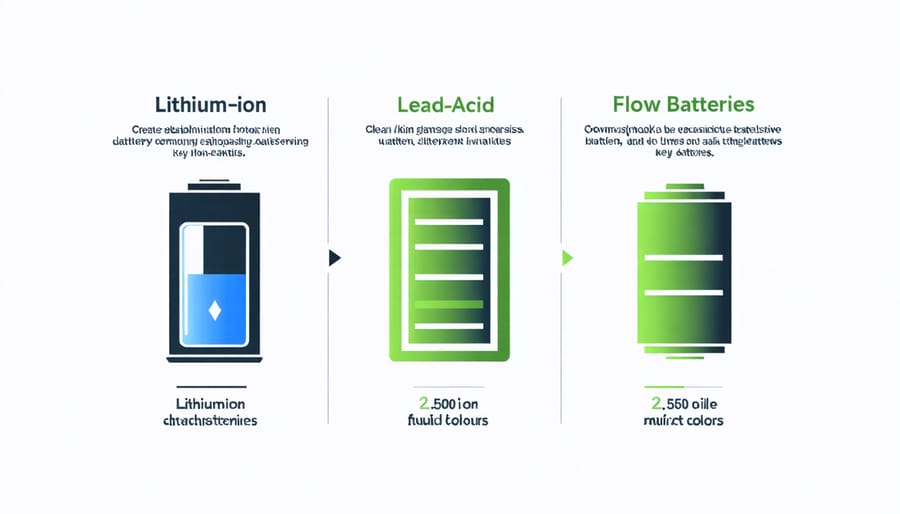
Battery storage technologies form the backbone of modern solar power systems, with several options available for different applications and scales. Lithium-ion batteries dominate the market due to their high energy density, extended cycle life, and declining costs. These batteries typically maintain 80% of their original capacity after 3,000-5,000 cycles, making them ideal for daily cycling in residential and commercial installations.
Lead-acid batteries, while more economical upfront, offer lower energy density and shorter lifespans compared to lithium-ion alternatives. However, they remain viable for backup power applications and remote installations where initial cost is a primary concern. Modern sealed lead-acid variants require minimal maintenance and provide improved safety features over traditional flooded cells.
Emerging technologies are reshaping the battery storage landscape. Flow batteries, utilizing liquid electrolytes stored in separate tanks, offer theoretically unlimited cycle life and independent scaling of power and energy capacity. Solid-state batteries promise enhanced safety and energy density, though commercialization remains in development stages.
Recent advances in battery management systems (BMS) have significantly improved storage efficiency and longevity. These sophisticated controllers optimize charging cycles, maintain cell balance, and protect against thermal runaway, ensuring optimal performance across various environmental conditions. When selecting a battery storage solution, considerations should include depth of discharge requirements, ambient temperature ranges, and expected cycling frequency.
Alternative Storage Methods
While lithium-ion batteries dominate the solar storage market, several alternative storage methods offer unique advantages for specific applications. Thermal energy storage systems, particularly molten salt technology, excel in utility-scale installations by storing excess solar energy as heat, which can be converted back to electricity when needed. These systems demonstrate impressive efficiency rates of up to 90% and provide extended storage duration capabilities.
Pumped hydroelectric storage remains the most widely deployed large-scale storage solution globally, utilizing elevation differences to store energy by pumping water uphill during excess generation periods. This proven technology offers decades of operational lifespan and can be integrated with hybrid storage solutions for enhanced system reliability.
Compressed air energy storage (CAES) systems present another viable option, storing energy by compressing air in underground caverns or dedicated tanks. While less common than other methods, CAES systems offer long-duration storage capabilities and minimal environmental impact.
Flywheel energy storage systems, though currently limited in capacity, provide rapid response times and high cycle efficiency, making them ideal for grid stabilization and power quality applications. These mechanical systems can complement other storage technologies in integrated renewable energy installations.
Each alternative storage method presents distinct advantages and limitations, emphasizing the importance of selecting appropriate solutions based on specific project requirements, geographical conditions, and operational objectives.
Optimization Strategies for PV Storage Systems
Capacity Planning and Sizing
Determining optimal storage capacity for solar power systems involves careful mathematical analysis of several key variables. The process begins with calculating daily energy consumption patterns and peak demand periods. To effectively optimize PV system performance, system designers employ the following equation:
Required Storage Capacity = (Daily Energy Usage × Days of Autonomy) / (DOD × System Efficiency)
Where:
– Daily Energy Usage is measured in kilowatt-hours (kWh)
– Days of Autonomy represents backup duration requirements
– DOD (Depth of Discharge) typically ranges from 0.5 to 0.8
– System Efficiency accounts for conversion and transmission losses
Additional considerations include:
– Peak sun hours in the installation location
– Seasonal variations in energy production
– Load growth projections
– Battery degradation over time
Professional system designers often utilize specialized software tools that incorporate these variables into comprehensive modeling algorithms. These tools can simulate various scenarios and predict system performance under different conditions, helping to determine the most cost-effective storage capacity while ensuring reliable power supply throughout the year.
The final sizing decision should balance initial investment costs against long-term energy independence goals and potential utility savings. Regular reassessment of storage capacity needs ensures system effectiveness as usage patterns evolve.
Load Profile Analysis
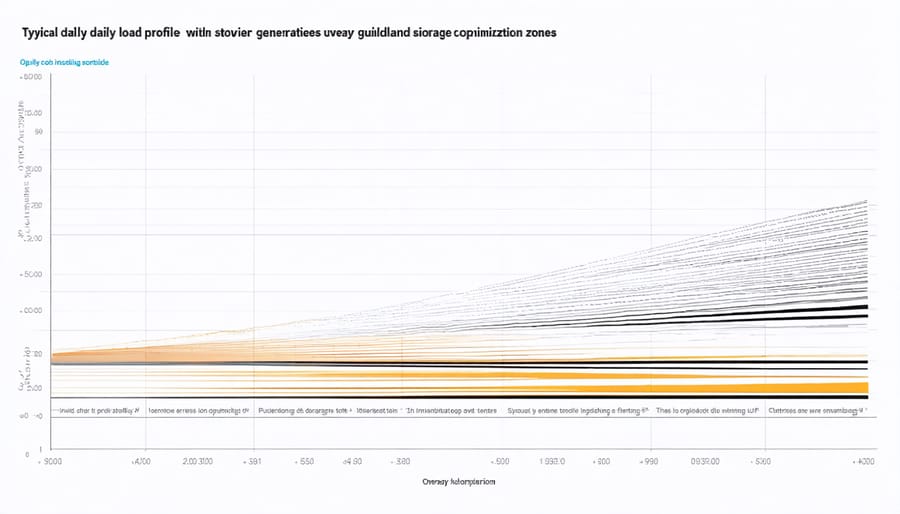
Load profile analysis is a crucial component in optimizing solar energy storage systems, focusing on understanding and predicting energy consumption patterns to maximize system efficiency. This systematic approach involves collecting and analyzing historical energy usage data across different time scales – hourly, daily, seasonal, and annual.
The analysis typically begins with smart meter data collection, which provides granular insights into consumption behaviors. Key metrics include peak demand periods, base load requirements, and usage variations. These patterns are then mapped against solar generation profiles to identify potential mismatches between energy production and consumption.
Advanced software tools employ statistical methods and machine learning algorithms to process this data, creating detailed load profiles that account for various factors such as weather conditions, occupancy patterns, and operational schedules. This information helps system designers determine optimal storage capacity and charging/discharging strategies.
For commercial applications, load profile analysis often includes power quality assessment and demand charge evaluation. Residential analysis focuses more on daily consumption habits and lifestyle patterns. Both scenarios benefit from load segregation techniques, which categorize energy usage by purpose or priority.
The resulting insights enable precise sizing of storage systems, development of efficient control strategies, and implementation of demand-side management programs. This data-driven approach ensures storage systems are utilized effectively, maximizing return on investment while maintaining reliable power supply.
Economic Optimization
Economic optimization of solar storage systems requires careful analysis of multiple financial factors, including initial investment costs, operational expenses, and potential revenue streams. The cost-benefit analysis typically considers the levelized cost of energy storage (LCOS), which accounts for capital expenditure, maintenance costs, system efficiency, and projected lifespan of the storage components.
Return on investment (ROI) calculations for solar storage systems generally factor in several key variables: electricity rate structures, peak demand charges, time-of-use pricing, and available incentives or rebates. A comprehensive ROI assessment should include both direct financial benefits, such as reduced utility bills and potential grid service revenues, and indirect benefits like increased energy independence and system reliability.
Storage system sizing plays a crucial role in economic optimization. Oversizing can lead to unnecessary capital expenditure, while undersizing may limit the system’s ability to capture maximum economic benefits. Advanced modeling tools can help determine the optimal storage capacity by analyzing historical consumption patterns, solar generation profiles, and local utility rate structures.
For commercial installations, demand charge management through strategic storage deployment can significantly impact ROI. Systems programmed to discharge during peak demand periods can substantially reduce utility costs. Additionally, participating in grid services markets, where available, can provide additional revenue streams through frequency regulation, voltage support, and demand response programs.
Integration with Modern PV Systems
Hardware Requirements
A successful solar energy storage system requires several essential hardware components working in harmony. The primary element is the battery bank, typically consisting of lithium-ion, lead-acid, or flow batteries, which serve as the core storage medium. Modern lithium-ion batteries are increasingly preferred due to their higher energy density, longer lifecycle, and improved efficiency.
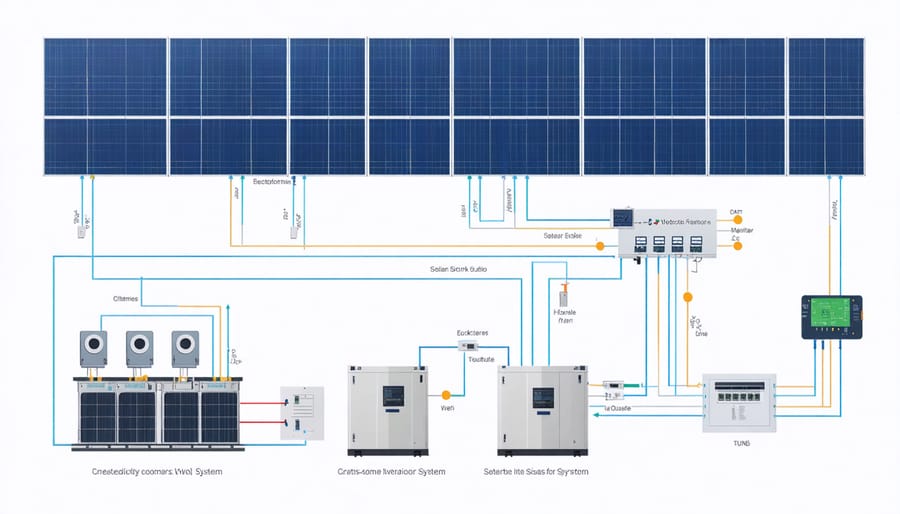
The system requires a robust charge controller to regulate the flow of electricity between solar panels and batteries, preventing overcharging and extending battery life. An inverter is crucial for converting the DC power stored in batteries to AC power for household use, with hybrid inverters offering integrated charging capabilities and grid connectivity.
Additional hardware components include proper mounting systems, electrical panels, and safety equipment such as circuit breakers and surge protectors. Monitoring systems with sensors and data loggers are essential for tracking system performance and energy flow. These typically include voltage meters, current sensors, and temperature monitors.
The system must also incorporate appropriate wiring and connectors rated for DC power applications, along with weatherproof enclosures for outdoor components. A backup generator connection point may be necessary for regions with extended periods of low solar production.
For grid-tied systems, specialized hardware such as grid-synchronization equipment and anti-islanding protection devices are required to ensure safe integration with the utility grid. The entire system should be equipped with proper grounding equipment and lightning protection to safeguard against electrical surges and environmental factors.
Control Systems and Monitoring
Modern solar energy storage systems rely heavily on sophisticated smart energy management systems to optimize performance and ensure efficient operation. These control systems integrate multiple components, including battery management systems (BMS), inverters, and monitoring equipment, to maintain optimal charging cycles and protect storage assets.
Advanced monitoring capabilities provide real-time data on system performance, including state of charge (SOC), depth of discharge (DOD), and overall system efficiency. This data enables predictive maintenance, early fault detection, and performance optimization. Temperature monitoring and thermal management systems are particularly crucial, as they help maintain batteries within optimal operating ranges and prevent degradation.
System controllers utilize sophisticated algorithms to optimize energy flow between solar panels, storage systems, and the grid. These algorithms consider factors such as time-of-use pricing, weather forecasts, and historical consumption patterns to make intelligent decisions about when to store or discharge energy.
Remote monitoring capabilities allow system operators to access performance data, adjust settings, and respond to alerts from any location. This functionality is essential for large-scale installations and distributed energy storage networks. Integration with building management systems and smart home technologies enables automated demand response and enhanced energy efficiency.
Safety features are paramount in these control systems, incorporating multiple layers of protection against overcharging, deep discharge, and thermal runaway. Automatic shutdown mechanisms and fault isolation protocols ensure system reliability and longevity while protecting valuable storage assets and ensuring user safety.
The optimization of solar power energy storage systems represents a critical frontier in advancing renewable energy adoption and grid reliability. Through the implementation of sophisticated battery management systems, intelligent load prediction algorithms, and hybrid storage solutions, we can significantly enhance the efficiency and cost-effectiveness of solar energy systems.
Key optimization strategies discussed throughout this article demonstrate the importance of proper system sizing, temperature management, and strategic charging/discharging cycles. The integration of advanced monitoring systems with predictive maintenance capabilities has proven instrumental in extending battery life and improving overall system performance. Furthermore, the adoption of smart inverter technologies and grid integration protocols has enabled more dynamic and responsive energy management.
Looking ahead, several promising developments are poised to revolutionize solar energy storage. Emerging battery technologies, including solid-state batteries and flow batteries, show potential for higher energy density and longer operational lifespans. The continued advancement of artificial intelligence and machine learning algorithms will further optimize storage systems’ performance through more accurate load forecasting and intelligent energy distribution.
The industry is also witnessing increased focus on sustainability and circular economy principles in battery manufacturing and disposal. Research institutions and manufacturers are developing more environmentally friendly storage solutions with reduced reliance on rare earth materials and improved recyclability.
As costs continue to decline and technology improves, we can expect to see wider adoption of integrated solar-plus-storage systems across residential, commercial, and utility-scale applications. The development of standardized protocols and improved grid integration capabilities will facilitate this expansion, creating more resilient and sustainable energy networks.
Success in optimizing solar power storage systems requires a holistic approach, combining technical expertise with environmental consciousness and economic considerations. By staying informed about emerging technologies and best practices, stakeholders can make informed decisions that maximize the benefits of their solar energy investments while contributing to a more sustainable energy future.