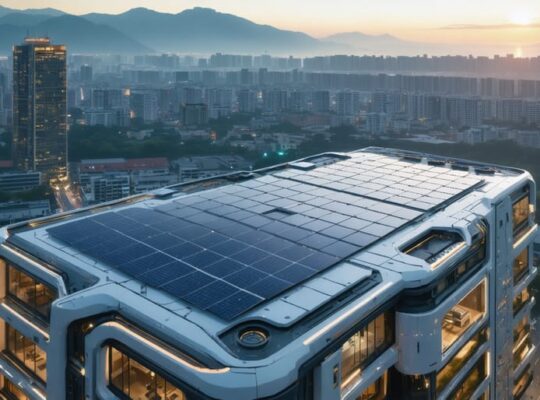
Ultraviolet (UV) solar panels represent a groundbreaking advancement that has revolutionized energy production by harnessing a broader spectrum of solar radiation. Unlike conventional photovoltaic cells that primarily capture visible light, UV-enhanced solar technology incorporates specialized materials and nanoscale engineering to convert high-energy ultraviolet rays into usable electricity. This innovative approach significantly boosts overall panel efficiency by up to 20%, particularly in overcast conditions where traditional panels underperform.
Recent developments in UV-sensitive photovoltaic materials, including zinc oxide and titanium dioxide nanostructures, have enabled unprecedented advances in solar energy capture. These materials demonstrate remarkable stability under intense UV exposure while maintaining high quantum efficiency, making them ideal for next-generation solar applications. As climate change intensifies the need for renewable energy solutions, UV solar technology emerges as a promising pathway toward achieving greater energy independence and environmental sustainability.
Engineers and researchers continue to refine UV solar panel design, focusing on cost-effective manufacturing processes and improved durability. This technological evolution marks a significant step forward in photovoltaic science, offering enhanced performance across diverse environmental conditions and geographical locations.
Understanding UV Solar Panel Technology
How UV Solar Panels Work
UV solar panels operate by capturing and converting ultraviolet radiation from sunlight into electrical energy through a specialized photovoltaic process. Unlike traditional solar panels that primarily utilize visible light, UV panels incorporate specific materials and technologies designed to harness the higher-energy ultraviolet spectrum.
The conversion process begins with UV-sensitive photovoltaic materials, typically composed of wide-bandgap semiconductors such as zinc oxide or titanium dioxide. When UV photons strike these materials, they excite electrons in the semiconductor’s valence band, promoting them to the conduction band. This electron movement creates electron-hole pairs, generating an electric potential difference.
A unique feature of UV solar panels is their multi-layered structure. The top layer consists of a UV-transparent coating that allows ultraviolet light to pass while protecting the underlying components. Beneath this lies the photoactive layer containing the UV-sensitive materials, followed by electron transport layers and electrical contacts.
The generated electrical current is collected through a network of conductive materials and directed to an inverter for conversion into usable alternating current. Modern UV panels often incorporate quantum dots or plasmonic nanostructures to enhance UV light absorption and improve conversion efficiency.
Advanced UV solar technologies also feature specialized anti-reflective coatings and surface texturing to maximize UV light capture, even during cloudy conditions when UV radiation remains relatively constant. This characteristic makes UV panels particularly effective in regions with variable weather patterns.
Key Components and Materials
UV solar panels incorporate several specialized materials and components designed specifically for ultraviolet light absorption and conversion. The primary photovoltaic layer typically consists of wide-bandgap semiconductors, such as zinc oxide (ZnO) or titanium dioxide (TiO2), which are particularly effective at capturing UV radiation.
The top layer features an advanced anti-reflective coating that maximizes UV light transmission while protecting the underlying materials. This coating often incorporates nanostructured materials that enhance light trapping and reduce surface reflection. Below this, a transparent conductive oxide (TCO) layer serves as the front electrical contact, commonly using materials like indium tin oxide (ITO) or fluorine-doped tin oxide (FTO).
The active layer utilizes specialized UV-sensitive materials, including organic polymers or perovskite compounds, which demonstrate superior UV light absorption properties. These materials are engineered at the molecular level to optimize electron-hole pair generation and charge transport efficiency.
The back contact layer typically comprises highly conductive metals like aluminum or silver, often enhanced with additional buffer layers to prevent electron recombination. The entire assembly is encapsulated in UV-resistant materials, such as modified ethylene-vinyl acetate (EVA) or polyolefin elastomers, ensuring long-term stability and protection from environmental factors.
Each component is carefully selected and engineered to maintain optimal performance under UV exposure while maximizing conversion efficiency and operational lifespan.

Efficiency Advantages of UV Solar Technology
Enhanced Light Absorption Capabilities
UV solar panels demonstrate remarkable capabilities in capturing and utilizing a broader spectrum of solar radiation, particularly in the ultraviolet range between 100-400 nanometers. These specialized photovoltaic cells incorporate advanced materials and surface treatments that enable them to harness energy from UV light, which traditional solar panels typically cannot efficiently utilize.
The enhanced absorption capabilities are achieved through multiple technological innovations. A key feature is the implementation of specialized anti-reflective coatings that minimize UV light reflection and maximize absorption. These coatings typically consist of multiple layers of materials with varying refractive indices, optimized for UV wavelengths.
Research indicates that UV-enhanced solar panels can achieve absorption rates of up to 95% in the UV spectrum, compared to conventional panels that may only utilize 15-20% of available UV radiation. This significant improvement is partly due to the integration of wide-bandgap semiconductors and quantum dot technologies, which enable more efficient conversion of high-energy UV photons into usable electrical current.
The absorption enhancement mechanism also benefits from surface texturing at the nanoscale level. These textured surfaces create light-trapping effects that increase the optical path length of incoming UV radiation, allowing for greater absorption probability. Additionally, advanced electron transport layers and selective contacts help minimize recombination losses, ensuring that more of the absorbed UV light contributes to power generation.
Modern UV solar panels often incorporate fluorescent materials that can downconvert UV photons into visible light, which is then more readily absorbed by the underlying photovoltaic material. This photon management strategy further improves overall energy conversion efficiency and demonstrates the sophisticated approach to maximizing solar spectrum utilization.
Performance Metrics and Benchmarks
UV solar panels demonstrate distinct performance characteristics when compared to conventional photovoltaic technologies. While traditional silicon-based panels typically achieve efficiency rates between 15-20%, UV-optimized panels have shown promising results in capturing and converting higher-energy ultraviolet radiation, contributing to record-breaking efficiency levels under specific conditions.
Laboratory testing reveals that UV-enhanced panels can increase overall energy conversion efficiency by 3-5% when specifically optimized for the UV spectrum. This improvement is particularly notable during overcast conditions when UV radiation remains relatively constant, unlike visible light. However, these gains must be considered alongside the panels’ performance across the entire solar spectrum.
Key performance metrics include:
– UV-specific conversion efficiency: 8-12%
– Additional power output in diffuse light conditions: 2-4%
– Temperature coefficient: -0.35%/°C (compared to -0.45%/°C for standard panels)
– Degradation rate: 0.5% annually (similar to conventional panels)
When benchmarked against traditional PV technologies, UV-optimized panels show superior performance in:
– Early morning and late afternoon generation
– Consistent output during cloudy weather
– Reduced performance degradation from UV exposure
– Enhanced durability due to specialized coating technologies
These metrics demonstrate that while UV solar panels may not completely outperform conventional technologies in all conditions, they offer significant advantages in specific applications and environments where UV utilization is paramount. The technology continues to evolve, with ongoing research focusing on improving UV-specific conversion rates while maintaining broad-spectrum effectiveness.

Implementation and Applications
Commercial and Residential Uses
UV solar panels find diverse applications across both commercial and residential sectors, each with distinct requirements and implementation approaches. In commercial settings, these panels are increasingly integrated into large-scale installations on office buildings, warehouses, and industrial facilities. The technology’s ability to capture UV radiation makes it particularly valuable in urban environments where traditional solar panels may underperform due to limited direct sunlight exposure.
For residential applications, UV solar panels offer homeowners enhanced energy generation capabilities, especially in regions with frequent cloud cover or during winter months. These systems can be implemented through various building integration solutions, including roof-mounted arrays, solar tiles, and facade installations.
System requirements vary significantly between commercial and residential installations. Commercial applications typically demand higher voltage configurations, sophisticated monitoring systems, and industrial-grade inverters to handle larger power outputs. Residential systems, while smaller in scale, require careful consideration of aesthetic integration, local building codes, and grid connection requirements.
Both sectors benefit from UV solar panels’ improved performance in diffuse light conditions, though installation specifications must account for factors such as available surface area, structural loading capacity, and local climate conditions. The technology’s versatility makes it suitable for both new construction projects and retrofitting existing structures, providing sustainable energy solutions across diverse architectural contexts.

Integration with Existing PV Systems
Integrating UV solar panels into existing photovoltaic systems requires careful planning and consideration of several key factors. The process begins with a thorough assessment of the current installation’s capacity, structural integrity, and available space. Compatibility between UV panels and conventional PV modules must be evaluated, particularly regarding voltage requirements and inverter specifications.
For optimal integration, the existing mounting infrastructure should be examined to determine if modifications are necessary. UV panels typically require similar mounting solutions to traditional solar panels, but their specific weight and dimensional characteristics must be considered. The electrical configuration demands particular attention, as UV panels may operate at different voltage ranges than conventional modules.
System designers should implement appropriate isolation and protection devices to ensure seamless operation between UV and traditional panels. The charge controller and inverter specifications must accommodate the combined output characteristics of both panel types. Modern hybrid inverters capable of managing multiple input sources are recommended for such installations.
Monitoring systems should be upgraded or modified to track the performance of both UV and conventional panels separately, enabling efficient system optimization. Documentation of the integration process, including electrical diagrams and performance expectations, should be maintained for future reference and maintenance purposes.
Professional installation by certified technicians is crucial to ensure compliance with local regulations and maintain warranty validity. Regular maintenance schedules should be adjusted to account for the specific requirements of UV panels while maintaining the existing system’s performance standards.
Future Developments and Market Outlook
The UV solar panel technology sector is poised for significant advancement in the coming years, driven by intensive research and development efforts across major institutions and manufacturers. Market analysts project a compound annual growth rate (CAGR) of 8.2% for UV-enhanced solar technologies through 2030, highlighting the increasing recognition of their potential in improving overall solar energy conversion efficiency.
Emerging technological improvements focus on enhancing the UV absorption capabilities through novel materials and manufacturing processes. Researchers are developing advanced quantum dot technologies and specialized coating materials that can more effectively capture and convert UV radiation into usable electricity. These innovations are expected to increase the conversion efficiency of UV solar panels by an additional 15-20% within the next five years.
The integration of artificial intelligence and machine learning algorithms is set to optimize UV solar panel performance through predictive maintenance and real-time adjustment capabilities. Smart monitoring systems will enable better tracking of UV exposure and panel degradation, leading to improved longevity and performance reliability.
Market trends indicate growing adoption across various sectors, particularly in regions with high UV exposure. Commercial and industrial applications are expected to drive significant market growth, with building-integrated photovoltaics (BIPV) representing a key growth segment. The automotive industry is also showing increased interest in UV-enhanced solar technologies for electric vehicle applications.
Manufacturing costs are projected to decrease by approximately 30% over the next decade due to economies of scale and improved production techniques. This cost reduction, coupled with increasing energy efficiency requirements and environmental regulations, will likely accelerate market adoption.
Research partnerships between industry leaders and academic institutions continue to explore new materials and configurations, including hybrid systems that combine UV-specific panels with traditional solar technologies. These collaborative efforts are expected to yield breakthrough innovations in UV light harvesting and conversion efficiency, potentially revolutionizing the solar energy landscape.
UV solar panels represent a significant advancement in photovoltaic technology, offering compelling benefits that position them as a crucial component of our renewable energy future. By harnessing previously untapped portions of the solar spectrum, these innovative panels demonstrate enhanced energy generation capabilities, particularly in low-light and diffuse light conditions. Their ability to perform effectively even on cloudy days and in indoor settings opens up new possibilities for solar energy deployment across diverse applications.
The economic advantages of UV solar panels, including improved efficiency and potential cost savings over traditional PV systems, make them increasingly attractive for both commercial and residential applications. Their durability and resistance to environmental factors contribute to longer operational lifespans, reducing maintenance requirements and overall lifecycle costs.
Looking ahead, ongoing research and development in UV solar technology promises even greater improvements in efficiency and cost-effectiveness. Emerging applications in building-integrated photovoltaics, urban solar installations, and specialized industrial uses suggest a bright future for this technology. As manufacturing processes continue to evolve and economies of scale take effect, UV solar panels are expected to become more accessible and economically viable for widespread adoption.
The integration of UV solar technology into existing renewable energy frameworks represents a crucial step toward achieving global sustainability goals and reducing carbon emissions. With continued investment in research and development, along with supportive policy frameworks, UV solar panels are poised to play an increasingly important role in the global transition to clean energy sources.