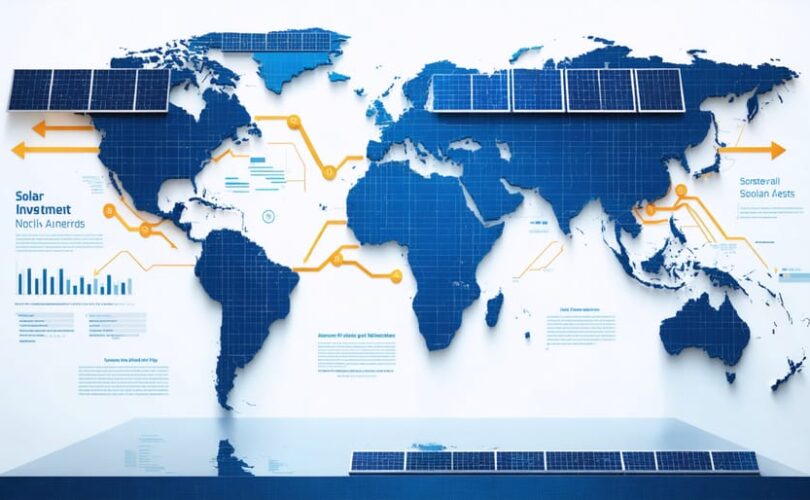
Cross-continental solar investments are reshaping the global energy landscape, driving unprecedented collaboration across borders and continents. As multilateral solar agreements forge new pathways for international cooperation, stakeholders from Europe, Asia, and the Americas are pooling resources, expertise, and capital to accelerate renewable energy adoption worldwide. This strategic convergence of international investment flows has catalyzed technological innovation, standardized regulatory frameworks, and optimized project delivery across diverse geographical regions.
The rise of cross-continental solar ventures represents a fundamental shift in how renewable energy projects are conceived, funded, and implemented. By leveraging complementary strengths across different regions – from European engineering excellence to Asian manufacturing capabilities and North American financial innovation – these partnerships are establishing new benchmarks for project efficiency and sustainability. This collaborative approach not only mitigates investment risks through geographical diversification but also accelerates the global transition toward renewable energy sources through shared knowledge and resources.
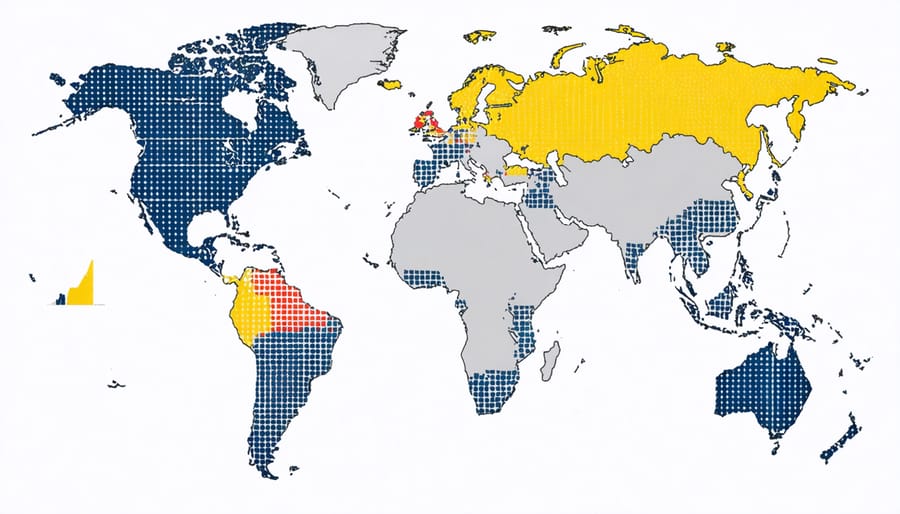
The Rise of International Solar Investment Corridors
Asia-Europe Solar Partnership
The Asia-Europe Solar Partnership represents a pivotal force in the global energy market transformation, characterized by substantial investment flows between Asian manufacturing powerhouses and European markets. Chinese, South Korean, and Japanese manufacturers have established significant production facilities across Europe, while European technology firms contribute advanced research and development capabilities to Asian manufacturing processes.
Recent data indicates that Asian investments in European solar markets exceeded €15 billion in 2023, primarily focused on manufacturing facilities, distribution networks, and research centers. This partnership has resulted in reduced production costs while maintaining European quality standards. Key manufacturing hubs in countries like Poland, Hungary, and Germany have benefited from Asian technical expertise and capital investment.
European markets provide attractive incentives for Asian manufacturers, including access to skilled workforce, established infrastructure, and proximity to end-users. Conversely, Asian partners benefit from Europe’s robust intellectual property protection and research facilities. This symbiotic relationship has accelerated technological innovation, particularly in areas such as heterojunction cell technology and advanced module design.
The partnership has also fostered knowledge transfer through joint ventures and collaborative research programs, strengthening both regions’ positions in the global solar industry.
North America-Africa Initiatives
North American investments in African solar development have grown significantly over the past decade, with the United States and Canada taking leading roles in fostering renewable energy partnerships across the continent. The U.S. Power Africa initiative has facilitated over $14 billion in solar investments since 2013, supporting utility-scale projects and mini-grid solutions across sub-Saharan Africa.
Canadian organizations have similarly demonstrated strong commitment through programs like the Canada-African Power Alliance, which has helped establish multiple solar farms in countries including Kenya, Ghana, and Nigeria. These initiatives combine infrastructure development with capacity building, ensuring long-term sustainability through knowledge transfer and local workforce development.
Key projects include the 150MW Noor Solar Complex in Morocco, supported by U.S. development finance, and the 40MW Mocuba Solar Plant in Mozambique, backed by Canadian investment. These installations not only generate clean energy but also create employment opportunities and strengthen bilateral relations.
Educational partnerships between North American and African institutions have emerged as crucial components of these initiatives. Universities collaborate on research projects, while technical training programs prepare local professionals for solar industry careers. This comprehensive approach ensures that investments create lasting impact beyond initial infrastructure development.
Technology Transfer and Innovation Exchange
Research and Development Collaboration
Research and development collaborations across continents have become instrumental in advancing solar technology and renewable energy solutions. Leading institutions from Europe, Asia, and North America regularly engage in joint research projects, sharing resources, expertise, and facilities to accelerate innovation in photovoltaic technology.
Notable partnerships include the EU-Japan collaborative research program on advanced solar cells, which has yielded significant breakthroughs in perovskite technology. Similarly, the US-China Clean Energy Research Center has facilitated groundbreaking developments in solar panel efficiency and energy storage solutions.
These cross-continental collaborations have resulted in several key achievements, including the development of bifacial solar panels with enhanced efficiency, advanced energy storage systems, and improved solar tracking technologies. Universities and research institutions have established shared laboratories and testing facilities, enabling real-time data exchange and collaborative experimentation across time zones.
The impact of these partnerships extends beyond technological advancement. Knowledge transfer programs have helped standardize testing methodologies and quality control processes across different regions. Additionally, joint research initiatives have contributed to the development of international standards for solar equipment manufacturing and installation.
Educational institutions have also benefited from these collaborations through student exchange programs, joint research publications, and shared curriculum development. This academic cooperation has created a global network of solar energy experts and researchers, fostering innovation and advancing the field of photovoltaic technology worldwide.

Manufacturing Standards Alignment
Global investments in cross-continental solar projects have catalyzed a significant push toward standardizing manufacturing processes across different regions. This harmonization of standards has become crucial as solar component production spans multiple continents, requiring consistent quality and compatibility regardless of manufacturing location.
Major solar manufacturers are implementing unified quality control systems that align with international certifications such as ISO 9001 and IEC standards. These standardized approaches ensure that solar panels and components manufactured in Asia meet the same specifications and performance criteria as those produced in Europe or North America.
The standardization effort extends beyond product specifications to encompass production methodologies, testing protocols, and quality assurance processes. Investment flows have facilitated the transfer of best practices across borders, leading to the establishment of identical manufacturing protocols in facilities worldwide. This consistency has become particularly important as supply chains grow increasingly complex and interconnected.
Furthermore, cross-continental investments have driven the adoption of automated manufacturing systems that maintain precise quality controls across different production facilities. These automated systems help eliminate variations in manufacturing output while ensuring adherence to stringent international standards.
The alignment of manufacturing standards has also improved supply chain efficiency, reduced production costs, and enhanced product reliability. This standardization has become a cornerstone of successful cross-continental solar investments, enabling seamless integration of components manufactured across different regions while maintaining consistent quality levels throughout the global solar industry.
Investment Risk Management Strategies
Managing investment risks in cross-continental solar projects requires a comprehensive approach that addresses multiple variables across different geographical regions. A robust risk management strategy typically begins with thorough due diligence, encompassing political, economic, and environmental assessments of target markets.
Currency risk mitigation stands as a primary concern in cross-continental investments. Investors often employ hedging strategies, including forward contracts and currency swaps, to protect against exchange rate fluctuations that could impact project returns. Additionally, structuring investments through stable third-party currencies or utilizing multi-currency financing packages can provide additional protection.
Political risk insurance plays a crucial role in safeguarding investments across different jurisdictions. This coverage typically protects against events such as expropriation, political violence, and contract frustration. Many investors work with multilateral organizations like the World Bank’s Multilateral Investment Guarantee Agency (MIGA) to secure such protection.
Technical risk management involves careful evaluation of equipment suppliers, performance guarantees, and maintenance contracts. Implementing rigorous quality control measures during construction and operation phases helps ensure long-term project viability. Regular performance monitoring and preventive maintenance programs are essential components of this strategy.
Environmental and social risk assessments are increasingly important in cross-continental solar investments. These evaluations help identify potential impacts on local communities and ecosystems, ensuring project sustainability and compliance with international standards. Engaging with local stakeholders and maintaining transparent communication channels can help mitigate social risks.
Financial structuring plays a vital role in risk management. Diversifying investment portfolios across multiple regions and projects helps spread risk exposure. Project finance structures often include contingency reserves and debt service coverage ratios to provide additional security for investors and lenders.
Insurance coverage extending beyond political risk is essential, including protection against natural disasters, business interruption, and professional liability. Regular risk assessments and updates to insurance policies ensure adequate coverage as project conditions evolve.
Policy Frameworks and International Agreements
The development of cross-continental solar investments is significantly influenced by international regulatory frameworks and policy agreements that facilitate global renewable energy cooperation. Key multilateral initiatives like the International Solar Alliance (ISA) and the Paris Agreement have established foundational guidelines for cross-border solar development, creating standardized approaches to project implementation and investment protection.
National governments have increasingly aligned their domestic renewable energy policies with international standards, creating more predictable investment environments. These harmonized regulations address critical aspects such as grid integration requirements, technical specifications, and environmental impact assessments, enabling smoother cross-continental project development.
Several significant policy mechanisms support cross-continental solar investments, including:
1. Bilateral Investment Treaties (BITs) that protect foreign investors and ensure fair treatment
2. Standardized Power Purchase Agreements (PPAs) that facilitate international energy trading
3. Green financing frameworks that enable cross-border funding for renewable projects
4. Technology transfer protocols that support knowledge sharing between nations
Regional cooperation frameworks, such as the European Union’s Renewable Energy Directive and the African Renewable Energy Initiative, have established successful models for cross-continental collaboration. These frameworks demonstrate how coordinated policy approaches can accelerate solar deployment while addressing region-specific challenges.
The evolution of carbon pricing mechanisms and renewable energy certificates has created additional economic incentives for cross-continental solar investments. These market-based instruments help quantify and monetize the environmental benefits of solar projects, making them more attractive to international investors.
Recent developments in international trade agreements have also begun incorporating specific provisions for renewable energy technologies, reducing barriers to cross-border solar equipment trade and technical expertise exchange. This trend reflects growing recognition of the need for coordinated global action in advancing solar energy adoption.
Market Impact and Future Projections
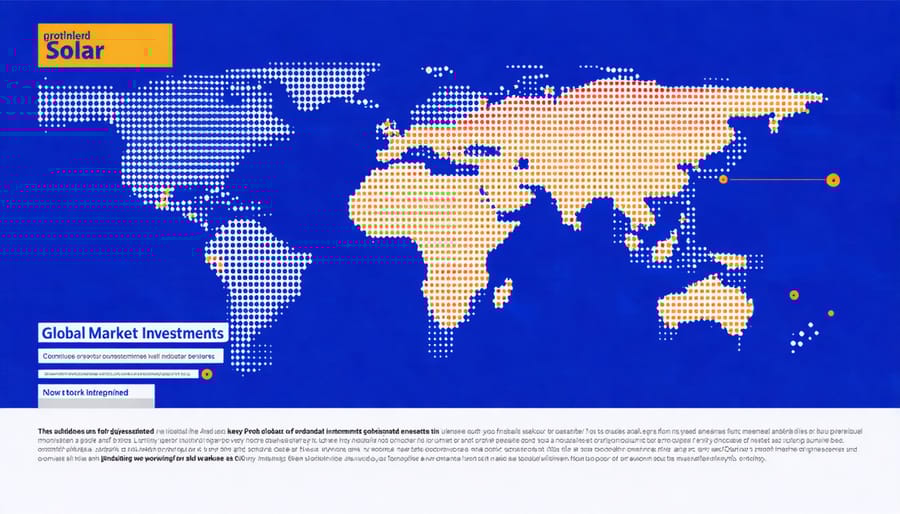
The cross-continental solar investment landscape has witnessed substantial growth, with market valuations reaching unprecedented levels in recent years. Current global solar market trends indicate a compound annual growth rate of 20.5% from 2023 to 2030, driven by increasing demand for renewable energy solutions and favorable policy frameworks across continents.
Investment flows between Asia and Europe have been particularly robust, with Chinese manufacturing expertise combining with European technological innovation to create substantial market opportunities. North American markets have also shown significant interest in cross-continental partnerships, especially in utility-scale solar projects.
Analysis of current market data suggests that cross-continental solar investments will continue to expand, with projections indicating a market value exceeding $300 billion by 2030. This growth is supported by several key factors, including:
– Decreasing solar technology costs across international markets
– Enhanced grid integration capabilities
– Improved energy storage solutions
– Strengthening international cooperation frameworks
– Growing corporate commitment to renewable energy targets
Future projections indicate a shift toward more integrated cross-continental supply chains, with increased focus on sustainable manufacturing practices and technological standardization. Emerging markets in Africa and South America are expected to play increasingly important roles, offering new opportunities for cross-continental collaboration and investment.
The market outlook remains positive, despite challenges such as regulatory differences and trade policies. Industry experts anticipate that continued technological advancement and policy harmonization will further strengthen cross-continental solar investment opportunities, creating a more interconnected and efficient global solar energy market.
The cross-continental solar investment landscape continues to evolve rapidly, shaped by technological advancements, policy frameworks, and growing environmental awareness. As we’ve explored throughout this analysis, successful cross-continental ventures require careful consideration of multiple factors, including regulatory compliance, risk management strategies, and cultural sensitivity in business operations.
The future of cross-continental solar investments appears promising, with emerging markets showing increasing potential for growth and established markets continuing to innovate. Technological improvements in solar panel efficiency and energy storage solutions are making projects more viable across diverse geographical locations. This evolution is particularly significant for developing regions where solar energy can address both environmental concerns and energy access challenges.
Investment strategies are becoming more sophisticated, incorporating ESG considerations and leveraging international partnerships to maximize impact and returns. The trend toward standardization of regulatory frameworks across borders is facilitating smoother cross-continental transactions, though challenges remain in harmonizing various national policies.
Looking ahead, we can expect to see increased collaboration between nations, more standardized investment protocols, and enhanced technological integration across solar projects. The role of digital technologies, particularly in project monitoring and maintenance, will become more prominent. For stakeholders in the solar industry, staying informed about these developments and maintaining flexibility in investment approaches will be crucial for capitalizing on future opportunities while managing associated risks effectively.