
Global solar regulations stand at a critical intersection of technological innovation, international trade, and environmental sustainability. As the photovoltaic (PV) industry experiences unprecedented growth, the need for harmonized regulatory frameworks has become increasingly urgent. The current landscape of divergent national standards, certification requirements, and compliance protocols creates significant challenges for manufacturers, developers, and investors operating across borders.
Recent initiatives by international organizations, including the International Electrotechnical Commission (IEC) and the International Organization for Standardization (ISO), demonstrate a concerted effort to establish unified global standards. These harmonization efforts aim to streamline market access, reduce compliance costs, and accelerate the deployment of solar technologies worldwide. Understanding these regulatory dynamics is crucial for industry stakeholders navigating the complex web of international requirements while maintaining product quality and safety standards.
The evolution of global solar regulations reflects a delicate balance between fostering innovation and ensuring product reliability. As emerging markets continue to expand their solar capacity and established markets refine their regulatory frameworks, the push for standardization becomes increasingly vital for sustainable industry growth and international collaboration in renewable energy development.
The Current State of Global Solar Regulations
Regional Disparities in Solar Standards
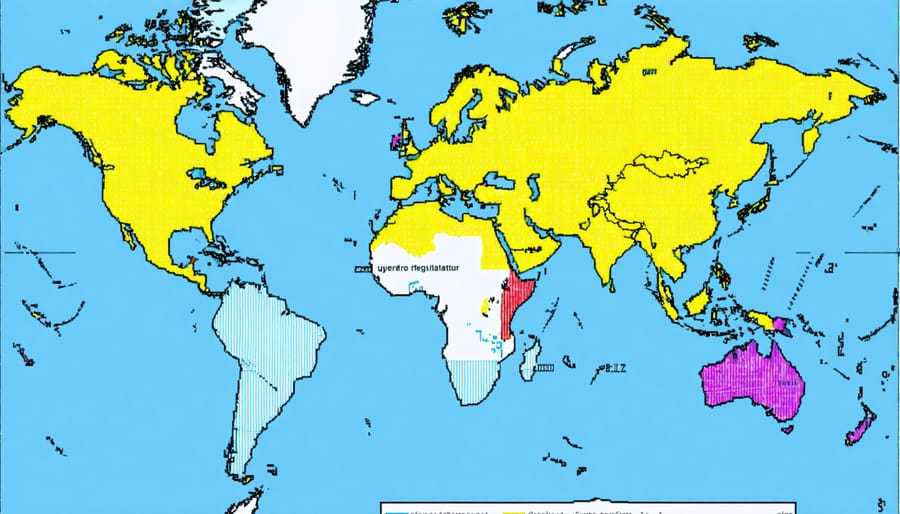
The global solar industry faces significant challenges due to varying regulatory frameworks across major markets. In Europe, the IEC standards serve as the primary reference, with additional national requirements layered on top. The European Union’s EN standards have established stringent quality and safety protocols, particularly for grid integration and performance monitoring.
The United States maintains distinct requirements through UL certifications, which sometimes conflict with international standards, creating compliance challenges for manufacturers. Asian markets present further complexity, with China implementing GB standards that often differ from international norms, while Japan enforces unique JIS requirements for domestic installations.
These regional disparities affect manufacturing costs, market access, and technology deployment. For instance, a solar panel certified for use in Germany may require additional testing and modifications before deployment in California or Tokyo. This regulatory fragmentation impacts supply chain efficiency and increases production costs, ultimately affecting market prices and adoption rates.
Emerging markets add another layer of complexity, often adopting hybrid approaches that combine international standards with local requirements, creating additional challenges for global manufacturers and installers.
Key Regulatory Bodies and Their Influence
Several influential organizations play pivotal roles in shaping global solar standards and regulations. The International Electrotechnical Commission (IEC) stands as the primary authority, developing comprehensive technical standards for photovoltaic systems through its Technical Committee 82. These standards serve as benchmarks for safety, performance, and reliability worldwide.
The International Organization for Standardization (ISO) complements the IEC’s work by establishing quality management systems and environmental standards crucial for solar manufacturing processes. Additionally, the International Renewable Energy Agency (IRENA) provides policy frameworks and technical guidelines that influence regulatory development across member states.
Regional bodies also exert significant influence. The European Committee for Electrotechnical Standardization (CENELEC) adapts international standards for the European market, while Underwriters Laboratories (UL) shapes North American requirements. The China National Certification and Accreditation Administration (CNCA) maintains substantial influence over Asian markets.
These organizations collaborate through various harmonization initiatives, working to reduce technical barriers to trade while maintaining high safety and performance standards. Their collective efforts drive innovation, ensure product quality, and facilitate global market access for solar technologies.
International Harmonization Initiatives
IEC Standards and Global Adoption
The International Electrotechnical Commission (IEC) plays a pivotal role in establishing global standards for photovoltaic technology and systems. Through its technical committees, particularly TC 82 for solar photovoltaic energy systems, the IEC develops comprehensive standards that ensure safety, reliability, and performance across international markets. These standards serve as the foundation for various multilateral solar agreements and national regulations worldwide.
IEC standards have achieved widespread adoption, with over 100 countries either directly implementing them or using them as the basis for their national standards. Key documents such as IEC 61215 for module design qualification and IEC 61730 for safety qualification have become essential references in the global solar industry. This harmonization facilitates international trade, reduces technical barriers, and promotes innovation while maintaining quality standards.
The commission’s working groups regularly update these standards to accommodate technological advancements and emerging market needs. This dynamic approach ensures that regulations remain relevant and effective in addressing contemporary challenges in solar technology deployment. The IEC’s collaborative framework also enables stakeholder participation from diverse geographical regions, ensuring that standards reflect global industry requirements rather than regional preferences.
Through systematic conformity assessment systems and certification schemes, the IEC helps manufacturers demonstrate compliance with international standards, thereby facilitating market access and fostering trust among investors and consumers.
Cross-Border Certification Programs
Cross-border certification programs play a crucial role in facilitating international trade and ensuring consistent quality standards in the photovoltaic industry. These programs operate through mutual recognition agreements (MRAs) between different jurisdictions, enabling manufacturers to obtain certifications that are valid across multiple markets. The International Electrotechnical Commission’s System of Conformity Assessment Schemes for Electrotechnical Equipment and Components (IECEE) stands as a cornerstone of these efforts, providing a standardized framework for testing and certification.
Through collaborative frameworks, certification bodies worldwide work together to harmonize testing procedures and requirements. Key programs include the Solar Keymark in Europe, UL certification in North America, and the International PV Quality Assurance Task Force (PVQAT) initiatives, which aim to establish globally recognized quality standards.
These certification schemes typically assess product safety, performance, and reliability through standardized testing protocols. Manufacturers can leverage these programs to reduce redundant testing requirements and accelerate market entry across different regions. Notable developments include the establishment of bilateral agreements between major markets like the EU and Asia-Pacific regions, streamlining certification processes and reducing compliance costs while maintaining rigorous quality standards.
The evolution of these programs continues to support industry growth by facilitating technology transfer, reducing trade barriers, and ensuring consistent product quality across international markets.

Impact on PV Manufacturing and Trade
Manufacturing Compliance Benefits
Adherence to global manufacturing compliance standards delivers significant operational advantages for photovoltaic manufacturers. Streamlined production processes, aligned with international requirements, enable consistent quality control across multiple facilities while reducing redundant testing and certification procedures. This standardization leads to more efficient resource allocation and decreased production costs.
Manufacturers benefit from improved quality management systems that meet multiple regional requirements simultaneously. By implementing unified compliance protocols, companies can maintain consistent product quality while efficiently managing their supply chains across different markets. This systematic approach helps identify and address potential issues earlier in the production cycle, reducing waste and minimizing costly rework.
The harmonization of manufacturing standards also facilitates better documentation and traceability throughout the production process. This enhanced transparency allows manufacturers to demonstrate compliance more effectively during audits and inspections, while simultaneously providing valuable data for continuous improvement initiatives.
Furthermore, standardized testing procedures and quality benchmarks enable more accurate performance predictions and reliability assessments. This reliability data supports warranty programs and helps manufacturers maintain customer confidence while reducing liability risks. The resulting operational efficiency and quality consistency create a strong foundation for sustainable business growth in the global solar market.
Trade Facilitation Effects
Global regulatory harmonization has significantly enhanced international trade flows in the photovoltaic industry by reducing technical barriers and streamlining market access procedures. The standardization of certification requirements and testing protocols has decreased compliance costs for manufacturers, enabling more efficient cross-border commerce. This harmonization has particularly benefited emerging markets, where aligned regulations have created new opportunities for solar technology deployment and shown substantial regional economic impact.
The implementation of unified standards has accelerated customs clearance processes and reduced documentation requirements, leading to shorter lead times and lower logistics costs. Manufacturers can now design products to meet a single set of requirements rather than multiple regional specifications, resulting in economies of scale and improved production efficiency.
These improvements have fostered increased competition in global markets, driving innovation and cost reductions across the solar value chain. Small and medium-sized enterprises have particularly benefited from simplified compliance procedures, enabling them to expand their market reach internationally. The harmonization of technical standards has also facilitated technology transfer between developed and developing nations, supporting the global transition to renewable energy sources while maintaining consistent quality and safety standards.
Future Directions and Challenges
Emerging Technologies and Standards
The landscape of photovoltaic technology continues to evolve rapidly, introducing new challenges for global regulatory frameworks. Recent PV innovation trends have sparked the development of advanced materials and manufacturing processes, necessitating updates to existing standards. Emerging technologies such as perovskite solar cells, bifacial modules, and building-integrated photovoltaics (BIPV) require careful regulatory consideration to ensure safety, performance, and market acceptance.
International standards organizations are actively developing new protocols for testing and certifying these innovative technologies. The IEC Technical Committee 82 has established working groups specifically focused on emerging PV technologies, addressing concerns about long-term reliability and performance validation. These efforts are complemented by regional initiatives to create specialized testing procedures and quality assurance frameworks.
Regulatory bodies are also adapting to accommodate smart grid integration, energy storage systems, and IoT-enabled solar technologies. The implementation of blockchain for renewable energy certificates and virtual power plants has prompted the development of new regulatory guidelines focusing on cybersecurity and data protection. These developments underscore the need for flexible yet robust regulatory frameworks that can evolve alongside technological advancement while maintaining safety and quality standards.
Harmonization Roadblocks
Despite global efforts to standardize photovoltaic regulations, several significant challenges impede the harmonization process. Regional differences in technical requirements, testing methodologies, and certification procedures create complex barriers for manufacturers and installers operating across multiple markets. These disparities often stem from varying climate conditions, grid infrastructure capabilities, and local safety standards.
Economic factors also play a crucial role, as developing nations may struggle to implement sophisticated testing facilities or certification processes required by international standards. This creates a divide between markets with advanced regulatory frameworks and those with emerging solar industries. Additionally, established local industries may resist harmonization efforts to protect their market position and existing investments in specific technologies or processes.
Political considerations further complicate the standardization process, with some countries prioritizing domestic industry protection over international alignment. The absence of binding international agreements and enforcement mechanisms makes it challenging to ensure consistent implementation of harmonized standards. Moreover, the rapid evolution of solar technology often outpaces regulatory development, creating gaps between existing standards and new technological capabilities.
The harmonization of global solar regulations represents a crucial step toward accelerating the worldwide adoption of photovoltaic technology. As the industry continues to mature, the alignment of standards and certification processes across different regions becomes increasingly vital for reducing trade barriers, ensuring product quality, and fostering innovation. The establishment of unified regulatory frameworks has already demonstrated significant benefits, including reduced manufacturing costs, streamlined certification processes, and improved market access for solar products.
Looking ahead, the future of global regulatory harmonization appears promising, with increasing collaboration between international standards organizations, government bodies, and industry stakeholders. Emerging trends suggest a move toward more sophisticated digital compliance systems and automated verification processes. These developments will likely facilitate faster market entry for new products while maintaining rigorous safety and performance standards.
However, success will require ongoing commitment from all participants in the solar ecosystem. Continued investment in research, development of common testing methodologies, and regular updates to existing standards will be essential to address evolving technological challenges and market demands. As the industry progresses, regulatory harmonization will remain a cornerstone of sustainable growth in the global solar market.