Peer-to-peer lending in solar projects presents a fundamentally different risk profile than traditional investments, requiring careful evaluation of platform security, borrower creditworthiness, and regulatory protections before committing capital. The central safety question hinges on three interconnected factors: the financial stability of the P2P platform itself, the quality of solar project underwriting, and the legal frameworks governing investor recourse in case of default.
Unlike conventional banking deposits protected by federal insurance, P2P solar investments expose participants to direct credit risk from borrowers financing photovoltaic installations. Platform failures have occurred in the broader P2P lending market, resulting in investor losses when intermediaries collapse before fully distributing repayments. However, established solar-focused platforms implement risk mitigation strategies including diversification requirements, loan loss reserves, and secondary market liquidity options that distinguish them from unregulated peer-to-peer arrangements.
The safety assessment demands understanding structural protections such as security interests in equipment, payment processing segregation, and platform track records spanning multiple economic cycles. Investors must evaluate whether returns adequately compensate for illiquidity periods typically ranging from three to seven years, alongside the technical risks inherent in solar performance projections that underpin borrower repayment capacity.
This analysis examines empirical default rates, regulatory oversight gaps, comparative risk metrics against alternative investments, and essential due diligence frameworks that photovoltaic professionals and investors require to make informed decisions about P2P solar lending participation. Educational institutions partnering with industry leaders increasingly incorporate these risk assessment methodologies into renewable energy finance curricula, recognizing the growing prominence of distributed capital models in accelerating solar deployment.
Understanding Peer-to-Peer Solar Financing Networks
How P2P Solar Financing Works
P2P solar networks operate through digital platforms that directly connect individual investors with solar project developers seeking capital. The process begins when project developers submit detailed proposals, including technical specifications, financial projections, and risk assessments. These platforms conduct preliminary due diligence, verifying project viability and developer credentials before listing opportunities.
Investors browse available solar projects, reviewing energy production estimates, expected returns, and investment terms. Minimum investment thresholds typically range from $100 to $1,000, enabling portfolio diversification across multiple projects. Once funding targets are met, capital transfers to developers for equipment procurement and installation.
Returns flow from the solar installation’s energy production revenue, whether through power purchase agreements, feed-in tariffs, or direct electricity sales. The platform intermediates payment distribution, typically on monthly or quarterly schedules. This smart solar financing model creates transparent capital flows while reducing traditional banking intermediaries. Platform fees, usually 1-3% of transaction value, cover operational costs and ongoing project monitoring services.
Key Players in the Network
Peer-to-peer solar lending networks involve four distinct stakeholder groups, each contributing essential functions to the financing ecosystem. Understanding these roles provides clarity on how risk distributes across the platform and where safety mechanisms operate.
Investors supply capital to solar projects through the P2P platform, seeking financial returns while supporting renewable energy adoption. These individuals or institutions typically face credit risk, liquidity constraints, and platform dependency. Sophisticated investors often diversify across multiple projects to mitigate concentration risk, while newer participants may lack experience in evaluating solar-specific lending opportunities.
Solar installers execute the physical deployment of photovoltaic systems and frequently partner with P2P platforms to offer financing options to their customers. Their technical expertise and installation quality directly impact system performance, affecting borrowers’ ability to generate savings and repay loans. Reputable installers with established track records reduce technical risk for all parties.
Homeowners and businesses serve as borrowers, seeking accessible financing for solar installations without traditional bank barriers. Their creditworthiness, payment history, and property characteristics determine loan approval and interest rates. These borrowers benefit from streamlined application processes and potentially lower rates compared to conventional financing.
Platform operators facilitate transactions, conduct due diligence, manage loan servicing, and implement risk assessment protocols. Their operational integrity, regulatory compliance, and financial stability fundamentally determine overall platform safety. Leading platforms maintain reserve funds, carry appropriate insurance, and provide transparent reporting to stakeholders. Educational partnerships with universities enhance their credibility by contributing to workforce development and advancing industry knowledge, though this alone does not guarantee financial security for investors.
The Primary Safety Concerns in P2P Solar Lending
Default and Payment Risk
Default risk represents the most significant concern for peer-to-peer solar lending participants. Historical data from established P2P solar platforms indicates default rates ranging from 2% to 8%, depending on borrower screening protocols and loan structures. These figures compare favorably to unsecured consumer lending but require careful consideration within investment portfolios.
When solar system owners cease payments, the outcome depends on security mechanisms embedded in loan agreements. Most P2P solar loans include equipment liens, allowing lenders to claim the photovoltaic system as collateral. However, removing installed solar arrays proves logistically complex and often yields recovery values below outstanding balances. Some platforms maintain reserve funds to cover partial losses, though these protections vary considerably across providers.
Performance data from 2015-2023 reveals that solar loans generally outperform expectations during periods of stable electricity prices, as system owners recognize ongoing operational savings. Economic downturns and unexpected equipment failures correlate with elevated default rates. Platform diversification—spreading investments across multiple borrowers—reduces concentration risk but cannot eliminate default exposure entirely.
Academic research institutions collaborating with renewable energy financing organizations have documented that borrower education programs correlate with lower default rates. Platforms implementing comprehensive financial literacy components and realistic payment projections demonstrate 30-40% fewer payment delinquencies compared to those without such educational frameworks, highlighting the protective value of informed borrower participation.
Platform Stability and Operational Risk
Platform stability represents a significant operational risk in peer-to-peer solar lending arrangements. When intermediary platforms facilitating solar project financing encounter financial distress or bankruptcy, investor capital and ongoing loan servicing face potential disruption. Unlike traditional financial institutions with established regulatory frameworks and deposit insurance protections, P2P lending platforms operate with varying levels of oversight depending on jurisdiction.
Historical evidence from broader P2P lending markets demonstrates that platform failures do occur. Established solar-focused P2P platforms typically implement contingency arrangements, including loan servicing transfer agreements with backup administrators who assume obligations if the original platform ceases operations. These protective mechanisms ensure that loan repayments continue flowing to investors even when the intermediary fails.
Investors should evaluate platform track records thoroughly, examining operational history, financial audits, and regulatory compliance records. Platforms with university partnerships often demonstrate enhanced due diligence standards and transparent operational practices. The longevity of a platform, combined with clear documentation of loan servicing backup plans, provides indicators of institutional stability.
Academic research into alternative energy financing suggests that platforms maintaining diversified revenue streams beyond transaction fees exhibit greater resilience during market downturns. Prospective investors must recognize that platform risk exists separately from underlying solar project performance risk, requiring independent assessment of both the borrower’s creditworthiness and the intermediary’s operational soundness.
Regulatory and Legal Protection Gaps
Peer-to-peer solar lending operates in a regulatory landscape significantly different from traditional securities markets. Unlike stocks or bonds traded on regulated exchanges, P2P solar platforms often fall into gray areas of financial regulation. In many jurisdictions, these platforms are not subject to the same stringent oversight as conventional financial institutions, creating potential protection gaps for investors.
The absence of comprehensive federal frameworks means investor protections vary considerably by region and platform. Traditional securities benefit from established mechanisms including deposit insurance, Securities Investor Protection Corporation coverage, and mandatory disclosure requirements. P2P solar investments typically lack these safeguards, placing greater responsibility on individual investors to assess creditworthiness and platform stability.
Current regulations focus primarily on crowdfunding limits and accredited investor requirements rather than addressing solar-specific risks such as equipment performance degradation or maintenance obligations. Some jurisdictions require platforms to register as intermediaries, while others impose minimal oversight. This fragmented regulatory environment creates uncertainty for both investors and photovoltaic professionals advising clients on financing options.
Educational institutions partnering with industry leaders play an increasingly vital role in establishing best practices and ethical standards where formal regulations remain underdeveloped. Understanding these protection gaps enables stakeholders to make informed decisions while advocating for stronger regulatory frameworks that balance innovation with investor security.
Safety Mechanisms and Risk Mitigation Features
Built-in Platform Protections
Reputable peer-to-peer lending platforms serving the solar sector implement multiple protective mechanisms to mitigate investor risk. Credit scoring systems form the foundation of these protections, with platforms conducting comprehensive assessments of borrower creditworthiness, project viability, and historical repayment patterns. These proprietary algorithms typically evaluate factors including FICO scores, debt-to-income ratios, property valuations, and anticipated solar system performance metrics to assign risk ratings that guide investment decisions.
Portfolio diversification tools represent another critical safeguard, enabling investors to spread capital across multiple solar projects rather than concentrating exposure in single installations. Many platforms offer automated diversification features that allocate funds according to predefined risk tolerances and investment objectives, reducing the impact of individual loan defaults on overall returns.
Reserve funds provide an additional safety layer, with some platforms maintaining capital reserves to cover potential losses from borrower defaults. These provisions vary significantly between platforms, ranging from modest contingency funds to more substantial protection pools funded through platform fees or investor contributions.
Insurance products, though less common in the P2P solar lending space, are increasingly available through select platforms. These may include performance guarantees for solar installations, payment protection insurance, or equipment warranties that reduce technical risk. However, investors should carefully examine coverage terms, exclusions, and the financial stability of insurance providers before relying on these protections as primary risk mitigation strategies.
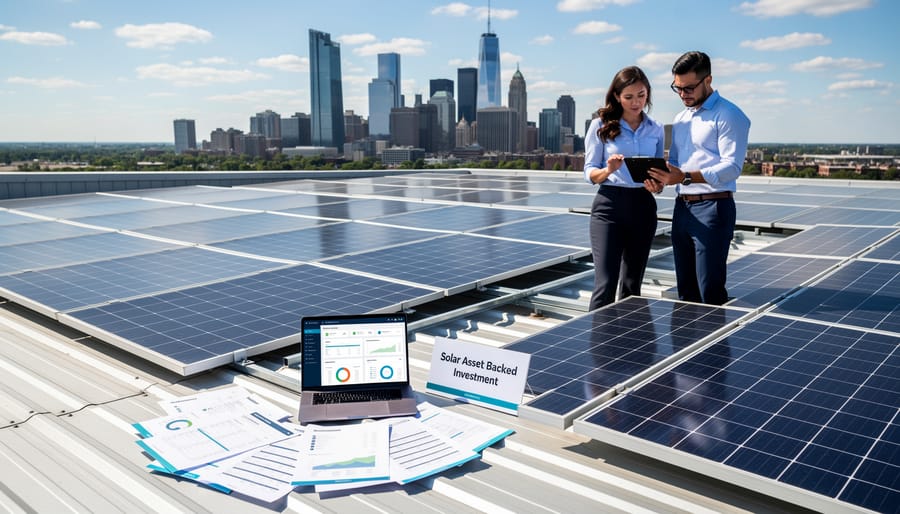
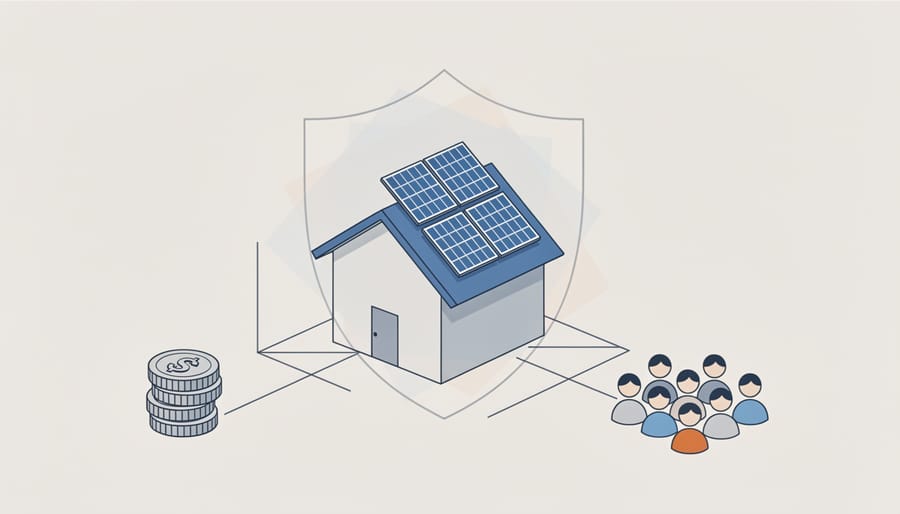
Asset-Backed Security: The Solar System Itself
Unlike unsecured personal loans, peer-to-peer solar lending benefits from tangible collateral: the photovoltaic system itself. This physical asset provides substantial security for lenders through established legal mechanisms. Most P2P solar platforms file UCC-1 financing statements or similar lien instruments, granting lenders priority interest in the equipment should borrowers default. This legal structure mirrors traditional equipment financing, creating a recoverable asset that can be repossessed or transferred to satisfy outstanding debt.
Solar equipment demonstrates favorable value retention characteristics compared to many consumer goods. Quality photovoltaic panels typically maintain 80-90% of their original efficiency after 25 years, preserving functional and economic value. Inverters, racking systems, and balance-of-system components similarly retain utility throughout their operational lifespan. This durability translates to sustained collateral value, protecting lenders against total loss scenarios.
However, challenges exist in asset recovery. Removal and reinstallation costs can diminish net recovery values, particularly for residential rooftop systems. Geographic location, equipment age, and technological obsolescence affect resale potential. Additionally, secondary markets for used solar equipment remain less liquid than for traditional collateral like vehicles or real estate. Academic research conducted through university partnerships continues examining optimal lien structures and recovery procedures, helping establish industry best practices that strengthen P2P lending security frameworks while supporting renewable energy expansion.
Third-Party Verification and Monitoring
Independent verification mechanisms establish critical safeguards in peer-to-peer solar lending platforms. Third-party auditing firms conduct regular financial examinations of P2P platforms, assessing loan portfolio quality, default rates, and operational transparency. These audits verify that platforms accurately represent investment risks and maintain adequate reserves for investor protection.
Performance monitoring systems track solar installation outputs in real-time, ensuring financed projects generate expected returns. Advanced monitoring platforms use IoT sensors and satellite imagery to detect underperforming systems, triggering investigations before payment defaults occur. This proactive approach reduces investor exposure to project-specific risks.
Installer certification requirements add another protection layer. Reputable P2P platforms mandate that solar contractors hold recognized industry certifications and maintain proper licensing. Educational institutions increasingly partner with industry stakeholders to develop standardized certification programs that assess technical competency and business ethics. These partnerships between universities and solar industry organizations establish baseline quality standards, helping platforms pre-qualify reliable installers. Verification of installer credentials through independent databases minimizes installation quality risks that could jeopardize loan repayment and investor returns.
Comparing P2P Solar Lending Safety to Other Investment Options
P2P Solar vs. Traditional P2P Lending
P2P solar lending presents distinct risk characteristics compared to traditional P2P platforms offering unsecured personal loans. The fundamental difference lies in asset backing: solar installations provide tangible collateral generating measurable cash flows through energy production, whereas conventional P2P loans typically rely solely on borrower creditworthiness. This asset-backed advantage significantly reduces default risk exposure for investors. Traditional P2P lending platforms often report default rates between 3-7% for unsecured consumer loans, while solar P2P platforms benefit from equipment that maintains residual value even in default scenarios. The physical infrastructure can be repossessed, relocated, or transferred to new operators, providing recovery options unavailable with unsecured debt. Additionally, solar project finance structures often incorporate performance guarantees and insurance mechanisms that further mitigate investor risk. Revenue predictability from power purchase agreements or feed-in tariffs creates more stable return profiles compared to variable consumer loan repayments, though solar investments typically require longer commitment periods and present technology-specific risks absent from traditional lending categories.
P2P Solar vs. Solar Investment Funds and REITs
P2P solar lending platforms differ substantially from pooled investment vehicles like solar investment funds and Real Estate Investment Trusts (REITs) across several critical dimensions that impact investor safety. Solar REITs and mutual funds offer superior liquidity, as shares typically trade on public exchanges with daily pricing, whereas P2P solar loans often lock capital for 5-20 years with limited secondary market options. Diversification presents another significant contrast—pooled vehicles automatically spread investment across dozens or hundreds of projects, while P2P platforms require investors to manually construct diversified portfolios or accept concentrated exposure to individual installations.
Regulatory oversight provides perhaps the most substantial safety difference. Solar REITs operate under SEC registration requirements and Investment Company Act provisions, mandating regular financial reporting, independent audits, and fiduciary responsibilities. In contrast, P2P platforms face fragmented regulation, with oversight varying by jurisdiction and platform structure. This regulatory gap can expose investors to inadequate disclosure practices or operational deficiencies.
However, P2P lending offers advantages that pooled vehicles cannot match: direct project selection aligned with personal values, potentially higher returns due to eliminated management fees, and transparency into specific solar power financial models. Understanding these tradeoffs enables investors to determine which approach best balances safety considerations with their investment objectives and risk tolerance.
Due Diligence: What to Evaluate Before Investing

Platform Evaluation Criteria
When evaluating peer-to-peer lending platforms for solar financing, applying rigorous assessment criteria protects both investors and borrowers. Begin by examining the platform’s track record—operational history, default rates, and total funding volume provide concrete performance indicators. Platforms with three or more years of solar-specific lending demonstrate greater stability and sector expertise.
Transparency requirements include publicly accessible performance data, detailed risk disclosures, and clear borrower vetting processes. Reputable platforms publish quarterly reports showing portfolio performance across different risk categories, enabling informed solar investment decisions.
Fee structures warrant careful scrutiny. Compare origination fees, servicing charges, and early repayment penalties across platforms. Hidden fees can significantly erode returns, particularly on smaller solar installations where margins are already compressed.
Regulatory compliance verification is essential. Confirm the platform holds appropriate financial services licenses, adheres to securities regulations, and maintains proper registration with relevant authorities. Educational institutions partnering with lending platforms often conduct independent compliance audits, adding credibility.
Finally, assess financial backing and reserve funds. Platforms with institutional investors, established insurance partnerships, or contingency funds demonstrate stronger financial foundations. Some platforms collaborate with universities to develop risk assessment models, enhancing their analytical capabilities and investor protection mechanisms.
Project and Borrower Assessment
Thorough project assessment forms the cornerstone of safe peer-to-peer solar lending. Before committing capital, investors must evaluate multiple dimensions of both the installation project and the borrowing entity.
Begin by examining installer credentials and track record. Verify licensing, certifications from organizations like the North American Board of Certified Energy Practitioners, and insurance coverage. Request documentation of previous installations, including system performance data over multiple seasons. Quality installers maintain transparent records and provide verifiable references from past clients.
Borrower creditworthiness requires scrutiny beyond traditional credit scores. For residential borrowers, assess debt-to-income ratios, employment stability, and property ownership status. Commercial borrowers warrant analysis of business financials, cash flow patterns, and existing debt obligations. Many P2P platforms provide proprietary risk ratings, but independent verification strengthens due diligence.
System performance projections demand critical evaluation. Review site assessment reports including shading analysis, roof condition evaluations, and energy consumption patterns. Compare projected generation figures against regional data from the National Renewable Energy Laboratory’s PVWatts calculator. Unrealistic performance claims signal potential issues with project viability or installer competence.
Educational institutions and research organizations increasingly publish methodologies for solar project evaluation. Academic partnerships have yielded standardized assessment frameworks that help investors identify quality installations. These evidence-based approaches reduce subjective judgment while incorporating regional variables affecting system performance.
Request detailed equipment specifications, warranty terms, and maintenance agreements. High-quality components from reputable manufacturers typically indicate superior long-term performance and lower default risk for lenders.
The Role of Education in Safer P2P Solar Financing
Professional education plays a critical role in enhancing the safety landscape of peer-to-peer solar financing by equipping photovoltaic professionals with the knowledge needed to identify risks and guide clients toward secure investment opportunities. As P2P lending platforms continue to proliferate in the renewable energy sector, the demand for trained advisors who understand both financial mechanisms and technical solar considerations has intensified.
University-affiliated educational programs specifically address this knowledge gap by integrating financial literacy with photovoltaic system design principles. These comprehensive curricula cover essential topics including platform due diligence methodologies, risk assessment frameworks, regulatory compliance requirements, and investor protection mechanisms. PV professionals who complete such programs gain the analytical skills necessary to evaluate platform credibility, assess borrower qualifications, and interpret financial disclosures that may confuse less-informed participants.
The collaborative approach between academic institutions and industry practitioners ensures that educational content remains current with evolving market conditions and regulatory developments. Students learn to recognize warning signs of fraudulent platforms, understand the implications of different security structures, and communicate complex financial concepts to clients in accessible terms. This educational foundation directly translates to improved client outcomes, as informed professionals can steer investors away from high-risk arrangements and toward platforms with robust protective measures.
Furthermore, these programs emphasize ethical advisory practices, teaching future professionals to prioritize client interests over commission-based incentives that might compromise objectivity. By establishing professional standards rooted in comprehensive education, the solar industry can cultivate a generation of advisors capable of making P2P solar financing safer through informed guidance, transparent communication, and rigorous evaluation of investment opportunities before recommending them to clients.
Real-World Performance: What the Data Shows
Empirical data from established P2P solar lending platforms reveals nuanced performance patterns that merit careful consideration. Industry reports indicate that solar-specific P2P platforms have demonstrated default rates ranging from 2% to 5% annually, significantly lower than unsecured consumer lending but higher than traditional secured loans. This variance reflects the emerging nature of the sector and the diverse creditworthiness profiles within solar borrower populations.
Returns for investors typically range between 4% and 8% annually, depending on the risk tier selected and platform fee structures. Platforms implementing rigorous credit screening and requiring substantial borrower equity stakes have consistently delivered returns toward the higher end of this spectrum. Conversely, platforms with aggressive growth strategies or relaxed underwriting standards have experienced elevated default rates and diminished investor returns over multi-year periods.
Platform longevity data presents additional considerations. While several P2P solar lending platforms have operated successfully for five to seven years, the sector has also witnessed platform closures and consolidations. Established platforms with institutional backing and diversified funding sources demonstrate greater resilience during economic downturns compared to newer entrants dependent solely on retail investor capital.
Recovery rates following defaults average 40% to 60% for solar loans, higher than unsecured credit products due to the tangible asset component. However, recovery processes typically extend 12 to 24 months, creating liquidity challenges for investors. Platforms with established secondary markets or buyback guarantees provide enhanced exit options, though these mechanisms add operational complexity and cost.
Academic research from renewable energy finance programs highlights that portfolio diversification across multiple projects substantially reduces individual investor risk. Data suggests that investors distributing capital across 50 or more solar loans experience significantly lower volatility than those concentrating investments in fewer projects. This finding underscores the importance of minimum investment thresholds and platform access to diverse project pipelines.
Geographic concentration also influences performance outcomes. Platforms operating in regions with supportive regulatory frameworks and established solar markets demonstrate more consistent returns than those in emerging or unstable policy environments. Understanding these performance indicators enables stakeholders to make evidence-informed decisions aligned with their risk tolerance and investment objectives.
Peer-to-peer lending for solar projects presents a compelling intersection of financial innovation and environmental responsibility, but safety ultimately depends on informed participation. The evidence demonstrates that P2P solar financing can be reasonably safe when investors and borrowers approach these platforms with proper due diligence, realistic expectations, and comprehensive understanding of inherent risks.
The safety equation balances multiple factors: platform credibility, regulatory oversight, loan diversification strategies, borrower vetting processes, and transparent risk disclosure. No investment vehicle eliminates risk entirely, but P2P solar lending offers unique advantages through tangible asset backing, energy savings verification, and alignment with expanding renewable energy markets. Investors who conduct thorough platform comparisons, diversify across multiple projects, and maintain appropriate risk tolerance levels can participate with reasonable confidence.
For photovoltaic professionals advising clients, emphasizing education becomes paramount. Understanding platform fee structures, default mitigation strategies, and regulatory protections empowers stakeholders to navigate this evolving landscape effectively. The collaboration between financial technology platforms and educational institutions strengthens knowledge foundations, creating more sophisticated market participants.
As the renewable energy financing sector matures, regulatory frameworks continue developing stronger consumer protections while platforms refine risk assessment methodologies. This evolutionary process requires ongoing education and vigilance from all participants. Those willing to invest time in understanding mechanisms, comparing options, and monitoring portfolio performance can access P2P solar lending as a legitimate financing channel that serves both financial objectives and sustainability goals. Informed decision-making transforms potential uncertainty into calculated opportunity within this dynamic marketplace.