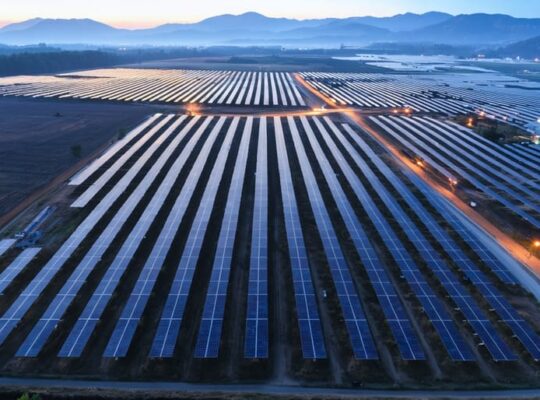
Unlock the power of solar energy without the burden of high upfront costs through innovative smart solar financing options. Modern financing mechanisms have transformed solar adoption from a luxury investment into an accessible energy solution for homeowners and businesses alike. Pay-as-you-go (PAYG) models, solar leases, and power purchase agreements (PPAs) now enable immediate energy cost savings while eliminating traditional financial barriers. These flexible financing structures typically require minimal down payments, offer predictable monthly payments, and include comprehensive maintenance coverage – ensuring optimal system performance throughout the agreement term. By leveraging these financing solutions, property owners can reduce their carbon footprint while maintaining positive cash flow from day one, with energy savings often exceeding monthly financing costs. Understanding these financing pathways is crucial for making informed decisions about transitioning to solar power, whether for residential, commercial, or industrial applications.
How Pay-As-You-Go Solar Financing Works
The Basic Payment Structure
Solar system financing typically offers multiple payment structures to accommodate various financial situations and preferences. Monthly payments are the most common arrangement, where customers pay a fixed amount over an agreed-upon term, usually ranging from 5 to 20 years. These payments often include both the system cost and maintenance services, making budgeting more predictable.
Many financial institutions offer flexible down payment options, ranging from zero-down arrangements to substantial initial payments that reduce monthly obligations. Interest rates and terms vary based on creditworthiness, with some providers offering fixed rates to protect against market fluctuations.
Payment schedules can be structured as ascending, where payments increase over time to account for rising energy costs and inflation, or level, maintaining consistent payments throughout the term. Some providers offer seasonal adjustment options, allowing higher payments during peak production months and lower payments during less productive periods.
Early repayment options are typically available without penalties, enabling customers to reduce their overall financing costs. Many providers also offer payment deferral periods, allowing customers to delay initial payments while the system generates savings. Performance-based payment adjustments may be included, linking payment obligations to actual system output and ensuring value alignment.
For commercial installations, customized payment structures can be arranged to match business cash flows and tax incentive schedules, optimizing financial benefits while maintaining operational efficiency.
Smart Technology Integration
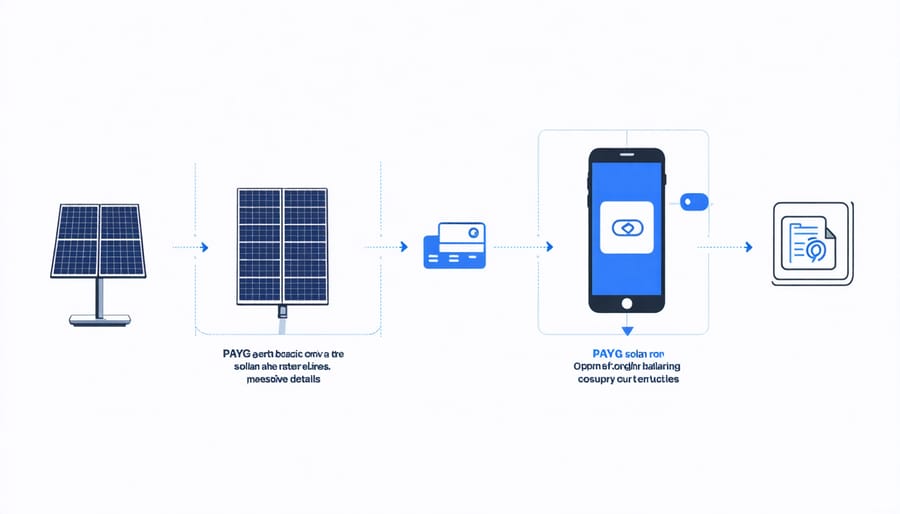
Modern solar financing solutions incorporate advanced technology to enhance system management and user experience. Remote monitoring capabilities allow both users and service providers to track system performance in real-time through dedicated mobile applications or web portals. These platforms provide detailed insights into energy generation, consumption patterns, and system health metrics.
Payment tracking features streamline the financial aspects of solar ownership by automating billing processes and providing transparent payment histories. Users can view their remaining balance, payment schedules, and system ownership progress through secure digital interfaces. Many platforms also offer automated payment options and instant notification systems for payment confirmations and upcoming dues.
System control features enable remote management of solar installations, allowing users to optimize energy consumption and monitor system efficiency. Smart inverters and energy management systems can be integrated with these platforms to provide advanced functionality such as load balancing, energy storage management, and consumption scheduling.
Data analytics capabilities within these platforms help users understand their energy usage patterns and identify opportunities for optimization. Regular performance reports and predictive maintenance alerts ensure optimal system operation while minimizing downtime. These technological integrations also facilitate communication between users and service providers, enabling quick response to technical issues or maintenance requirements.
Security measures, including encryption protocols and multi-factor authentication, protect user data and system access, ensuring safe and reliable operation of the integrated technology platform.
Benefits of PAYG Solar Systems
Financial Advantages
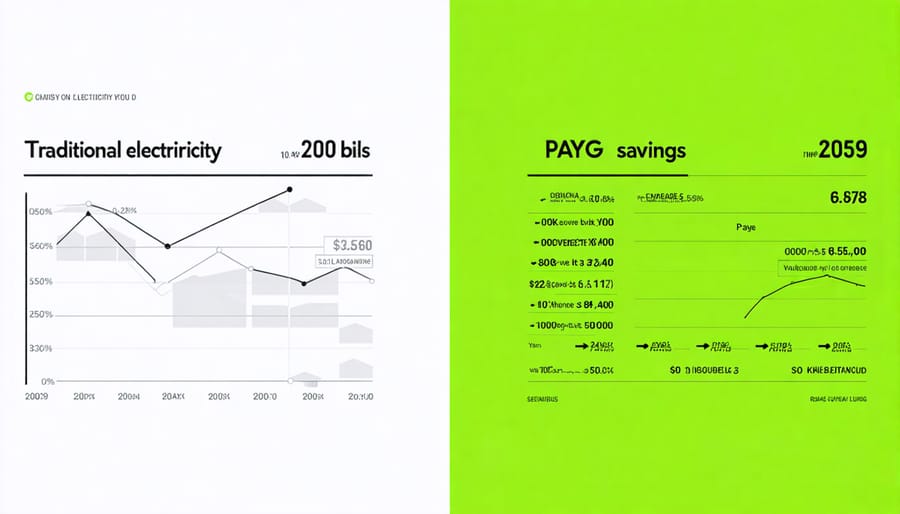
Financing a solar system offers numerous financial advantages that make renewable energy adoption more accessible and economically viable. Understanding solar investment metrics reveals substantial long-term benefits for both residential and commercial installations.
The primary advantage is the elimination of substantial upfront costs, which traditionally posed a significant barrier to solar adoption. Modern financing options allow customers to install solar systems with minimal or zero initial investment, making clean energy immediately accessible. Monthly payments are typically structured to be lower than or comparable to existing utility bills, ensuring immediate cost savings.
Analysis of real solar PV economics demonstrates that financed systems can generate positive cash flow from the first month of operation. Users benefit from reduced electricity costs while building equity in their solar assets. Additionally, many financing programs include maintenance and monitoring services, ensuring optimal system performance without additional expenditure.
Flexible payment options accommodate various budgetary requirements, with terms typically ranging from 5 to 20 years. These arrangements often include performance guarantees, protecting the investment by ensuring the system generates the promised energy output. Tax incentives and renewable energy credits further enhance the financial benefits, though availability varies by location.
For businesses, solar financing can provide additional advantages through depreciation benefits, improved cash flow management, and enhanced corporate sustainability metrics. The predictable nature of solar payments also helps organizations better forecast and manage their long-term energy expenses.
Technical Benefits
When financing a solar system, several technical benefits enhance the value proposition beyond the financial advantages. Most financing packages include comprehensive maintenance services, ensuring optimal system performance throughout the agreement period. Professional technicians conduct regular inspections, clean panels, and address any mechanical issues promptly, maximizing energy production efficiency.
Advanced monitoring systems come standard with financed installations, providing real-time performance data accessible through web portals or mobile applications. These systems track energy generation, consumption patterns, and system health metrics, enabling quick identification and resolution of potential issues before they impact performance.
Performance guarantees represent a significant technical advantage of financed solar systems. Providers typically guarantee minimum energy production levels, offering compensation or remediation if the system underperforms. These guarantees often extend throughout the financing term, providing long-term assurance of system effectiveness.
Equipment warranties are another crucial technical benefit. Financing packages frequently include comprehensive coverage for all major components, including panels, inverters, and mounting systems. These warranties often span 20-25 years for panels and 10-12 years for inverters, protecting against manufacturing defects and performance degradation.
Remote diagnostic capabilities allow providers to monitor system health continuously and implement preventive maintenance measures. This proactive approach minimizes downtime and ensures consistent energy production. Additionally, many providers offer technical support hotlines and emergency service response, addressing concerns quickly and maintaining system reliability.
These technical benefits collectively ensure that financed solar systems maintain peak performance while minimizing maintenance responsibilities for the system owner.
Choosing the Right PAYG Solar Provider
Essential Provider Criteria
When evaluating Pay-As-You-Go (PAYG) solar providers, several critical criteria demand careful consideration to ensure a reliable and sustainable investment. First, assess the provider’s track record and industry experience, including their successful installations and customer satisfaction rates. Established providers should demonstrate a history of reliable service delivery and maintain transparent communication channels.
Financial stability is paramount, as it indicates the provider’s ability to honor warranties and provide long-term support. Examine their business model sustainability and funding sources to ensure they can maintain operations throughout your payment period. Additionally, verify their technical expertise and certification standards, ensuring compliance with relevant industry regulations and safety protocols.
The quality of equipment and components used in their solar systems should meet international standards. Look for providers offering tier-1 solar panels, reliable inverters, and robust energy storage solutions when applicable. The warranty terms and after-sales support structure must be clearly defined and comprehensive.
Payment flexibility and terms should align with your financial capabilities. Evaluate their payment platforms, accepted payment methods, and policies regarding payment difficulties or system malfunctions. The provider should offer clear documentation of ownership transfer upon completion of payments.
Customer support infrastructure is crucial. Ensure the provider maintains a responsive support system, including technical assistance and maintenance services. They should also provide thorough training on system operation and basic troubleshooting procedures for end-users.
Finally, examine their monitoring and remote management capabilities, which are essential for system performance tracking and prompt issue resolution.
Contract Considerations
When considering a solar system financing contract, it’s crucial to carefully review several key elements to ensure a sound investment. Understanding various solar power financial models helps in making informed decisions about contract terms and conditions.
First, examine the warranty coverage for both equipment and workmanship. Quality solar contracts typically include a 25-year performance warranty for panels and a 10-year warranty for inverters. Ensure these warranties are explicitly stated and transferable if you sell your property.
Pay close attention to performance guarantees and production estimates. The contract should clearly outline expected energy production levels and specify compensation mechanisms if the system underperforms. Look for detailed maintenance responsibilities and schedule commitments from the provider.
Review the payment terms thoroughly, including interest rates, payment schedules, and any penalties for early repayment. The contract should explicitly state ownership transfer conditions and timing. Be wary of escalator clauses that might increase payments over time.
Verify that the contract includes comprehensive insurance coverage and liability provisions. It should clearly define responsibilities for system repairs, maintenance, and potential property damage during installation or operation.
Finally, ensure the contract provides clear procedures for dispute resolution and system removal if necessary. Look for transparency regarding additional costs, such as permit fees, grid connection charges, or system monitoring expenses.
Implementation Process
System Assessment and Design
The assessment and design phase of a solar system installation begins with a comprehensive evaluation of your energy requirements. Professional solar engineers analyze historical electricity consumption patterns, examining utility bills from the past 12-24 months to establish baseline energy needs. This data helps determine the optimal system size and configuration necessary to meet your power objectives.
Site evaluation follows, where technicians assess your property’s solar potential through detailed roof analysis, shading studies, and structural integrity checks. They measure available installation space, roof orientation, and tilt angles while considering local climate conditions and solar irradiance levels. Advanced modeling software generates precise predictions of expected energy production throughout the year.
The design process incorporates these findings to create a customized system specification. Engineers select appropriate components, including solar panels, inverters, and mounting systems, based on efficiency requirements and budget constraints. They also factor in local building codes, utility interconnection requirements, and potential future energy needs.
System designers develop detailed electrical diagrams and structural plans, ensuring compliance with safety standards and optimization of available space. The final design package includes production estimates, component specifications, and installation requirements. This comprehensive assessment serves as the foundation for accurate cost projections and financing calculations, enabling informed decisions about system size and payment options.
Installation and Activation
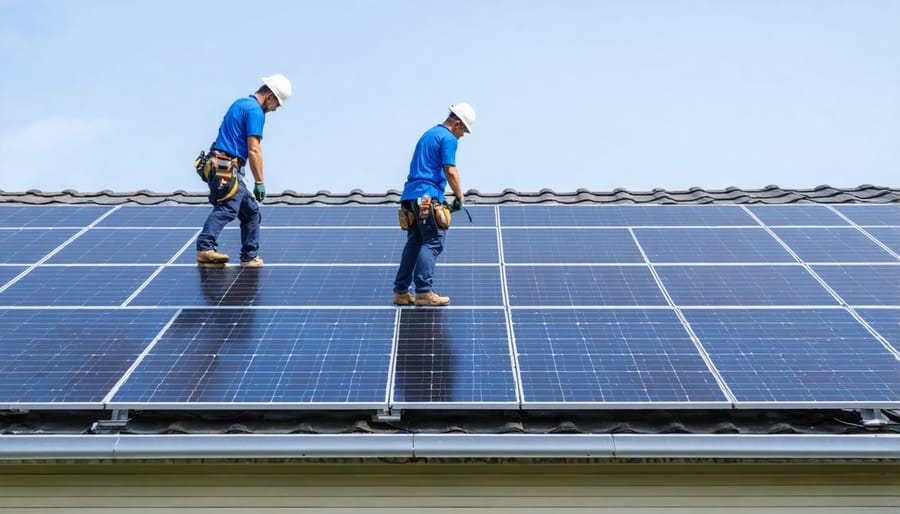
Once financing is approved, the installation process begins with a detailed site assessment by certified solar technicians. They will verify the proposed system design, confirm structural requirements, and ensure compliance with local building codes and electrical standards.
The installation team typically completes the physical setup within 1-3 days, depending on system size and complexity. This includes mounting solar panels, installing inverters, establishing electrical connections, and implementing monitoring systems. Throughout the installation, quality control checks are performed to ensure all components meet manufacturer specifications and safety requirements.
After installation, the system undergoes comprehensive testing and commissioning. This includes performance verification, safety checks, and proper calibration of monitoring equipment. The installation team will also configure the payment system interface, allowing you to track energy production and manage payments efficiently.
Your payment plan activation coincides with system commissioning. You’ll receive detailed documentation explaining payment schedules, system operation guidelines, and warranty information. Most providers offer mobile applications or web portals for convenient payment processing and system monitoring.
The final step involves obtaining necessary permits and inspections from local authorities. Once approved, your utility company will install a bi-directional meter if required, enabling proper tracking of energy production and consumption. Your installer will provide thorough training on system operation, maintenance requirements, and payment procedures before handover.
Pay-as-you-go solar financing represents a transformative solution for accessing clean, renewable energy while managing costs effectively. This innovative financing model eliminates substantial upfront investments, making solar power accessible to a broader range of consumers and businesses. By combining technological advancement with flexible payment structures, PAYG systems offer immediate energy access, reduced long-term costs, and environmental benefits. The integration of smart monitoring systems and professional maintenance services ensures optimal system performance throughout the financing period. As the renewable energy sector continues to evolve, PAYG solar financing stands as a practical pathway toward sustainable energy adoption. Consider exploring this financing option to begin your journey toward energy independence while contributing to a cleaner, more sustainable future.