
America’s power grid stands at a critical crossroads, facing unprecedented challenges and opportunities as renewable energy reshapes our electrical infrastructure. This vast network of interconnected systems, spanning over 7,300 power plants and 160,000 miles of high-voltage transmission lines, powers everything from rural communities to bustling metropolitan centers. Yet, this aging infrastructure, largely built in the mid-20th century, must now adapt to integrate distributed energy resources, particularly solar and wind power, while maintaining reliability and resilience against emerging threats.
The transformation of our national grid infrastructure represents both a technical challenge and an economic imperative. With renewable energy costs plummeting and grid modernization technologies advancing rapidly, utilities and regulators are racing to upgrade transmission systems, implement smart grid solutions, and enhance cybersecurity measures. These improvements are essential not only for accommodating clean energy sources but also for ensuring grid stability in the face of increasing extreme weather events and evolving consumer demands.
As we move toward a more sustainable and resilient energy future, the modernization of U.S. energy grids requires unprecedented coordination between federal agencies, state regulators, utilities, and technology providers. This collective effort aims to create a more flexible, efficient, and responsive power system capable of meeting 21st-century energy needs while supporting the nation’s transition to clean energy sources.
Current State of US Grid Infrastructure
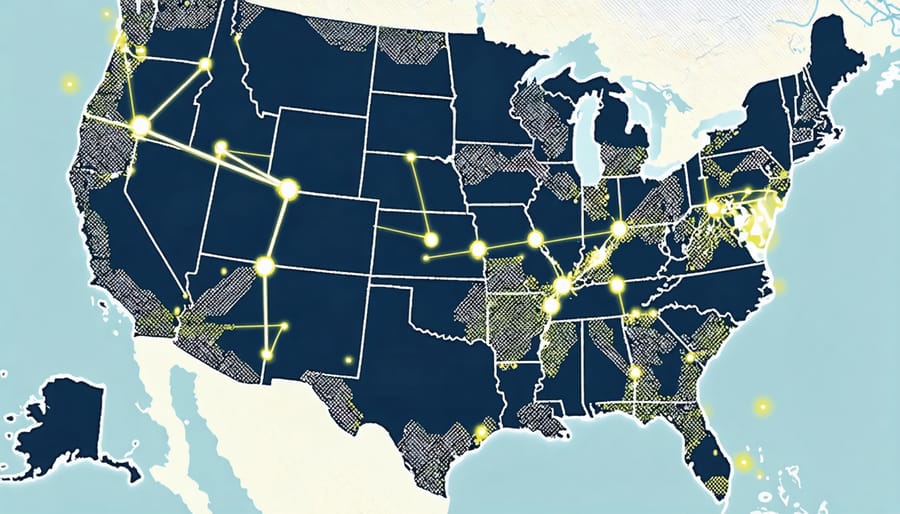
Regional Grid Variations
The United States power grid exhibits significant regional variations in infrastructure, capacity, and solar integration readiness. The Eastern Interconnection, serving states from the Atlantic coast to the Rocky Mountains, features a robust transmission network with numerous substations and redundant pathways, making it relatively adaptable to solar integration. This region benefits from established infrastructure but faces challenges with aging equipment and varying state regulations.
The Western Interconnection, covering states from the Pacific coast to the Rockies, demonstrates different characteristics with longer transmission distances and more isolated load centers. This region has shown particular promise for utility-scale solar projects due to abundant land resources and high solar irradiance levels. However, it requires substantial grid modernization to handle intermittent renewable sources effectively.
The Texas Interconnection (ERCOT) operates as an independent system, offering unique advantages for solar implementation through streamlined regulatory processes and advanced smart grid technologies. This isolation has enabled faster adoption of innovative grid solutions but also presents challenges during extreme weather events.
Each region’s grid configuration reflects local geographic constraints, historical development patterns, and regulatory frameworks. The Northeast features dense, interconnected networks suitable for distributed solar systems, while the Southwest’s grid emphasizes long-distance transmission capabilities for large-scale solar farms. These regional differences significantly influence solar integration strategies and necessary infrastructure investments for future renewable energy expansion.
Infrastructure Age and Modernization Needs
Much of America’s electrical grid infrastructure was constructed in the 1950s and 1960s, with an expected operational lifespan of 50 years. Today, this aging system faces significant challenges in meeting modern energy demands and accommodating renewable energy integration. According to the American Society of Civil Engineers, the average age of power lines and transformers exceeds 40 years, with some components operating well beyond their intended service life.
The integration of solar energy systems requires substantial grid modernization efforts to enhance flexibility, reliability, and bidirectional power flow capabilities. Key infrastructure updates needed include advanced metering infrastructure (AMI), smart inverters, enhanced distribution automation systems, and improved voltage regulation equipment.
Current estimates suggest that modernizing the U.S. grid for optimal renewable energy integration could require investments ranging from $338 billion to $476 billion through 2030. These upgrades are essential to support increased distributed energy resources, maintain grid stability, and enable sophisticated demand response programs.
Critical components requiring immediate attention include:
– Substation automation systems
– High-capacity transmission lines
– Digital control and communication networks
– Energy storage infrastructure
– Advanced grid management software
Without these fundamental improvements, the grid’s ability to accommodate growing solar capacity will remain limited, potentially constraining the nation’s transition to renewable energy sources.
Economic Benefits of Solar Grid Integration
Cost Reduction Potential
Modernizing the U.S. energy grid presents significant opportunities for long-term cost savings through strategic infrastructure investments and technological advancements. Analysis by the Department of Energy suggests that grid modernization could reduce annual operating costs by 12-15% while improving reliability and resilience.
The implementation of smart grid technologies, including advanced metering infrastructure (AMI) and automated distribution systems, can decrease maintenance expenses by up to 25% through predictive maintenance and real-time monitoring. These improvements enable utilities to identify and address potential failures before they occur, significantly reducing emergency repair costs.
Energy storage integration plays a crucial role in cost reduction by optimizing power distribution and minimizing peak demand charges. Studies indicate that strategic deployment of grid-scale storage systems could save utilities between $15-20 billion annually by 2030 through improved load management and reduced transmission infrastructure requirements.
Grid modernization also facilitates better integration of renewable energy sources, potentially reducing wholesale electricity prices by 5-8% in regions with high solar and wind penetration. Advanced power electronics and control systems enable more efficient power flow management, decreasing transmission losses by approximately 3-4% across the network.
The adoption of distributed energy resources (DERs) and microgrids can defer or eliminate the need for costly transmission infrastructure upgrades. Industry analysis suggests that strategic DER deployment could save utilities $30-50 billion in capital expenditures over the next decade.
Automated demand response programs, enabled by modern grid infrastructure, offer additional savings through reduced peak capacity requirements. These programs can decrease system-wide capacity needs by 10-15%, translating to substantial cost reductions in infrastructure investments and operational expenses.
Moreover, enhanced cybersecurity measures, while requiring initial investment, prevent costly security breaches and system failures, potentially saving the industry billions in damage prevention and recovery costs annually.
Job Creation and Market Growth
The integration of solar energy into the US power grid has catalyzed significant economic growth, particularly in job creation across multiple sectors. Recent industry analyses indicate that the solar integration sector has become one of the fastest-growing employers in the renewable energy landscape, with employment opportunities expanding at approximately 5% annually.
Solar grid integration projects create diverse employment opportunities, ranging from technical positions like grid engineers and system designers to installation specialists and maintenance technicians. These roles often command competitive salaries, with median wages typically 20-30% higher than traditional energy sector positions, reflecting the specialized skills required.
Market growth in this sector extends beyond direct employment. The development of smart grid technologies and energy storage solutions has spurred innovation in adjacent industries, including software development, manufacturing, and telecommunications. This ripple effect has generated additional economic opportunities in supply chain management, logistics, and consulting services.
Investment in grid modernization projects has attracted significant capital, with utility companies and private investors committing substantial resources to upgrade existing infrastructure. These investments have led to the emergence of new business models and service providers specializing in grid optimization and renewable energy integration solutions.
Educational institutions have responded to this market expansion by developing specialized training programs and certifications. Universities and technical schools now offer comprehensive curricula focused on smart grid technologies, creating a skilled workforce pipeline to meet growing industry demands.
The economic benefits also extend to local communities, where solar integration projects often stimulate regional development through increased tax revenue and enhanced energy security. Small businesses and entrepreneurs have found opportunities in providing specialized services, from energy auditing to maintenance contracts for solar-enabled grid systems.
Looking ahead, projections suggest continued robust growth in this sector, driven by increasing renewable energy adoption targets and ongoing grid modernization initiatives. This sustained expansion promises to create additional employment opportunities while fostering technological innovation and economic development across the United States.
Integration Costs and Challenges
Infrastructure Investment Requirements
The modernization of U.S. energy grids requires substantial capital investments across multiple infrastructure components. Current estimates from the Department of Energy indicate that grid modernization costs could reach $500 billion by 2035. These investments encompass various critical elements, including transmission line upgrades, smart grid technologies, and enhanced storage capabilities.
Primary investment categories include transmission infrastructure ($150-200 billion), distribution system upgrades ($180-220 billion), and grid intelligence systems ($80-100 billion). Sophisticated infrastructure investment financing mechanisms will be essential to support these extensive capital requirements.
Grid hardening initiatives demand approximately 30% of the total investment, focusing on protecting against extreme weather events and cybersecurity threats. Smart meter deployment and advanced monitoring systems require another 25% of funding, while energy storage integration accounts for 20%. The remaining investment supports communication networks, control systems, and workforce training programs.
Regional requirements vary significantly, with dense urban areas requiring more sophisticated distribution networks and rural regions needing extensive transmission infrastructure. The Northeast grid modernization costs are estimated at $125 billion, while Western interconnection upgrades require approximately $150 billion. The Texas ERCOT system needs roughly $80 billion in improvements.
These investments are expected to generate substantial returns through improved reliability, reduced outage costs, and enhanced renewable energy integration capabilities. Studies indicate that every dollar invested in grid modernization can yield $2.5-3.5 in economic benefits through reduced energy losses, improved operational efficiency, and enhanced grid resilience. The implementation timeline typically spans 10-15 years, allowing for phased investment approaches that align with technological advancements and evolving grid requirements.
Operational Cost Considerations
Operating and maintaining the U.S. energy grid infrastructure requires substantial financial investment and careful resource allocation. The primary operational costs include equipment maintenance, system upgrades, workforce training, and emergency response capabilities. Utility companies typically allocate between 30-40% of their annual budgets to these ongoing operational expenses.
Regular maintenance of transmission lines, transformers, and substations constitutes a significant portion of operational costs. These essential components require periodic inspection, repair, and replacement to ensure reliable power delivery. Weather-related damage and aging infrastructure further amplify these maintenance requirements, with utilities spending approximately $5-7 billion annually on routine maintenance activities.
Grid modernization initiatives, including the integration of smart technologies and cybersecurity measures, represent another substantial cost category. These investments are crucial for improving grid reliability and efficiency but require continuous updates and maintenance. Annual spending on grid modernization typically ranges from $15-20 billion across the nation’s utilities.
Workforce expenses form a considerable portion of operational costs, encompassing salaries, training programs, and safety protocols for skilled technicians and engineers. The increasing complexity of grid operations, particularly with the integration of renewable energy sources, necessitates ongoing professional development and specialized training programs.
Emergency preparedness and response capabilities require dedicated funding for equipment, personnel, and communication systems. Utilities must maintain robust emergency response plans and resources to address potential disruptions, from severe weather events to equipment failures. These preparedness measures typically account for 10-15% of operational budgets.
Energy loss during transmission and distribution represents an often-overlooked operational cost. The U.S. grid loses approximately 5% of transmitted electricity through resistance and other technical factors, translating to billions of dollars in annual losses. Implementing more efficient technologies and maintaining optimal system performance helps minimize these losses.
The integration of renewable energy sources has introduced new operational considerations, including the need for advanced forecasting systems and flexible generation capacity. These requirements add complexity to grid operations and necessitate additional investments in control systems and grid management technologies.
Future Economic Projections
Market Growth Forecasts
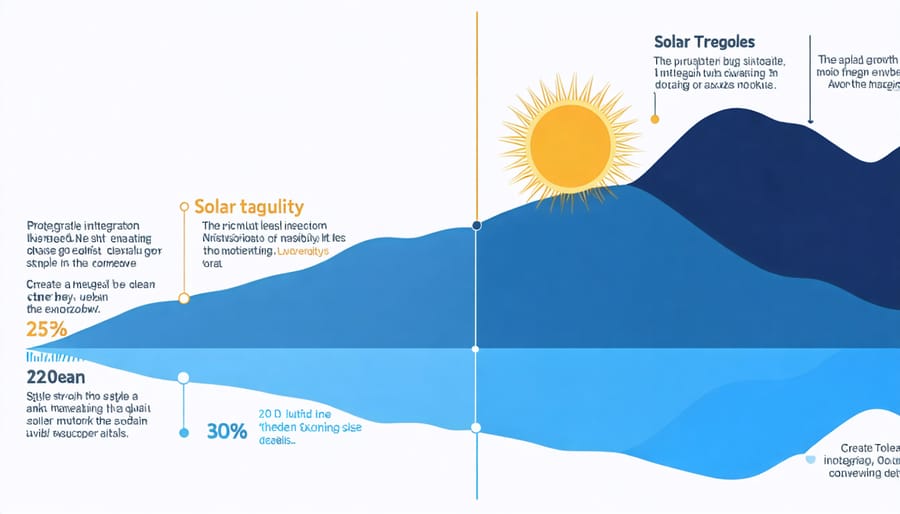
Market projections indicate substantial growth for the U.S. energy grid infrastructure, with investments expected to reach $100 billion by 2030. This growth is primarily driven by the increasing integration of renewable energy sources and the pressing need for grid modernization. Current emerging solar market trends suggest a compound annual growth rate (CAGR) of 15% for smart grid technologies through 2028.
Utility-scale energy storage solutions are projected to experience particularly robust growth, with market valuations expected to triple by 2025. This expansion is supported by declining battery costs and increasing demand for grid stability services. Distributed energy resources (DERs) are forecast to comprise 25% of total grid capacity by 2030, representing a significant shift from traditional centralized power generation.
The microgrid segment is anticipated to grow at an accelerated pace, with projections indicating a market size of $40 billion by 2028. This growth is particularly pronounced in regions prone to extreme weather events or areas seeking enhanced grid resilience. Grid modernization initiatives are expected to create over 200,000 jobs across the energy sector, while simultaneously reducing power outages by up to 40% nationwide.
Investment in advanced metering infrastructure (AMI) is projected to reach $30 billion by 2025, enabling more efficient grid management and consumer engagement. These developments are expected to result in annual energy cost savings of $20-25 billion for consumers while significantly reducing carbon emissions.
Policy Impact Analysis
Recent solar energy policy changes have significantly influenced the economic landscape of U.S. energy grids. The Inflation Reduction Act (IRA) of 2022 has introduced substantial incentives for grid modernization, allocating $369 billion for clean energy initiatives. This legislation has accelerated the deployment of smart grid technologies and enhanced transmission infrastructure.
Federal tax credits and state-level renewable portfolio standards have created a more favorable environment for grid investments, resulting in increased private sector participation. Studies indicate that these policies could reduce electricity costs by 5-15% over the next decade while creating approximately 550,000 new jobs in the energy sector.
However, regulatory complexities across different jurisdictions continue to present challenges. Interstate transmission projects face varying approval requirements, potentially delaying critical infrastructure developments. The Federal Energy Regulatory Commission’s Order 2222 has opened markets for distributed energy resources, though implementation varies by region.
Cost-benefit analyses suggest that current policies will drive $100 billion in grid infrastructure investments by 2030. This includes transmission expansion, storage integration, and digital control systems. While initial implementation costs are substantial, long-term economic benefits include reduced operational expenses, improved grid reliability, and decreased carbon emissions-related costs.
The policy framework’s success largely depends on coordinated efforts between federal, state, and local authorities to streamline approval processes and standardize interconnection requirements.
The integration of solar energy into US power grids represents a transformative shift in our energy landscape, with significant economic implications that extend far beyond the power sector. Current market trends indicate that solar integration costs continue to decrease while efficiency improvements drive greater returns on investment. Utility companies are experiencing reduced operational expenses through modernized grid infrastructure, while consumers benefit from more stable electricity prices and increased energy independence.
Looking ahead, the outlook for solar grid integration remains promising, with projected growth in both utility-scale and distributed solar installations. Economic forecasts suggest that by 2030, solar integration could generate over $100 billion in annual economic activity while creating thousands of skilled jobs across the renewable energy sector. Advanced storage solutions and smart grid technologies are expected to further enhance the economic viability of solar integration.
However, successful implementation requires continued investment in grid modernization and storage infrastructure. Regulatory frameworks must evolve to support fair market participation and ensure equitable distribution of benefits. The transition also necessitates workforce development programs to meet growing demand for qualified professionals in grid management and solar technology.
Despite initial implementation challenges, the long-term economic benefits of solar grid integration are substantial. These include reduced dependency on fossil fuels, enhanced grid reliability, and increased energy security. As technology costs continue to decline and efficiency improves, the business case for solar integration becomes increasingly compelling for utilities, businesses, and consumers alike.
The future of US energy grids lies in successful solar integration, supported by smart technologies, proper policy frameworks, and continued innovation in storage solutions. This transformation promises to deliver both environmental and economic benefits while ensuring a more resilient and sustainable energy future.