
Battery storage systems have emerged as the critical backbone of renewable energy integration, revolutionizing how we harness and deploy clean power across global energy networks. As renewable sources like solar and wind continue their exponential growth, advanced energy storage technologies are transforming intermittent power generation into reliable, dispatchable electricity. Recent technological breakthroughs in lithium-ion batteries, flow batteries, and thermal storage systems have dramatically reduced costs while increasing efficiency, making grid-scale storage increasingly viable for utilities and energy providers.
The convergence of declining battery prices, supportive government policies, and urgent climate action imperatives has created unprecedented momentum in the energy storage sector. Market analysts project the global battery storage market to exceed $300 billion by 2030, with utility-scale applications leading this growth. This expansion is enabling greater grid flexibility, enhanced renewable energy integration, and improved power quality while reducing reliance on fossil fuel-based peaker plants.
As nations worldwide accelerate their transition to clean energy systems, battery storage technology stands at the forefront of enabling a resilient, sustainable electricity infrastructure. Understanding the technical capabilities, economic considerations, and policy frameworks surrounding battery storage has become essential for energy professionals, policymakers, and stakeholders driving the renewable energy revolution.
Current State of Battery Storage Technology
Leading Battery Storage Solutions
Lithium-ion batteries continue to dominate the energy storage landscape, offering high energy density and proven reliability for renewable energy systems. These batteries excel in both utility-scale applications and residential installations, with recent technological advances pushing their efficiency beyond 90% while reducing costs significantly.
Flow batteries represent another crucial storage solution, particularly for long-duration applications. Unlike lithium-ion batteries, flow batteries store energy in liquid electrolytes, allowing for independent scaling of power and energy capacity. Vanadium redox flow batteries (VRFB) have emerged as the most commercially viable option, offering longer operational lifespans and minimal capacity degradation.
Emerging technologies are reshaping the storage landscape. Solid-state batteries promise higher energy density and enhanced safety features, while sodium-ion batteries present a more sustainable alternative to lithium-ion technology. Metal-air batteries, particularly zinc-air variants, are gaining attention for their high energy density and use of abundant materials.
Research institutions and manufacturers are also exploring hybrid systems that combine different storage technologies to optimize performance and cost-effectiveness. These innovations are crucial for addressing intermittency challenges in renewable energy deployment and grid stability.
Grid-Scale vs. Residential Applications
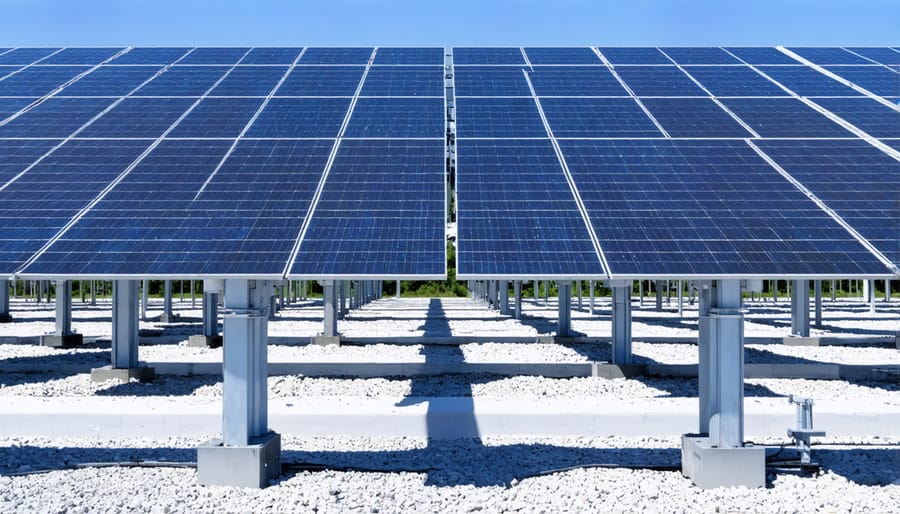
Battery storage systems operate at two distinct scales, each serving unique purposes in the renewable energy ecosystem. Grid-scale installations typically range from 10 MW to several hundred MW, providing crucial grid stabilization, peak load management, and large-scale energy arbitrage capabilities. These utility-level systems often utilize advanced lithium-ion or flow battery technologies and require sophisticated control systems to integrate with existing grid infrastructure.
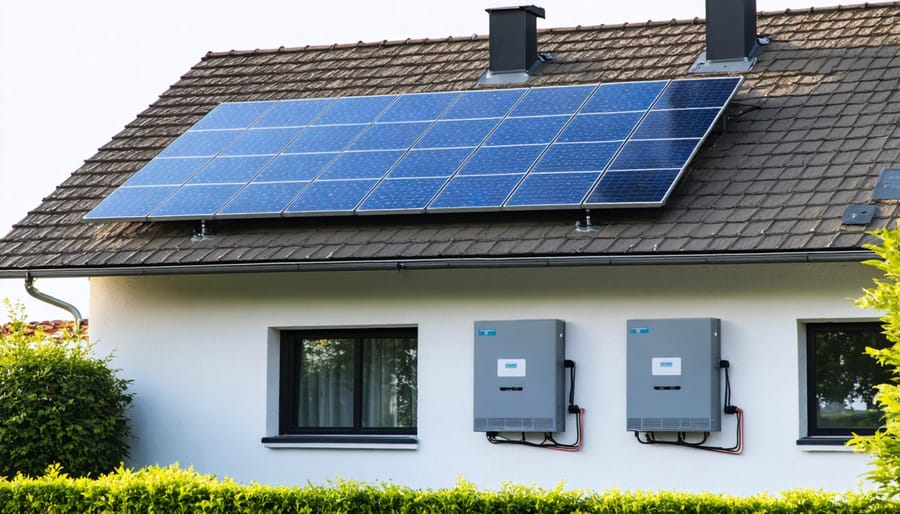
Residential applications, conversely, typically range from 5-20 kWh, primarily serving individual households’ needs for energy independence and backup power. While grid-scale systems focus on power quality and grid services, residential installations prioritize self-consumption optimization and backup power during outages.
Each scale presents distinct challenges. Grid-scale implementations must address complex interconnection requirements, substantial capital investments, and extensive permitting processes. Residential systems face space constraints, cost-effectiveness hurdles, and the need for simplified maintenance procedures accessible to homeowners. Despite these differences, both scales contribute significantly to renewable energy integration, with grid-scale systems supporting broader infrastructure stability and residential applications enabling distributed energy resources and consumer energy independence.
Transformative Policy Initiatives
Federal Investment Tax Credits
The Investment Tax Credit (ITC) represents a significant advancement in federal support for energy storage systems. Under the Inflation Reduction Act of 2022, standalone battery storage projects now qualify for federal investment incentives, marking a pivotal shift in renewable energy policy. The base credit starts at 30% of the total project cost and can increase to 40% when specific domestic content and labor requirements are met.
These tax credits apply to both residential and commercial installations with a capacity greater than 3 kilowatt-hours. For commercial projects, the ITC can be claimed for battery systems integrated with renewable energy sources or as standalone installations. The credit structure includes bonus incentives for projects in energy communities and those meeting prevailing wage requirements.
To qualify, systems must maintain a minimum round-trip efficiency of 75% and undergo regular maintenance to ensure optimal performance. The ITC program runs through 2032, with a gradual phase-down beginning in 2033, providing a clear timeline for industry stakeholders to plan their investments and implementations effectively.
State-Level Programs
Several states have implemented comprehensive programs to accelerate battery storage deployment alongside renewable energy systems. California leads with its Self-Generation Incentive Program (SGIP), which provides substantial rebates for energy storage installations. The state’s mandate requiring utilities to procure 1,325 MW of storage capacity by 2024 has set a precedent for other regions. New York’s Energy Storage Roadmap includes ambitious targets and state-level energy incentives to achieve 3,000 MW of storage capacity by 2030.
Massachusetts has pioneered the Clean Peak Energy Standard, which incentivizes energy storage deployment during peak demand periods. New Jersey and Nevada have established energy storage targets and financial mechanisms to support implementation. These programs typically combine direct incentives, tax benefits, and regulatory frameworks to create favorable conditions for storage development.
States are increasingly incorporating storage requirements into their renewable portfolio standards and implementing innovative financing mechanisms. Oregon and Washington have introduced specific provisions for utility-scale storage projects, while Arizona focuses on integrating storage with existing solar installations. These diverse approaches demonstrate how state-level initiatives are driving the evolution of grid modernization and renewable energy integration through strategic storage deployment.
Utility Regulations
Utility-scale battery storage systems are subject to complex regulatory frameworks that vary by jurisdiction and market structure. The Federal Energy Regulatory Commission (FERC) Order 841 marked a significant milestone by requiring wholesale market operators to establish rules enabling energy storage participation in capacity, energy, and ancillary services markets. This order has accelerated the integration of large-scale storage solutions into the electrical grid.
State-level regulations further shape the deployment of utility-scale storage. Many states have implemented storage mandates, requiring utilities to procure specific amounts of energy storage capacity within defined timeframes. California’s landmark mandate of 1.3 GW by 2020 has set a precedent for other states to follow.
Interconnection requirements and safety standards also play crucial roles in utility storage regulations. These include IEEE 1547 standards for grid integration and UL 9540 for safety certification of energy storage systems. Utilities must navigate permitting processes, environmental impact assessments, and local zoning regulations when deploying storage facilities.
Rate structures and cost recovery mechanisms remain critical regulatory considerations. Public utility commissions increasingly allow utilities to include storage investments in their rate base, recognizing storage as a vital grid asset rather than merely a generation resource.
Economic Impact and Market Growth
Cost Reduction Trends
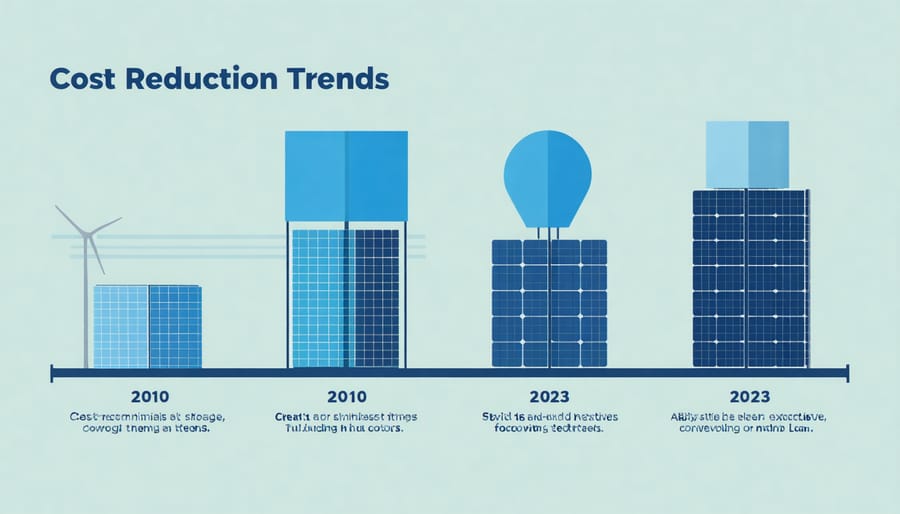
The cost trajectory of battery storage systems has shown a remarkable downward trend over the past decade, primarily driven by supportive policy frameworks and technological advancements. Between 2010 and 2020, lithium-ion battery pack prices declined by approximately 89%, from $1,100 per kilowatt-hour to around $137, making energy storage increasingly viable for both utility-scale and residential applications.
Government incentives, including investment tax credits and research grants, have played a crucial role in accelerating cost reductions. These policy measures have encouraged manufacturers to scale up production, leading to improved manufacturing efficiencies and reduced material costs. Additionally, competitive procurement processes and renewable energy auctions have created market pressure for continued cost optimization.
The implementation of supportive regulations, such as capacity markets and energy arbitrage opportunities, has further enhanced the economic viability of battery storage systems. States with comprehensive energy storage mandates have witnessed particularly significant cost reductions, as these policies create stable market conditions that attract investment and foster innovation.
Industry analysts project that battery storage costs will continue to decline, with expectations of reaching $100 per kilowatt-hour by 2024. This ongoing cost reduction trend, coupled with increasing renewable energy integration requirements, positions battery storage as an increasingly attractive component of the modern energy infrastructure.
Market Expansion Projections
The battery storage market is poised for unprecedented growth over the next decade, driven by increasing renewable energy integration and the push for energy transition success. Industry analysts project the global battery storage market to reach $31.2 billion by 2029, with a compound annual growth rate (CAGR) of 24.3%.
Utility-scale battery installations are expected to lead this expansion, particularly in regions with high renewable energy penetration. Asia-Pacific markets, notably China and India, are forecasted to dominate growth trajectories, accounting for approximately 45% of new installations by 2025. North America and Europe follow closely, driven by ambitious decarbonization targets and supportive policy frameworks.
Technological advancements in battery chemistry and manufacturing processes are anticipated to reduce costs by an additional 40-60% by 2030, making energy storage increasingly competitive with traditional power generation methods. The residential and commercial segments are projected to experience significant growth, supported by the rising adoption of solar-plus-storage systems and the increasing focus on energy independence.
Grid modernization initiatives and the emergence of virtual power plants will further accelerate market expansion, creating new opportunities for integrated storage solutions. These developments will be crucial in addressing intermittency challenges and enhancing grid reliability as renewable energy penetration continues to increase globally.
Implementation Challenges and Solutions
Technical Barriers
Battery storage systems face several significant technical challenges that impact their widespread deployment in renewable energy applications. The primary barrier remains energy density limitations, with current lithium-ion technologies struggling to match the energy storage capacity needed for grid-scale applications. This constraint affects both the physical footprint requirements and the overall system efficiency.
Degradation and cycle life present another crucial challenge. Battery performance naturally deteriorates over time, with capacity reduction accelerating under frequent charging and discharging cycles. This degradation is particularly pronounced in high-temperature environments and during rapid power delivery scenarios, necessitating careful thermal management systems.
Safety concerns continue to pose technical challenges, particularly regarding thermal runaway risks in large-scale installations. Engineers must implement sophisticated battery management systems (BMS) to monitor and control cell temperature, voltage, and current parameters. These systems add complexity and cost to storage solutions while being essential for safe operation.
Grid integration poses additional technical hurdles, particularly in managing power quality and grid synchronization. Storage systems must maintain stable frequency and voltage levels while responding rapidly to fluctuating demand and supply conditions. The development of advanced power electronics and control algorithms remains crucial for seamless grid integration.
Material availability represents another significant barrier, especially concerning critical minerals like lithium, cobalt, and nickel. The limited supply chain for these essential components affects both manufacturing scalability and long-term sustainability of battery storage solutions.
Policy Solutions
Governments worldwide are implementing comprehensive policy frameworks to accelerate the adoption of battery storage systems and support renewable energy integration. Investment tax credits (ITC) have emerged as a primary mechanism, offering significant financial incentives for both utility-scale and residential battery installations when paired with renewable energy systems.
Several states have introduced mandated energy storage procurement targets, compelling utilities to incorporate specific amounts of battery storage capacity into their grid infrastructure. California’s landmark policy requires utilities to procure 11.5 GW of energy storage by 2026, setting a precedent for other regions.
Feed-in tariffs and time-of-use pricing structures are being modified to incentivize battery storage deployment, encouraging consumers to store excess renewable energy during peak generation periods. These policies help address grid stability concerns while promoting economic benefits for storage system owners.
Regulatory frameworks are evolving to streamline permitting processes and establish clear technical standards for battery storage installations. Organizations like the International Electrotechnical Commission (IEC) are developing standardized safety protocols and performance metrics, facilitating market growth and technological advancement.
Federal research funding programs support continued innovation in battery technology, with particular emphasis on improving energy density, reducing costs, and enhancing safety features. These initiatives, combined with public-private partnerships, are accelerating the commercialization of advanced storage solutions and strengthening the renewable energy ecosystem.
Policy initiatives have played a pivotal role in accelerating the adoption of battery storage systems across the renewable energy sector. Through strategic incentives, tax credits, and regulatory frameworks, governments worldwide have successfully reduced barriers to entry and stimulated market growth. The implementation of these policies has resulted in significant cost reductions, improved technological advancement, and increased grid integration of energy storage solutions.
Looking ahead, the future of battery storage in renewable energy appears promising. Industry projections indicate continued expansion of utility-scale storage projects, enhanced grid reliability, and improved energy management capabilities. The combination of declining battery costs and supportive policy mechanisms is expected to drive further innovation and deployment across residential, commercial, and industrial applications.
Key policy achievements include the establishment of energy storage targets, streamlined permitting processes, and integration requirements for new renewable energy installations. These measures have created a robust foundation for sustainable growth in the sector. However, ongoing policy support remains crucial for addressing remaining challenges, such as standardization of safety protocols and optimization of grid interconnection procedures.
As the industry matures, policy frameworks are evolving to address emerging needs, including recycling regulations, workforce development programs, and grid modernization initiatives. This comprehensive approach ensures long-term sustainability while maintaining focus on environmental protection and economic viability. The successful implementation of these policies continues to shape the trajectory of battery storage technology, positioning it as a cornerstone of the renewable energy transition.