
Carbon pricing has emerged as one of the most powerful policy mechanisms for accelerating renewable energy deployment worldwide. By attaching a financial cost to greenhouse gas emissions, these policies fundamentally reshape energy economics—making fossil fuels more expensive while simultaneously improving the competitive position of solar photovoltaic systems and other clean technologies.
The premise is straightforward: when emitters must pay for their carbon pollution through taxes or permit purchases, renewable energy becomes increasingly cost-competitive without direct subsidies. This market-based approach has proven remarkably effective across diverse economies, from the European Union’s Emissions Trading System to carbon tax implementations in Canada and Scandinavia. Recent data demonstrates that jurisdictions with robust carbon pricing mechanisms experience renewable capacity additions at rates 2-3 times higher than those without such policies.
For photovoltaic professionals and renewable energy stakeholders, understanding carbon pricing mechanics is no longer optional—it’s essential strategic knowledge. These policies directly influence project financing, long-term power purchase agreements, and market forecasts that shape investment decisions. Whether you’re developing solar installations, conducting academic research, or advising on clean energy transitions, carbon pricing frameworks fundamentally alter the risk-return calculations governing renewable energy expansion.
This analysis examines how carbon pricing mechanisms specifically drive photovoltaic adoption, explores real-world implementation outcomes, and provides practical insights for professionals navigating this evolving policy landscape.
What Carbon Pricing Really Means for Energy Markets

The True Cost of Carbon Emissions
For decades, fossil fuels have appeared economically competitive primarily because their market prices failed to reflect their true societal costs. This phenomenon, known as an externality in economics, occurs when producers and consumers don’t bear the full expense of their activities—instead, society absorbs these hidden costs through degraded air quality, climate change impacts, and public health burdens.
The environmental damage from carbon emissions imposes substantial costs that traditional markets ignore. These include healthcare expenses from respiratory illnesses, agricultural losses from extreme weather events, infrastructure damage from rising sea levels, and ecosystem degradation affecting biodiversity. Research consistently demonstrates that when these externalities remain unpriced, fossil fuel consumption exceeds socially optimal levels, creating market failure that disadvantages cleaner alternatives.
A comprehensive environmental cost analysis reveals that coal-fired electricity generation, for instance, generates external costs ranging from $0.09 to $0.27 per kilowatt-hour—expenses currently borne by communities rather than reflected in electricity prices. Similarly, transportation emissions impose costs through climate impacts and local air pollution that consumers never see at the fuel pump.
This artificial cheapness of fossil fuels has historically created an uneven playing field, where renewable energy technologies compete against incumbent systems that don’t account for their environmental harm. Carbon pricing mechanisms aim to correct this market distortion by internalizing these externalities, ensuring that prices reflect true costs and enabling fair competition between energy sources based on their complete economic and environmental profiles.
How Pricing Mechanisms Level the Playing Field
Carbon pricing mechanisms fundamentally transform energy market dynamics by addressing a critical market failure: the absence of costs for environmental damage. For decades, fossil fuel generators have externalized the true costs of carbon emissions, effectively receiving an implicit subsidy that distorted competitive conditions. When properly implemented, carbon pricing corrects this imbalance by requiring polluters to pay for their environmental impact.
This correction creates a cascade of competitive advantages for renewable technologies. Solar photovoltaic systems, which produce zero direct emissions during operation, immediately gain price competitiveness against coal and natural gas generators that must now account for carbon costs. Research from the International Renewable Energy Agency demonstrates that carbon prices between $50-100 per ton make renewable energy projects economically superior to fossil alternatives in most markets, even without additional subsidies.
The mechanism operates through transparent price signals that permeate investment decisions throughout the energy sector. When carbon carries a cost, utilities reassess their generation portfolios, investors redirect capital toward clean technologies, and grid operators prioritize dispatch from renewable sources. This market-based approach aligns with broader decarbonization strategies by creating sustained economic incentives rather than relying solely on regulatory mandates.
Importantly, carbon pricing doesn’t pick winners—it simply ensures all energy sources compete on equal footing when environmental costs are factored. This levels the playing field organically, allowing the most efficient and sustainable technologies to succeed based on true economic merit. For renewable energy professionals, understanding this fundamental shift is essential for strategic planning and project development in an increasingly carbon-constrained world.
The Two Primary Carbon Pricing Mechanisms
Cap-and-Trade Systems: Creating Emission Markets
Cap-and-trade systems establish a regulatory ceiling on total greenhouse gas emissions while creating market-based mechanisms for compliance. Under this approach, governments set an absolute limit on emissions for a specific sector or economy, then issue or auction tradable emission allowances to covered entities. Each allowance represents the right to emit one tonne of carbon dioxide equivalent. Companies must hold sufficient allowances to cover their actual emissions, creating economic incentives to reduce pollution.
The trading mechanism enables facilities that reduce emissions below their allocation to sell surplus allowances to those finding reduction more costly. This flexibility ensures emissions decrease at the lowest possible economic cost, as market forces direct capital toward the most efficient abatement opportunities. For renewable energy developers and photovoltaic professionals, this dynamic creates significant advantages: fossil fuel generators face compliance costs that don’t apply to zero-emission solar installations, improving the competitive position of renewable technologies.
The system’s environmental effectiveness stems from declining emission caps over time. Regulators gradually tighten the total allowance supply, typically reducing available permits by a predetermined percentage annually. As allowances become scarcer, their market price rises, progressively strengthening the economic signal favoring low-carbon alternatives. This predictable trajectory enables long-term investment planning for solar projects and other renewable infrastructure.
The European Union Emissions Trading System (EU ETS), launched in 2005, exemplifies this approach at scale. Covering approximately 40% of EU emissions across power generation and industrial sectors, the EU ETS has contributed to substantial coal-to-renewables switching. Between 2005 and 2020, emissions from covered installations declined by over 35%, while renewable energy capacity expanded dramatically. Similar systems operate in California, Quebec, South Korea, and China’s national carbon market, collectively influencing billions of tonnes of annual emissions.
These markets directly accelerate renewable investment by increasing operating costs for carbon-intensive generation while leaving solar photovoltaic facilities unaffected, thereby improving project economics and attracting capital to the sector.

Carbon Taxes: Direct Price Signals
Carbon taxes represent the most straightforward approach to pricing carbon emissions, establishing a direct cost per tonne of CO₂ released into the atmosphere. Under this mechanism, governments set a fixed price that emitters must pay for each unit of greenhouse gases produced, creating an immediate financial incentive to reduce emissions and transition toward cleaner energy sources like solar photovoltaics.
The fundamental advantage of carbon taxes lies in their predictability. Unlike cap-and-trade systems where prices fluctuate based on market conditions, carbon taxes provide businesses and investors with price certainty, enabling more confident long-term planning for renewable energy projects. This stability proves particularly valuable for solar developers calculating project feasibility and return on investment over 20-25 year timeframes.
Revenue generation constitutes another significant benefit. Governments can allocate carbon tax revenues toward renewable energy subsidies, research and development, or direct rebates to citizens, creating a policy cycle that further accelerates clean energy adoption. British Columbia’s revenue-neutral carbon tax demonstrates how these funds can be redistributed while maintaining economic growth.
Sweden exemplifies successful implementation, having maintained a carbon tax since 1991—currently among the world’s highest at approximately $130 per tonne. This policy has contributed to Sweden reducing emissions by 27% since 1990 while achieving 3% annual GDP growth. Canada’s federal carbon pricing system, beginning at $20 per tonne in 2019 and escalating to $170 by 2030, similarly aims to drive emission reductions while returning revenues to households through climate action incentive payments, making renewable energy increasingly cost-competitive against fossil fuels.
How Carbon Pricing Accelerates Solar PV Deployment
Investment Signals and Financial Certainty
Carbon pricing mechanisms fundamentally transform the financial landscape for solar photovoltaic investments by internalizing previously externalized costs. When fossil fuel generators must pay for their carbon emissions, renewable energy projects gain a measurable economic advantage that extends across multi-decade project lifespans. This policy-driven price signal creates the long-term predictability that institutional investors require when committing capital to large-scale solar developments.
The investment case for solar strengthens considerably under carbon pricing regimes. Project developers can model revenue streams with greater confidence, knowing that carbon costs will consistently favor zero-emission technologies. Financial institutions, including pension funds and infrastructure investors, increasingly factor carbon pricing into their risk assessments and return projections. Research from the International Energy Agency indicates that stable carbon pricing frameworks reduce the perceived risk premium associated with renewable energy investments, directly lowering the cost of capital for solar projects.
This improved access to financing creates a virtuous cycle. Lower capital costs reduce the levelized cost of electricity from solar installations, making these projects competitive even without additional subsidies. Markets with established carbon pricing—such as the European Union’s Emissions Trading System—demonstrate higher renewable energy investment rates compared to regions without such mechanisms. The price certainty extends beyond project finance to supply chain planning, manufacturing investment, and workforce development initiatives.
For aspiring photovoltaic professionals, understanding these investment dynamics is essential for participating in project development, financial modeling, and strategic planning within the expanding renewable energy sector.
Competitive Advantages for Solar Technology
Carbon pricing fundamentally reshapes the economic landscape for solar photovoltaic technology by internalizing the environmental costs of fossil fuel generation. When carbon taxes or cap-and-trade systems add $30-$60 per ton of CO₂ emissions, coal and natural gas electricity generation costs increase by 3-6 cents per kilowatt-hour, directly improving solar’s competitive position.
This policy-driven cost adjustment accelerates grid parity achievement—the point where solar electricity matches or undercuts conventional sources—often advancing timelines by 3-5 years in jurisdictions with robust carbon pricing. The European Union’s Emissions Trading System demonstrates this effect clearly, with renewable auction prices consistently undercutting fossil alternatives since carbon allowances exceeded €50 per ton.
Enhanced cost-competitiveness translates into measurable market expansion. Research indicates that each $10 increase in carbon pricing correlates with a 12-15% rise in solar installation demand within two years. This creates cascading benefits throughout the photovoltaic supply chain, from module manufacturers to installation contractors and system integrators.
For professionals entering the solar industry, understanding these dynamics is essential. Carbon pricing mechanisms don’t simply favor renewables through subsidies—they correct market distortions by ensuring fossil generators pay for their carbon externalities, creating sustainable competitive advantages that persist beyond temporary policy incentives.
Revenue Recycling for Renewable Infrastructure
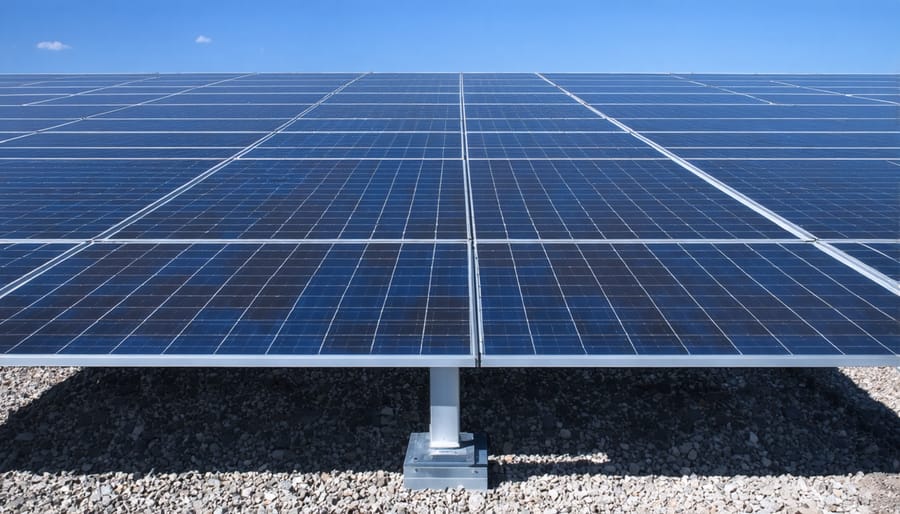
Carbon pricing mechanisms generate substantial government revenues that can strategically accelerate renewable energy transitions. Effective revenue recycling allocates these funds toward critical solar infrastructure investments, including advanced photovoltaic research at university laboratories, grid modernization projects that accommodate distributed solar generation, and next-generation energy storage solutions. Many jurisdictions earmark carbon tax proceeds for workforce development programs, creating specialized training opportunities for emerging PV professionals in system design, installation standards, and performance optimization. These reinvestments complement existing solar incentives by addressing systemic barriers to renewable expansion. Revenue transparency remains essential—stakeholders benefit when governments publish detailed allocation reports demonstrating how carbon pricing revenues directly fund solar advancement. This approach transforms carbon pricing from a purely punitive mechanism into a self-reinforcing catalyst for renewable infrastructure development, ensuring that polluters directly finance the clean energy alternatives that will replace fossil fuel dependence.
Real-World Impact: Carbon Pricing Success Stories
European Union’s ETS and Renewable Growth
The European Union’s Emissions Trading System (EU ETS), launched in 2005, demonstrates a compelling correlation between carbon market maturation and renewable energy deployment. As carbon prices strengthened from €5-10 per ton in the early 2010s to over €80 per ton by 2022, the EU witnessed exponential solar photovoltaic growth. According to SolarPower Europe data, the region’s cumulative PV capacity expanded from 51 GW in 2010 to 209 GW by 2022—a fourfold increase directly coinciding with ETS price stabilization and policy reforms.
The Market Stability Reserve, implemented in 2019, reduced allowance oversupply and strengthened price signals, catalyzing investment confidence in renewable projects. Germany alone added 7.5 GW of solar capacity in 2022, while Spain deployed 8.1 GW—both records attributable partly to elevated carbon costs making fossil generation economically disadvantageous. Research collaborations between universities and industry stakeholders confirm that sustained carbon prices above €50 per ton create sufficient investment incentives for utility-scale solar development, demonstrating how robust carbon pricing mechanisms directly accelerate photovoltaic market expansion across member states.
Regional Carbon Markets in North America
North America has witnessed significant renewable energy expansion through regional carbon markets, with California’s cap-and-trade program and the Regional Greenhouse Gas Initiative (RGGI) demonstrating measurable impacts on solar adoption.
California’s cap-and-trade system, launched in 2013, has generated over $18 billion in auction revenues through 2023, with substantial allocations directed toward renewable energy projects. The program establishes a declining emissions cap for major polluters, creating economic incentives for utilities to invest in solar infrastructure. Between 2013 and 2022, California’s solar capacity increased by 340%, reaching 15.5 GW of installed photovoltaic systems. The state allocates approximately 65% of cap-and-trade proceeds to greenhouse gas reduction programs, including residential and commercial solar installations.
RGGI, covering eleven northeastern states, has driven comparable results since its 2009 inception. Participating states have reduced power sector emissions by 50% while investing $4.7 billion in energy efficiency and renewables. Solar capacity in RGGI states grew by 280% between 2015 and 2022, significantly outpacing non-participating neighboring states. These regional initiatives complement federal solar incentives, creating layered policy mechanisms that accelerate photovoltaic deployment and manufacturing growth across multiple market segments.
Lessons from International Implementation
International carbon pricing initiatives offer valuable insights for renewable energy expansion. British Columbia’s carbon tax, implemented in 2008, demonstrates how revenue recycling through tax cuts can maintain public support while driving clean energy adoption. The province achieved a 15% reduction in fossil fuel consumption while maintaining economic growth, with proceeds funding solar incentive programs and grid modernization.
South Korea’s emissions trading system, launched in 2015, covers approximately 70% of national emissions and has accelerated corporate investment in renewable energy infrastructure. Companies subject to emissions caps increasingly turn to solar procurement to reduce compliance costs, creating robust demand for photovoltaic installations.
Emerging markets present compelling case studies as well. Colombia’s carbon tax revenue specifically funds rural solar electrification projects, demonstrating how developing nations can leverage pricing mechanisms to expand renewable access. Similarly, Singapore’s carbon pricing approach includes targeted rebates for businesses investing in solar technologies, directly linking emissions costs to clean energy deployment. These examples underscore a critical best practice: carbon pricing proves most effective when revenues explicitly support renewable energy infrastructure, workforce training programs, and technology research—creating reinforcing mechanisms that accelerate the transition to clean energy systems.
Challenges and Criticisms of Carbon Pricing Mechanisms
Setting the Right Price Point
Determining the optimal carbon price remains one of the most contentious aspects of climate policy. Economic models suggest prices ranging from $40 to over $100 per ton of CO₂ are necessary to align with Paris Agreement targets and drive meaningful renewable energy expansion. The social cost of carbon—which quantifies the economic damages from each additional ton of emissions—provides a theoretical foundation for these calculations, though estimates vary widely based on discount rates and climate sensitivity assumptions.
Current implemented prices often fall short of these benchmarks. The EU Emissions Trading System has seen prices fluctuate between €50-€90 per ton in recent years, while many carbon tax jurisdictions maintain lower rates. Research indicates that prices exceeding $75 per ton would create sufficient economic incentives to accelerate solar photovoltaic deployment and displace fossil fuel generation at the pace required for 1.5°C warming scenarios. However, policymakers must balance environmental effectiveness against economic competitiveness concerns and public acceptance. Sweden’s carbon tax, now exceeding $130 per ton, demonstrates that higher prices can coexist with economic growth when implemented gradually with complementary policies, offering valuable insights for renewable energy stakeholders navigating the evolving policy landscape.
Political and Economic Resistance
Carbon pricing faces substantial political and economic resistance, primarily from energy-intensive industries concerned about competitiveness and increased operational costs. Manufacturing sectors, fossil fuel producers, and trade-exposed industries often lobby against carbon pricing mechanisms, arguing they place domestic businesses at a disadvantage compared to international competitors operating without similar constraints. These concerns have merit in the absence of border carbon adjustments or coordinated international policies.
However, evidence from successful implementations demonstrates that well-designed carbon pricing systems can address these challenges. Revenue recycling—returning carbon revenues through tax reductions, direct rebates, or targeted support for affected industries—mitigates economic impacts while maintaining emissions reduction incentives. Several jurisdictions allocate carbon pricing revenues specifically toward renewable energy development and workforce transition programs, creating opportunities for photovoltaic professionals.
Political feasibility improves when carbon pricing policies include gradual implementation timelines, allowing industries to adapt investments and business models. Transparent communication about environmental benefits and economic opportunities in renewable sectors helps build public support. Academic research consistently shows that early adoption of carbon pricing positions regions advantageously for the clean energy transition, creating competitive advantages in solar manufacturing, installation services, and renewable energy innovation rather than economic disadvantages.
What Carbon Pricing Means for Solar Professionals

Expanding Career Opportunities in Solar
Carbon pricing mechanisms are fundamentally reshaping energy markets, creating unprecedented demand for qualified solar professionals. As governments implement carbon taxes and cap-and-trade systems, the economic incentives favoring solar installations intensify, directly translating into expanded employment opportunities across the photovoltaic sector.
The market response to carbon pricing policies has generated significant workforce requirements. Solar installation technicians, system designers, project managers, and maintenance specialists are increasingly sought after as organizations accelerate their renewable energy transitions. Engineers specializing in grid integration and energy storage systems face particularly strong demand as utilities navigate carbon compliance requirements.
Educational institutions and industry leaders recognize this growing opportunity. Programs like those offered through Mose Solar’s training initiatives prepare professionals with the technical competencies and policy knowledge essential for success in this evolving landscape. Understanding carbon pricing frameworks alongside technical solar expertise positions graduates advantageously in the expanding clean energy workforce.
Research indicates that regions with established carbon pricing mechanisms consistently demonstrate higher job creation rates in renewable energy sectors compared to jurisdictions without such policies. This correlation underscores the importance of policy literacy for aspiring photovoltaic professionals seeking to identify emerging market opportunities and strategic career pathways.
Strategic Positioning for Solar Businesses
Solar businesses can strategically position themselves to capitalize on carbon pricing mechanisms by emphasizing their role in emissions reduction. Companies should quantify and communicate the carbon offset value their installations provide, translating megawatt-hours into avoided emissions using regional carbon price benchmarks. Developing partnerships with carbon-intensive industries seeking to reduce their footprints creates new market opportunities, particularly in jurisdictions with robust cap-and-trade systems. Professional development programs that educate sales teams and engineers about carbon markets enable more sophisticated client consultations. Solar providers should also collaborate with academic institutions to stay current on emerging carbon pricing policies and their implications for project financing. By framing solar installations as compliance tools and investment hedges against rising carbon costs, businesses can differentiate themselves in competitive markets while contributing to accelerated renewable energy deployment.
Carbon pricing mechanisms represent far more than environmental regulations—they are transformative economic instruments reshaping the energy landscape and creating unprecedented opportunities in the solar photovoltaic sector. By assigning tangible costs to carbon emissions, these policies fundamentally alter the financial equation that has historically favored fossil fuels, making solar PV not just environmentally responsible but economically compelling.
For aspiring photovoltaic professionals, understanding carbon pricing is no longer optional; it is essential to career advancement and strategic decision-making. The professionals who recognize how cap-and-trade systems, carbon taxes, and offset markets influence project financing, energy procurement decisions, and market expansion will be positioned to lead the renewable energy transition. These mechanisms directly impact solar installation demand, investment flows, and technological innovation rates across global markets.
The evidence is clear: jurisdictions with robust carbon pricing consistently demonstrate accelerated solar deployment, stronger investment climates, and more resilient renewable energy sectors. As governments worldwide intensify climate commitments, carbon pricing frameworks will only expand in scope and stringency, further strengthening solar PV’s competitive position.
The call to action is straightforward—engage with carbon pricing policy developments, pursue educational opportunities that build this critical knowledge, and participate actively in shaping implementation frameworks. The intersection of environmental policy and renewable energy economics defines the future of our industry. Those who master this intersection will not only advance their careers but contribute meaningfully to the global energy transformation our planet urgently requires.