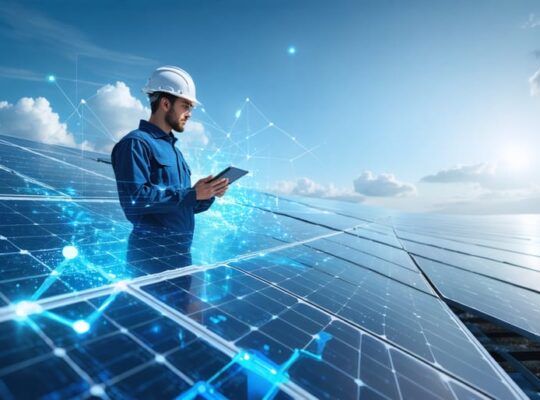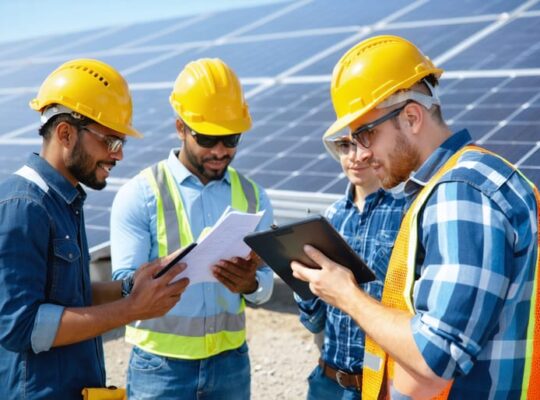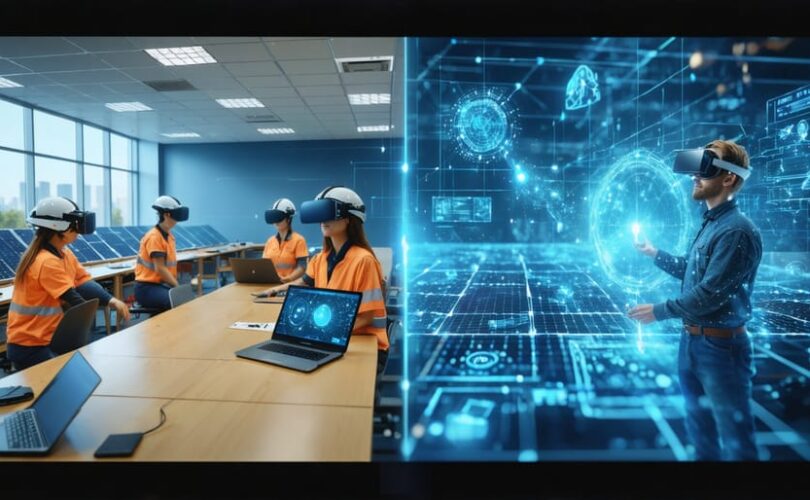
Artificial Intelligence is revolutionizing solar workforce training, transforming traditional installation methods into sophisticated, data-driven processes. As renewable energy adoption accelerates globally, the integration of AI-powered tools and simulators provides unprecedented opportunities for hands-on learning without physical risk. Advanced machine learning algorithms now enable predictive maintenance training, virtual reality installations, and real-time performance optimization scenarios that were impossible just years ago.
Industry leaders implementing AI-enhanced training programs report up to 40% faster skill acquisition and a 60% reduction in on-site errors among new technicians. These improvements stem from AI’s ability to create personalized learning paths, simulate complex installation scenarios, and provide instant feedback during practical exercises. For training institutions and solar companies, this translates to more efficient resource allocation, standardized quality assurance, and scalable workforce development solutions.
The convergence of AI and solar installation training represents a critical evolution in renewable energy education. As solar technology continues to advance, AI-integrated training ensures that workforce development keeps pace with industry innovations, creating a new generation of technicians equipped with both traditional expertise and cutting-edge technological proficiency.
The Evolution of Solar Installation Training
Traditional Training Limitations
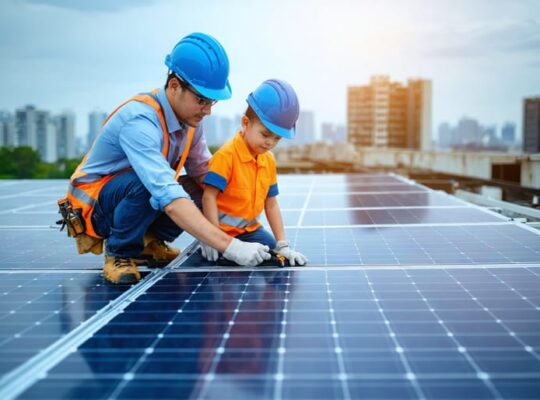
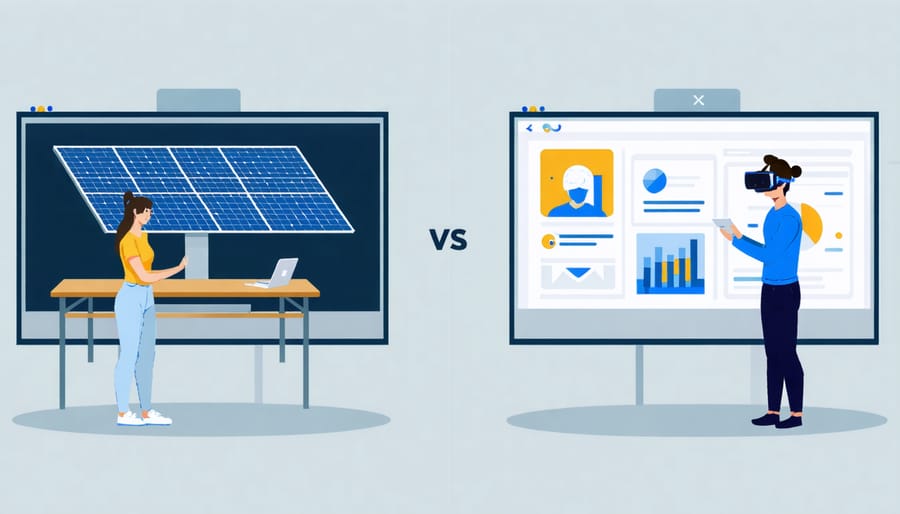
Traditional solar training programs face several significant limitations that can impact the effectiveness of workforce development. While conventional solar installation techniques are taught through classroom instruction and hands-on practice, these methods often struggle to provide consistent, scalable training experiences. Physical workshops require substantial infrastructure investment and are limited by equipment availability, weather conditions, and instructor capacity.
Safety concerns also restrict the range of scenarios that can be practically simulated during training. Students may not experience critical troubleshooting situations or emergency responses until they encounter them in the field. Additionally, traditional programs struggle to keep pace with rapidly evolving solar technologies and installation methods, making it challenging to maintain current, relevant curriculum materials.
The geographical constraints of in-person training create accessibility barriers for many potential learners, particularly those in remote areas. Furthermore, the time-intensive nature of conventional training methods can lead to increased costs and extended learning periods, potentially limiting the industry’s ability to meet growing workforce demands efficiently.
AI-Enhanced Learning Platforms
Modern AI-powered learning platforms are revolutionizing solar workforce training through personalized, adaptive learning experiences. These sophisticated systems leverage machine learning algorithms to analyze student performance, identify knowledge gaps, and automatically adjust the curriculum to match individual learning patterns and needs.
These platforms integrate various AI technologies, including natural language processing for enhanced communication, computer vision for equipment recognition training, and predictive analytics to forecast student progress. Virtual simulation environments allow trainees to practice complex installation procedures safely, while intelligent tutoring systems provide real-time feedback and guidance.
Key features of AI-enhanced learning platforms include automated assessment tools that evaluate technical competencies, interactive 3D models for equipment familiarization, and adaptive quizzing systems that evolve with learner progress. Many platforms also incorporate gamification elements to increase engagement and knowledge retention.
The integration of AI in training solutions has demonstrated significant improvements in learning outcomes, with studies showing reduced training time and increased proficiency rates. These platforms also enable scalable, consistent training delivery across multiple locations while maintaining high educational standards and ensuring compliance with industry regulations.
AI Simulation and Virtual Training Environments
Virtual Reality Installation Practice
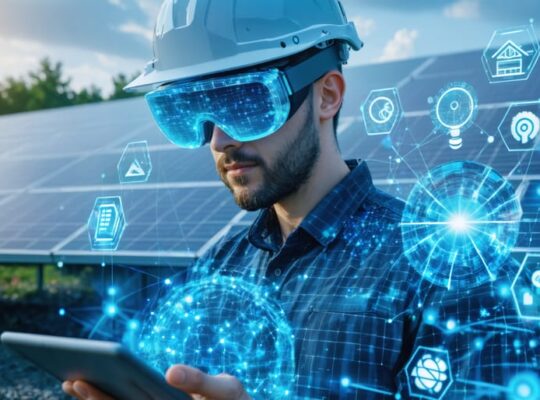
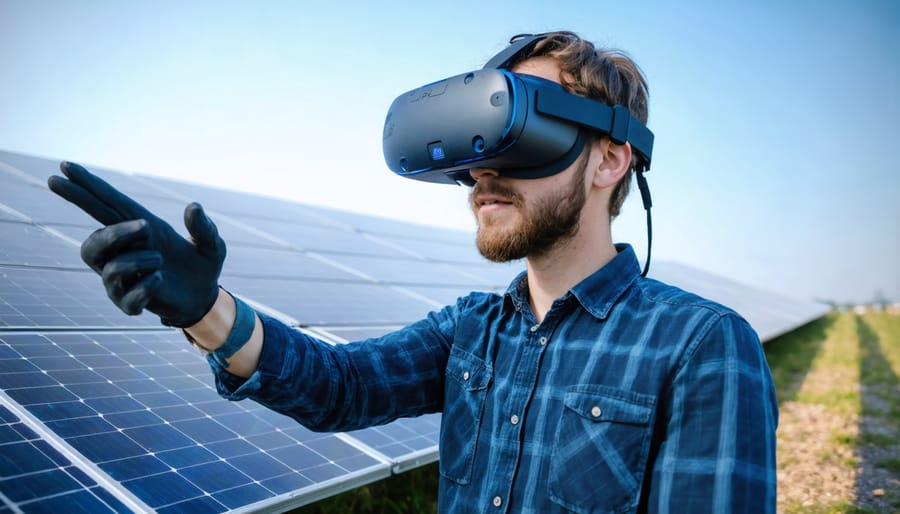
Virtual reality technology has revolutionized solar installation training by providing immersive, risk-free practice environments. These sophisticated simulations enable trainees to experience realistic installation scenarios while developing crucial skills and muscle memory. The VR training benefits include reduced equipment costs, enhanced safety protocols, and accelerated learning curves.
Through VR installations, trainees can practice mounting solar panels on various roof types, connecting electrical components, and troubleshooting common installation challenges. The technology incorporates precise measurements, proper tool handling, and safety procedures, allowing learners to master technical skills before working on actual installations.
Advanced VR systems feature haptic feedback, providing realistic tactile sensations that simulate the physical aspects of installation work. This sensory feedback helps trainees develop proper techniques for handling equipment and understanding material properties. The systems also include performance tracking metrics that measure accuracy, completion time, and adherence to safety protocols.
Multi-user VR environments facilitate collaborative learning, enabling instructors to guide multiple trainees simultaneously while demonstrating proper installation techniques. These virtual spaces can simulate various weather conditions, time constraints, and site-specific challenges, preparing workers for real-world scenarios they may encounter in the field.
AI-Driven Performance Assessment
AI-powered performance assessment systems are revolutionizing how training programs evaluate and track trainee progress in solar installation education. These intelligent systems utilize machine learning algorithms to analyze multiple data points, including practical exercise results, theoretical knowledge assessments, and hands-on simulation performances.
The assessment process begins with establishing baseline competencies through AI-driven diagnostic tools. These tools create detailed learner profiles by evaluating initial skill levels across various installation techniques, safety protocols, and technical knowledge. As trainees progress through their coursework, the AI system continuously monitors their performance, identifying areas of strength and potential improvement.
Real-time feedback mechanisms provide instructors with comprehensive insights into individual and group progress. The AI analyzes patterns in learning behaviors, completion times, and error rates to generate personalized recommendations for each trainee. This data-driven approach ensures that learning interventions are targeted and effective.
Advanced analytics capabilities enable training programs to measure competency development against industry standards and certification requirements. The system can predict likely success rates for certification examinations and suggest additional preparation where needed. This predictive capability helps optimize training resources and improve overall program effectiveness.
Performance metrics are presented through intuitive dashboards that allow both instructors and trainees to track progress visually. These dashboards incorporate adaptive learning paths that automatically adjust based on individual performance, ensuring that each trainee receives appropriately challenging content while maintaining steady progress toward certification goals.
Robotic Systems in Hands-on Training
Collaborative Robots in Training
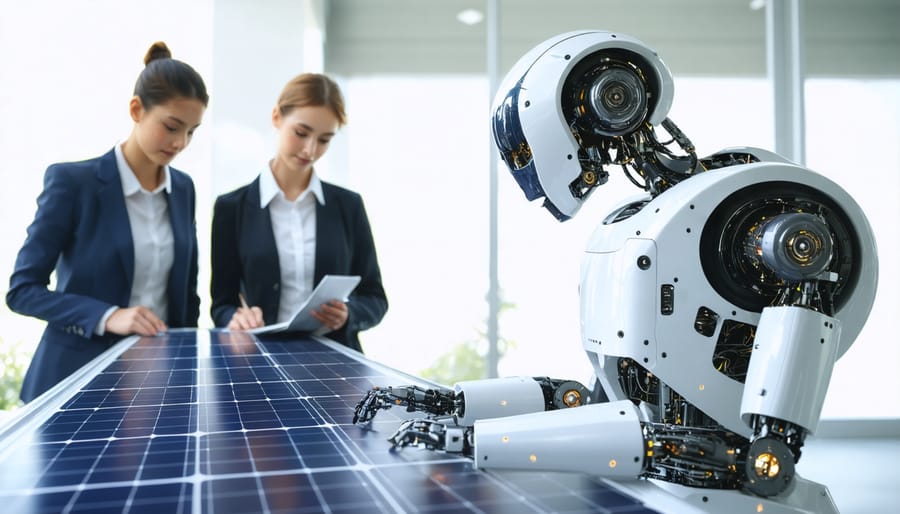
Collaborative robots, or cobots, are revolutionizing solar installation training by providing hands-on experience in a controlled, safe environment. These robotic systems simulate real-world installation scenarios while allowing trainees to practice without the risks associated with working at heights or handling live electrical components.
Training facilities are implementing robotic arms equipped with sensors that guide learners through proper panel mounting techniques. These systems provide immediate feedback on positioning, torque application, and safety protocols. For instance, some programs utilize cobots that demonstrate optimal panel handling procedures while monitoring trainee movements to ensure compliance with industry standards.
Virtual commissioning systems paired with collaborative robots enable trainees to practice complex installation sequences. These setups replicate various roof configurations and mounting systems, allowing students to master different installation scenarios before working on actual sites. The robots can detect improper techniques and suggest corrections in real-time, accelerating the learning process.
Advanced training centers are incorporating AI-enabled cobots that adapt their assistance levels based on trainee proficiency. As learners progress, the robots gradually reduce guidance, promoting independence while maintaining safety oversight. This adaptive approach ensures that trainees develop confidence and competence at their own pace while adhering to industry best practices.
Safety and Precision Training
AI-powered robotics significantly enhance safety training and installation precision in the solar industry through advanced simulation and real-time monitoring capabilities. Training programs incorporating robotic safety protocols enable apprentices to practice complex installation procedures in risk-free virtual environments before working on actual solar systems.
These intelligent systems utilize computer vision and machine learning algorithms to detect potential safety hazards and installation errors in real-time, providing immediate feedback to trainees. By analyzing thousands of successful installations, AI systems can guide workers through optimal installation sequences, reducing the likelihood of accidents and improving overall quality control.
Virtual reality (VR) simulations powered by AI create immersive training scenarios that replicate challenging weather conditions, height-related hazards, and equipment malfunctions. This comprehensive approach ensures workers are thoroughly prepared for various field situations while maintaining absolute safety during the learning process.
The integration of AI-driven quality assurance tools has demonstrated a significant reduction in installation errors, with some organizations reporting up to 40% fewer mistakes during training exercises. These systems continuously monitor installation procedures, ensuring adherence to safety standards and manufacturer specifications while providing real-time corrections when deviations occur.
Real-world Implementation Success Stories
Training Program Outcomes
Training programs enhanced with AI technology have demonstrated significant measurable improvements across multiple key performance indicators. Organizations implementing AI-driven training solutions report a 45% reduction in training completion time, while maintaining or exceeding traditional learning outcomes. Trainee competency assessments show an average improvement of 32% compared to conventional methods.
Safety incident rates among program graduates have decreased by 28%, attributable to enhanced hazard recognition training through virtual simulations and AI-powered scenario modeling. Installation quality metrics indicate a 25% improvement in first-time-right installations, reducing costly rework and enhancing customer satisfaction.
Knowledge retention rates have increased by 40%, with trainees demonstrating superior technical understanding during follow-up assessments conducted three and six months post-completion. The adaptive learning capabilities of AI systems have reduced the variance in trainee performance by 35%, ensuring more consistent skill development across diverse learning groups.
Cost efficiency metrics reveal a 30% reduction in overall training expenses when accounting for decreased instructor hours, reduced equipment wear, and improved resource allocation. Additionally, programs report a 50% increase in trainee engagement levels, measured through participation metrics and feedback surveys.
These outcomes demonstrate that AI integration in solar training programs delivers quantifiable benefits across safety, efficiency, and educational effectiveness while providing a strong return on investment for implementing organizations.
Industry Partner Perspectives
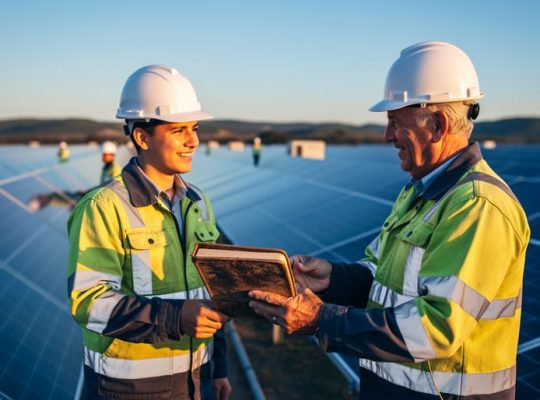
Leading solar companies have reported significant improvements in training outcomes after implementing AI-integrated systems. SolarTech Solutions, a major installation company, observed a 40% reduction in training time while achieving higher competency levels among new technicians. Their AI-enhanced simulation platform allows trainees to practice complex installations in various weather conditions and roof configurations without physical risks.
EnergySmart International highlights that their AI-powered training programs have resulted in a 60% decrease in installation errors during field assignments. Their automated assessment system provides instant feedback, helping instructors identify areas where trainees need additional support. “The AI system has transformed our ability to deliver consistent, high-quality training across multiple locations,” notes Sarah Chen, Director of Training Operations.
Renewable Energy Systems (RES) implements virtual assistants that guide technicians through troubleshooting procedures in real-time. This integration has reduced their on-site supervision requirements by 30% while maintaining safety standards. The company reports increased trainee confidence and faster skill acquisition, particularly in complex diagnostic scenarios.
PV Solutions Group emphasizes the cost-effectiveness of their AI training platform, citing a 45% reduction in training-related expenses. Their system combines machine learning algorithms with augmented reality, creating an immersive learning environment that accelerates skill development while ensuring safety protocols are properly internalized.
Future Implications for Solar Workforce Development
The integration of AI in solar workforce training is poised to revolutionize solar industry career development over the next decade. As artificial intelligence technology continues to advance, training programs will likely incorporate more sophisticated simulation environments, predictive analytics, and personalized learning pathways.
Machine learning algorithms are expected to enhance the effectiveness of virtual reality training modules by adapting to individual learning patterns and providing real-time feedback. These systems will become increasingly capable of identifying potential safety risks and technical competency gaps, allowing for more targeted skill development.
Industry experts anticipate the emergence of AI-powered digital twins that replicate entire solar installation projects, enabling trainees to practice complex scenarios without physical risks. These simulations will incorporate real-world variables such as weather conditions, equipment specifications, and site-specific challenges.
The evolution of natural language processing will facilitate multilingual training programs, making solar education more accessible to diverse workforce populations. Additionally, AI-driven assessment tools will provide more objective and comprehensive evaluation of practical skills, ensuring consistent quality standards across the industry.
Robotics integration in training programs will likely expand, with AI-guided robotic systems demonstrating optimal installation techniques and safety procedures. This technological advancement will help standardize best practices while reducing the learning curve for new technicians entering the field.
The integration of AI in solar workforce training represents a transformative leap forward in preparing the next generation of photovoltaic professionals. By combining advanced simulation technologies, data-driven learning platforms, and intelligent assessment tools, training programs can now deliver more effective, personalized, and practical education experiences. The benefits are multifaceted: accelerated skill acquisition, reduced training costs, enhanced safety during practical exercises, and improved learning outcomes through real-time feedback and adaptive learning paths.
The importance of AI integration extends beyond individual training benefits. As the solar industry continues to evolve rapidly, AI-enhanced training programs ensure that the workforce remains agile and capable of meeting emerging challenges. These technological advancements enable training providers to scale their programs efficiently while maintaining high-quality educational standards. Furthermore, the standardization of training through AI-powered platforms helps establish consistent competency levels across the industry.
Looking ahead, the continued development and refinement of AI integration in solar workforce training will be crucial for meeting the growing demand for skilled professionals in the renewable energy sector. Organizations that embrace these technological innovations will be better positioned to develop a highly qualified workforce ready to drive the future of solar energy implementation.