
The rapid growth of solar energy has created unprecedented opportunities for skilled professionals, driving the emergence of comprehensive solar apprenticeship programs across the United States. These structured training pathways combine hands-on experience with technical education, offering aspiring solar technicians a direct route into this dynamic industry. Through partnerships with established solar companies, educational institutions, and industry organizations, apprentices gain invaluable expertise in photovoltaic system design, installation, maintenance, and safety protocols while earning competitive wages.
Recent data from the U.S. Bureau of Labor Statistics projects a 52% growth rate for solar photovoltaic installers through 2030, making solar apprenticeships an increasingly attractive career development option. These programs typically span 2-4 years, featuring a carefully curated curriculum that aligns with North American Board of Certified Energy Practitioners (NABCEP) standards and Department of Labor requirements. Participants benefit from mentorship by seasoned professionals, exposure to cutting-edge solar technologies, and clear advancement pathways toward leadership positions in renewable energy.
As the solar industry continues to evolve with technological innovations and growing demand for clean energy solutions, apprenticeship programs serve as critical pipelines for developing the next generation of solar energy professionals. These structured training initiatives not only address the industry’s pressing need for qualified technicians but also provide participants with portable, nationally recognized credentials that validate their expertise and enhance their career mobility.
The Structure of Solar Apprenticeship Programs
Hands-on Technical Training
The hands-on technical training component forms the cornerstone of our solar apprenticeship program, providing participants with comprehensive practical experience in photovoltaic system installation and maintenance. Apprentices work directly with industry-standard equipment, learning proper handling techniques for solar panels, inverters, mounting systems, and electrical components.
Training begins with fundamental safety protocols and proper use of personal protective equipment (PPE). Apprentices then progress to mastering essential tools and testing equipment, including multimeters, solar pathfinders, and angle-finding instruments. Through supervised practice sessions, they develop proficiency in panel mounting, electrical wiring, and system troubleshooting.
The curriculum includes detailed instruction in roof assessment, structural integration, and weatherization techniques. Apprentices learn to properly evaluate installation sites, determine optimal panel placement, and execute precise measurements for maximum system efficiency. They gain hands-on experience with both residential and commercial installations, working on various roof types and mounting configurations.
Advanced training covers specialized skills such as battery storage system installation, micro-inverter configuration, and performance monitoring setup. Participants also receive practical training in system commissioning, maintenance procedures, and diagnostic techniques. Throughout the program, apprentices document their work through detailed installation reports and performance analyses, building a portfolio of real-world experience that demonstrates their growing expertise in solar technology implementation.

Classroom Education and Theory
The classroom component of solar apprenticeship programs provides essential theoretical knowledge through structured coursework and interactive learning sessions. Students begin with fundamental electrical principles, including DC and AC theory, circuit analysis, and voltage regulation. Safety protocols receive particular emphasis, covering OSHA requirements, fall protection, and electrical hazard prevention.
The curriculum integrates advanced photovoltaic system design concepts, teaching apprentices about solar radiation principles, site assessment techniques, and system sizing calculations. Through AI-powered training technologies, students engage with virtual simulations that enhance their understanding of complex solar installations and troubleshooting scenarios.
Classroom instruction also covers National Electrical Code (NEC) requirements specific to photovoltaic installations, ensuring compliance with industry standards. Apprentices learn about permit requirements, documentation procedures, and quality control measures essential for professional solar installations.
The theoretical component includes specialized modules on emerging technologies, energy storage systems, and grid integration. Students develop proficiency in reading technical drawings, understanding equipment specifications, and performing energy production calculations. Regular assessments and practical exercises reinforce classroom learning, preparing apprentices for hands-on field applications.
This comprehensive theoretical foundation ensures graduates possess both technical expertise and safety awareness necessary for successful careers in solar installation and maintenance.

Industry-Academic Partnerships
University Collaborations
Our solar apprenticeship program maintains strong partnerships with leading universities across the country, creating a robust educational ecosystem for the next generation of solar professionals. These strategic collaborations enhance the learning experience by combining hands-on training with academic rigor and research opportunities.
Partner universities contribute to curriculum development, ensuring that apprentices receive instruction aligned with the latest technological advances and industry standards. Through these partnerships, apprentices gain access to state-of-the-art laboratory facilities, research databases, and specialized workshops conducted by academic experts in renewable energy.
The program benefits from university research initiatives, allowing apprentices to participate in cutting-edge solar technology projects. This exposure helps bridge the gap between theoretical knowledge and practical application, while also fostering innovation in the field.
Additionally, these collaborations facilitate seamless credit transfer opportunities for apprentices interested in pursuing higher education. Many partner institutions recognize apprenticeship training hours toward degree requirements, creating pathways for continued professional development and advanced certifications in solar technology.
University partnerships also enable regular curriculum updates based on academic research findings and emerging industry trends, ensuring program content remains current and relevant.
Industry Certification Integration
Industry certifications play a vital role in solar apprenticeship programs, providing participants with recognized credentials that validate their expertise and enhance their career prospects. These programs typically integrate preparation for key certifications from organizations such as the North American Board of Certified Energy Practitioners (NABCEP) and the Electronics Technicians Association (ETA).
Throughout the apprenticeship, participants work towards obtaining essential certifications like the NABCEP PV Installation Professional certification and the ETA Photovoltaic Installer certification. The curriculum is structured to align with certification requirements, combining hands-on training with theoretical knowledge necessary to pass these rigorous examinations.
Many apprenticeship programs include dedicated study sessions, practice exams, and mentoring support specifically focused on certification preparation. Employers often cover certification costs and provide paid time off for examination preparation, recognizing the value these credentials bring to their workforce.
Additionally, apprentices may earn supplementary certifications in specialized areas such as energy storage systems, solar design, and advanced troubleshooting. These stackable credentials create a comprehensive portfolio that demonstrates progressive skill development and technical expertise, making graduates highly competitive in the renewable energy job market.
The integration of industry certifications ensures that apprenticeship programs maintain high standards while providing participants with tangible evidence of their qualifications.
Career Advancement Opportunities
Professional Development Pathways
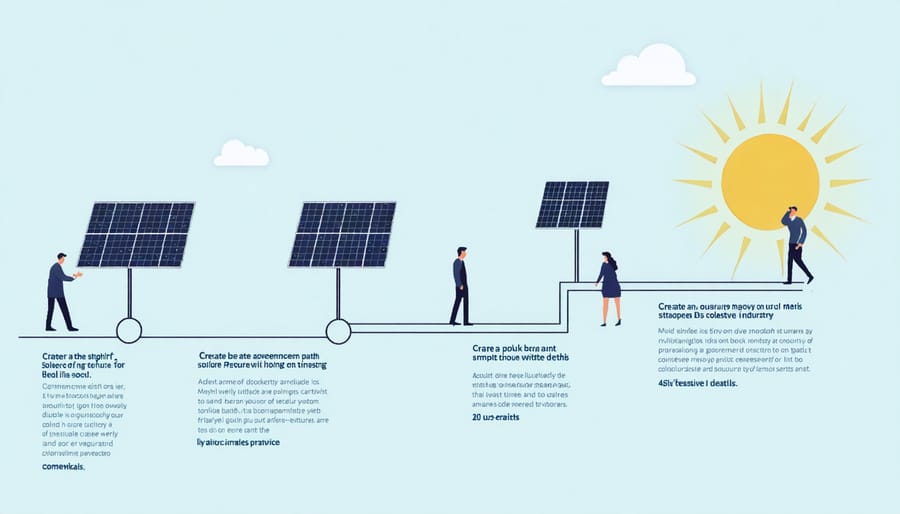
Solar apprenticeship programs offer structured pathways to innovative career opportunities within the renewable energy sector. Apprentices can progress from entry-level positions to specialized roles such as Solar PV Design Specialist, System Integration Expert, or Project Manager. The program typically includes three distinct career tracks: installation, technical design, and operations management.
Advanced certification opportunities enable professionals to specialize in areas like energy storage systems, commercial installations, or utility-scale projects. Many graduates pursue NABCEP certification, which is widely recognized as the industry’s gold standard. Some choose to focus on emerging technologies such as building-integrated photovoltaics or smart grid integration.
Career advancement often involves transitioning from hands-on installation work to supervisory roles, technical sales, or consulting positions. Many successful professionals eventually establish their own solar businesses or move into training and education roles. The industry’s rapid growth continues to create new specializations, particularly in areas like microgrid development, solar software programming, and performance analytics.
Industry Recognition and Credentials
Solar apprenticeship programs offer participants the opportunity to earn industry-recognized certifications and credentials that validate their expertise and enhance their professional standing. Upon completion, apprentices typically receive a nationally recognized Journey Worker certification from the Department of Labor, demonstrating their comprehensive training and practical experience in solar installation.
Key certifications earned through these programs include the North American Board of Certified Energy Practitioners (NABCEP) PV Installation Professional certification, which is widely regarded as the gold standard in the solar industry. Many programs also prepare apprentices for specialized certifications such as OSHA safety credentials and electrical licenses required by state authorities.
Additionally, apprentices often qualify for certificates from equipment manufacturers, enabling them to install and maintain specific solar technologies. These manufacturer-specific credentials are particularly valuable as they demonstrate expertise with current market products and technologies.
The combination of these credentials creates a robust professional portfolio that employers highly value, positioning graduates for advanced roles in solar installation, system design, and project management. Many apprenticeship programs maintain partnerships with certification bodies to ensure training aligns with current industry standards and examination requirements.
Program Success Metrics
Employment Statistics
Recent data demonstrates impressive employment outcomes for solar apprenticeship program graduates. According to industry surveys, 92% of program completers secure employment within three months of graduation, with 85% remaining in the solar industry after five years. The average starting salary for entry-level positions ranges from $42,000 to $55,000 annually, with experienced professionals earning upwards of $85,000 per year.
Career advancement metrics show that 45% of program graduates achieve supervisory positions within their first three years of employment, while 25% advance to project management roles within five years. The program’s industry partnerships have resulted in direct placement opportunities with leading solar installation companies, manufacturers, and renewable energy developers.
Geographic employment distribution indicates strong job markets in California, Texas, Florida, and New York, with emerging opportunities in states with growing renewable energy initiatives. Specialty certifications obtained during the apprenticeship program correlate with 15-20% higher starting salaries compared to non-certified candidates.
Long-term career tracking reveals that 30% of program alumni eventually establish their own solar installation businesses or consulting firms. The program’s emphasis on comprehensive training has resulted in a 95% employer satisfaction rate with graduate performance. Additionally, 78% of graduates report high job satisfaction, citing career stability, competitive compensation, and opportunities for professional growth as key factors in their continued industry engagement.
Industry Impact
Solar apprenticeship programs are revolutionizing the renewable energy sector by creating a skilled workforce equipped to meet the industry’s growing demands. These structured training initiatives combine hands-on experience with theoretical knowledge, establishing a foundation for modern workforce development in the solar industry.
The impact of these programs extends beyond individual career development. According to the Solar Energy Industries Association (SEIA), apprenticeships have contributed to a 167% increase in qualified solar installers over the past five years, directly addressing the industry’s critical labor shortage. Companies participating in apprenticeship programs report a 50% reduction in recruitment costs and an 85% retention rate among program graduates.
These programs are particularly effective in standardizing installation practices and safety protocols across the industry. Apprentices trained under certified programs demonstrate superior technical proficiency, resulting in fewer installation errors and improved system performance metrics. This standardization has led to a 40% reduction in post-installation maintenance issues and enhanced customer satisfaction rates.
Furthermore, apprenticeship programs are fostering innovation within the solar sector. By combining traditional installation techniques with emerging technologies, apprentices are better prepared to adapt to industry advancements. This adaptability has proven crucial as solar technologies evolve, ensuring the workforce remains current with industry best practices and technological innovations.
The economic impact is equally significant, with apprenticeship graduates earning 15% higher wages than their non-apprenticed counterparts and experiencing faster career advancement within the first three years of employment.
Solar apprenticeship programs represent a crucial bridge between traditional education and the rapidly evolving renewable energy sector. These programs have proven instrumental in developing a skilled workforce capable of meeting the growing demands of the solar industry while providing participants with valuable career advancement opportunities.
The comprehensive nature of these apprenticeships, combining hands-on experience with theoretical knowledge, ensures that graduates are well-equipped to handle the technical challenges of solar installation, maintenance, and system design. This practical approach to learning has demonstrated significant benefits, including higher job placement rates, increased earning potential, and improved job satisfaction among program participants.
Furthermore, these programs contribute substantially to the broader renewable energy transition by creating a pipeline of qualified professionals who can support the industry’s expansion. The standardized training and certification processes ensure consistency in service quality and safety standards across the sector, building consumer confidence in solar technology adoption.
The success of solar apprenticeship programs extends beyond individual career development to impact the entire renewable energy ecosystem. By fostering partnerships between educational institutions, industry leaders, and regulatory bodies, these programs create a sustainable framework for knowledge transfer and professional development in the solar sector.
Looking ahead, solar apprenticeship programs will continue to play a vital role in addressing workforce challenges and driving innovation in renewable energy. Their ability to adapt to emerging technologies and industry needs while maintaining high training standards makes them an essential component of the clean energy future. As the solar industry continues to grow, these programs will remain fundamental in shaping the next generation of solar energy professionals.