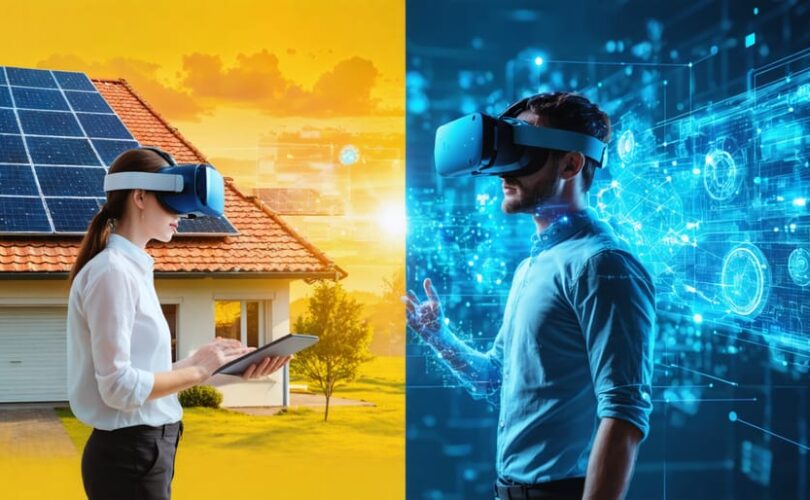
Virtual reality stands at the forefront of a technological revolution that’s reshaping how we train, learn, and interact within the renewable energy sector. As photovoltaic installations grow exponentially worldwide, traditional training methods struggle to keep pace with industry demands. VR technology offers an unprecedented solution, combining immersive learning environments with real-world applications for solar workforce development.
Recent studies from the National Renewable Energy Laboratory demonstrate that VR-based training can reduce learning time by up to 40% while improving knowledge retention by 75% compared to conventional methods. This transformative approach allows practitioners to safely simulate complex installation scenarios, troubleshoot equipment failures, and master critical safety protocols without the risks associated with physical training environments.
Industry leaders like Tesla, Sunrun, and major utilities are already incorporating VR training programs into their workforce development strategies, signaling a paradigm shift in how we prepare the next generation of solar professionals. As hardware costs decrease and software capabilities expand, VR is rapidly evolving from an experimental technology to an essential tool in renewable energy education.
This compelling convergence of technology and training efficiency raises a critical question: Is virtual reality not just an option, but the definitive future of solar workforce development?
The Evolution of Solar Installation Training
Traditional Training Methods: Benefits and Limitations
Traditional solar industry training has long relied on a combination of classroom instruction and hands-on field experience through solar industry apprenticeship programs. This approach offers several key advantages, including direct interaction with experienced instructors, real-world equipment handling, and immediate feedback during practical exercises.
Classroom-based learning provides a solid theoretical foundation, allowing students to understand fundamental concepts, safety protocols, and industry standards. On-site training enables trainees to develop essential motor skills and gain familiarity with actual installation conditions. This hands-on experience is crucial for building confidence and competence in the field.
However, traditional training methods face significant limitations. The high costs of equipment, facility maintenance, and instructor time can make comprehensive training programs expensive and less accessible. Weather conditions and daylight hours often restrict practical training opportunities, while safety concerns may limit the complexity of scenarios that can be practiced. Additionally, traditional methods struggle to efficiently scale to meet the rapidly growing demand for skilled solar professionals, particularly in remote or underserved regions.
The Need for Innovation in PV Training
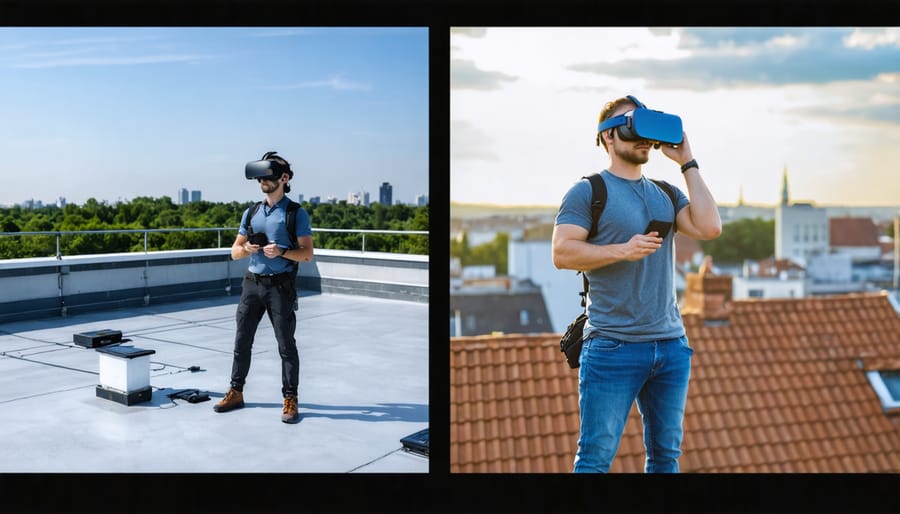
The solar industry is experiencing unprecedented growth, with projections indicating a need for over 400,000 new workers by 2030. This rapid expansion presents a significant challenge: how to effectively train this influx of workers while maintaining high safety and quality standards. Traditional training methods, while valuable, often struggle to keep pace with the industry’s evolving needs and technological advancements.
The complexity of modern solar installations demands comprehensive training in both technical skills and safety protocols. As the industry embraces new technologies and installation methods, the need for innovative training approaches becomes increasingly apparent. Moreover, the development of digital skills in solar has become crucial for workforce competency.
Current training challenges include limited hands-on experience opportunities, inconsistent learning environments, and the high costs associated with equipment-based training. These obstacles can result in longer training periods and potential safety risks when new technicians enter the field. The industry requires a solution that can provide standardized, scalable, and immersive learning experiences while reducing both time and resource investments.
VR Technology in Solar Training: A Game-Changer
Immersive Learning Environments
Virtual reality training platforms create highly detailed, interactive environments that accurately replicate real-world solar installation scenarios. These immersive spaces allow trainees to practice installation procedures, safety protocols, and troubleshooting techniques in a risk-free setting that mirrors actual work conditions.
The virtual environments incorporate precise 3D models of solar panels, mounting systems, electrical components, and tools, ensuring that trainees become familiar with industry-standard equipment. Realistic physics engines simulate the handling of materials and tools, while sophisticated lighting and weather systems recreate various environmental conditions installers might encounter in the field.
Training modules can simulate different roof types, architectural configurations, and installation challenges, providing comprehensive exposure to diverse scenarios. Trainees can practice everything from initial site assessment to final system testing, with immediate feedback on their performance and decision-making.
The immersive nature of these environments helps develop muscle memory and spatial awareness, crucial skills for safe and efficient installations. Virtual reality’s ability to replicate height conditions and safety hazards allows trainees to build confidence in challenging situations without physical risk. Advanced haptic feedback systems further enhance the learning experience by providing realistic tactile sensations when handling virtual tools and equipment.
These environments can be easily updated to reflect new technologies, regulations, or best practices, ensuring training remains current with industry standards.
Safety Training Without Real Risks
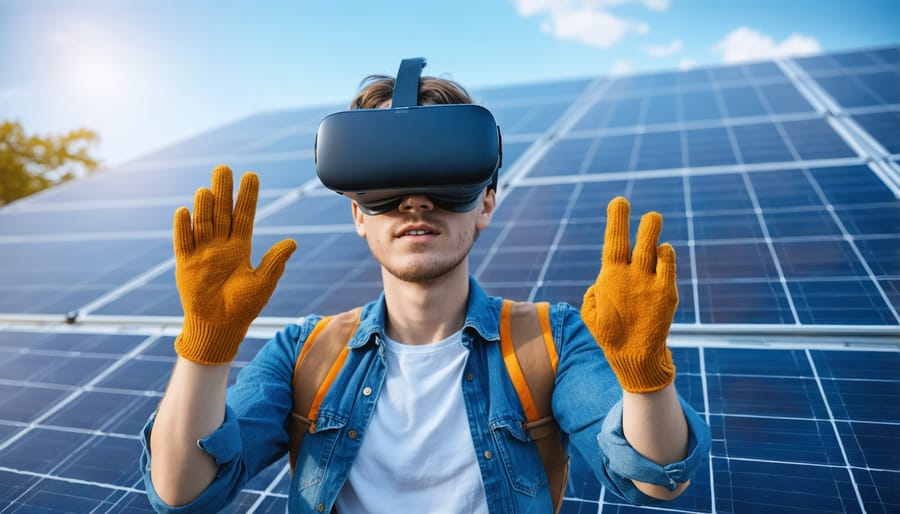
Virtual reality training environments provide a secure platform for solar industry professionals to practice potentially hazardous procedures without exposure to actual risks. Trainees can repeatedly perform tasks such as working at heights, handling electrical components, and operating complex equipment in a controlled digital space where mistakes have no physical consequences.
This risk-free approach is particularly valuable when training personnel for high-stakes scenarios like emergency responses or working with high-voltage systems. Virtual simulations allow practitioners to experience realistic challenges while maintaining complete safety, enabling them to build confidence and competence before engaging with actual equipment.
The controlled environment also permits instructors to introduce various scenarios and complications that might be too dangerous or impractical to replicate in real-world training sessions. Weather conditions, equipment malfunctions, and emergency situations can all be simulated without compromising safety protocols or risking damage to expensive equipment.
Furthermore, VR training programs can track and analyze trainee performance, identifying areas where additional practice is needed before advancing to real-world applications. This systematic approach ensures that workers are thoroughly prepared when they transition to actual field work, significantly reducing workplace accidents and improving overall safety compliance.
By eliminating physical risks during the learning process, organizations can provide comprehensive training while maintaining their duty of care to employees and reducing insurance-related costs.
Technical Skill Development
Virtual reality training platforms offer precise, step-by-step guidance for mastering critical installation techniques in the solar industry. Through immersive simulations, technicians can practice complex procedures like module mounting, electrical wiring, and inverter installation in a risk-free environment. These platforms utilize detailed 3D models of actual solar components, allowing trainees to examine equipment from multiple angles and understand proper assembly sequences.
The technology enables learners to practice specialized skills such as roof assessment, array layout planning, and safety harness procedures without the physical constraints of traditional training environments. Advanced VR systems incorporate haptic feedback, providing realistic tactile sensations when handling virtual tools and equipment. This feature is particularly valuable for developing muscle memory and proper handling techniques.
Training modules can be customized to address specific installation scenarios, including different roof types, mounting systems, and environmental conditions. Virtual mentors guide learners through each step, offering immediate feedback and correction. Performance metrics track precision, completion time, and adherence to safety protocols, allowing instructors to identify areas needing improvement.
The ability to repeat complex procedures without material waste or safety risks accelerates skill development. Trainees can practice until they achieve mastery, building confidence before working on actual installations. This systematic approach to technical skill development ensures consistent quality standards across the workforce while reducing training costs and potential workplace accidents.
Real-World Impact and ROI
Training Efficiency Metrics
Recent studies have demonstrated significant improvements in training efficiency through virtual reality implementation. Research conducted across multiple educational institutions shows that VR-based training can reduce learning time by up to 40% compared to traditional methods, while increasing knowledge retention by 75%.
A comprehensive analysis of 2,000 learners across various technical fields revealed that VR training participants achieved competency in complex tasks 4 times faster than classroom learners. Additionally, VR trainees demonstrated 30% higher accuracy in practical assessments compared to those trained through conventional methods.
In terms of cost-effectiveness, organizations implementing VR training programs reported an average reduction of 58% in training-related expenses over a two-year period. This includes savings on equipment, facility maintenance, and instructor time. The ability to simulate high-risk scenarios without physical danger has also led to a 43% decrease in training-related incidents.
Learning retention metrics show particularly promising results, with VR-trained individuals maintaining 80% of learned information after six months, compared to 20% retention rates in traditional training settings. The immersive nature of VR experiences has proven especially effective for complex technical procedures, with error rates decreasing by 32% among VR-trained professionals.
These metrics demonstrate VR’s potential to revolutionize professional training while delivering measurable improvements in both efficiency and effectiveness.
Cost-Benefit Analysis
Virtual reality training solutions present compelling economic advantages when compared to traditional training methods. Initial implementation costs, including hardware and software investments, are quickly offset by significant reductions in ongoing training expenses. Organizations can eliminate costs associated with physical training facilities, equipment maintenance, and travel expenses for instructors and trainees.
Studies indicate that VR training can reduce training time by up to 40% while improving knowledge retention by 75% compared to conventional methods. This efficiency translates to faster workforce deployment and reduced labor costs during the training period. The scalability of VR solutions allows organizations to train multiple employees simultaneously without incurring additional instructor fees or facility costs.
The risk mitigation aspect of VR training also presents substantial cost benefits. By conducting hazardous operations training in virtual environments, companies minimize workplace accidents and associated insurance premiums. Equipment damage during training is eliminated, preserving valuable resources and reducing replacement costs.
Furthermore, VR training platforms offer data analytics capabilities that enable organizations to identify areas for improvement and optimize their training programs. This data-driven approach leads to more efficient resource allocation and better training outcomes. The ability to update training content digitally also eliminates the need for costly physical training material updates and reprinting.
When factoring in these combined benefits, organizations implementing VR training solutions typically achieve return on investment within 12-18 months of deployment.
Future Implications for the Solar Industry
Integration with Other Technologies
Virtual reality’s potential is significantly amplified through its integration with complementary technologies. When combined with AI-powered training solutions, VR systems can adapt to individual learning patterns, providing personalized instruction and real-time feedback. Augmented reality (AR) integration enables hybrid learning environments where trainees can overlay digital information onto physical solar installations, enhancing comprehension of complex systems.
Mixed reality technologies bridge the gap between virtual and physical worlds, allowing practitioners to interact with both simulated and real components simultaneously. This convergence creates immersive learning ecosystems where artificial intelligence monitors performance metrics, AR provides contextual information, and VR delivers hands-on practice opportunities.
The integration of these technologies enables sophisticated data analytics, tracking trainee progress and identifying areas for improvement with unprecedented precision. As these systems continue to evolve, they’re establishing new standards for technical education and professional development in the renewable energy sector, making comprehensive training more accessible and effective than ever before.
Scaling Solar Workforce Development
As the solar industry experiences unprecedented growth, workforce development has become a critical challenge. Virtual reality technology offers a scalable solution to meet the increasing demand for skilled professionals. Through remote training capabilities, organizations can simultaneously train multiple technicians across different locations while maintaining consistent quality standards.
VR training platforms enable solar companies to rapidly onboard new employees without compromising safety or educational effectiveness. These systems can simulate complex installation scenarios, troubleshooting procedures, and maintenance operations, allowing trainees to gain hands-on experience without the risks associated with live equipment.
The scalability of VR training is particularly valuable for large solar organizations with geographically dispersed teams. By implementing standardized virtual training modules, companies can ensure uniform skill development across their workforce while significantly reducing travel costs and training time. This approach also allows for rapid curriculum updates to address evolving industry standards and new technology implementations, ensuring the workforce remains current with best practices and safety protocols.
Virtual reality has proven itself to be more than just a technological novelty, emerging as a transformative force across multiple industries, including solar energy and renewable technologies. The evidence demonstrates that VR training solutions offer significant advantages in terms of cost-effectiveness, safety, and learning retention compared to traditional methods. As hardware becomes more affordable and software capabilities expand, the adoption of VR technology is likely to accelerate across the renewable energy sector.
The integration of VR in professional training programs has shown measurable improvements in workforce preparedness and technical competency. Companies implementing VR-based training report reduced training times, decreased accidents, and improved worker confidence in performing complex tasks. These outcomes suggest that VR will play an increasingly crucial role in addressing the growing demand for skilled solar energy professionals.
Looking ahead, technological advancements in haptic feedback, artificial intelligence, and mixed reality capabilities will further enhance the effectiveness of VR training platforms. The potential for remote collaboration, real-time troubleshooting, and standardized certification programs through VR presents exciting opportunities for the solar industry’s future workforce development.
While challenges remain regarding initial implementation costs and content development, the trajectory of VR adoption indicates that it will become an indispensable tool for solar energy training and education. Organizations that embrace this technology early will likely gain a competitive advantage in workforce development and operational efficiency.