Solar-powered vans represent a transformative leap in sustainable transportation, merging renewable energy innovation with practical mobility solutions. As global markets pivot towards eco-friendly alternatives, these vehicles integrate advanced photovoltaic technology with conventional van functionality, creating a compelling solution for both commercial fleets and private users. Recent technological breakthroughs in solar panel efficiency and energy storage systems have made solar-powered vans increasingly viable, offering operational ranges that compete with traditional fossil fuel vehicles while significantly reducing carbon emissions and operating costs.
The emergence of solar-powered vans marks a critical intersection between transportation evolution and environmental responsibility. These vehicles harness roof-mounted solar arrays to generate clean electricity, powering everything from basic operations to advanced climate control systems. With the transportation sector accounting for approximately 29% of global carbon emissions, solar-powered vans present a practical pathway toward sustainable mobility, particularly for last-mile delivery services and mobile businesses seeking to minimize their environmental impact while optimizing operational efficiency.
The technology’s rapid advancement, coupled with decreasing solar panel costs and improved battery storage capabilities, positions solar-powered vans at the forefront of sustainable transportation innovation, offering a glimpse into the future of clean, efficient mobility solutions.
Solar Integration Technology in Modern Vans
Advanced PV Module Configurations
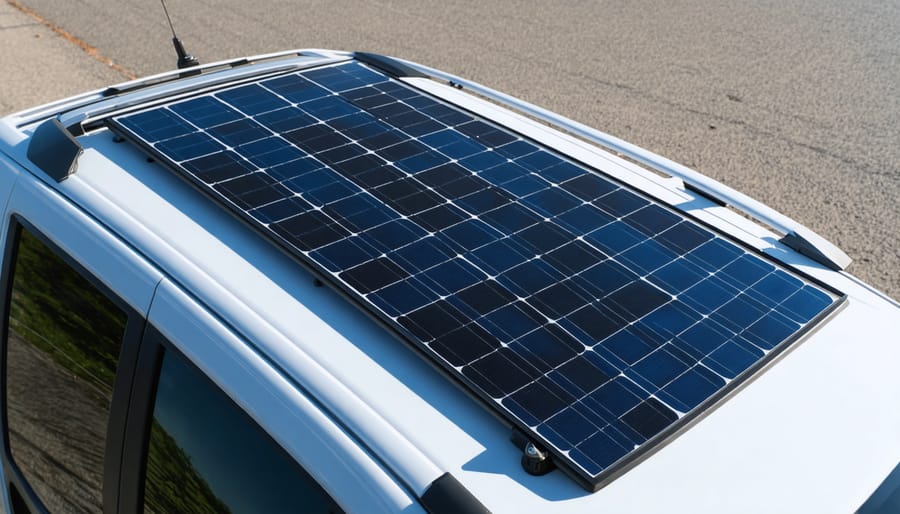
Maximizing solar energy capture on a van requires sophisticated panel configurations that address the unique challenges of mobile applications. The most effective arrangements typically employ a combination of fixed and adjustable panels to optimize energy generation while maintaining aerodynamic efficiency.
High-efficiency monocrystalline panels are commonly arranged in a multi-tier system, with primary arrays mounted flat on the roof and secondary panels installed on extendable brackets along the sides. This configuration allows for up to 40% more surface area compared to traditional flat-roof installations while maintaining the vehicle’s profile during transit.
Advanced tracking systems can be integrated to automatically adjust panel angles based on the sun’s position, increasing energy yield by 25-30% compared to fixed installations. These systems utilize lightweight actuators and sophisticated controllers that consider vehicle orientation and movement patterns.
Flexible thin-film panels serve as excellent complementary elements, conforming to curved surfaces and providing supplementary power generation. When combined with rigid panels, this hybrid approach maximizes available surface area while accommodating the van’s structural design.
Modern configurations also incorporate bypass diodes and micro-inverters to minimize power losses from partial shading, a common challenge in mobile applications. This technology ensures optimal performance even when portions of the array are temporarily obstructed by overhead obstacles or irregular terrain.
Material selection focuses on lightweight, durable components that withstand vibration and environmental stresses while maintaining high conversion efficiency. Advanced mounting systems utilizing aerospace-grade aluminum and carbon fiber composites help reduce the overall weight impact on the vehicle.
Power Management Systems
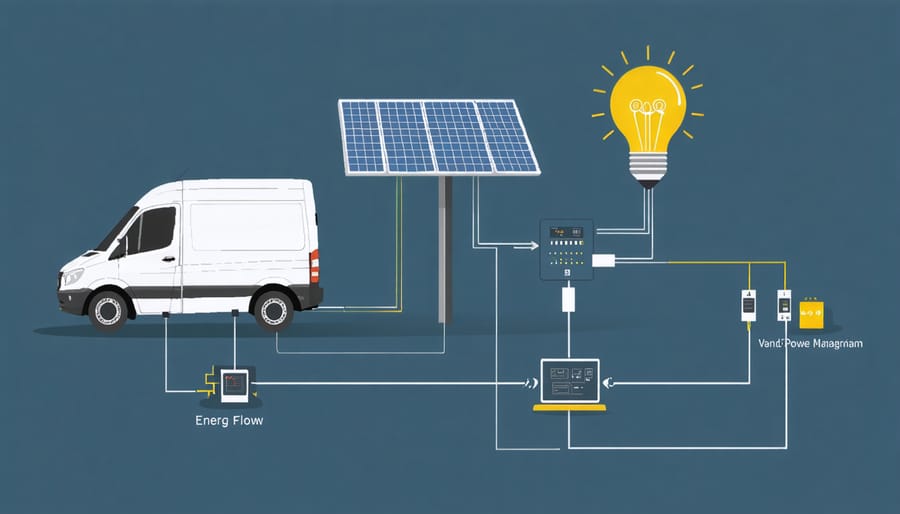
The integration of solar power systems with a van’s electrical infrastructure requires sophisticated power management solutions to ensure optimal performance and reliability. Modern smart solar power systems incorporate advanced charge controllers, inverters, and battery management systems to regulate power flow between solar panels, storage batteries, and vehicle systems.
Central to this integration is the power distribution unit (PDU), which manages the allocation of solar-generated electricity to various vehicle components while maintaining proper voltage levels. The system typically includes Maximum Power Point Tracking (MPPT) technology to optimize solar panel output under varying conditions and sophisticated monitoring capabilities that provide real-time performance data.
Battery management systems (BMS) play a crucial role in protecting the storage system from overcharging, deep discharge, and thermal issues. These systems often feature programmable parameters to accommodate different battery chemistries and charging profiles, ensuring maximum battery life and performance.
Modern power management systems also incorporate intelligent load prioritization, automatically directing power to essential systems during periods of limited solar generation. This might include maintaining climate control systems, refrigeration units, or critical electronics while temporarily reducing power to non-essential loads.
The integration also includes safety features such as ground fault protection, surge suppression, and emergency disconnects, ensuring reliable operation while protecting both the vehicle’s electrical system and its occupants.
Performance and Efficiency Metrics
Energy Generation Capacity
The energy generation capacity of solar-powered vans varies significantly based on several key factors, including panel type, installation configuration, and environmental conditions. Standard installations typically feature high-efficiency monocrystalline panels delivering 200-400 watts per square meter under optimal conditions. A typical van roof installation, measuring approximately 6-8 square meters, can generate between 1.2-3.2 kWh daily, depending on solar power integration methods and geographical location.
Real-world efficiency rates demonstrate consistent performance patterns: direct sunlight yields 85-95% of rated capacity, while overcast conditions maintain 25-35% generation capability. Temperature significantly impacts output, with panel efficiency decreasing approximately 0.4% for every degree Celsius above standard testing conditions (25°C). Modern solar-powered vans incorporate maximum power point tracking (MPPT) controllers, achieving conversion efficiencies of 94-98%.
Performance metrics indicate that southern-facing panels at a 30-40 degree tilt angle optimize energy capture in most locations. Seasonal variations affect daily generation: summer months typically produce 20-30% more power than winter months at middle latitudes. Urban environments present unique challenges, with partial shading reducing efficiency by 10-40% depending on obstruction patterns.
Advanced systems often include dual-axis tracking mechanisms, increasing energy yield by 25-35% compared to fixed installations. This technology, combined with high-efficiency panels, can achieve peak performance of 1,000 watts per hour during optimal conditions, providing sufficient power for essential vehicle systems and auxiliary equipment.
Range and Operating Parameters
Solar-powered vans typically achieve operational ranges between 100-250 miles per charge, depending on various factors including solar panel configuration, battery capacity, and driving conditions. The vehicle’s solar energy efficiency is optimized through strategic placement of photovoltaic panels, usually covering 60-80% of the roof surface area.
Operating parameters are significantly influenced by environmental conditions, with peak performance achieved during daylight hours in clear weather. Most systems generate 2-4 kWh daily through solar charging, supplementing the main battery pack which commonly ranges from 40-100 kWh capacity. This combination enables sustainable operation while reducing grid-charging dependency.
Temperature management is crucial, with optimal performance maintained between 20-35°C (68-95°F). Advanced thermal management systems protect battery longevity and maintain consistent power output. The regenerative braking system typically recovers 10-15% of expended energy during normal operation.
Load capacity affects range and performance, with most solar-powered vans maintaining optimal efficiency when carrying 60-80% of their maximum payload. Speed considerations are essential, with most vehicles achieving maximum efficiency at 45-60 mph. Higher speeds significantly impact range due to increased aerodynamic resistance.
Charging times vary based on available sunlight and charging method. While solar charging alone provides 15-25 miles of range per day under ideal conditions, DC fast-charging capabilities can replenish 80% of battery capacity in 30-45 minutes when needed. This hybrid charging approach ensures operational flexibility while maximizing renewable energy utilization.
Commercial Applications and Benefits
Delivery and Logistics Solutions
Several leading logistics companies have successfully integrated solar-powered vans into their delivery fleets, demonstrating the practical viability of this sustainable transportation solution. DHL’s pilot program in Germany showcases a notable implementation, where a fleet of 10 solar-augmented electric delivery vans achieved a 15% increase in range during summer months, resulting in significant operational cost savings.
In the Netherlands, PostNL deployed 20 solar-powered vans for urban deliveries in Amsterdam, reporting a 25% reduction in grid charging requirements. The vehicles’ roof-mounted photovoltaic panels generate an average of 3.5 kWh of electricity daily, extending the operational range by up to 40 kilometers under optimal conditions. This implementation has prevented approximately 5.5 metric tons of CO2 emissions annually per vehicle.
Australian courier service Sendle partnered with several universities to conduct a comprehensive study of solar-powered delivery vehicles in varying climate conditions. Their findings revealed that solar augmentation increased vehicle efficiency by 18-22% in sunny conditions and 8-12% in cloudy weather, demonstrating the technology’s adaptability across different environments.
A particularly innovative case study comes from FedEx’s Solar Solutions Initiative in California, where a fleet of 35 solar-powered vans operates in conjunction with smart routing algorithms. This integration has optimized delivery schedules around peak solar generation periods, maximizing the benefits of solar power while maintaining delivery efficiency. The program achieved a 30% reduction in conventional charging needs and decreased operational costs by 22%.
These implementations highlight the practical benefits of solar-powered delivery vehicles, particularly in regions with high solar irradiance. Success factors include strategic route planning, proper solar panel maintenance protocols, and integration with existing fleet management systems. The case studies demonstrate that solar-powered vans can effectively reduce operational costs while contributing to sustainability goals in the logistics sector.

Cost-Benefit Analysis
The implementation of solar power systems in commercial vans presents a compelling economic case for businesses seeking long-term cost efficiency. Initial investment costs typically range from $8,000 to $15,000, depending on system capacity and vehicle specifications. However, the solar power cost savings can offset this investment within 3-5 years through reduced fuel consumption and maintenance expenses.
Companies operating solar-powered vans report average annual fuel savings of $2,500-$3,500 per vehicle, with additional maintenance cost reductions of approximately $800-$1,200. The elimination of traditional generator systems results in decreased service requirements and extended vehicle lifespan. Furthermore, businesses can benefit from various government incentives, including tax credits and grants, which can reduce initial installation costs by 20-30%.
Return on Investment (ROI) calculations demonstrate that solar-powered vans typically achieve break-even points faster than conventional alternatives. A standard commercial van covering 30,000 miles annually can realize net positive returns within 36-48 months of solar system installation. This calculation factors in reduced operational costs, tax benefits, and increased vehicle resale value.
The economic advantages extend beyond direct cost savings. Companies utilizing solar-powered vans often report enhanced brand value and customer preference, particularly among environmentally conscious consumers. This competitive advantage frequently translates into increased contract opportunities and premium pricing potential, especially in sectors prioritizing sustainable transportation solutions.
For fleet operators, the scalability of solar van technology offers additional economic benefits through bulk purchasing power and standardized maintenance protocols. Organizations implementing solar-powered vans across their fleets report system-wide cost reductions of 15-20% compared to individual vehicle conversions, further improving the overall financial proposition of this sustainable transportation solution.
The emergence of solar-powered vans represents a significant milestone in the evolution of sustainable commercial transportation. As demonstrated throughout this analysis, these innovative vehicles offer compelling advantages in terms of operational costs, environmental impact, and energy independence. The integration of photovoltaic technology with commercial vehicles has proven particularly effective for last-mile delivery services, mobile businesses, and fleet operations.
Current market trends indicate a growing adoption rate among forward-thinking businesses, with early adopters reporting substantial reductions in fuel costs and carbon emissions. The technology has matured significantly, with modern solar panels achieving higher efficiency rates and improved durability, making them increasingly viable for commercial applications. This progress has been accompanied by advances in energy storage systems and power management technologies, addressing previous limitations in range and reliability.
Looking ahead, the future of solar-powered vans appears promising. Ongoing research and development efforts continue to enhance solar cell efficiency, while manufacturing innovations are gradually reducing production costs. The integration of smart grid technologies and vehicle-to-grid capabilities presents additional opportunities for fleet operators to optimize their energy usage and potentially generate additional revenue streams.
However, widespread adoption still faces certain challenges, including initial investment costs and the need for supporting infrastructure. These obstacles are expected to diminish as technology costs continue to decrease and government incentives for sustainable transportation solutions expand. Industry experts project that by 2030, solar-powered vans could represent a significant portion of commercial fleet vehicles in regions with favorable solar conditions.
The transition to solar-powered commercial vehicles aligns with global sustainability goals and corporate environmental initiatives. As businesses increasingly prioritize environmental responsibility and seek cost-effective alternatives to traditional fossil fuel-dependent vehicles, solar-powered vans are positioned to play a crucial role in shaping the future of sustainable logistics and mobile commerce. Their continued development and adoption will contribute significantly to reducing transportation-related emissions while offering businesses tangible economic benefits.