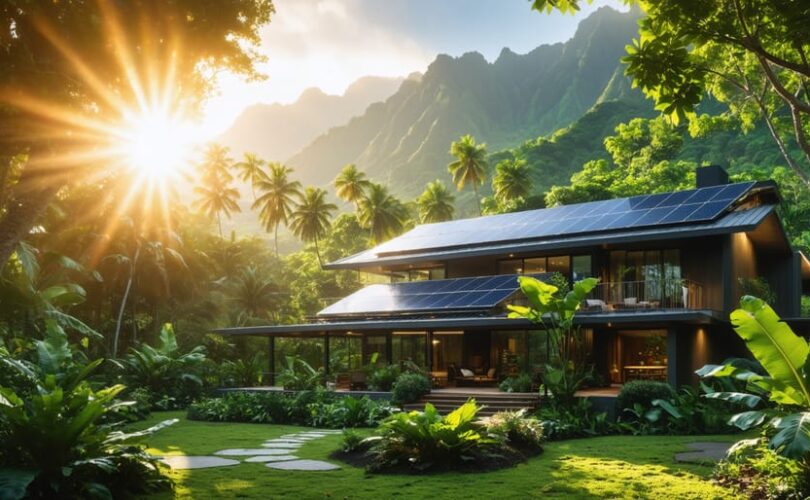
Transform Hawaii’s abundant solar resources into a complete off-grid power solution by implementing a strategically designed 6-12kW photovoltaic system, paired with lithium battery storage sized at 2-3x daily usage. Calculate year-round energy requirements accounting for Hawaii’s unique seasonal variations, incorporating minimum 20% capacity buffer for extended cloudy periods common in tropical microclimates. Engineer system redundancy through hybrid inverter configurations and automatic transfer switches, ensuring uninterrupted power during maintenance or equipment failures – a critical consideration for sustainable off-grid living in remote Hawaiian locations.
Navigate Hawaii’s stringent permitting requirements by working with NABCEP-certified installers who understand county-specific regulations, particularly regarding hurricane wind ratings and salt-air corrosion protection. Select marine-grade components rated for coastal environments, utilizing stainless steel racking systems and enclosures designed to withstand sustained exposure to salt spray and high humidity levels characteristic of Hawaii’s diverse microclimates.
Why Hawaii is Perfect for Off-Grid Solar
Solar Resource Assessment
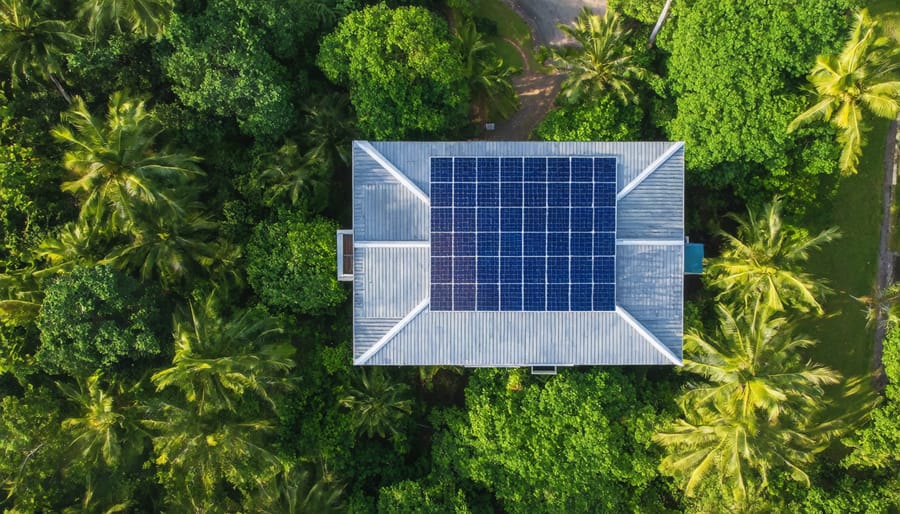
Hawaii’s exceptional solar potential stems from its unique geographical position and climate characteristics. The state receives an average of 6-7 kWh/m² of solar radiation per day, with annual variations typically ranging between 5.5-7.5 kWh/m² depending on location and seasonal factors. The Big Island’s western coast particularly excels, recording some of the highest insolation levels in the United States.
Key factors contributing to Hawaii’s optimal solar conditions include its proximity to the equator, minimal atmospheric interference, and consistently clear skies throughout much of the year. The state experiences approximately 271 sunny days annually, with peak solar hours occurring between 9 AM and 3 PM. Even during the winter months, Hawaii maintains relatively stable solar exposure compared to mainland locations.
Local microclimate variations significantly impact solar resource availability. Coastal areas generally receive more direct sunlight, while mountainous regions may experience intermittent cloud cover. The trade winds pattern creates distinct microclimates, with leeward sides typically offering more consistent solar exposure than windward areas.
Professional solar assessments utilize sophisticated monitoring equipment and historical meteorological data to determine site-specific solar potential. These assessments consider factors such as shading analysis, seasonal variations, and local weather patterns to optimize system design and predict energy yield accurately. Understanding these parameters is crucial for developing efficient off-grid solar installations that maximize Hawaii’s abundant solar resources.
Grid Independence Benefits
Hawaii residents face some of the highest electricity rates in the United States, with costs often exceeding $0.30 per kilowatt-hour – nearly triple the national average. This financial burden, coupled with the islands’ vulnerability to natural disasters and grid disruptions, makes achieving complete energy independence particularly attractive.
The state’s isolated location and reliance on imported fossil fuels contribute significantly to these elevated costs. Grid reliability challenges are further compounded by severe weather events, including hurricanes and tropical storms, which can lead to extended power outages affecting thousands of households.
Off-grid solar systems offer a compelling solution to these challenges. By generating and storing their own power, homeowners can shield themselves from unpredictable utility rate increases and ensure continuous power supply during grid outages. This independence is particularly valuable in remote areas of the islands where grid connection may be unreliable or cost-prohibitive.
Recent data shows that Hawaii households with off-grid solar systems typically recover their initial investment within 5-7 years through eliminated utility bills and reduced maintenance costs. Additionally, these systems contribute to Hawaii’s renewable energy goals while providing homeowners with stable, predictable energy costs for decades to come.
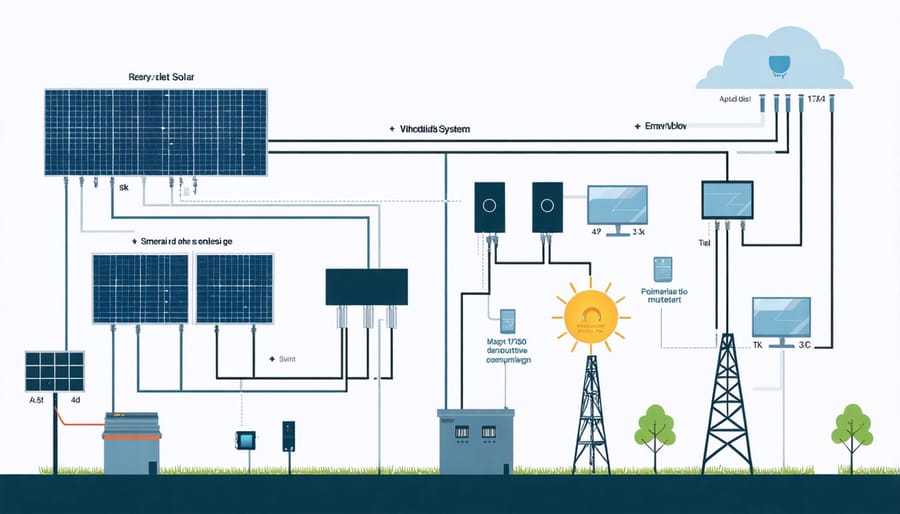
Essential Components for Hawaiian Off-Grid Systems
Solar PV Module Selection
In Hawaii’s tropical climate, selecting the right solar PV modules is crucial for optimal off-grid system design and long-term performance. High-efficiency monocrystalline panels, particularly those with PERC (Passivated Emitter and Rear Cell) technology, demonstrate superior performance in elevated temperatures and high humidity conditions. These panels typically maintain efficiency rates above 20% even during intense mid-day heat.
For coastal installations, modules with enhanced salt-mist resistance certification (IEC 61701) are essential to prevent corrosion and ensure longevity. Double-glass panels offer excellent protection against moisture ingress and UV degradation, making them particularly suitable for Hawaii’s environment. Additionally, panels with low temperature coefficients (-0.35%/°C or better) help maintain consistent power output despite temperature fluctuations.
Leading manufacturers now offer bifacial modules that capture reflected light from both sides, increasing energy yield by 5-30% depending on ground conditions. These panels are especially effective in areas with high albedo surfaces or when mounted on elevated structures. When selecting modules, prioritize those with comprehensive warranties covering both product defects (minimum 12 years) and performance guarantees (25 years with at least 80% output retention), ensuring long-term reliability in Hawaii’s demanding climate conditions.
Energy Storage Solutions
Energy storage solutions play a critical role in off-grid solar systems in Hawaii, particularly given the islands’ unique climate conditions and power requirements. Lithium iron phosphate (LiFePO4) batteries have emerged as the preferred choice for Hawaiian installations due to their superior heat tolerance, longer cycle life, and enhanced safety features compared to traditional lead-acid batteries.
For typical residential off-grid systems in Hawaii, a minimum storage capacity of 20-30 kWh is recommended to ensure reliable power through extended periods of cloud cover and nighttime usage. The high humidity and salt air exposure in coastal areas necessitate specialized battery enclosures with robust environmental controls and corrosion-resistant materials.
Temperature management is particularly crucial for battery longevity in Hawaii’s tropical climate. Advanced battery management systems (BMS) monitor and regulate cell temperatures, while ventilated enclosures help maintain optimal operating conditions. Many installations incorporate redundant battery banks to ensure uninterrupted power supply and facilitate maintenance without system downtime.
Modern storage solutions also feature smart monitoring capabilities that enable remote system diagnostics and performance optimization. These systems can automatically adjust charging parameters based on weather forecasts and usage patterns, maximizing battery life and system efficiency. When selecting battery systems for Hawaiian installations, factors such as warranty coverage, manufacturer support, and local maintenance availability should be carefully considered to ensure long-term reliability and performance.
Inverter and Control Systems
Modern off-grid solar installations in Hawaii demand sophisticated inverter systems and advanced control technologies to optimize performance and reliability. The integration of high-efficiency inverters, particularly those designed for tropical environments, ensures seamless power conversion while maintaining system stability. These systems typically incorporate both string and micro-inverters, depending on the specific installation requirements and environmental conditions.
Advanced smart energy management systems play a crucial role in monitoring and controlling power flow, battery charging cycles, and load distribution. These systems utilize artificial intelligence and machine learning algorithms to predict energy consumption patterns, optimize storage utilization, and maintain system efficiency even during extended periods of cloudy weather.
Control systems in Hawaiian off-grid installations must account for unique environmental factors, including high humidity, salt exposure, and variable tropical weather patterns. Modern monitoring platforms provide real-time data analytics, remote system access, and predictive maintenance alerts, ensuring optimal system performance while minimizing downtime.
The integration of backup generators through sophisticated automatic transfer switches and hybrid controllers enables seamless power transition during extended low-solar periods. This redundancy, combined with intelligent load management and priority-based consumption algorithms, ensures consistent power delivery while maximizing battery life and system efficiency.
Design Considerations for Island Environments
Weather Resistance
Hawaii’s tropical climate presents unique challenges for off-grid solar installations, requiring specific measures to ensure system longevity and reliability. The combination of salt air, high humidity, and potential tropical storms necessitates careful consideration of weather-resistant components and protective measures.
Marine-grade materials are essential for all external components, particularly mounting hardware and electrical enclosures. Type 316 stainless steel fasteners and brackets offer superior corrosion resistance compared to standard materials, while NEMA 4X-rated enclosures provide robust protection against salt spray and moisture intrusion.
Solar panels must feature enhanced EVA (ethylene vinyl acetate) encapsulation and specialized edge sealing to prevent delamination in high-humidity conditions. Double-glass module construction offers additional protection against moisture infiltration and salt corrosion, extending panel lifespan in coastal environments.
Inverters and charge controllers require installation within well-ventilated, weather-resistant enclosures, preferably with additional moisture barriers and corrosion-resistant coatings. Strategic placement of these components in protected areas, such as covered spaces or purpose-built shelters, further enhances their durability.
For protection against tropical storms and high winds, solar array mounting systems should be engineered to withstand wind speeds of at least 150 mph. This typically involves reinforced racking systems, additional mounting points, and wind deflectors where appropriate. Regular inspections of mounting hardware and structural components help identify potential weaknesses before severe weather events.
Implementing a comprehensive maintenance schedule, including quarterly cleaning to remove salt deposits and inspection of weather seals, ensures long-term system reliability. Professional coating applications and sacrificial anodes can provide additional protection for metal components exposed to harsh coastal conditions.
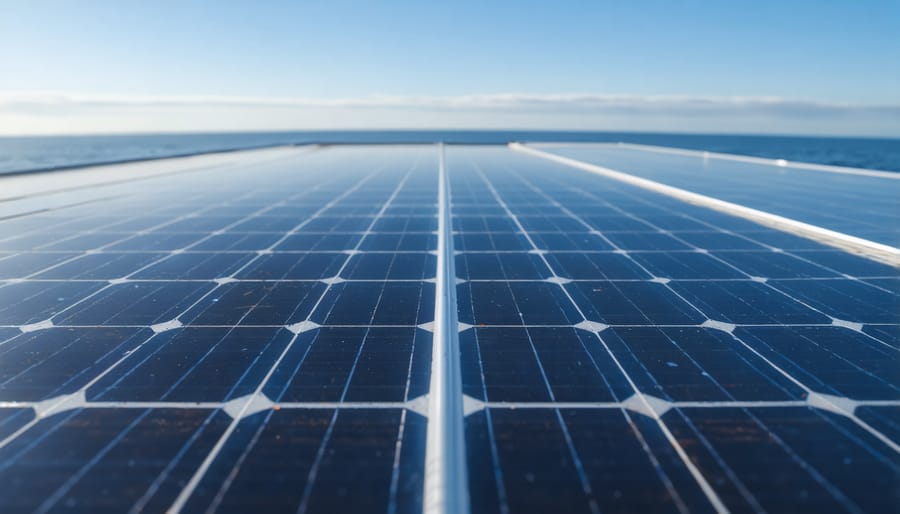
Space Optimization
In Hawaii’s limited land environment, optimizing space for solar installations becomes crucial for achieving maximum energy independence. The archipelago’s unique topography and high property values necessitate innovative approaches to solar array placement and configuration.
Vertical mounting solutions offer significant advantages for space-constrained properties. By utilizing wall spaces and implementing bifacial panels, these installations can capture both direct sunlight and reflected radiation, maximizing energy generation per square foot. Strategic panel positioning on south-facing walls can achieve up to 80% of the output of traditional roof installations while preserving valuable ground space.
Dual-purpose installations represent another effective space-optimization strategy. Integration of solar panels into existing structures such as carports, lanais, and pergolas serves multiple functions while generating clean energy. These solutions not only provide shade and weather protection but also contribute to the overall energy production capacity without requiring additional land area.
For properties with limited roof space, high-efficiency panels become essential. Modern monocrystalline panels with efficiency ratings exceeding 22% can generate more power from smaller areas compared to standard panels. When combined with microinverter technology, these high-performance systems can optimize production even in partially shaded conditions.
Ground-mounted systems, while space-intensive, can be integrated with agricultural activities through agrivoltaic approaches. This dual-land-use strategy allows for crop cultivation or grazing beneath elevated panel arrays, maximizing land utility while maintaining agricultural productivity.
Careful consideration of system sizing and future expansion needs during the initial design phase ensures optimal space utilization while maintaining scalability for growing energy demands.
Regulatory Framework and Incentives
State-Specific Requirements
Installing off-grid solar systems in Hawaii requires careful attention to off-grid solar regulations and compliance with state-specific requirements. Property owners must obtain electrical permits from their respective county building departments before installation begins. On Oahu, the Department of Planning and Permitting (DPP) mandates detailed system drawings, equipment specifications, and structural calculations for mounting systems.
Hawaii’s building code requires all solar installations to meet wind resistance standards of up to 105 mph in most areas, with higher requirements for certain coastal zones. Systems must also incorporate corrosion-resistant components due to the salt-air environment. The State Energy Office stipulates that off-grid systems must include adequate battery storage capacity to maintain power during extended periods of limited sunlight.
Licensed electrical contractors must perform all installations, and systems require inspection by county officials before activation. Additionally, homeowners associations may have specific requirements regarding system placement and visibility. The Hawaii State Energy Office provides resources for understanding these requirements and maintaining compliance throughout the installation process.
For remote properties, environmental impact assessments may be necessary, particularly in protected areas or locations with endangered species. Consultation with local authorities and qualified solar professionals is essential to ensure all requirements are met while maximizing system efficiency within Hawaii’s unique tropical environment.
Financial Incentives
Hawaii offers some of the most generous financial incentives for off-grid solar installations in the United States. The Hawaii Renewable Energy Technologies Income Tax Credit (RETITC) provides residents with a 35% tax credit for solar energy systems, with a maximum of $5,000 for single-family residences. This substantial incentive significantly reduces the initial investment required for off-grid solar installations.
Additionally, the Hawaii Green Infrastructure Authority (HGIA) offers the Green Energy Money $aver (GEM$) On-Bill Program, which helps homeowners finance renewable energy improvements with no upfront costs. The program allows participants to pay for their solar installations through their utility bills, making the transition to off-grid solar more accessible.
Federal incentives further enhance the financial benefits. The Federal Solar Investment Tax Credit (ITC) provides a 30% tax credit for solar installations through 2032. When combined with state incentives, these programs can reduce total system costs by up to 65%.
Several Hawaiian banks and credit unions offer specialized loan programs for renewable energy projects, featuring competitive interest rates and flexible terms. The Hawaii State Energy Office maintains partnerships with these financial institutions to facilitate accessible financing options for residents pursuing off-grid solar solutions.
For commercial installations, additional programs such as the Modified Accelerated Cost Recovery System (MACRS) allow businesses to depreciate solar equipment over five years, providing significant tax advantages.
Maintenance Best Practices
Maintaining an off-grid solar system in Hawaii’s tropical climate requires specific attention to ensure optimal performance and longevity. Regular inspection of solar panels for salt spray accumulation and volcanic residue is essential, with quarterly cleaning recommended using deionized water and appropriate cleaning solutions. Avoid cleaning during peak sun hours to prevent thermal shock to the panels.
Battery maintenance is particularly critical in Hawaii’s warm climate. Monitor battery temperature regularly and ensure proper ventilation in battery enclosures. For lithium-ion systems, maintain charge levels between 20% and 80% to maximize battery life. Lead-acid batteries require monthly electrolyte level checks and terminal cleaning to prevent corrosion from humid conditions.
Inspect mounting hardware quarterly for signs of corrosion, particularly in coastal areas where salt exposure is high. Apply appropriate marine-grade protective coatings annually to metal components. Check and tighten all electrical connections bi-annually, as thermal cycling can cause connections to loosen over time.
Monitor system performance through charge controllers and inverters monthly. Document power production patterns and battery performance to identify potential issues early. During hurricane season, ensure all mounting systems are secure and have redundant attachment points. Consider installing additional surge protection devices to guard against lightning strikes, which are more common in tropical environments.
Establish a maintenance schedule aligned with local weather patterns, scheduling major maintenance tasks during Hawaii’s drier months for optimal access and safety.
The future of off-grid solar in Hawaii presents unprecedented opportunities for energy independence and sustainability. As the state continues its journey toward 100% renewable energy, off-grid solar systems have emerged as a vital solution for both remote locations and grid-connected properties seeking energy autonomy. The combination of Hawaii’s abundant solar resources, decreasing equipment costs, and advancing battery technology makes off-grid systems increasingly viable and cost-effective.
Key considerations for successful implementation include proper system sizing, high-quality components selection, and regular maintenance protocols. The integration of smart monitoring systems and efficient energy management practices has proven essential for optimal performance in Hawaii’s unique climate conditions. Professional installation and compliance with local regulations remain crucial factors for long-term success.
Looking ahead, emerging technologies such as advanced lithium battery storage, improved solar panel efficiency, and sophisticated energy management systems will further enhance off-grid capabilities. As Hawaii continues to lead in renewable energy adoption, off-grid solar solutions will play an increasingly important role in achieving the state’s sustainability goals while providing reliable power solutions for residents and businesses across the islands.