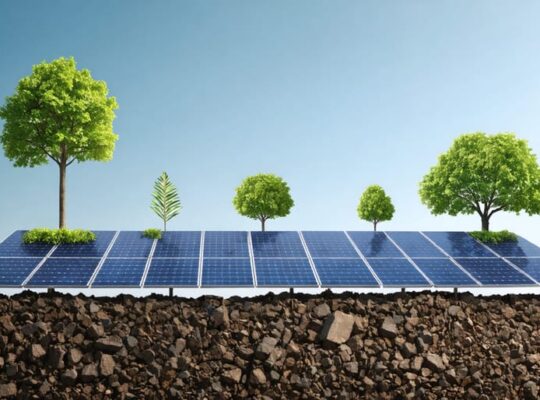
Land use sustainability stands at the intersection of environmental stewardship and renewable energy development, demanding a strategic approach that balances ecological preservation with clean energy deployment. As solar installations continue to expand globally, implementing sustainable solar energy practices becomes increasingly critical for maintaining biodiversity, protecting soil health, and ensuring long-term ecosystem viability.
The integration of solar infrastructure with existing agricultural operations, known as agrivoltaics, demonstrates how thoughtful land use planning can maximize both energy generation and food production capabilities. This dual-use approach represents a paradigm shift in renewable energy development, offering solutions to land scarcity while preserving valuable agricultural resources.
Recent advances in site assessment technologies and environmental impact modeling have revolutionized our ability to identify optimal locations for solar installations that minimize ecological disruption. These scientific approaches, combined with robust environmental management systems, enable developers to create solar projects that not only generate clean energy but also contribute to habitat conservation and soil regeneration.
Dual-Use Solar: Maximizing Land Value
Agrivoltaic Integration
Agrivoltaic systems represent a groundbreaking approach to land use optimization, combining solar energy generation with agricultural production on the same plot of land. These integrated systems enable farmers to maintain crop cultivation while generating clean energy, effectively doubling land productivity. Research demonstrates that certain crops, particularly shade-tolerant varieties, can thrive under solar panels, with some species showing improved water efficiency due to reduced evaporation.
Successful implementations include elevated solar panel installations that allow for machinery access and crop growth underneath. Studies from leading agricultural research institutions have shown yield improvements in specific crops, such as leafy greens and root vegetables, when grown in the partial shade of solar arrays. The modified microclimate created by the panels can also protect crops from extreme weather events and reduce water consumption by 20-30%.
Livestock integration has proven particularly successful, with sheep grazing serving as a cost-effective vegetation management solution while providing additional farm income. Poultry operations have also demonstrated compatibility with solar installations, offering birds protection from predators and harsh weather while maintaining energy production.
Economic analyses indicate that agrivoltaic systems can increase land-use efficiency by 60-70%, providing farmers with dual revenue streams from energy and agricultural production. This innovative approach not only addresses land use concerns but also contributes to food security and renewable energy goals simultaneously.

Biodiversity Enhancement
Solar installations present unique opportunities to enhance local biodiversity through thoughtful planning and implementation of ecosystem-friendly measures. Strategic vegetation management can create valuable habitats for native species while maintaining optimal solar panel performance. Native plant species selected for ground cover provide essential resources for pollinators and support local wildlife populations.
Effective biodiversity enhancement strategies include establishing wildlife corridors between solar arrays, creating buffer zones with indigenous vegetation, and installing artificial habitats such as bird boxes and bee hotels. These features enable wildlife movement and create sanctuaries for various species within the solar installation.
Water management systems, such as rain gardens and bioswales, can be integrated to support both local flora and fauna while managing stormwater runoff. These features create microhabitats that attract diverse species and contribute to ecosystem resilience.
Regular monitoring and assessment of biodiversity indicators help track the effectiveness of enhancement measures. Collaboration with local environmental experts and conservation organizations ensures that biodiversity initiatives align with regional conservation goals and ecological needs.
Successful biodiversity enhancement requires careful consideration of site-specific factors, including local climate conditions, existing ecosystems, and seasonal variations. By implementing these strategies, solar installations can contribute positively to local ecosystem health while generating clean energy, demonstrating that renewable energy development and biodiversity conservation can work in harmony.
Site Selection and Assessment
Land Quality Analysis
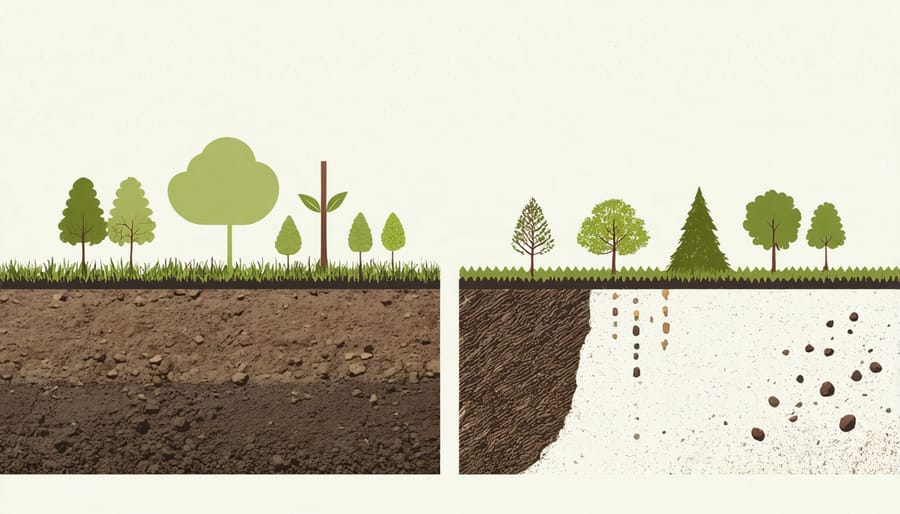
Land quality analysis involves systematic evaluation of soil properties and environmental conditions to determine site suitability for solar installations. This assessment encompasses multiple parameters including soil composition, drainage characteristics, topography, and existing vegetation patterns. Professional soil scientists employ various testing methods, from physical soil sampling to advanced geotechnical surveys, ensuring comprehensive site characterization.
Key evaluation metrics include soil pH levels, organic matter content, compaction potential, and erosion susceptibility. These factors directly influence the stability of solar mounting systems and the site’s long-term sustainability. Modern analysis techniques incorporate Geographic Information Systems (GIS) mapping and remote sensing data to create detailed land suitability maps, enabling developers to identify optimal locations for innovative solar installation solutions.
Environmental impact assessments complement these technical analyses by evaluating potential effects on local ecosystems and biodiversity. Soil scientists work alongside environmental specialists to develop mitigation strategies that preserve soil health while maximizing solar energy generation potential. This integrated approach ensures that land development for solar installations maintains ecological balance while meeting energy production goals.
The analysis results inform site-specific recommendations for soil management, erosion control measures, and vegetation management strategies. These recommendations form the foundation for sustainable site development plans that optimize both environmental protection and solar energy production efficiency.
Environmental Impact Studies
Environmental Impact Studies (EIS) serve as crucial tools for evaluating and mitigating the potential effects of land development projects on local ecosystems. These comprehensive assessments examine multiple environmental factors, including wildlife habitats, soil composition, water resources, and air quality. The process typically involves collecting baseline environmental data, analyzing potential impacts, and developing mitigation strategies to minimize ecological disruption.
Professional environmental scientists conduct these studies using standardized methodologies that include Geographic Information Systems (GIS) mapping, biodiversity surveys, and soil analysis. The assessment process generally spans multiple seasons to account for seasonal variations in wildlife patterns and environmental conditions. This thorough approach ensures that development projects consider both short-term and long-term ecological implications.
Key components of an EIS include habitat assessment, species inventory, watershed analysis, and cultural resource evaluation. These studies also incorporate stakeholder consultation and public feedback to address community concerns. The findings inform the development of specific mitigation measures, such as wildlife corridors, buffer zones, and habitat restoration plans.
Modern EIS procedures increasingly utilize advanced monitoring technologies and data analytics to improve accuracy and effectiveness. This integration of technology allows for more precise tracking of environmental changes and better-informed decision-making throughout the project lifecycle. The results of these studies directly influence project design modifications and implementation strategies to achieve optimal balance between development needs and environmental preservation.
Sustainable Installation Practices
Low-Impact Mounting Systems
Low-impact mounting systems represent a crucial advancement in sustainable solar installations, prioritizing soil conservation while maintaining optimal solar system design. These innovative mounting solutions minimize ground disturbance through various engineering approaches, including ballasted foundations, helical piles, and elevated support structures.
Ballasted systems utilize weight distribution rather than deep ground penetration, effectively reducing soil disruption while ensuring structural stability. These systems are particularly valuable in areas with sensitive soil conditions or where traditional foundation methods might compromise local ecosystems.
Helical pile foundations offer another environmentally conscious alternative, requiring minimal excavation while providing robust structural support. Their installation process creates significantly less soil disturbance compared to conventional concrete foundations, and they can be completely removed at the end of the project’s lifecycle, allowing for full site restoration.
Elevated support structures, designed with wider spacing between mounting points, reduce the overall ground contact area while maintaining system integrity. This approach preserves more natural vegetation underneath the arrays and facilitates better water infiltration, supporting local biodiversity and natural soil processes.
These mounting solutions also incorporate features that facilitate future site restoration, such as removable components and minimal concrete usage, ensuring long-term land use sustainability while meeting structural requirements for solar installations.
Soil Conservation Techniques
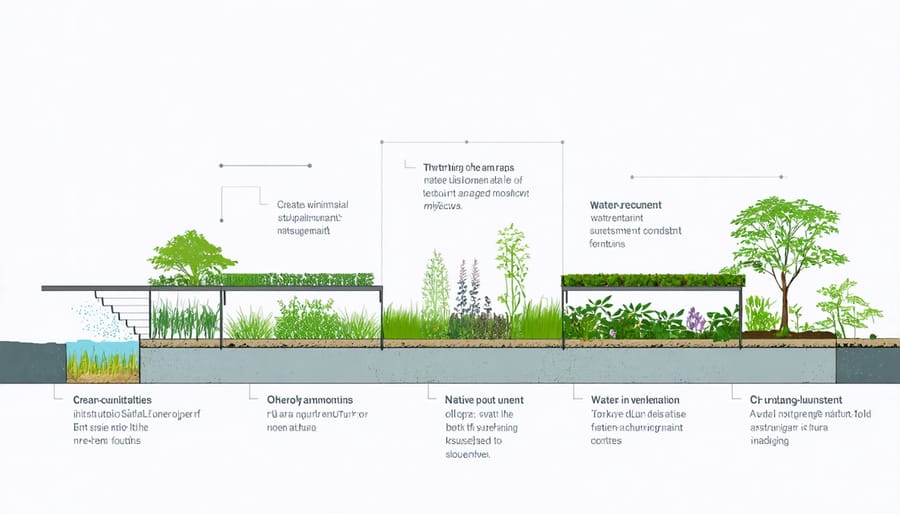
Soil conservation techniques play a vital role in maintaining land productivity and environmental sustainability in solar installations. Strategic vegetation management forms the foundation of effective soil conservation, utilizing native plant species to stabilize soil structure and prevent erosion. The implementation of cover crops during construction phases and between solar arrays helps maintain soil integrity while supporting beneficial microorganisms.
Contour planting and terracing techniques are particularly effective on sloped terrain, reducing water runoff velocity and promoting natural infiltration. These methods work in conjunction with properly designed drainage systems that direct water flow while minimizing soil displacement. Installation of erosion control barriers, such as fiber rolls and silt fences, provides additional protection during construction and early operational phases.
Regular soil testing and monitoring enable data-driven decisions about soil amendment needs and conservation strategies. The application of organic matter and proper pH management support long-term soil health while enhancing its water retention capabilities. Implementing no-till or minimal-till practices where possible helps preserve soil structure and organic content.
Wind barriers and strategic placement of vegetation serve dual purposes: protecting soil from wind erosion while providing natural screening for solar installations. These conservation methods not only preserve soil quality but also contribute to the overall sustainability of solar energy projects, ensuring their long-term environmental compatibility.
Water Management Strategies
Effective water management is crucial for sustainable land use practices, incorporating both conservation strategies and innovative drainage solutions. Modern water management systems employ integrated approaches that combine rainwater harvesting, efficient irrigation techniques, and sustainable urban drainage systems (SUDS).
Smart irrigation technologies utilize soil moisture sensors and weather data to optimize water usage, reducing consumption by up to 30% compared to traditional methods. These systems can be programmed to deliver precise amounts of water based on specific plant needs and environmental conditions, preventing both under and over-watering scenarios.
Permeable surfaces and bioswales play vital roles in managing stormwater runoff, allowing natural groundwater recharge while filtering pollutants. Green infrastructure elements, such as rain gardens and constructed wetlands, provide additional benefits by supporting biodiversity and reducing the burden on municipal water systems.
Water recycling and greywater systems represent another crucial component of sustainable water management. These systems collect, treat, and repurpose water from sinks, showers, and other non-toilet sources for irrigation and non-potable applications, significantly reducing freshwater demand.
To maximize effectiveness, water management strategies should be integrated into early planning stages of land development projects. Regular monitoring and maintenance of these systems ensure optimal performance and longevity, while continuous assessment helps identify opportunities for improvement in water conservation efforts.
Land Restoration and Maintenance
Vegetation Management
Native plant selection plays a crucial role in sustainable land management for solar installations. When selecting vegetation, priority should be given to indigenous species that are well-adapted to local climate conditions and require minimal irrigation. These plants typically demonstrate greater resilience to environmental stresses and support local biodiversity.
Maintenance protocols should focus on establishing deep-rooted perennial species that prevent soil erosion and enhance soil stability. Regular monitoring of plant health and growth patterns helps ensure optimal ground coverage while minimizing maintenance requirements. Implementation of strategic mowing schedules, typically 2-3 times per year, helps maintain desired vegetation height without compromising plant health.
For effective vegetation management, consider the following guidelines:
– Select drought-resistant native species
– Implement seasonal maintenance schedules
– Monitor soil quality and moisture levels
– Control invasive species through early detection
– Maintain appropriate vegetation height for solar panel efficiency
Professional consultation with local botanists or agricultural extension services can provide valuable insights into region-specific plant selection and maintenance strategies. This approach ensures long-term sustainability while supporting local ecosystems and optimizing solar facility operations.
Site Monitoring
Effective site monitoring protocols are essential for maintaining sustainable land use practices in solar PV installations. Regular environmental assessments should be conducted quarterly, focusing on soil quality, vegetation growth, and wildlife activity. These assessments help operators reduce environmental impact while optimizing facility performance.
Key monitoring activities include soil sampling to track nutrient levels and erosion patterns, vegetation surveys to assess native plant species recovery, and wildlife observation protocols to document species presence and behavior. Data collection should follow standardized procedures, utilizing both automated monitoring systems and manual inspection methods.
Environmental monitoring teams should maintain detailed documentation of their findings, including photographic evidence and quantitative measurements. This data supports informed decision-making for site management and helps identify trends that may require intervention. Regular reporting to relevant stakeholders and environmental authorities ensures compliance with regulations while demonstrating commitment to sustainable land management practices.
Implementing adaptive management strategies based on monitoring results allows facilities to respond effectively to changing environmental conditions and maintain optimal site performance.
Sustainable land use practices form the cornerstone of responsible environmental stewardship and long-term ecological balance. By implementing strategic land management approaches such as integrated farming systems, protected area networks, and smart urban planning, communities can maximize resource efficiency while preserving biodiversity. These practices yield multiple benefits, including enhanced soil health, improved water conservation, and increased carbon sequestration potential. The adoption of precision agriculture technologies, coupled with conservation-minded development policies, ensures optimal land utilization while minimizing environmental impact. Looking ahead, the success of sustainable land use initiatives depends on continued collaboration between stakeholders, evidence-based policy making, and ongoing monitoring of environmental outcomes. Through these coordinated efforts, we can create resilient landscapes that serve both human needs and ecological preservation goals for future generations.