
Accelerating global adoption of sustainable waste management practices demands robust recycling policies that balance environmental protection with economic viability. The exponential growth of renewable energy technologies, particularly the solar panel recycling process, has thrust recycling regulations into the spotlight of international policy discussions. As governments worldwide grapple with mounting electronic waste challenges, implementing effective recycling frameworks has become crucial for environmental preservation and resource conservation.
Recent analysis indicates that well-structured recycling policies can reduce landfill waste by up to 40% while generating substantial economic opportunities in the circular economy. These policies, when properly implemented, create a triple benefit: environmental protection, resource recovery, and job creation. However, the success of such initiatives heavily depends on the careful balance between mandatory requirements and market-based incentives, supported by clear enforcement mechanisms and stakeholder engagement.
For the solar PV industry specifically, recycling policies play a pivotal role in ensuring sustainable growth and responsible end-of-life management of photovoltaic materials. Understanding and adapting to these evolving regulations is essential for industry professionals, policymakers, and researchers working to advance sustainable practices in renewable energy deployment.
Current Global Solar PV Recycling Regulations
European Union WEEE Directive
The European Union’s WEEE (Waste Electrical and Electronic Equipment) Directive represents one of the most comprehensive regulatory frameworks for solar panel recycling globally. Implemented in 2012 and revised in 2018, this legislation mandates that manufacturers and importers take responsibility for the collection and recycling of end-of-life photovoltaic panels.
Under the directive, solar panels are classified as large household appliances, requiring producers to finance the collection, treatment, and environmentally sound disposal of their products. The framework establishes minimum recovery targets of 85% by weight and recycling targets of 80% for photovoltaic modules, ensuring that valuable materials such as silicon, silver, and aluminum are recaptured and reintegrated into the supply chain.
The directive also introduces strict documentation requirements, including detailed reporting of collection rates, recovery percentages, and disposal methods. Member states must establish authorized collection points and treatment facilities, creating a standardized infrastructure for PV waste management across the EU.
This legislative framework has catalyzed innovation in recycling technologies and fostered the development of specialized treatment facilities. Notable examples include facilities in Germany and France that achieve recovery rates exceeding 95% for certain panel types. The directive’s success has influenced similar policies worldwide, serving as a model for other regions developing their own solar waste management strategies.

U.S. State-Level Initiatives
State-level U.S. recycling initiatives vary significantly across different regions, with some states implementing comprehensive mandatory recycling programs while others maintain voluntary approaches. California leads with its pioneering legislation that classifies end-of-life solar panels as universal waste, establishing specific handling and processing requirements. Washington state has enacted comprehensive solar panel recycling legislation, requiring manufacturers to finance and implement collection and recycling programs.
New York and Massachusetts have implemented extended producer responsibility (EPR) frameworks, placing the responsibility for end-of-life management on manufacturers. These programs include mandatory take-back systems and reporting requirements. Illinois and New Jersey have introduced bills focusing on sustainable disposal practices and recycling infrastructure development.
Several states offer tax incentives and grants to encourage private sector participation in recycling infrastructure development. Oregon’s Department of Environmental Quality provides technical assistance and funding for recycling facilities, while Arizona focuses on public-private partnerships to expand recycling capacity.
Notable variations exist in reporting requirements, disposal restrictions, and financial mechanisms across states. Some require detailed documentation of recycling processes and recovery rates, while others emphasize consumer education and accessibility. These diverse approaches create a complex regulatory landscape that industry stakeholders must navigate while working toward sustainable solar panel disposal solutions.
Economic Implications of Recycling Policies
Manufacturer Responsibilities
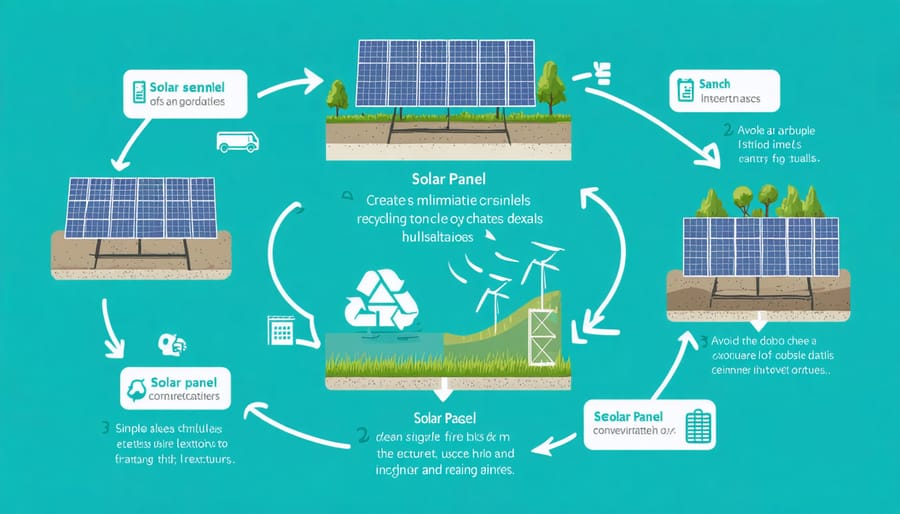
Extended producer responsibility (EPR) places the onus on manufacturers to manage their products’ entire lifecycle, including end-of-life disposal and recycling. This approach requires manufacturers to incorporate recycling costs into their product pricing and business planning, ensuring sustainable waste management practices.
Manufacturers must establish or participate in collection networks, recycling facilities, and take-back programs. These responsibilities often include funding recycling infrastructure, coordinating with certified recyclers, and maintaining documentation of proper disposal methods. Companies must also invest in product design that facilitates easier dismantling and material recovery.
Compliance costs vary significantly based on jurisdiction and regulatory requirements. Manufacturers typically face expenses related to recycling program administration, transportation logistics, processing fees, and reporting requirements. These costs can include establishing collection points, maintaining recycling facilities, and implementing tracking systems for materials.
To meet these obligations, manufacturers often collaborate with recycling partners and industry associations. Some companies opt to join collective compliance schemes, sharing infrastructure and administrative costs with other producers. This approach can help reduce individual burden while ensuring consistent recycling standards across the industry.
Many jurisdictions require manufacturers to achieve specific recycling targets and submit regular compliance reports. Failure to meet these obligations can result in substantial penalties, making it crucial for companies to maintain robust recycling programs and documentation systems.
Market Opportunities
The recycling industry continues to evolve rapidly, presenting numerous opportunities for innovation and economic growth. As governments worldwide implement stricter recycling policies, new markets are emerging for sustainable waste management solutions. Emerging recycling technologies are creating profitable ventures in materials recovery and processing, particularly in the solar PV sector.
Advanced sorting systems, utilizing artificial intelligence and machine learning, are revolutionizing material identification and separation processes. These technologies enable higher recovery rates and purer material streams, increasing the value of recycled materials. Additionally, chemical recycling processes are gaining traction, offering solutions for previously difficult-to-recycle materials.
The circular economy model is driving business opportunities in reverse logistics, refurbishment, and remanufacturing. Companies are developing innovative take-back programs and establishing regional recycling facilities to meet growing demand. The rise of extended producer responsibility policies is fostering partnerships between manufacturers and recycling operators.
Investment in recycling infrastructure is attracting significant capital, with venture firms and corporate investors recognizing the sector’s potential. Market analysts project substantial growth in the recycling equipment market, particularly in regions with ambitious waste reduction targets. These developments are creating opportunities for specialized consulting services, technology providers, and facility operators while supporting environmental sustainability goals.
Environmental Benefits and Challenges
Material Recovery Rates
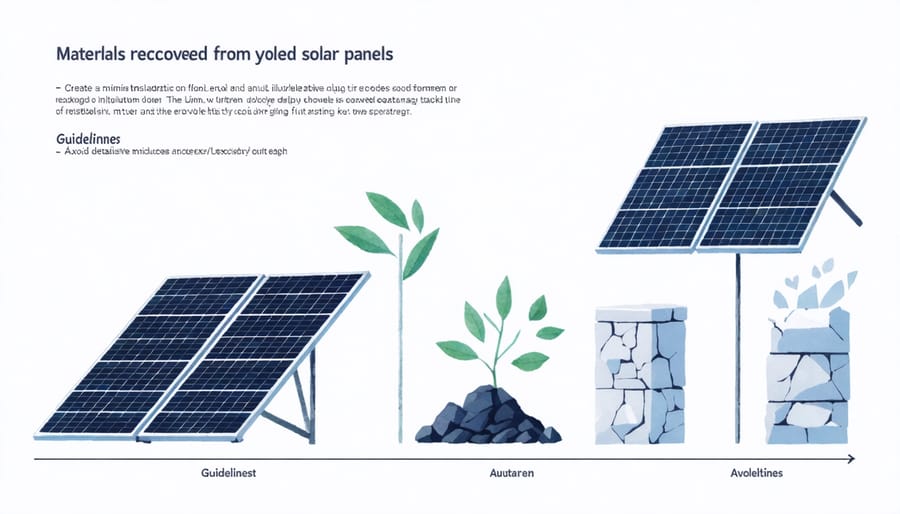
Material recovery rates in recycling programs vary significantly across different regions and materials, with efficiency ranging from 20% to 95% depending on the collection and processing methods employed. Advanced sorting technologies and improved collection systems have substantially increased recovery rates in recent years, particularly for high-value materials such as aluminum, copper, and glass.
For photovoltaic materials specifically, current recovery rates show promising results: up to 95% of semiconductor materials can be recovered from silicon-based panels, while glass and aluminum components consistently achieve recovery rates exceeding 85%. However, these figures represent optimal conditions in state-of-the-art facilities, with average recovery rates typically falling between 70-80% in standard recycling operations.
The efficiency of material recovery is heavily influenced by several factors, including the purity of collected materials, processing technology capabilities, and the initial design of products for recyclability. Contamination remains a significant challenge, potentially reducing recovery rates by 15-30% if materials are improperly sorted or prepared for processing.
Recent technological advances have led to improved recovery rates for previously challenging materials. For instance, new chemical separation processes have increased the recovery rate of silver and other precious metals from solar panels by up to 40% compared to traditional mechanical methods. These improvements demonstrate the potential for continued enhancement of material recovery efficiency through technological innovation and process optimization.
Carbon Footprint Reduction
Effective recycling policies have demonstrated significant potential in reducing the carbon footprint associated with solar PV manufacturing and disposal. Studies indicate that comprehensive recycling programs can decrease greenhouse gas emissions by up to 70% compared to traditional disposal methods. This reduction is particularly relevant when considering the environmental impact of solar panels throughout their lifecycle.
The implementation of structured recycling policies enables the recovery of valuable materials such as silicon, silver, and aluminum, significantly reducing the need for raw material extraction. This circular approach diminishes energy consumption in manufacturing processes, with estimates suggesting energy savings of 40-50% when using recycled materials instead of virgin resources.
Carbon footprint assessments of recycling programs reveal that every metric ton of recycled solar panel materials prevents approximately 1.2 tons of CO2 emissions from entering the atmosphere. This reduction stems from decreased mining activities, reduced transportation requirements, and lower energy consumption in material processing.
Furthermore, policy-driven recycling initiatives have fostered technological innovations in recovery processes, leading to more efficient material separation methods and reduced energy consumption during recycling operations. These improvements continually enhance the environmental benefits of solar panel recycling, creating a more sustainable industry ecosystem.
Implementation Challenges
The implementation of recycling policies faces several significant technical and logistical challenges that require careful consideration and strategic planning. One primary obstacle is the establishment of efficient collection systems that can effectively gather materials from diverse locations while maintaining cost-effectiveness. Many municipalities struggle with transportation logistics, particularly in rural areas where collection points may be widely dispersed.
Infrastructure development presents another substantial challenge, as recycling facilities require significant capital investment and specialized equipment. The sorting and processing of mixed materials demand sophisticated technology and trained personnel, which may not be readily available in all regions. Additionally, contamination of recyclable materials remains a persistent issue, potentially compromising the quality of recovered materials and increasing processing costs.
Market fluctuations for recycled materials create economic uncertainty, affecting the financial viability of recycling programs. When market prices for recycled materials drop, facilities may struggle to maintain operational sustainability without additional funding or policy support. Furthermore, public engagement and compliance with recycling guidelines vary significantly across communities, impacting program effectiveness.
Technical standardization across different jurisdictions poses another challenge, as varying requirements and specifications can create confusion and inefficiencies in material processing. This becomes particularly evident in cross-border recycling initiatives, where different regulatory frameworks must be reconciled.
The successful implementation of recycling policies requires ongoing coordination between multiple stakeholders, including government agencies, waste management companies, manufacturers, and the public. This complex web of relationships necessitates clear communication channels and robust monitoring systems to ensure program effectiveness.
Future Policy Directions
The landscape of recycling policies is rapidly evolving, with several promising developments on the horizon. Extended Producer Responsibility (EPR) programs are gaining traction globally, with many jurisdictions considering mandatory participation requirements for manufacturers and distributors. These programs aim to shift the financial burden of waste management from municipalities to producers, creating stronger incentives for sustainable product design and end-of-life planning.
Digital tracking systems and blockchain technology are emerging as powerful tools for waste management policy implementation. These innovations enable better monitoring of material flows, improved compliance verification, and more transparent reporting of recycling outcomes. Several pilot programs are already demonstrating the potential for these technologies to revolutionize policy enforcement and data collection.
Policy frameworks are increasingly incorporating circular economy principles, moving beyond simple recycling targets to encompass design requirements, repairability standards, and minimum recycled content mandates. The European Union’s Circular Economy Action Plan serves as a model for other regions, with its comprehensive approach to resource efficiency and waste reduction.
Financial mechanisms are also evolving, with more jurisdictions exploring market-based instruments such as deposit-refund systems and recycling credits trading. These tools can provide economic incentives for increased recycling rates while reducing the administrative burden on regulatory agencies.
International cooperation on waste management policies is becoming more prominent, particularly concerning cross-border material flows and technology transfer. Harmonization of standards and regulations across regions could facilitate more efficient recycling markets and reduce compliance costs for businesses operating internationally.
Looking ahead, artificial intelligence and machine learning are expected to play crucial roles in policy implementation, enabling more sophisticated monitoring systems and predictive analytics for waste management planning.
The implementation of comprehensive recycling policies in the solar PV industry represents a crucial step toward sustainable development and circular economy principles. These policies have demonstrated significant potential for reducing environmental impact while creating new economic opportunities within the sector. Industry stakeholders must recognize that effective recycling programs not only address end-of-life management challenges but also contribute to resource conservation and supply chain resilience.
The evidence clearly shows that successful recycling initiatives require collaboration between manufacturers, installers, waste management facilities, and regulatory bodies. As the industry continues to grow, standardized procedures and clear guidelines will become increasingly important for ensuring consistent compliance and optimal resource recovery. Companies that proactively adopt robust recycling practices position themselves advantageously for future regulatory requirements while building consumer trust and market differentiation.
Looking ahead, the evolution of recycling policies will likely focus on improving recovery rates, developing more efficient processing technologies, and creating stronger economic incentives for participation. Industry leaders should prepare for stricter regulations while investing in innovative solutions that maximize material recovery and minimize environmental impact. This proactive approach will be essential for maintaining the solar industry’s reputation as a truly sustainable energy solution.