

A 5kW solar system’s monthly output represents a critical investment decision for homeowners transitioning to renewable energy. Operating at peak efficiency, these systems typically generate between 400-850 kWh per month, varying significantly based on geographical location, seasonal patterns, and installation parameters. This comprehensive analysis explores the real-world performance metrics of 5kW solar installations, examining crucial factors such as solar panel orientation, shading considerations, and atmospheric conditions that influence monthly energy production. Understanding these output variations empowers property owners to maximize their system’s efficiency while providing reliable benchmarks for expected energy generation throughout the year. Whether you’re evaluating a potential solar investment or optimizing an existing installation, grasping the nuances of monthly output patterns proves essential for achieving optimal return on investment and environmental impact.
Understanding 5kW Solar System Baseline Performance
Key System Components
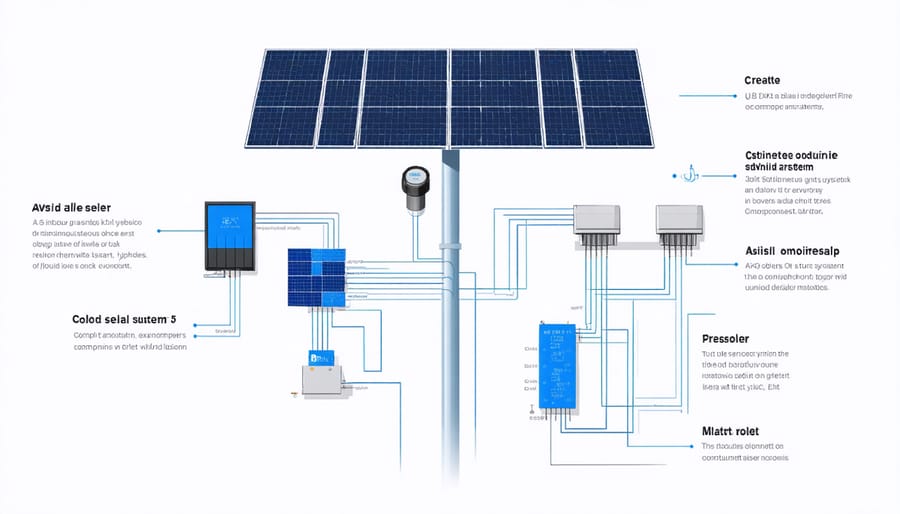
A 5kW solar system’s output relies on several critical components working in harmony. The solar panels, typically comprising 15-20 high-efficiency modules, form the primary power generation unit. These modules utilize photovoltaic cells, usually monocrystalline or polycrystalline, to convert sunlight into electrical energy.
The inverter plays a crucial role in converting the DC power generated by the panels into usable AC power for household consumption. Modern solar inverters achieve conversion efficiencies of up to 97%, significantly impacting the system’s overall performance.
Mounting systems and their orientation affect energy capture, with adjustable racking systems allowing for optimal panel positioning based on geographical location. The charge controller regulates power flow between panels and batteries, preventing overcharging and ensuring system longevity.
Quality wiring and connections are essential for minimizing power losses, while monitoring systems provide real-time performance data and alert owners to potential issues. When properly integrated, these components work together to maximize the system’s monthly output, typically ranging from 600-800 kWh in optimal conditions.
Theoretical vs. Real-World Output
While theoretical calculations suggest a 5kW solar system should generate approximately 20-25 kWh per day under optimal conditions, real-world solar panel efficiency often yields different results. Actual output typically ranges between 15-20 kWh daily, accounting for various performance-limiting factors. This 20-30% reduction from theoretical values stems from environmental conditions, system losses, and installation variables.
Key factors affecting real-world performance include shading from nearby structures or vegetation, dust accumulation, temperature variations, and inverter efficiency losses. Geographic location and seasonal changes also play crucial roles, with summer months generally producing 30-40% more energy than winter periods. Panel degradation, typically 0.5-1% annually, further contributes to the gap between theoretical and actual output.
To bridge this performance gap, professional installation, regular maintenance, and optimal panel positioning are essential. Monitoring systems can help track actual performance metrics and identify potential issues affecting system efficiency.
Monthly Output Variations and Factors
Seasonal Impact on Generation
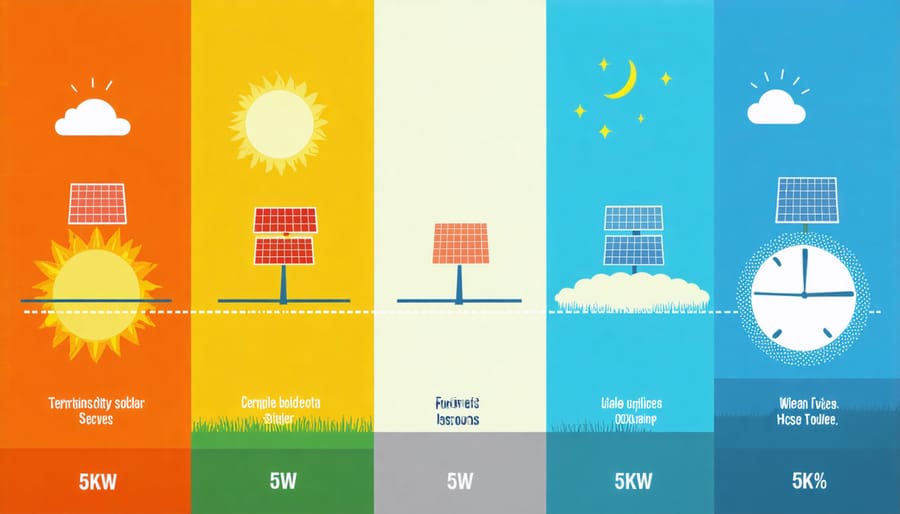
The performance of a 5kW solar system varies significantly throughout the year due to seasonal changes in solar radiation, day length, and weather patterns. During summer months, systems typically achieve peak production due to longer daylight hours and more direct solar radiation. A well-positioned 5kW system can generate between 20-25 kWh per day in optimal summer conditions.
Winter months generally see a reduction in output, with production typically decreasing by 30-40% compared to summer peaks. This reduction occurs due to shorter days, lower sun angles, and increased cloud cover. In winter, daily output might range from 12-15 kWh, depending on geographical location and weather conditions.
Spring and autumn serve as transitional periods, with generation levels falling between summer and winter extremes. These seasons often provide stable energy production due to moderate temperatures, which actually benefit solar panel efficiency compared to intense summer heat that can slightly reduce panel performance.
Geographical location plays a crucial role in seasonal variation. Systems installed closer to the equator experience less seasonal fluctuation than those in higher latitudes. Local climate patterns, such as monsoon seasons or regular morning fog, can create additional seasonal patterns in energy production.
To optimize year-round performance, system designers typically angle panels to maximize annual yield rather than seasonal peaks. This approach ensures more consistent energy production throughout the year, though some compromise between summer and winter optimization is necessary. Understanding these seasonal patterns is essential for accurate system sizing and performance expectations.
Geographic Location Considerations
Geographic location plays a crucial role in determining the monthly output of a 5kW solar system. Solar irradiance levels vary significantly across different regions, directly impacting energy generation potential. For instance, locations closer to the equator typically receive more consistent and intense solar radiation throughout the year, resulting in higher monthly outputs.
In the United States, southwestern states like Arizona and New Mexico can expect monthly outputs ranging from 600-800 kWh during peak summer months, while northern states might generate 400-600 kWh during the same period. These variations are primarily due to differences in solar insolation values and atmospheric conditions.
Seasonal changes also affect system performance differently based on location. While desert regions maintain relatively stable output throughout the year, areas with distinct seasons experience more significant fluctuations. Winter months in temperate zones may see production drops of 30-40% compared to summer peaks due to shorter days and lower sun angles.
Altitude and local weather patterns further influence system performance. Higher elevations typically benefit from reduced atmospheric interference and cooler temperatures, which can improve panel efficiency. Coastal areas might experience morning fog or increased humidity, potentially reducing early-day generation.
Understanding these geographic considerations is essential for accurate system sizing and performance expectations. Local solar installers typically use region-specific solar irradiance data and weather patterns to provide precise monthly output estimates, ensuring system designs align with customer needs and local conditions. Regular monitoring of actual performance against location-based projections helps identify any necessary adjustments for optimal operation.
Storage Optimization Strategies
Battery Storage Solutions
When optimizing a 5kW solar system’s performance, implementing effective energy storage solutions becomes crucial for maximizing energy utilization. Modern battery storage systems typically range from 5kWh to 13.5kWh capacity, with lithium-ion batteries emerging as the industry standard due to their superior energy density and cycle life.
For a 5kW solar installation, the recommended battery capacity should align with daily consumption patterns. A 10kWh battery system generally provides optimal storage for average household usage, enabling energy independence during non-generating hours. Advanced battery management systems (BMS) maintain optimal charging cycles and protect against over-discharge, extending battery lifespan significantly.
Storage efficiency varies among different battery technologies: lithium iron phosphate (LiFePO4) batteries offer 95-98% round-trip efficiency, while lead-acid alternatives typically achieve 80-85%. Temperature regulation systems maintain battery performance within the optimal 20-25°C range, ensuring consistent output regardless of ambient conditions.
Modern hybrid inverters integrate seamlessly with battery storage, facilitating intelligent power management through automated switching between solar generation, battery power, and grid supply. This integration enables real-time monitoring and optimization of energy flow, maximizing self-consumption rates and reducing reliance on grid power during peak pricing periods.
Smart Management Systems
Modern smart energy management systems play a crucial role in optimizing the performance of 5kW solar installations. These sophisticated monitoring platforms provide real-time data analysis, predictive maintenance alerts, and automated performance optimization to ensure maximum energy yield from your solar system.
Advanced monitoring features track key performance indicators such as voltage levels, current flow, and power generation efficiency across different times of day and weather conditions. This data enables system owners to identify potential issues before they impact output and implement corrective measures promptly.
Integration with weather forecasting systems allows these management platforms to adjust system parameters proactively, optimizing energy production based on anticipated environmental conditions. The systems can automatically regulate inverter settings, manage battery charging cycles, and balance grid feed-in rates to maximize financial returns.
Remote monitoring capabilities enable system owners and maintenance teams to access performance data through mobile applications or web interfaces. Automated alerts notify stakeholders of any anomalies or maintenance requirements, ensuring continuous optimal performance. These systems also generate detailed performance reports, helping owners track long-term system efficiency and make informed decisions about system upgrades or modifications.
By leveraging artificial intelligence and machine learning algorithms, modern management systems continuously improve their optimization strategies, leading to enhanced system reliability and increased energy yield over time.

Load Balancing Techniques
Load balancing in a 5kW solar system involves strategic management of energy distribution to maximize system efficiency and reliability. The primary technique involves implementing smart inverter technology that monitors and adjusts power flow between solar panels, battery storage, and household consumption.
A well-designed load balancing system typically incorporates peak load shifting, which redirects excess daytime energy production to battery storage for use during high-demand evening hours. This approach can increase overall system efficiency by up to 25% when properly configured.
Time-of-use optimization plays a crucial role in load balancing. By programming major appliances to operate during peak solar production hours (typically 10 AM to 2 PM), homeowners can directly utilize generated power rather than drawing from the grid or storage systems.
Advanced monitoring systems enable automated load distribution, ensuring critical appliances receive priority power allocation during limited generation periods. These systems can be configured to maintain optimal battery charge levels while supporting essential household functions.
For optimal performance, consider implementing a hybrid approach that combines:
– Dynamic load scheduling
– Smart appliance integration
– Automated consumption monitoring
– Battery charge level management
– Grid export optimization
Regular system assessment and adjustment of load balancing parameters ensure sustained efficiency as seasonal variations and consumption patterns change throughout the year.
Performance Monitoring and Maintenance
Regular Maintenance Schedule
To maintain optimal output from your 5kW solar system, implementing a structured maintenance schedule is essential. Monthly visual inspections should check for debris accumulation, physical damage, and loose connections. Clean solar panels quarterly using appropriate cleaning solutions and soft brushes to remove dust, bird droppings, and other contaminants that can reduce efficiency.
Bi-annual professional inspections are recommended to assess electrical connections, inverter performance, and mounting structure integrity. These inspections should include thermal imaging to identify potential hotspots and performance degradation. Modern solar installations benefit from predictive maintenance strategies that utilize data analytics to anticipate potential issues before they impact system output.
Monitor system performance data weekly through your inverter or monitoring platform to identify any unexpected drops in generation. Replace inverter cooling fans every 5-7 years and plan for inverter replacement after 10-15 years of operation. Document all maintenance activities and keep records of system performance metrics to track long-term efficiency trends.
Output Optimization Tips
To maximize your 5kW solar system’s output, proper panel orientation and tilt angle are crucial. Install panels facing true north (in the Southern Hemisphere) or true south (in the Northern Hemisphere) at an angle approximately equal to your latitude for optimal year-round performance. Regular cleaning of solar panels can increase efficiency by up to 5%, with quarterly maintenance being the recommended minimum frequency.
Consider implementing a solar tracking system, which can boost energy production by 25-35% compared to fixed installations. Monitor shading patterns throughout the day and seasons, removing or trimming any vegetation that may cast shadows on your panels. Installing micro-inverters or power optimizers can help minimize the impact of partial shading on overall system performance.
Temperature management is equally important, as panel efficiency decreases by approximately 0.5% for every degree Celsius above their rated temperature. Ensure adequate airflow beneath the panels by maintaining a gap of at least 10cm between the roof and panel surface. Installing high-quality monitoring systems allows for real-time performance tracking and early detection of any efficiency issues.
A 5kW solar system’s monthly output represents a significant investment in sustainable energy, with performance varying based on geographical location, installation quality, and environmental factors. Understanding these variables is crucial for maximizing system efficiency and return on investment. Regular monitoring, maintenance, and optimization strategies can help achieve the theoretical maximum output of 600-900 kWh per month in ideal conditions. As solar technology continues to advance, we can expect improved efficiency rates and storage solutions, making 5kW systems increasingly attractive for residential and small commercial applications. The key to success lies in proper system design, professional installation, and ongoing performance optimization, ensuring that your solar investment delivers reliable, clean energy for years to come.


