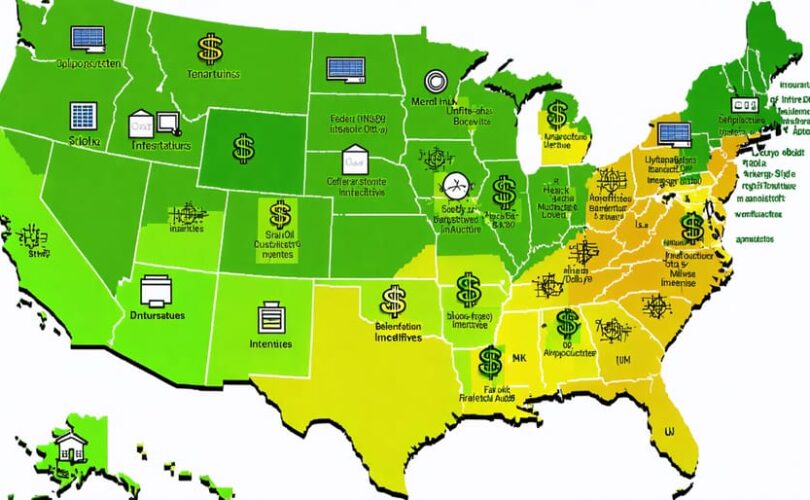
Solar incentive programs vary dramatically by location, with potential savings ranging from a few hundred dollars to over $20,000 per installation. Understanding these zip code-specific opportunities enables manufacturers, investors, and homeowners to maximize their return on solar investments through strategic facility placement and timing.
Federal incentives, including the Investment Tax Credit (ITC), provide a baseline 30% tax credit nationwide. However, the real financial advantage lies in combining these federal benefits with state and local programs. California’s Self-Generation Incentive Program (SGIP), for example, offers additional rebates up to $1,000 per kilowatt for qualifying systems, while New York’s NY-Sun program provides location-specific incentives based on regional installation density.
Manufacturing facilities strategically positioned in high-incentive zones can significantly reduce operational costs while accessing specialized industrial programs. For instance, regions with renewable portfolio standards (RPS) often offer enhanced manufacturing incentives, performance-based payments, and property tax exemptions specifically designed for solar production facilities.
This comprehensive guide analyzes the current incentive landscape across different zip codes, providing manufacturers and investors with actionable insights for optimal facility placement and maximum financial benefit capture.
Understanding Federal Solar Manufacturing Incentives
The Inflation Reduction Act Impact
The Inflation Reduction Act (IRA) has fundamentally transformed the landscape of solar manufacturing incentives across the United States, introducing unprecedented opportunities for manufacturers and investors. This landmark legislation, part of broader clean energy initiatives, allocates $369 billion toward climate and energy programs, with significant provisions for solar manufacturing.
Key manufacturing incentives vary by region, with enhanced benefits for facilities located in energy communities and low-income areas. The Act provides production tax credits ranging from $0.87 to $3.00 per watt for domestically manufactured solar components, depending on the manufacturing stage and location. Manufacturers in qualified census tracts can receive bonus credits up to 10% above standard rates.
The IRA’s impact extends beyond direct manufacturing benefits, creating regional ecosystems that support supply chain development. Areas with existing manufacturing infrastructure, skilled workforce availability, and proximity to transportation hubs typically offer the most advantageous combination of federal and local incentives. This geographic distribution of benefits has sparked renewed interest in domestic solar manufacturing, particularly in regions with established industrial bases.
Federal Tax Credit Structure
The federal tax credit structure for solar manufacturers provides substantial financial incentives through the Inflation Reduction Act (IRA) of 2022. Manufacturers can claim up to 40% in advanced manufacturing production credits for components produced and sold domestically. This includes credits of $0.07 per watt for photovoltaic cells, $0.04 per watt for modules, and varying rates for critical components like inverters and mounting systems.
Production credits are calculated based on annual manufacturing capacity and apply to both new facilities and expansions of existing operations. Manufacturers must meet specific domestic content requirements, including sourcing a minimum percentage of materials from U.S. suppliers. The credit structure operates on a phase-down schedule, maintaining full value through 2029 before gradually reducing.
Additional bonus credits are available for facilities located in energy communities or areas with significant historical fossil fuel employment. Manufacturers can stack these federal incentives with state and local benefits, potentially reducing overall production costs by 50-60%. To maintain eligibility, companies must comply with prevailing wage and apprenticeship requirements established by the Department of Labor.
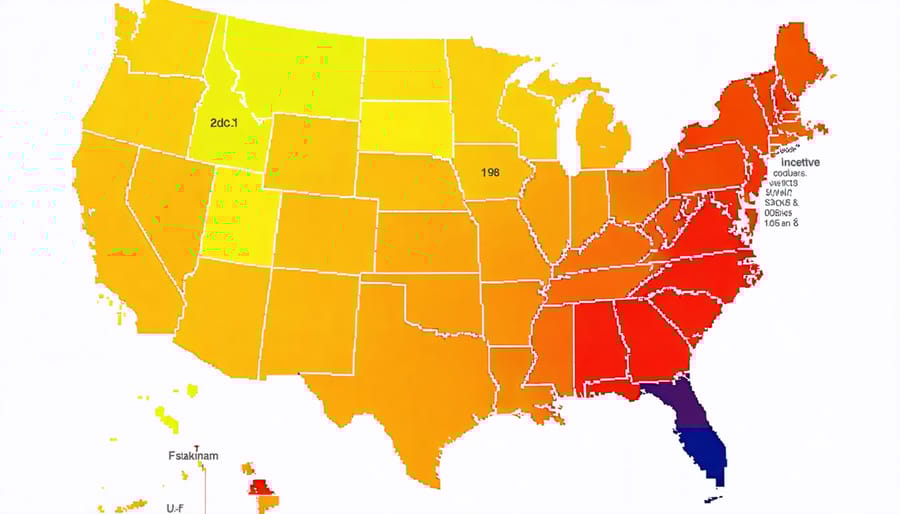
State-Level Manufacturing Incentives
Top States for Solar Manufacturing
Several states have emerged as leaders in attracting solar manufacturing facilities through comprehensive incentive packages and supportive policies. Georgia has positioned itself as a frontrunner, offering substantial tax credits, workforce development programs, and infrastructure support that have attracted major manufacturers. The state’s commitment to developing smart energy infrastructure has been particularly appealing to industry leaders.
Texas maintains its competitive edge through combined incentives, including property tax abatements, sales tax exemptions, and specialized workforce training programs. The state’s established energy sector expertise and robust transportation infrastructure provide additional advantages for manufacturers.
North Carolina and Arizona have also implemented aggressive manufacturing incentive packages, featuring reduced energy costs, expedited permitting processes, and research partnerships with local universities. These states offer location-specific benefits such as specialized enterprise zones and port access.
Michigan has recently emerged as a contender, offering targeted incentives for advanced manufacturing facilities and emphasizing its skilled workforce and existing automotive manufacturing infrastructure. The state’s Critical Industry Program provides significant financial support for large-scale solar manufacturing projects.
Tennessee rounds out the top tier, with its integrated approach combining tax incentives, site development assistance, and specialized training programs. The state’s strategic location and lower operating costs have attracted significant investment in solar manufacturing facilities.
State-Specific Requirements
State-level solar incentive requirements vary significantly across the United States, with each jurisdiction maintaining distinct eligibility criteria and application procedures. In California, applicants must demonstrate compliance with Title 24 building energy efficiency standards and submit detailed documentation through the GoSolar California portal. New York requires participation in the NY-Sun program and adherence to strict equipment quality standards, with applications processed through NYSERDA’s central platform.
Massachusetts maintains a tiered incentive structure through the SMART program, where eligibility depends on system size, location, and additional energy storage components. Applicants must work with approved system integrators and submit comprehensive site plans for review.
Florida’s requirements focus on hurricane resilience standards and utility interconnection agreements, with most applications processed through individual utility companies rather than a centralized state system. Texas operates primarily through utility-specific programs, with varying requirements based on service territories and local building codes.
Key documentation typically required across states includes:
– Property ownership verification
– Site assessment reports
– Equipment specifications
– Contractor licensing credentials
– Utility interconnection agreements
– Building permits
– Energy audit results
Applicants should verify current requirements through their state energy office, as criteria and processes are subject to periodic updates. Most states mandate professional installation by certified contractors and compliance with national electrical codes for incentive eligibility.
Local Incentives and Enterprise Zones
Enterprise Zone Benefits
Enterprise Zones offer substantial advantages for solar manufacturing operations, providing targeted economic incentives in specifically designated geographic areas. These zones, established to stimulate economic development and job creation, typically feature reduced tax rates, simplified permitting processes, and specialized workforce development programs.
Manufacturers who establish facilities within these zones can benefit from significant cost reductions, including property tax abatements, sales tax exemptions on manufacturing equipment, and reduced utility rates. Many enterprise zones also offer employment credits ranging from $500 to $5,000 per qualified employee, making them particularly attractive for labor-intensive solar panel production.
The benefits often extend beyond direct financial incentives. Enterprise zones frequently provide priority access to infrastructure improvements, expedited environmental reviews, and partnerships with local technical schools for workforce training. Some zones specifically target renewable energy manufacturing, offering additional incentives for solar-related operations.
When evaluating potential manufacturing locations, it’s crucial to consider both state and federal enterprise zone designations, as benefits can be layered for maximum advantage. Many zones also feature specialized foreign trade zone status, enabling duty-free import of raw materials and simplified customs procedures for international solar component suppliers.
Municipal Support Programs
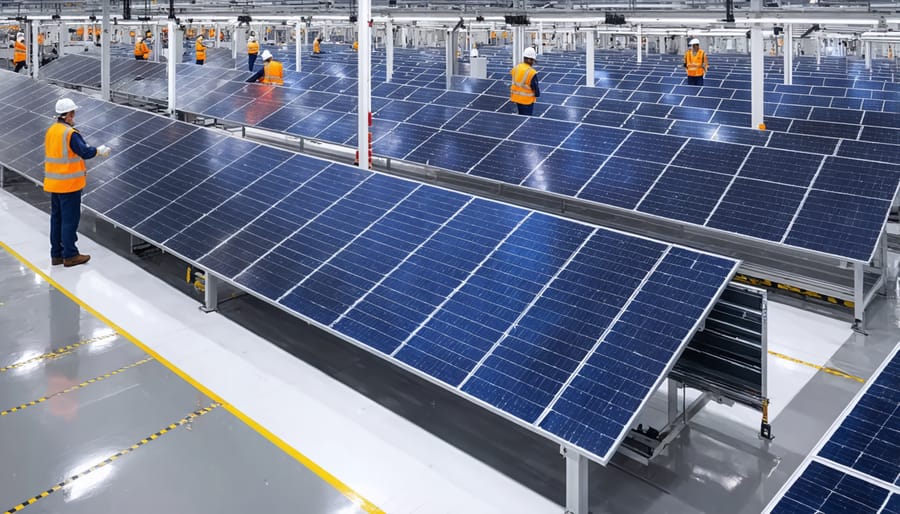
Municipal governments across the United States are increasingly implementing robust support programs to attract and retain solar manufacturing facilities within their jurisdictions. These initiatives often include tax abatements, streamlined permitting processes, and specialized workforce development programs designed specifically for the solar industry.
Many cities offer direct financial incentives, such as reduced utility rates and infrastructure grants, to solar manufacturers who establish operations within designated development zones. These incentives are frequently coupled with community solar programs that create guaranteed local markets for manufactured products.
Local governments also collaborate with technical colleges and universities to develop specialized training programs, ensuring a skilled workforce for solar manufacturing operations. Some municipalities provide land grants or brownfield redevelopment incentives specifically targeting solar manufacturing facilities.
Notable support mechanisms include:
– Fast-track permit processing for manufacturing facilities
– Local tax credits for job creation
– Municipal bond programs for facility construction
– Utility rate reduction agreements
– Workforce training grants
– Infrastructure improvement assistance
Manufacturers should consult local economic development offices and municipal planning departments to identify available incentives, as programs vary significantly by location and may be negotiable based on project scope and expected economic impact.
How to Research Incentives by Location
Using Online Resources
Several authoritative online resources provide comprehensive tools for researching solar incentives based on geographic location. The Database of State Incentives for Renewables & Efficiency (DSIRE) stands as the most comprehensive national repository, offering a user-friendly interface where stakeholders can input their zip code to access location-specific incentives, policies, and programs.
The Department of Energy’s Solar Energy Technologies Office maintains an interactive mapping tool that displays federal, state, and local incentives. This resource proves particularly valuable for manufacturers and investors analyzing multiple locations for facility placement.
EnergySage’s Solar Incentive Calculator combines zip code data with current market rates to generate detailed reports on available tax credits, rebates, and performance-based incentives. Users can access real-time updates on incentive programs and eligibility requirements specific to their area.
For utility-specific programs, the Smart Electric Power Alliance (SEPA) database enables users to search by service territory, revealing unique incentives offered by local power providers. Additionally, state energy offices typically maintain dedicated web portals with detailed information about region-specific programs and application procedures.
Professional organizations like the Solar Energy Industries Association (SEIA) provide members with exclusive access to advanced incentive tracking tools and regular policy updates, ensuring stakeholders remain informed about emerging opportunities in their target markets.
Working with Local Authorities
Local economic development offices serve as valuable resources for businesses and individuals seeking solar incentives in their area. These authorities maintain comprehensive databases of available programs, tax abatements, and development incentives specific to their jurisdiction. When approaching these offices, prepare detailed documentation about your proposed solar project, including estimated energy production, job creation potential, and economic impact.
Schedule an initial consultation with the economic development coordinator to discuss your project scope and potential incentive qualification. Many offices provide dedicated liaison officers who can guide you through the application process and help identify additional funding sources you may have overlooked.
Keep detailed records of all communications and submitted documentation, as incentive programs often require ongoing compliance monitoring. Economic development offices typically require regular progress reports and may conduct site visits to verify project implementation.
Be prepared to demonstrate how your solar project aligns with local development goals and sustainability initiatives. Many authorities prioritize projects that contribute to workforce development or incorporate community benefit agreements. Some offices also facilitate introductions to other stakeholders, including utility companies and workforce development agencies.
Remember that incentive programs often have limited funding cycles, so timing your application strategically is crucial. Many economic development offices maintain waiting lists for popular programs, making early engagement essential for securing optimal benefits.
Maximizing Incentive Benefits
To maximize solar incentive benefits, manufacturers should implement a strategic approach that combines multiple programs across federal, state, and local levels. Begin by conducting a comprehensive analysis of available incentives in each potential location, including tax credits, grants, and performance-based incentives. Create a matrix that outlines qualification requirements, application deadlines, and potential monetary values for each program.
Consider stacking compatible incentives to optimize financial returns. For example, combine the federal Investment Tax Credit (ITC) with state-specific manufacturing tax credits and local property tax exemptions. Some jurisdictions also offer enhanced benefits when facilities incorporate grid integration benefits or advanced energy storage systems.
Timing is crucial when coordinating multiple incentive programs. Develop a sequential implementation plan that accounts for application windows and documentation requirements. Maintain detailed records of all qualifying expenditures and ensure compliance with reporting obligations across different programs.
Partner with local economic development organizations and utility providers to identify additional opportunities. Many regions offer customized incentive packages for large-scale manufacturing operations that create jobs and contribute to local economic growth. Consider engaging qualified tax professionals and renewable energy consultants to optimize incentive structures and ensure regulatory compliance throughout the application process.
The landscape of solar manufacturing incentives continues to evolve rapidly across different regions, offering significant opportunities for industry growth and development. Federal initiatives like the Inflation Reduction Act have established a strong foundation for manufacturing support, while state and local programs provide additional layers of benefits that vary by location. Understanding these zip code-specific incentives remains crucial for manufacturers seeking optimal facility placement and maximum financial advantage.
Looking ahead, the solar manufacturing sector is poised for substantial expansion, with new incentive programs emerging regularly at various governmental levels. The trend toward localization of supply chains and increased domestic production capacity suggests that location-based benefits will become even more competitive and targeted. Manufacturers who thoroughly research and strategically leverage these geographical advantages stand to gain significant cost savings and operational benefits.
As the industry matures, we can expect to see more sophisticated incentive structures that combine traditional financial benefits with workforce development programs and infrastructure support. Success in this evolving landscape will require ongoing vigilance in monitoring incentive programs and maintaining flexibility in operational planning to capitalize on emerging opportunities across different regions.