Climate disruption threatens the very supply chains that deliver solar technology—creating a paradox where the tools needed to combat climate change face increasing vulnerability from its effects. Solar panel manufacturing depends on global networks spanning silicon production, cell fabrication, and component assembly, each susceptible to extreme weather events, resource scarcity, and geopolitical instability. When hurricanes halt port operations, droughts disrupt silicon refining, or heat waves shut down manufacturing facilities, solar deployment slows precisely when acceleration is critical.
Building supply chain resilience requires systematic risk mapping across all tiers of suppliers, diversifying sourcing strategies beyond single-country dependencies, and investing in regional manufacturing capacity that reduces transportation vulnerabilities. Companies must establish real-time monitoring systems that track climate risks at supplier locations, develop backup logistics routes before disruptions occur, and maintain strategic inventory buffers for critical components. Collaboration between manufacturers, developers, and policymakers enables shared infrastructure investments and standardized resilience protocols that individual actors cannot achieve alone.
The stakes extend beyond business continuity. Every month of delayed solar deployment translates to additional carbon emissions and missed climate targets. A resilient solar supply chain accelerates the energy transition by ensuring consistent availability of panels, inverters, and mounting systems regardless of climate shocks. For photovoltaic professionals entering this evolving landscape, understanding supply chain dynamics is no longer optional—it represents essential knowledge for delivering reliable renewable energy solutions at the scale and speed climate mitigation demands.
The Vulnerability Landscape: Where Solar Supply Chains Break Down
Geographic Concentration and Climate Risks
The photovoltaic industry faces significant vulnerability due to the concentration of manufacturing capabilities in specific geographic regions. Currently, over 80% of global solar panel production occurs in Asia, with China alone accounting for approximately 75% of polysilicon manufacturing. This concentration creates substantial exposure to regional climate disruptions that can cascade throughout the entire solar supply chain.
Extreme weather events pose increasing threats to these manufacturing hubs. Flooding in China’s Yangtze River basin has previously disrupted polysilicon and wafer production facilities, while typhoons regularly impact coastal manufacturing regions. The 2021 flooding in Henan Province demonstrated how rapidly climate events can halt production at critical supply chain nodes, affecting global module availability for months afterward.
Rising temperatures and water scarcity present additional challenges. Polysilicon production requires substantial water resources and energy-intensive processes that become less efficient during heat waves. Regions experiencing prolonged drought conditions face potential production curtailments, while extreme heat can damage semiconductor-grade materials and compromise quality control measures.
Southeast Asian manufacturing centers supporting module assembly and component production increasingly face monsoon intensification and sea-level rise concerns. Facilities located in coastal zones risk storm surge damage and infrastructure disruption, threatening continuity of operations. Research indicates that without geographic diversification and climate adaptation measures, the solar industry’s concentrated manufacturing footprint could experience supply disruptions 40% more frequently by 2030 compared to 2020 levels. This geographic risk concentration underscores the urgent need for supply chain resilience strategies that include regional diversification, climate-hardened facilities, and robust contingency planning across the photovoltaic value chain.
Transportation and Logistics Disruptions
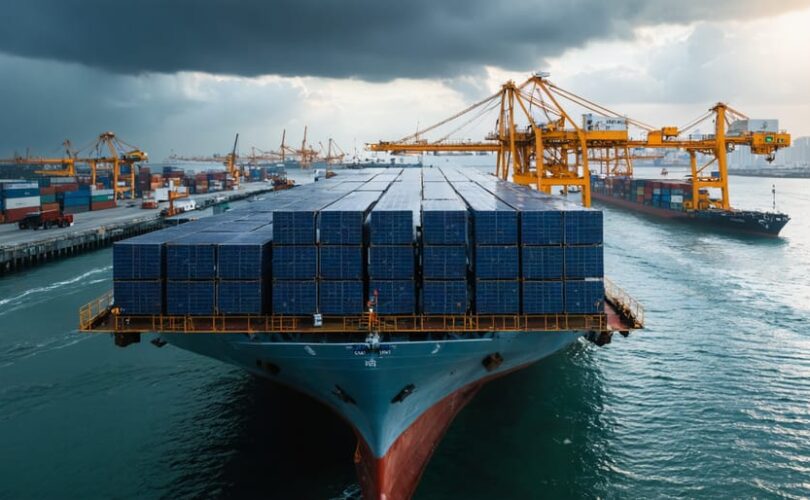
Climate change creates cascading disruptions throughout solar component transportation networks, threatening timely project delivery and increasing costs. Extreme weather events such as hurricanes, typhoons, and flooding frequently force port closures in major shipping hubs across Asia, where approximately 80% of solar panels are manufactured. These disruptions can delay shipments by weeks, creating bottlenecks that ripple through the entire supply chain.
Maritime shipping routes face mounting challenges from intensifying storms and rising sea levels that threaten port infrastructure. Container ships carrying photovoltaic modules may be rerouted to avoid dangerous weather, adding transit time and fuel costs. Port congestion worsens when facilities operate at reduced capacity following climate events, compounding delays for time-sensitive solar installations.
Land-based transportation encounters equally severe obstacles. Flooding damages road networks and rail lines, while extreme heat can buckle railway tracks and reduce trucking efficiency. Wildfires periodically close critical transportation corridors in regions like California and Australia, stranding equipment and forcing costly detours. These disruptions disproportionately affect just-in-time delivery models that many solar companies employ to minimize inventory costs.
Building resilience requires diversifying transportation modes, establishing regional distribution centers, and partnering with logistics providers experienced in climate risk management. Industry professionals must understand these vulnerabilities to develop adaptive strategies that maintain supply chain continuity despite increasing environmental pressures.
Raw Material Dependencies
Solar supply chains face significant vulnerabilities stemming from concentrated sources of critical materials. Polysilicon production, essential for photovoltaic module manufacturing, relies heavily on regions where water scarcity and extreme weather events threaten consistent output. The raw material extraction of silver, copper, and aluminum—key conductive and structural components—encounters disruptions from flooding, drought, and temperature extremes at mining sites. Rare earth elements like tellurium and indium, used in thin-film technologies, present dual challenges: geographic concentration in politically sensitive regions and climate-induced operational interruptions. These dependencies create cascading risks throughout the value chain, where a single disruption can delay project timelines and inflate costs. Industry stakeholders must diversify sourcing strategies, invest in material recovery technologies, and collaborate with academic institutions to develop alternative materials that reduce reliance on climate-vulnerable supply nodes.

Building Resilience: Strategic Approaches for Supply Chain Fortification
Diversification and Redundancy Planning
Building a resilient photovoltaic supply chain requires implementing comprehensive diversification and redundancy planning to mitigate disruptions caused by climate events, geopolitical tensions, or manufacturing challenges. Multi-sourcing strategies form the foundation of this approach, reducing dependence on single suppliers for critical solar components such as photovoltaic cells, inverters, and mounting systems.
Geographic distribution of suppliers across multiple regions provides essential protection against localized disruptions. Solar manufacturers and installers should establish relationships with suppliers in different continents, ensuring that extreme weather events, trade restrictions, or regional instabilities in one area do not halt operations entirely. This geographic diversification proves particularly valuable for sourcing polysilicon, which currently concentrates in specific regions vulnerable to both climate impacts and policy changes.
Backup inventory management tailored specifically to solar components requires balancing cost considerations with availability assurance. High-value items like inverters and specialized junction boxes warrant strategic stockpiling, while bulkier materials such as mounting hardware and cabling may benefit from flexible just-in-time arrangements with multiple vendors. Organizations should maintain safety stock levels based on lead time variability and historical disruption patterns, using data analytics to optimize inventory positions.
Collaboration with universities and research institutions helps organizations identify emerging supply chain vulnerabilities and develop innovative redundancy solutions. These partnerships contribute to educational program offerings that prepare the next generation of supply chain professionals to address evolving challenges in renewable energy logistics, ensuring long-term industry resilience and accelerated solar adoption critical for climate mitigation goals.
Advanced Forecasting and Risk Assessment
Modern supply chain resilience in the photovoltaic sector increasingly relies on sophisticated predictive technologies to identify and mitigate potential disruptions before they occur. Advanced analytics platforms integrate multiple data streams—including weather patterns, geopolitical indicators, transportation networks, and supplier performance metrics—to provide comprehensive risk visibility across the solar value chain.
Artificial intelligence algorithms analyze historical disruption patterns and real-time market signals to forecast potential bottlenecks in critical component supplies, from polysilicon to inverters. These systems can predict shipping delays caused by extreme weather events or identify emerging material shortages weeks in advance, enabling proactive inventory adjustments and alternative sourcing strategies.
Climate modeling tools specifically designed for supply chain applications assess how rising temperatures, shifting precipitation patterns, and increased storm intensity may affect manufacturing facilities, transportation routes, and raw material extraction sites. By quantifying climate-related vulnerabilities, solar companies can prioritize infrastructure investments and develop contingency plans that maintain operational continuity.
Leading photovoltaic organizations now collaborate with universities to refine these forecasting methodologies, combining academic research with industry data to enhance prediction accuracy and create more resilient supply networks capable of supporting accelerated solar deployment.
Regional Manufacturing and Localization
The solar industry is witnessing a strategic shift toward establishing regional manufacturing hubs, a development that significantly enhances supply chain resilience while addressing environmental concerns. This localization trend reduces dependency on intercontinental shipping routes vulnerable to disruptions from extreme weather events, geopolitical tensions, and port congestion. By manufacturing solar panels, inverters, and mounting systems closer to end markets, companies can respond more rapidly to demand fluctuations and minimize lead times from months to weeks.
Regional manufacturing facilities also contribute measurably to reducing carbon footprints associated with long-distance transportation. A solar panel manufactured domestically typically generates 15-30% fewer transportation-related emissions compared to imports from distant manufacturing centers. Additionally, localized production enables better quality control, faster warranty service, and stronger collaboration between manufacturers and installation professionals.
Universities are partnering with emerging regional manufacturers to develop workforce training programs that prepare technicians and engineers for these new facilities. This collaboration ensures that local communities benefit from job creation while building the technical expertise necessary to sustain domestic solar manufacturing. As regional hubs mature, they create ecosystem effects, attracting component suppliers and research institutions that further strengthen supply chain resilience and innovation capacity.
Collaborative Industry Networks
Building resilient solar supply chains requires strategic collaboration across multiple stakeholder groups. Manufacturers partnering with diverse suppliers reduce dependency on single sources, while maintaining quality standards through transparent communication channels. These partnerships enable rapid response to disruptions by establishing alternative procurement routes and shared inventory systems.
Installers benefit from direct relationships with manufacturers, gaining early visibility into product availability and delivery timelines. This coordination allows project planning that accounts for potential delays, protecting both timelines and budgets. Industry associations facilitate knowledge sharing about supply chain best practices, helping smaller companies implement resilience strategies typically available only to larger enterprises.
Policymakers play a crucial role by incentivizing domestic manufacturing capacity and supporting workforce development programs. Collaborative frameworks between government agencies and industry leaders establish standards for supply chain transparency and risk assessment. Universities contribute through research partnerships that identify emerging vulnerabilities and develop innovative solutions for supply chain optimization. These multi-sector networks create adaptive ecosystems capable of maintaining solar deployment momentum despite geopolitical tensions, natural disasters, or market volatility, ultimately accelerating climate mitigation goals.
The Climate Mitigation Feedback Loop: How Resilient Supply Chains Accelerate Solar Adoption
Price Stability and Market Confidence
Supply chain resilience directly correlates with price stability in the solar photovoltaic sector. When manufacturers maintain diversified supplier networks and robust inventory management systems, they can buffer against sudden cost spikes caused by geopolitical tensions, natural disasters, or resource scarcity. This stability proves essential for developers planning large-scale solar installations, as predictable component pricing enables accurate financial modeling and secures investor confidence.
Resilient supply chains allow project developers to lock in long-term pricing agreements with greater certainty, reducing the risk premium associated with renewable energy investments. This predictability accelerates project timelines and improves return-on-investment calculations, making solar installations more attractive to financial institutions. For emerging markets, price stability can determine whether renewable energy projects move forward or stall indefinitely.
Furthermore, universities and research institutions collaborating with industry partners can analyze historical supply chain data to develop predictive models that forecast potential disruptions. These insights enable proactive procurement strategies and hedging mechanisms, transforming reactive crisis management into strategic planning. The result is a more bankable solar industry that attracts sustained capital investment while maintaining competitive pricing for end consumers.
Meeting Global Decarbonization Timelines
Achieving ambitious international climate commitments, including net-zero targets by mid-century, depends fundamentally on accelerating solar energy deployment at unprecedented scale. A resilient photovoltaic supply chain serves as the backbone for meeting these decarbonization timelines, ensuring that manufacturing capacity, material availability, and distribution networks can support exponential growth in solar installations. When supply chains experience disruptions—whether from geopolitical tensions, extreme weather events, or resource constraints—the pace of renewable energy adoption slows, jeopardizing climate goals outlined in the Paris Agreement and subsequent global frameworks.
Understanding the environmental impact of PV systems throughout their lifecycle reinforces why supply chain resilience matters beyond mere logistics. Robust supply chains enable consistent quality control, ethical sourcing practices, and reduced transportation emissions, all contributing to lower carbon footprints per installed megawatt. Furthermore, diversified and resilient supply networks facilitate technology transfer and capacity building in emerging markets, expanding global access to clean energy solutions. By strengthening supply chain infrastructure through strategic partnerships, regional manufacturing hubs, and transparent procurement practices, the solar industry can maintain the deployment velocity necessary to limit global temperature rise and transition economies toward sustainable energy systems.
Reducing the Carbon Footprint of Solar Manufacturing
Supply chain optimization directly addresses the environmental impact of solar panel production by minimizing transportation distances and streamlining manufacturing processes. Strategic placement of production facilities closer to raw material sources and end markets substantially reduces freight-related carbon emissions. Furthermore, resilient supply chains incorporate circular economy principles, enabling manufacturers to repurpose production waste and integrate recycled materials into new panels. Advanced logistics planning reduces redundant shipments and optimizes container utilization, cutting fuel consumption per unit delivered. By implementing just-in-time inventory systems and regional manufacturing hubs, the industry can significantly lower solar manufacturing emissions while maintaining production efficiency. These improvements not only strengthen supply chain resilience against disruptions but also accelerate the net positive climate impact of solar technology deployment, ensuring each installed panel offsets its embodied carbon more rapidly.
Innovation at the Intersection: Technologies Strengthening Both Resilience and Sustainability
Next-Generation Manufacturing Technologies
Emerging manufacturing technologies are fundamentally transforming solar supply chain resilience by reducing material dependencies and increasing production flexibility. Tunnel Oxide Passivated Contact (TOPCon) cells achieve higher efficiencies while maintaining compatibility with existing production infrastructure, enabling manufacturers to upgrade facilities without complete overhauls. Heterojunction Technology (HJT) operates at lower temperatures than conventional processes, decreasing energy consumption and allowing production in regions with limited power infrastructure. These advanced methods require fewer raw materials per watt of output, directly addressing resource scarcity concerns.
Perovskite solar cells represent a particularly promising development for supply chain diversification. Their solution-based manufacturing process eliminates the need for energy-intensive high-temperature processing and expensive silicon purification. This accessibility enables production facilities in diverse geographic locations, reducing concentration risk. The technology’s compatibility with flexible substrates also opens applications in building-integrated photovoltaics and portable power systems.
These next-generation technologies share a common advantage: manufacturing agility. Facilities can scale production more rapidly and adapt to component shortages more effectively than traditional crystalline silicon plants. As climate disruptions intensify, this operational flexibility becomes essential for maintaining stable solar panel supply and supporting global decarbonization targets. Universities and research institutions continue advancing these technologies through collaborative programs that prepare the workforce for evolving manufacturing demands.
Circular Economy and Recycling Infrastructure
As photovoltaic deployment accelerates globally, establishing robust solar panel recycling infrastructure becomes essential for supply chain resilience. Closed-loop material recovery systems reduce dependency on virgin raw materials, particularly critical minerals like silicon, silver, and tellurium that face extraction constraints and geopolitical supply risks.
Advanced recycling technologies now recover up to 95% of materials from decommissioned panels, transforming end-of-life products into feedstock for new manufacturing. This circular approach insulates supply chains from commodity price volatility and resource scarcity, creating strategic material reserves within existing infrastructure. European Union regulations mandating producer responsibility and minimum recovery rates demonstrate policy frameworks that incentivize circular economy adoption.
Leading manufacturers are partnering with universities to develop next-generation separation techniques and establish regional recycling hubs that reduce transportation emissions while ensuring material availability. These collaborative research initiatives not only advance technical capabilities but also prepare the workforce through hands-on training programs. As the first wave of installed solar capacity approaches its 25-30 year lifespan, mature recycling networks will provide competitive advantages to organizations that prioritize material circularity alongside traditional supply chain metrics.
Digital Supply Chain Management
Digital transformation has revolutionized supply chain resilience in the photovoltaic sector through three key technologies. Blockchain-based traceability systems create immutable records of solar component origins, manufacturing processes, and transportation routes, enabling rapid identification of disrupted supply nodes and verification of ethical sourcing practices. This transparency proves essential when climate events or geopolitical tensions threaten specific production regions.
Internet of Things sensors provide continuous monitoring of environmental conditions during solar panel transport and storage, detecting temperature fluctuations, humidity exposure, or physical damage that could compromise product integrity. These real-time data streams allow logistics managers to reroute shipments away from extreme weather zones or adjust storage conditions proactively, minimizing losses and maintaining quality standards.
Digital twin technology replicates entire supply networks in virtual environments, allowing organizations to simulate disruption scenarios and test response strategies without real-world consequences. Universities collaborating with industry partners increasingly incorporate digital twin modeling into their research programs, preparing the next generation of supply chain professionals to leverage predictive analytics. These combined technologies reduce response times from days to hours, ensuring solar installations proceed on schedule despite external pressures.
Preparing the Workforce: Education’s Role in Building Adaptive Supply Chains
Essential Competencies for Supply Chain Resilience
Emerging photovoltaic professionals must develop a multifaceted skill set to navigate increasingly complex supply chain challenges. Understanding materials science fundamentals proves essential, particularly regarding silicon wafer production, rare earth elements, and alternative semiconductor technologies that may diversify sourcing options. Professionals should grasp geographic risk assessment methodologies to identify vulnerabilities across global manufacturing networks, especially concerning climate-exposed production facilities in flood-prone or drought-affected regions.
Data analytics capabilities enable practitioners to monitor real-time supply disruptions, forecast material availability, and model scenario-based contingencies. Knowledge of international trade regulations, tariff structures, and geopolitical dynamics helps anticipate policy-driven supply shifts that compound climate-related risks. Additionally, circular economy principles and recycling technologies represent critical competencies as the industry transitions toward closed-loop material flows to reduce virgin resource dependencies.
Cross-functional collaboration skills facilitate effective communication between procurement teams, climate scientists, and logistics specialists. Universities partnering with industry leaders increasingly offer specialized coursework combining supply chain management with climate adaptation strategies, preparing the next generation of professionals to build resilient solar infrastructure. Continuous professional development through industry certifications and technical workshops ensures practitioners remain current with evolving best practices and emerging risk mitigation technologies.
University-Industry Collaboration in Resilience Research
Academic-industry partnerships have become instrumental in advancing supply chain resilience research for the photovoltaic sector. Universities contribute advanced modeling capabilities, conducting simulations that predict supply disruptions under various climate scenarios and geopolitical conditions. These collaborations enable companies to test resilience strategies before implementation, reducing costly trial-and-error approaches.
Materials science departments are working alongside solar manufacturers to develop alternative materials that reduce dependency on single-source suppliers. Research teams are investigating domestic substitutes for critical raw materials and improving recycling technologies to create circular supply chains. These innovations address vulnerabilities while maintaining performance standards essential for solar module efficiency.
Logistics optimization research tackles transportation challenges exacerbated by extreme weather events. University researchers apply artificial intelligence and machine learning to develop adaptive routing systems that respond to real-time disruptions. Supply chain mapping projects, often conducted through graduate research programs, provide detailed visibility into multi-tier supplier networks, identifying hidden vulnerabilities.
These partnerships also foster workforce development, preparing the next generation of supply chain professionals with specialized knowledge in renewable energy logistics. Joint research initiatives produce practical frameworks that companies can implement immediately, accelerating the transition from theoretical models to operational resilience strategies that support climate mitigation goals.
The interconnected relationship between solar supply chain resilience and climate mitigation represents both a critical challenge and an unprecedented opportunity for the renewable energy sector. As climate change intensifies extreme weather events, geopolitical tensions, and resource constraints, the vulnerabilities within photovoltaic supply chains threaten to slow the very transition needed to address these global crises. However, by prioritizing resilience through diversified sourcing, advanced manufacturing technologies, robust logistics networks, and strategic inventory management, the solar industry can ensure uninterrupted growth while accelerating decarbonization efforts worldwide.
Building resilient supply chains extends beyond risk management—it fundamentally enables the scalability required to meet ambitious renewable energy targets. When supply chains withstand disruptions, solar installations proceed on schedule, grid integration advances without delay, and the displacement of fossil fuels accelerates. This resilience directly translates into measurable climate benefits, preventing gigatons of potential emissions while creating economic opportunities across global markets.
Industry stakeholders, photovoltaic professionals, and consumers all share responsibility in this transformation. Manufacturers must invest in supply chain transparency and localized production capabilities. Policymakers should incentivize resilience through supportive frameworks and workforce development initiatives. Educational institutions and industry collaborators must prepare the next generation of solar professionals with the knowledge and skills to navigate complex supply dynamics. Consumers can advocate for and support companies demonstrating supply chain accountability.
The path forward demands collective action. By embedding resilience into every aspect of solar supply chains, we strengthen the foundation upon which our climate future depends, ensuring that photovoltaic technology fulfills its essential role in building a sustainable, low-carbon world.