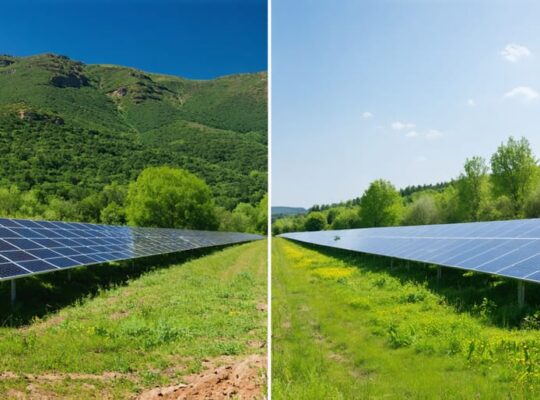
Global renewable energy investment reached an unprecedented $500 billion in 2023, marking a pivotal shift in the world’s energy landscape. This surge reflects not just growing environmental consciousness, but a fundamental transformation in the economics of clean energy. As solar photovoltaic costs plummet by 85% and wind energy efficiency soars, institutional investors and governments alike are rapidly redirecting capital from fossil fuels to renewable alternatives.
The convergence of technological innovation, supportive policy frameworks, and urgent climate imperatives has created an unparalleled opportunity in the renewable energy sector. Emerging markets, particularly China and India, are leading this transition with massive utility-scale projects, while developed nations focus on distributed energy systems and grid modernization. This dynamic investment environment is reshaping global energy markets, creating new economic opportunities, and accelerating the pathway to net-zero emissions.
Analysis of current investment patterns reveals a sophisticated interplay between public and private capital, with green bonds, sustainable finance initiatives, and innovative funding mechanisms driving project development across continents. Understanding these investment trends is crucial for stakeholders navigating the evolving landscape of global energy transformation.
The Evolution of Global Renewable Energy Investment
Key Investment Trends
Global renewable energy investments have shown remarkable growth trajectories, with 2023 marking unprecedented levels of capital flow into clean power sources. Solar photovoltaic technology continues to dominate investment portfolios, accounting for approximately 40% of total renewable energy investments. Emerging markets, particularly in Asia-Pacific and Latin America, are experiencing substantial growth in renewable energy financing.
Corporate Power Purchase Agreements (PPAs) have emerged as a crucial investment mechanism, with major technology companies leading the charge in direct renewable energy procurement. Institutional investors are increasingly divesting from fossil fuels and redirecting capital toward sustainable energy projects, driven by both environmental considerations and attractive returns.
Green bonds and sustainable finance instruments have gained significant traction, with global issuance reaching record levels. Innovation in financing models, including community-funded projects and blockchain-based energy trading platforms, is reshaping traditional investment approaches.
The integration of energy storage solutions has become a key focus area for investors, with significant capital flowing into battery technology and grid modernization projects. This trend reflects the growing emphasis on creating resilient and reliable renewable energy systems capable of meeting baseload power requirements.
Regional Investment Distribution
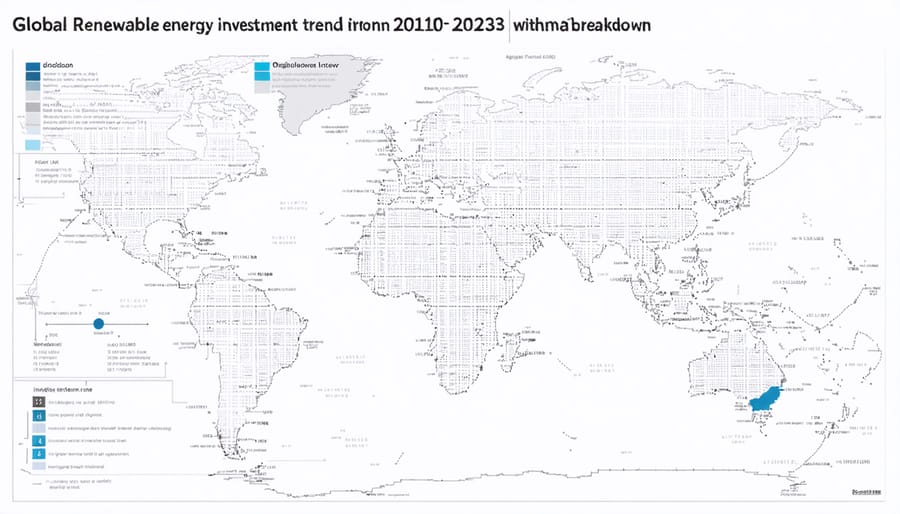
Global renewable energy investment shows distinct regional patterns, with Asia-Pacific emerging as the dominant force in recent years. China leads the region with approximately 45% of global renewable energy investments, primarily focused on utility-scale solar and wind projects. The European Union maintains its position as the second-largest investment hub, driven by ambitious climate targets and supportive policy frameworks.
North America, particularly the United States, has demonstrated renewed commitment through increased investment in renewable infrastructure, spurred by federal incentives and corporate sustainability goals. The region accounts for roughly 20% of global renewable energy investments, with significant growth in distributed solar installations and offshore wind development.
Emerging markets in Latin America and Africa show promising growth trajectories, though investment levels remain relatively modest compared to developed regions. Brazil leads Latin American investments, while South Africa and Morocco spearhead renewable energy development in Africa. The Middle East has significantly increased its renewable energy commitments, with the UAE and Saudi Arabia making substantial investments in utility-scale solar projects.
Southeast Asian nations are experiencing rapid growth in renewable energy investment, driven by declining technology costs and increasing energy demand. India stands out with ambitious renewable energy targets and growing domestic manufacturing capacity.
International Trade Policies Driving Investment
Bilateral and Multilateral Agreements
International cooperation through bilateral and multilateral agreements plays a crucial role in accelerating global renewable energy investment. The Paris Agreement stands as a cornerstone framework, encouraging nations to collaborate on clean energy development and cross-border investment opportunities. These agreements often incorporate specific renewable energy policies that facilitate technology transfer and shared development goals.
Notable examples include the EU-China Energy Cooperation Platform, which has catalyzed significant investment flows between these major markets. The International Solar Alliance (ISA), comprising 121 countries, has established frameworks for joint financing, research, and development of solar projects across member nations. Similarly, the ASEAN Power Grid initiative promotes regional integration of renewable energy infrastructure and investment.
Trade agreements increasingly incorporate specific provisions for renewable energy investment protection and promotion. The Comprehensive and Progressive Agreement for Trans-Pacific Partnership (CPTPP) includes dedicated chapters on environmental cooperation and sustainable development, while the Regional Comprehensive Economic Partnership (RCEP) facilitates easier movement of green technologies and expertise across Asia-Pacific markets.
Multilateral development banks, including the World Bank and Asian Development Bank, have established specialized funding mechanisms that complement these agreements. These institutions provide crucial financial support, technical assistance, and risk mitigation tools to enable cross-border renewable energy investments, particularly in emerging markets where traditional financing may be limited.
Policy Incentives and Barriers
Policy frameworks play a crucial role in shaping renewable energy investment flows globally. Feed-in tariffs (FiTs), renewable portfolio standards (RPS), and tax incentives have proven particularly effective in stimulating market growth. Countries with stable, long-term policy commitments typically attract higher investment volumes, as evidenced by Germany’s consistent renewable energy expansion under its Renewable Energy Act.
However, several barriers continue to impede investment acceleration. Regulatory uncertainty, particularly in emerging markets, remains a significant challenge. Sudden policy changes or retroactive adjustments to support schemes can severely impact investor confidence. For instance, Spain’s unexpected reduction of solar subsidies in 2010 led to a sharp decline in renewable energy investments.
Grid integration policies and permitting procedures also influence investment decisions. Countries with streamlined connection processes and clear grid access regulations tend to maintain steady investment flows. Conversely, complex bureaucratic procedures and lengthy approval processes can delay project implementation and increase costs.
Carbon pricing mechanisms, such as emissions trading systems and carbon taxes, increasingly affect investment patterns. The European Union’s Emissions Trading System (EU ETS) has created additional incentives for renewable energy deployment by making fossil fuel alternatives less economically attractive.
Developing nations face unique challenges, including limited access to financing and inadequate institutional frameworks. International support mechanisms, such as the Green Climate Fund, aim to address these barriers by providing technical assistance and financial resources. Success stories from countries like India demonstrate how targeted policy interventions can rapidly accelerate renewable energy deployment when properly implemented.
Impact on Solar PV Market Development
Manufacturing Capacity Expansion
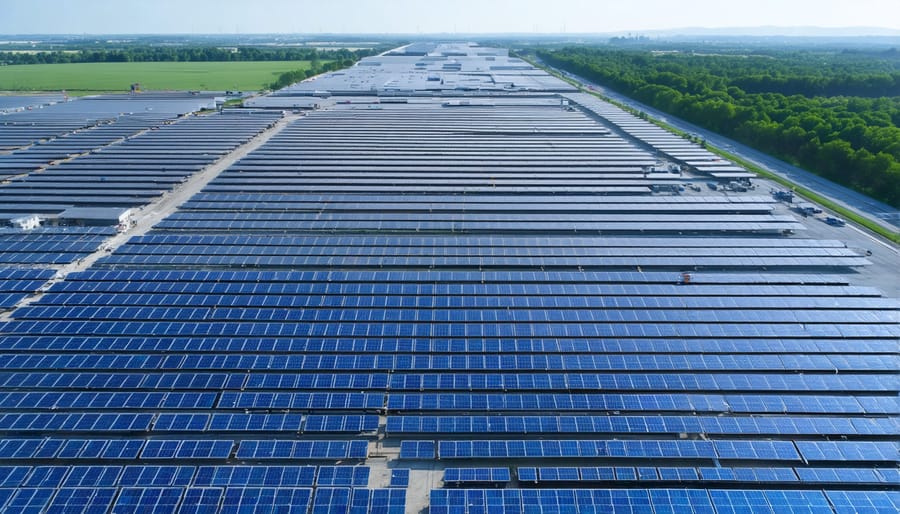
Global investment in renewable energy manufacturing capacity has witnessed unprecedented growth, with significant capital flowing into production facilities across major markets. Recent data indicates a surge in facility expansions, particularly in solar photovoltaic and wind turbine manufacturing sectors. Companies are strategically positioning themselves to meet the rising demand for renewable energy components while taking advantage of various solar manufacturing incentives.
The Asia-Pacific region continues to dominate manufacturing capacity investment, with China leading in both solar panel and wind turbine production capabilities. However, significant developments are emerging in other regions, with the United States and European Union implementing ambitious plans to establish domestic manufacturing bases. These investments are driven by supply chain security concerns and the desire to create local employment opportunities.
Investment figures show that manufacturing capacity expansion reached $127 billion in 2022, representing a 47% increase from the previous year. This growth is particularly evident in advanced manufacturing technologies, automation systems, and quality control processes. The expansion has also sparked innovation in production methodologies, leading to improved efficiency and reduced costs.
Supply chain resilience has become a key focus, with manufacturers investing in vertical integration and regional production networks. This strategic approach helps mitigate risks associated with global supply chain disruptions while ensuring consistent product quality and delivery timelines.
Technology Innovation Funding
Research and development funding in renewable energy technologies has seen substantial growth, with global R&D investments reaching $35 billion in 2022. This surge in funding has accelerated technological innovations across multiple renewable sectors, particularly in solar photovoltaics and energy storage solutions.
Private sector investments constitute approximately 60% of total R&D funding, with major technology companies and energy corporations leading breakthrough innovations in efficiency improvements and cost reduction strategies. Government initiatives and public-private partnerships contribute significantly to the remaining 40%, focusing on early-stage research and commercialization of promising technologies.
Universities and research institutions play a crucial role in advancing renewable energy technologies through collaborative research programs. These partnerships have yielded significant improvements in solar cell efficiency, battery storage capacity, and smart grid integration technologies. Notable achievements include the development of perovskite-silicon tandem cells achieving over 29% efficiency and advanced battery chemistries that have reduced energy storage costs by 89% since 2010.
Venture capital and corporate investment in clean energy startups has reached record levels, with particular focus on emerging technologies such as green hydrogen production, advanced materials for solar panels, and artificial intelligence applications in renewable energy systems. This diversified funding landscape has created a robust innovation ecosystem that continues to drive down the levelized cost of renewable energy while improving system reliability and grid integration capabilities.
Future Investment Outlook
Emerging Market Opportunities
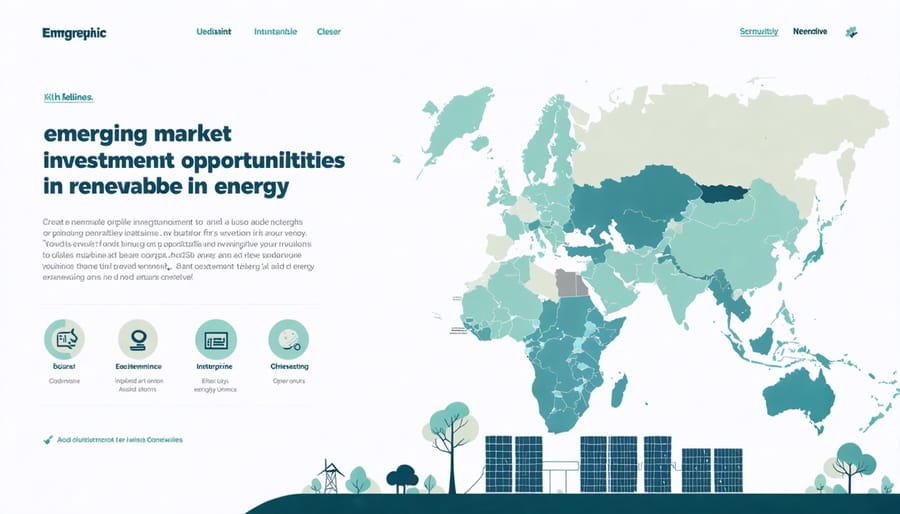
Emerging markets present compelling opportunities for renewable energy investors, with developing nations increasingly positioning themselves as key players in the global transition to clean energy. Countries across Southeast Asia, Africa, and Latin America are experiencing unprecedented growth in renewable energy adoption, driven by falling technology costs and supportive policy frameworks.
India and Brazil have emerged as particularly attractive investment destinations, with both countries setting ambitious renewable energy targets and implementing favorable regulatory environments. India’s commitment to achieving 450 GW of renewable energy capacity by 2030 has catalyzed substantial foreign investment, while Brazil’s established auction system continues to draw international capital to its wind and solar sectors.
The solar PV manufacturing growth in emerging markets is particularly noteworthy, with countries like Vietnam and Malaysia developing robust manufacturing capabilities and supply chain infrastructure. These nations are leveraging their competitive advantages in labor costs and strategic locations to establish themselves as significant players in the global renewable energy ecosystem.
African markets are showing promising potential, with countries like Morocco, Kenya, and South Africa leading the continent’s renewable energy transformation. Their success is attracting attention from international investors seeking to capitalize on the region’s abundant solar and wind resources while contributing to its sustainable development goals.
Policy Evolution Predictions
As we look toward the future of renewable energy investment, several key policy shifts are expected to reshape the global landscape. The European Union’s Green Deal initiatives are likely to evolve into more stringent requirements, potentially mandating higher renewable energy adoption rates by 2030. This evolution could trigger a cascade of policy adjustments across other major economies, particularly in North America and Asia.
Developing nations are expected to implement more aggressive feed-in tariff systems and tax incentives, following the successful models established by countries like Germany and Denmark. These policy changes could accelerate investment flows into emerging markets, particularly in Southeast Asia and Africa, where renewable energy potential remains largely untapped.
Carbon pricing mechanisms are projected to become more widespread and sophisticated, with many countries likely to adopt or strengthen their emissions trading systems. This trend could significantly influence investment decisions, directing capital toward renewable projects that offer both environmental and economic benefits.
The integration of energy storage policies with renewable energy frameworks is anticipated to gain prominence. Governments are expected to introduce specific incentives for battery storage systems and grid infrastructure improvements, addressing the intermittency challenges of renewable energy sources.
These policy developments are likely to create a more favorable environment for institutional investors, potentially leading to increased private sector participation in renewable energy projects. The combined effect of these policy changes could result in a substantial acceleration of global renewable energy investment, particularly in utility-scale solar and wind projects.
The global renewable energy investment landscape continues to evolve rapidly, demonstrating unprecedented growth and resilience despite economic challenges. Current trends indicate a significant shift in investment patterns, with emerging markets playing an increasingly vital role alongside traditional investment powerhouses. The analysis reveals that policy frameworks, technological advancements, and declining costs are primary drivers accelerating renewable energy adoption worldwide.
Looking ahead, the renewable energy sector is poised for substantial expansion, with projections suggesting investment volumes could double by 2030. This growth trajectory is supported by strengthening international commitments to carbon reduction, innovative financing mechanisms, and improving project economics. The interplay between public and private sector investments will remain crucial, particularly in developing regions where energy demand growth is highest.
Several key implications emerge from these developments. First, the continued decrease in technology costs will likely unlock new market opportunities, especially in previously underserved regions. Second, the integration of smart grid technologies and energy storage solutions will attract significant investment, enhancing the reliability and efficiency of renewable energy systems. Finally, the emergence of green hydrogen and other innovative technologies presents new investment frontiers that could reshape the global energy landscape.
Success in this evolving market will require adaptive strategies, robust risk management, and strong international cooperation. As the sector matures, investors must remain cognizant of both opportunities and challenges while maintaining focus on long-term sustainability goals.