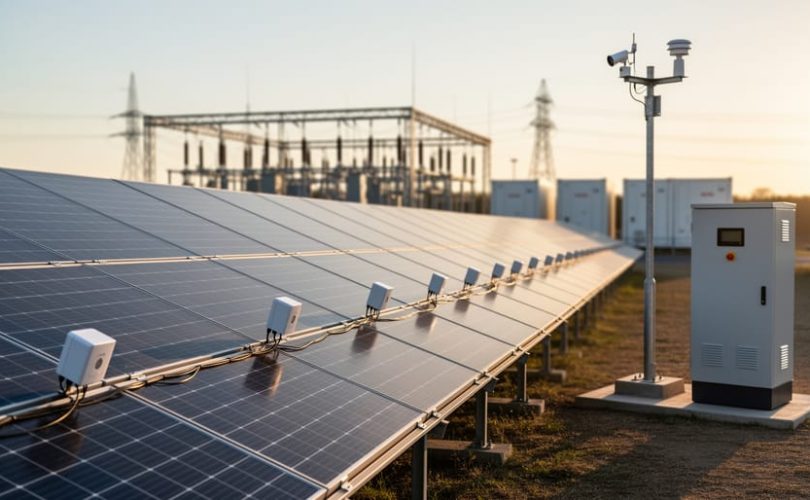
The convergence of smart grid technology and the Internet of Things is fundamentally transforming how solar photovoltaic systems integrate with electrical infrastructure. As distributed solar installations proliferate across residential, commercial, and utility-scale applications, the need for intelligent, real-time monitoring and control has become paramount. IoT-enabled smart grids address this challenge by creating networks of interconnected sensors, controllers, and analytics platforms that optimize energy production, consumption, and distribution with unprecedented precision.
Traditional electrical grids were designed for unidirectional power flow from centralized generation facilities to consumers. Solar PV systems disrupt this model by introducing variable, distributed generation that fluctuates with weather conditions and time of day. Smart grid IoT solutions resolve these complexities through continuous data collection from solar inverters, weather stations, battery storage systems, and grid connection points. This real-time visibility enables automated demand response, predictive maintenance, and dynamic load balancing that maximizes solar utilization while maintaining grid stability.
The practical implications extend beyond technical performance. IoT-enabled solar monitoring reduces operational costs through early fault detection, extends equipment lifespan via optimized operating parameters, and enhances return on investment through data-driven performance improvements. For utility operators, these systems provide critical forecasting capabilities that facilitate higher renewable energy penetration without compromising reliability. For solar asset owners, IoT platforms deliver actionable insights that transform passive generation assets into actively managed revenue streams.
Understanding smart grid IoT architecture requires examining the interplay between edge devices, communication protocols, cloud analytics, and control systems. This article explores these foundational elements alongside practical implementation strategies, emerging technologies, and real-world case studies that demonstrate the transformative potential of intelligent solar grid integration.
What Smart Grid IoT Actually Means for Solar PV Systems
The Core Components of IoT-Enabled Solar Infrastructure
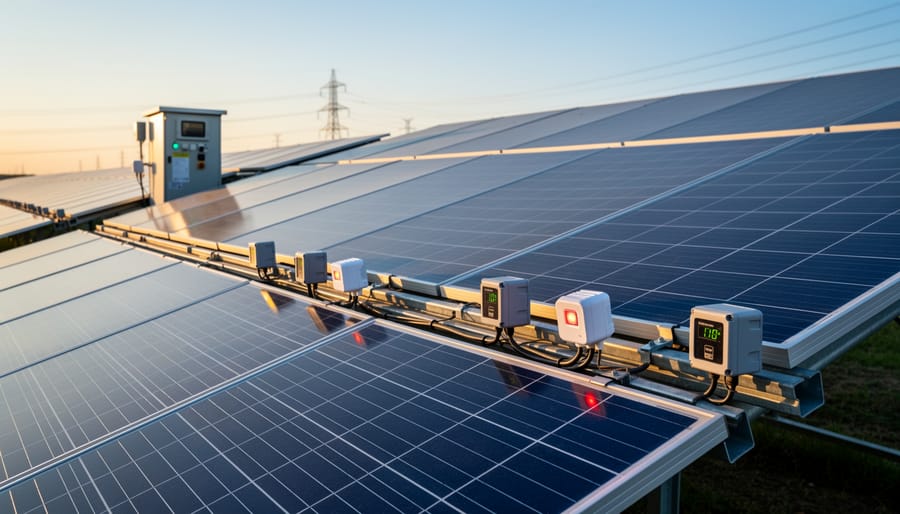
IoT-enabled solar infrastructure comprises an integrated ecosystem of hardware and software components that work synergistically to optimize energy generation and grid integration. At the heart of this system are smart inverters equipped with bidirectional communication capabilities, enabling real-time power conversion adjustments and grid stabilization functions. These devices form the critical bridge between solar arrays and the broader electrical network.
Environmental monitoring hardware provides essential operational intelligence through weather sensors that track atmospheric conditions, irradiance monitors measuring incoming solar radiation, and temperature sensors monitoring panel performance parameters. Together, these instruments enable predictive analytics and performance optimization across varying conditions.
Electrical monitoring components include voltage and current sensors that continuously track power output characteristics, identifying anomalies and ensuring system safety. Communication gateways serve as the data aggregation layer, collecting information from distributed sensors and transmitting it securely to centralized platforms using protocols such as MQTT, Modbus, or proprietary standards.
The software layer encompasses data analytics platforms that transform raw sensor data into actionable insights. These cloud-based or edge-computing systems employ machine learning algorithms to predict maintenance needs, optimize energy dispatch, and facilitate demand response strategies. Many leading smart PV systems integrate these components seamlessly, providing installers and operators with intuitive interfaces that simplify complex grid management tasks while maintaining robust cybersecurity protocols to protect critical infrastructure from potential threats.
How Data Flows From Panel to Power Grid
Understanding how data moves from individual solar panels to the broader power grid reveals the sophisticated architecture underlying smart grid IoT systems. This journey involves multiple stages, each critical to ensuring efficient energy management and grid stability.
The process begins with sensor collection at the panel level, where IoT devices continuously monitor voltage, current, temperature, and power output. These smart sensors, integrated into inverters or installed as dedicated modules, capture granular performance data at intervals ranging from seconds to minutes, depending on system requirements.
Next, edge processing occurs locally at the installation site. Edge computing devices filter raw data, perform preliminary analytics, and identify anomalies before transmission. This reduces bandwidth requirements and enables immediate responses to critical conditions like overcurrent or thermal events, enhancing system safety and efficiency.
Data transmission utilizes various communication protocols optimized for different deployment scenarios. MQTT (Message Queuing Telemetry Transport) offers lightweight, efficient messaging for systems with reliable internet connectivity. LoRaWAN provides long-range, low-power transmission ideal for distributed installations in remote areas. Cellular networks, including 4G and emerging 5G infrastructure, enable connectivity where traditional internet access is unavailable.
Cloud aggregation represents the convergence point where data from thousands of installations merges into centralized platforms. Advanced analytics engines process this information, generating insights about generation patterns, grid capacity, and optimization opportunities. Machine learning algorithms identify trends and predict future performance based on historical data and weather forecasts.
Crucially, bidirectional communication enables grid operators to send control signals back to solar installations, adjusting output levels during peak demand or curtailing generation when necessary to maintain grid stability, creating a truly responsive energy ecosystem.
Real-Time Performance Monitoring That Prevents Energy Loss
Predictive Maintenance Powered by Machine Learning
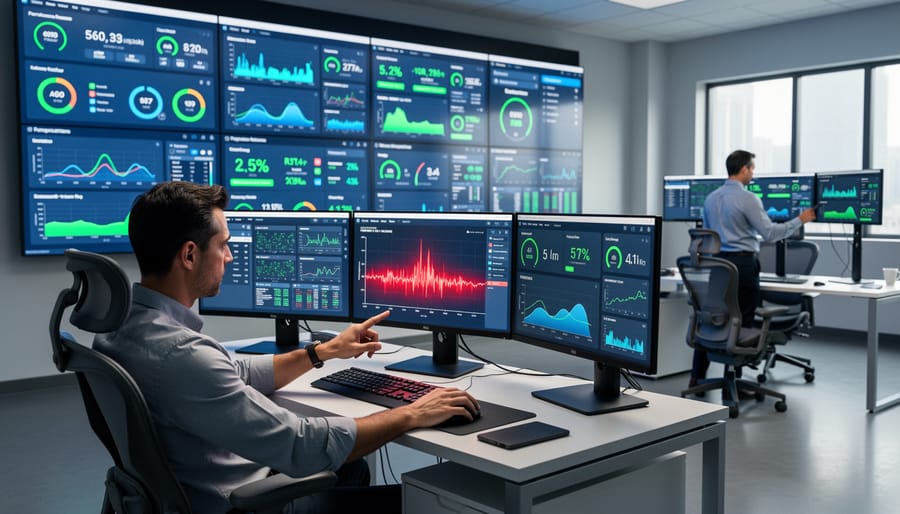
The convergence of IoT sensor networks and machine learning algorithms has revolutionized how solar installations approach system maintenance, shifting from reactive repairs to intelligent, proactive interventions. By continuously collecting operational data from inverters, connectors, junction boxes, and photovoltaic panels, IoT devices create comprehensive datasets that machine learning models analyze to identify subtle performance degradation patterns that precede component failures.
These algorithms process thousands of data points including voltage fluctuations, temperature anomalies, current irregularities, and environmental conditions to establish baseline performance profiles for each system component. When deviations occur—such as gradual efficiency drops in specific panel strings or unusual thermal signatures in inverters—the system flags these components for inspection before catastrophic failure occurs. This predictive maintenance approach dramatically reduces unplanned downtime, which can cost commercial installations thousands of dollars per incident.
The financial benefits extend beyond preventing failures. Machine learning models optimize maintenance scheduling by predicting the optimal intervention window, allowing operators to coordinate repairs during periods of low generation or bundle multiple service calls efficiently. Studies indicate that predictive maintenance strategies can reduce maintenance costs by 20-30% compared to traditional time-based schedules while extending equipment lifespan by identifying issues at early stages.
Mose Solar’s educational programs emphasize hands-on diagnostics training, teaching aspiring professionals how to interpret machine learning insights and validate algorithmic predictions through systematic troubleshooting. This practical knowledge bridges the gap between data science and field operations, ensuring that maintenance personnel can effectively leverage IoT-generated intelligence while maintaining critical thinking skills essential for complex system diagnostics. Through university collaborations, these programs prepare the next generation of professionals to harness artificial intelligence tools while understanding the underlying photovoltaic principles.
Grid Stabilization Through Intelligent Solar Integration
Demand Response and Dynamic Load Balancing
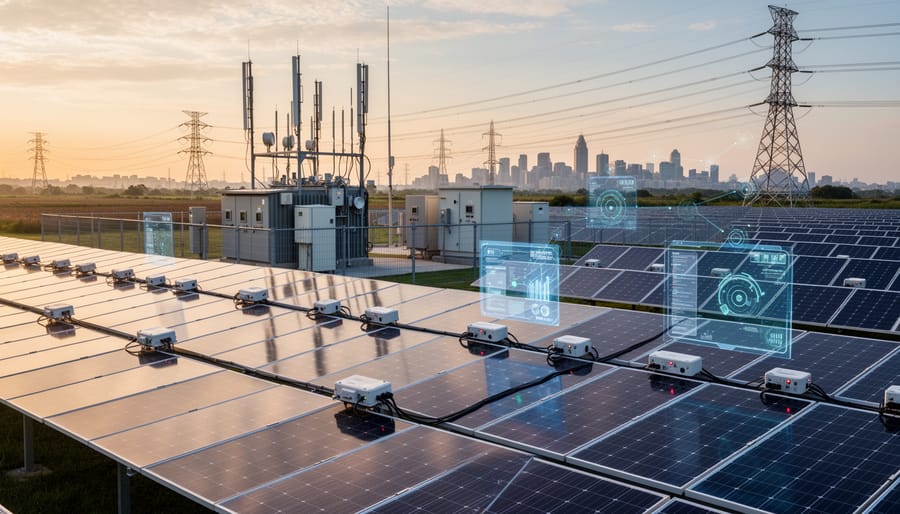
IoT technology transforms solar installations from passive power generators into active grid participants through demand response and dynamic load balancing capabilities. By receiving and responding to real-time grid signals, solar facilities can adjust their operations to support grid stability during periods of high demand or supply constraints.
Modern IoT-enabled solar systems utilize bidirectional communication protocols to receive curtailment signals from grid operators. When the grid experiences frequency deviations or voltage irregularities, solar inverters can rapidly reduce output or redirect excess generation to battery storage systems within milliseconds. This responsive behavior helps prevent grid instability that might otherwise result in brownouts or equipment damage.
During peak demand periods, solar operators can provide valuable ancillary services to utilities. These include frequency regulation, where systems automatically adjust output to maintain grid frequency at 60 Hz, and voltage support, which helps stabilize local distribution networks. IoT sensors continuously monitor grid conditions and execute predetermined response protocols without human intervention, ensuring reliable performance during critical periods.
Energy storage integration enhances demand response capabilities significantly. IoT systems can intelligently charge battery banks during periods of excess solar generation or low grid demand, then discharge stored energy during peak pricing windows. This time-shifting of energy delivery maximizes both economic returns for solar operators and grid reliability for utilities.
Universities collaborating on smart grid research are developing advanced algorithms that optimize these demand response strategies, balancing revenue opportunities with grid support obligations. Educational programs now incorporate hands-on training with demand response protocols, preparing the next generation of solar professionals to manage these sophisticated systems effectively. Through standardized communication frameworks like OpenADR and IEEE 2030.5, solar installations seamlessly integrate with utility demand response programs, creating a more resilient and efficient energy ecosystem.
Battery Storage Coordination in IoT Ecosystems
IoT platforms have revolutionized battery storage coordination by enabling intelligent decisions about when to store, use, or export solar energy. These systems analyze multiple data streams simultaneously, including time-of-use electricity pricing, real-time grid demand forecasts, and local weather predictions to optimize energy flows. For instance, when the platform anticipates peak pricing periods or cloudy conditions ahead, it automatically diverts excess solar generation to battery storage rather than exporting to the grid at lower off-peak rates.
Advanced IoT sensors continuously monitor state-of-charge levels, providing precise data about available battery capacity. This information integrates with predictive algorithms that learn household consumption patterns and seasonal variations, ensuring sufficient stored energy is available when needed most. The system prioritizes self-consumption during expensive peak hours while maximizing grid export revenues during favorable pricing windows.
Battery health management represents another critical function of IoT coordination systems. Connected sensors track temperature fluctuations, charge-discharge cycles, and voltage variations that affect battery longevity. By maintaining optimal operating conditions and preventing harmful deep discharge events, these systems extend battery lifespan significantly. The platform can automatically adjust charging rates during extreme temperatures or schedule maintenance alerts when performance degradation is detected. This proactive approach reduces replacement costs and ensures reliable energy storage performance throughout the system’s operational life, making solar-plus-storage installations more economically viable for residential and commercial applications.
Communication Protocols and Cybersecurity Considerations
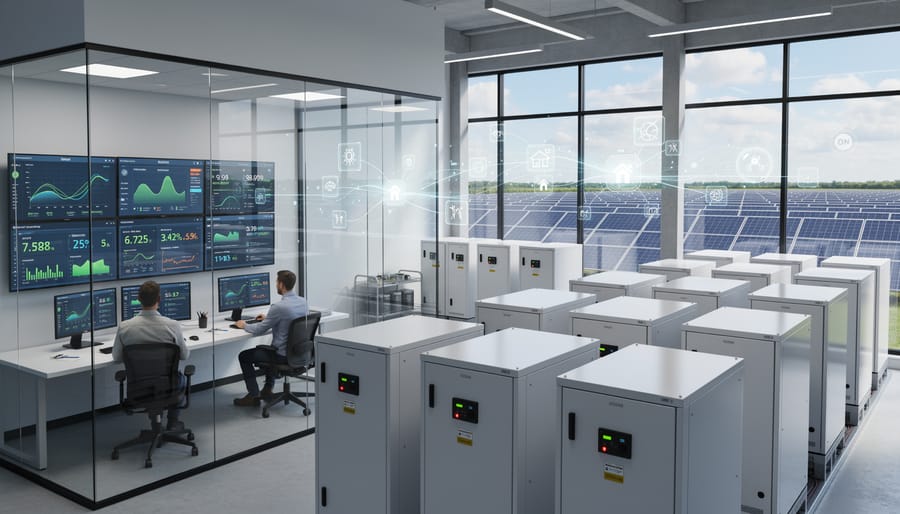
Effective communication between smart grid components requires standardized protocols that ensure interoperability across diverse IoT devices and systems. The solar industry has converged on several key standards that facilitate seamless data exchange and control operations in photovoltaic installations.
IEEE 2030.5, formerly known as Smart Energy Profile 2.0, has emerged as a fundamental protocol for demand response and distributed energy resource management. This standard enables secure communication between utility systems and customer-owned solar installations, facilitating functions like export limiting, consumption monitoring, and grid service participation. Its lightweight design makes it particularly suitable for resource-constrained IoT devices common in residential solar systems.
OpenADR (Open Automated Demand Response) provides a standardized framework for communicating demand response signals between utilities and distributed energy resources. In solar applications, OpenADR enables dynamic curtailment requests, price signals, and grid event notifications that help balance renewable generation with grid needs. The protocol supports both event-driven and schedule-based communication, offering flexibility for various operational scenarios.
SunSpec Modbus extends the widely adopted Modbus protocol specifically for solar applications, defining standardized data models for inverters, meters, and storage systems. This protocol simplification accelerates device integration and reduces commissioning time, allowing monitoring platforms to communicate with equipment from multiple manufacturers without custom programming.
However, the distributed nature of solar IoT systems presents significant cybersecurity challenges. Each connected device represents a potential entry point for malicious actors who could disrupt grid operations, manipulate energy data, or compromise customer privacy. Robust security frameworks must incorporate multiple defense layers to protect these critical energy assets.
Authentication mechanisms verify device identity before granting network access, preventing unauthorized equipment from infiltrating the system. Certificate-based authentication using public key infrastructure offers stronger protection than simple password schemes, particularly for high-value assets like inverters and battery controllers.
Encryption protects data integrity during transmission, ensuring that sensitive operational parameters and customer information remain confidential. Industry best practices recommend TLS 1.2 or higher for all communication channels, with AES-256 encryption for stored data on edge devices.
Network segmentation isolates critical operational technology networks from information technology systems and the broader internet. This architectural approach limits lateral movement by potential attackers, containing breaches within specific network zones. Properly configured firewalls and virtual LANs create these security boundaries while maintaining necessary data flows for monitoring and control functions.
Implementation Challenges and Practical Solutions
Cost-Benefit Analysis for Different Installation Scales
Understanding the financial implications of IoT integration across different solar installation scales helps stakeholders make informed decisions about technology adoption. The investment requirements and returns vary significantly based on project size and complexity.
For residential installations (3-10 kW), basic IoT monitoring systems typically add $300-$800 to initial costs. These systems provide real-time performance tracking, predictive maintenance alerts, and energy consumption optimization. Homeowners typically see 5-8% performance improvements through better system management, with payback periods ranging from 2-4 years when considering reduced maintenance costs and enhanced energy savings. Advanced residential systems incorporating smart inverters and automated energy management can extend payback to 4-6 years but deliver 10-15% overall efficiency gains.
Commercial installations (50-500 kW) require more sophisticated IoT infrastructure, with investments ranging from $5,000-$25,000. These systems integrate multiple monitoring points, advanced analytics platforms, and automated demand response capabilities. Commercial operators typically achieve 8-12% performance improvements and realize payback within 3-5 years through optimized energy usage, reduced downtime, and participation in grid services programs.
Utility-scale projects (1+ MW) demand comprehensive IoT ecosystems costing $50,000-$500,000, depending on array size and integration complexity. These installations benefit from 10-18% performance enhancements through predictive maintenance, real-time grid balancing, and advanced forecasting. Payback periods average 2-4 years, driven by substantial operational savings and revenue from ancillary grid services.
Mose Solar supports IoT implementation across all scales through educational partnerships with universities, providing professionals with practical knowledge to optimize installations while maximizing return on investment for their specific deployment scenarios.
The Future Landscape: AI-Driven Solar Grid Management
The convergence of emerging technologies is reshaping how solar installations interact with power grids, creating unprecedented opportunities for efficiency and reliability. Digital twin technology stands at the forefront of this transformation, enabling real-time virtual replicas of entire solar farms that predict performance, identify maintenance needs before failures occur, and optimize energy output under varying weather conditions. These virtual models process millions of data points simultaneously, allowing operators to test scenarios and implement improvements without risking actual infrastructure.
Blockchain technology is revolutionizing peer-to-peer energy trading, empowering solar prosumers to sell excess generation directly to neighbors through secure, transparent transactions. This decentralized approach eliminates traditional intermediary costs while creating resilient local energy markets. Smart contracts automatically execute trades based on predefined conditions, ensuring fair pricing and instantaneous settlement.
The deployment of 5G networks introduces ultra-low latency communication essential for grid stability. Response times measured in milliseconds enable rapid load balancing, seamless integration of distributed energy resources, and precise frequency regulation. This connectivity backbone supports the sophisticated coordination required when thousands of solar installations must respond collectively to grid demands.
AI-driven grid management systems orchestrate these technologies into cohesive ecosystems. Machine learning algorithms continuously refine forecasting accuracy, optimize storage dispatch, and coordinate virtual power plants comprising distributed solar assets. These systems learn from historical patterns while adapting to real-time conditions, achieving operational efficiency impossible through manual control.
Preparing professionals for this technological evolution requires comprehensive education bridging theoretical knowledge with practical application. Mose Solar’s university collaborations develop curriculum addressing digital twin implementation, blockchain energy applications, and AI system integration. These partnerships ensure graduates possess competencies in emerging technologies while understanding fundamental photovoltaic principles. Industry-academic collaboration accelerates innovation adoption, creating a talent pipeline equipped to design, deploy, and manage next-generation solar grid infrastructure that maximizes renewable energy utilization across increasingly complex power networks.
The integration of Internet of Things technologies fundamentally transforms solar photovoltaic systems from passive generation assets into dynamic, responsive grid participants. This evolution represents more than a technical upgrade—it signals a paradigm shift in how distributed energy resources contribute to grid stability, energy security, and environmental sustainability. Through real-time monitoring, predictive analytics, and automated control systems, IoT-enabled solar installations optimize energy production, reduce operational costs, and maximize return on investment while significantly decreasing carbon emissions.
The economic advantages are substantial: enhanced system performance through immediate fault detection, reduced maintenance expenses via predictive diagnostics, and improved grid services that create new revenue opportunities. Environmentally, smart integration enables higher renewable energy penetration rates, reduces reliance on fossil fuel peaker plants, and supports the transition toward decarbonized energy systems. These benefits compound as IoT technologies mature and deployment scales increase.
For aspiring photovoltaic professionals, developing competencies in IoT systems, data analytics, and smart grid technologies is no longer optional—it represents essential career preparation. The renewable energy sector increasingly demands professionals who understand both photovoltaic engineering fundamentals and digital integration strategies. Educational institutions and industry organizations offer specialized programs, certifications, and collaborative research opportunities that bridge this knowledge gap.
Staying current requires continuous learning through professional development courses, industry conferences, and partnerships with technology providers and academic institutions. Engaging with educational resources, participating in pilot projects, and contributing to industry standards development positions professionals at the forefront of this transformative technology convergence. The future of solar energy is intelligent, interconnected, and IoT-enabled—ensuring your expertise evolves accordingly will define professional success in this dynamic field.