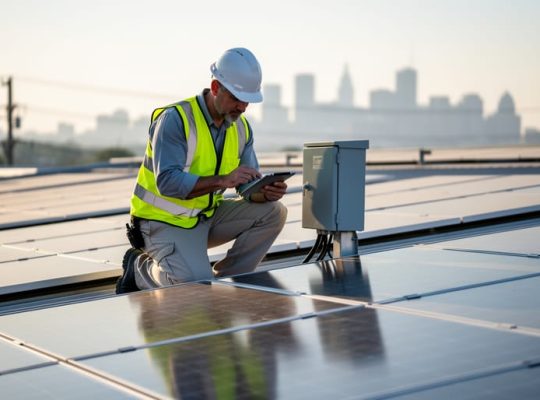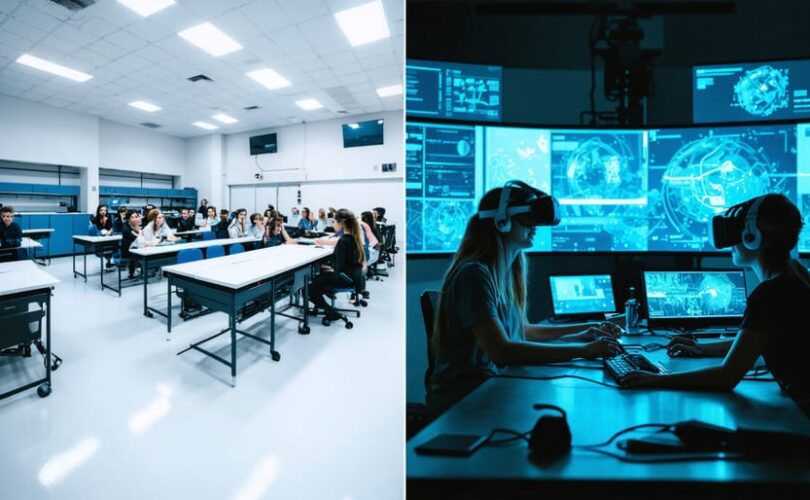
Transform your manufacturing career trajectory through specialized online education that combines hands-on virtual simulations with expert-led instruction. Today’s digital learning platforms offer comprehensive essential PV manufacturing classes and certification programs, delivering industry-recognized credentials without the constraints of traditional classroom settings.
Leading manufacturers and academic institutions have revolutionized technical education by developing sophisticated virtual laboratories, interactive 3D modeling tools, and real-time collaboration platforms. These innovations enable professionals to master complex manufacturing processes, from advanced automation systems to quality control protocols, while maintaining their current employment.
The convergence of manufacturing expertise and digital learning has created unprecedented opportunities for skill development. Industry professionals can now access specialized knowledge from global experts, participate in virtual factory simulations, and earn credentials that directly align with employer requirements. This transformation in technical education has eliminated geographical barriers while maintaining the rigorous standards demanded by modern manufacturing environments.
The Evolution of PV Manufacturing Education
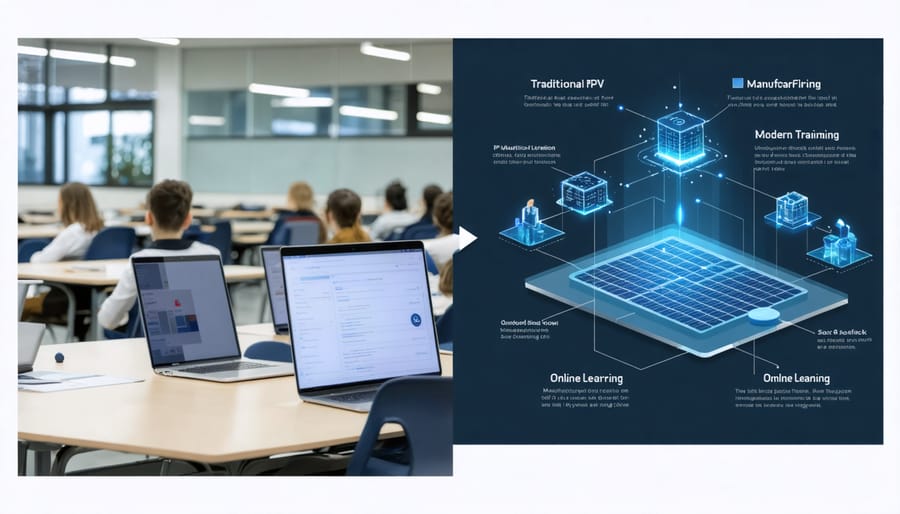
Traditional vs. Online Learning Approaches
Traditional PV manufacturing training typically involves in-person classroom sessions, hands-on laboratory work, and direct instructor supervision. While this approach offers immediate feedback and physical interaction with equipment, it often requires significant time commitment, fixed schedules, and geographical proximity to training facilities.
Online learning approaches have revolutionized PV manufacturing education by offering flexible, accessible, and scalable solutions. Digital platforms provide interactive simulations, virtual laboratories, and real-time collaboration tools that effectively replicate many aspects of traditional training. Students can access course materials 24/7, learn at their own pace, and participate in global learning communities.
Both methods have their merits in developing manufacturing expertise. Traditional learning excels in immediate tactile experience and face-to-face networking opportunities. Online courses, however, stand out in their ability to incorporate latest industry updates, provide diverse perspectives through international expertise, and offer cost-effective training solutions. Many successful programs now implement hybrid models, combining the strengths of both approaches to deliver comprehensive PV manufacturing education that meets modern industry demands.
Industry-Academia Partnerships
Leading universities and manufacturing industry leaders have formed strategic partnerships to develop comprehensive online manufacturing courses, particularly in the photovoltaic sector. These collaborations combine academic expertise with real-world industry experience, resulting in curricula that bridge theoretical knowledge and practical applications.
Notable institutions like MIT, Stanford, and Georgia Tech have partnered with major solar manufacturers to create specialized courses that reflect current industry practices and technological innovations. These partnerships ensure that course content remains up-to-date with rapidly evolving manufacturing processes and industry standards.
Industry partners contribute by providing case studies, virtual lab experiences, and actual production data, while academic institutions ensure pedagogical excellence and research-based learning approaches. Many programs also feature guest lectures from industry experts and opportunities for virtual facility tours, giving students invaluable insights into real-world manufacturing operations.
These collaborative efforts have resulted in certification programs that are widely recognized within the industry, enhancing their value for career advancement. The involvement of industry stakeholders also helps align course outcomes with current workforce needs, ensuring graduates possess relevant skills for immediate deployment in manufacturing roles.
Core Components of Online PV Manufacturing Courses
Technical Manufacturing Processes
Online manufacturing courses comprehensively cover essential production methodologies and equipment operation techniques vital to modern manufacturing processes. Students learn systematic approaches to quality control, including Statistical Process Control (SPC), Six Sigma principles, and ISO standards implementation. The curriculum typically encompasses both theoretical knowledge and practical applications of solar manufacturing innovations through virtual simulations and interactive modules.
Course content focuses on critical areas such as production line optimization, lean manufacturing principles, and automated system operations. Participants gain expertise in interpreting technical drawings, understanding material specifications, and implementing efficient workflow processes. Quality assurance modules cover inspection techniques, defect analysis, and corrective action procedures essential for maintaining high production standards.
Advanced topics include Industry 4.0 integration, robotics programming, and smart manufacturing systems. Students learn to operate and maintain sophisticated production equipment through detailed video demonstrations and virtual laboratory exercises. The courses emphasize practical problem-solving skills through case studies and real-world manufacturing scenarios.
Special attention is given to safety protocols, environmental compliance, and sustainable manufacturing practices. Participants develop proficiency in documentation procedures, regulatory requirements, and standard operating procedures (SOPs) crucial for modern manufacturing environments.
Interactive Learning Tools
Modern online manufacturing courses leverage cutting-edge technology to provide immersive learning experiences that bridge the gap between theory and practice. Virtual simulations allow students to operate complex manufacturing equipment and control systems without the risks associated with physical machinery. These simulations accurately replicate real-world production scenarios, enabling learners to develop practical skills in a safe environment.
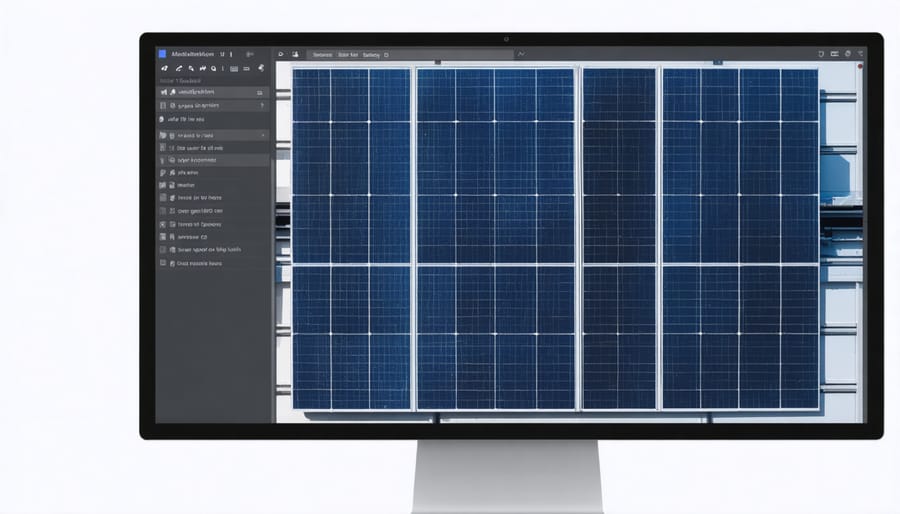
3D modeling tools form an integral part of the learning experience, enabling students to design and visualize photovoltaic components and manufacturing processes. Industry-standard software platforms help learners understand the intricacies of solar panel assembly, quality control procedures, and production line optimization. These tools provide immediate feedback, allowing students to identify and correct design flaws before implementation.
Practical exercises complement theoretical knowledge through interactive assignments that mirror actual manufacturing challenges. Students engage in virtual troubleshooting sessions, process optimization tasks, and quality control simulations. These exercises often include real-time collaboration features, enabling peer-to-peer learning and team-based problem-solving scenarios.
Digital learning platforms incorporate augmented reality (AR) and virtual reality (VR) technologies to create hands-on experiences. These technologies allow students to examine equipment components in detail, practice maintenance procedures, and understand complex manufacturing processes through three-dimensional visualization. Interactive dashboards and analytics tools help learners track their progress and identify areas for improvement, ensuring comprehensive skill development aligned with industry requirements.
Industry Certification Preparation
Online manufacturing courses often align with prestigious industry certifications, preparing students for recognized credentials while they learn. Many programs specifically target professional PV certification requirements, incorporating exam preparation materials and practice assessments into their curriculum.
Leading course providers collaborate with certification bodies such as NABCEP (North American Board of Certified Energy Practitioners), IPC (Institute for Printed Circuits), and SME (Society of Manufacturing Engineers) to ensure content meets industry standards. These partnerships guarantee that course materials remain current with evolving manufacturing technologies and certification requirements.
Students can typically expect preparation for multiple certification levels, from entry-level manufacturing certifications to advanced specialist credentials. Course content often includes simulation-based training modules, virtual laboratories, and interactive assessment tools that mirror actual certification exam formats.
Key certification preparation features include:
– Detailed study guides aligned with certification body requirements
– Practice examinations with performance analytics
– Hands-on virtual training scenarios
– Regular content updates reflecting industry standard changes
– Direct pathways to certification registration
Most programs offer certification exam vouchers or discounted registration fees as part of their course packages, streamlining the transition from course completion to professional certification.
Career Impact and Industry Benefits
Career Advancement Opportunities
Online manufacturing courses in photovoltaic technology open up numerous career advancement opportunities across the renewable energy sector. Graduates of industry-ready training programs can pursue roles such as PV Manufacturing Technician, Quality Control Specialist, or Production Line Supervisor.
As professionals gain expertise through these courses, they become eligible for senior positions like Manufacturing Operations Manager or Process Development Engineer. The skills acquired enable careers in research and development, where specialists work on improving solar cell efficiency and developing new manufacturing techniques.
The growing demand for sustainable energy solutions has created opportunities in specialized areas such as thin-film technology manufacturing, automated production systems, and advanced materials processing. Professionals can also transition into technical sales, project management, or consulting roles, leveraging their manufacturing knowledge to guide clients and organizations in solar technology implementation.
Many course graduates find positions in emerging markets where solar manufacturing facilities are being established. Others pursue entrepreneurial paths, starting their own solar manufacturing companies or consulting firms. The certification and practical knowledge gained through online courses also provide advantages when seeking positions with established solar manufacturers or renewable energy corporations.
Industry Innovation Support
Online manufacturing courses are playing a pivotal role in driving technological advancement and industry growth within the photovoltaic sector. These educational platforms facilitate rapid knowledge transfer, enabling manufacturers to quickly adapt to emerging technologies and production methodologies. By providing accessible training on cutting-edge manufacturing processes, online courses help bridge the skills gap that often hinders industry expansion.
The digital nature of these programs allows for real-time updates to course content, ensuring students learn the latest innovations in PV manufacturing techniques. This agility in curriculum adaptation is particularly crucial in an industry where technological advancement occurs at an unprecedented pace. Manufacturing facilities benefit from employees who can immediately apply new knowledge to improve production efficiency and quality control processes.
These courses also foster innovation through collaborative learning environments, where professionals from different regions can share insights and best practices. This cross-pollination of ideas accelerates the development of new manufacturing solutions and helps standardize industry practices globally. Additionally, online platforms often incorporate virtual simulations and digital twins of manufacturing processes, allowing learners to experiment with innovative approaches without risking actual production resources.
The integration of industry feedback into course development ensures that educational content remains aligned with real-world manufacturing needs. This symbiotic relationship between education providers and manufacturers creates a continuous improvement cycle that drives both technological advancement and workforce development.
Future Trends in Online PV Manufacturing Education
The landscape of online PV manufacturing education is rapidly evolving, driven by technological advancements and changing industry needs. Virtual reality (VR) and augmented reality (AR) technologies are emerging as powerful tools for simulating manufacturing environments, allowing students to practice complex assembly processes and troubleshooting scenarios without physical equipment access.
Artificial intelligence and machine learning integration are revolutionizing personalized learning experiences. These technologies adapt course content and pacing to individual student performance, ensuring optimal comprehension of critical manufacturing concepts. Predictive analytics help identify areas where students might struggle, enabling proactive intervention and support.
Digital twin technology is gaining prominence in online PV manufacturing education, enabling students to interact with virtual replicas of actual production facilities. This innovation provides hands-on experience with manufacturing processes, equipment operations, and quality control procedures in a risk-free environment.
Micro-credentials and stackable certificates are becoming increasingly popular, offering flexible learning paths that align with industry demands. These shorter, focused programs allow professionals to acquire specific skills quickly while building toward comprehensive qualifications.
Collaborative learning platforms are evolving to incorporate real-time industry projects and challenges. Students can work on actual manufacturing problems provided by solar companies, fostering practical experience and industry connections. These platforms often feature mentorship programs connecting learners with experienced professionals.
Mobile learning optimization is expanding access to educational content, allowing students to engage with course materials through smartphones and tablets. This flexibility particularly benefits working professionals seeking to upgrade their skills.
Looking ahead, blockchain technology may revolutionize credential verification and skill certification in PV manufacturing education. Smart contracts could automate the verification of completed coursework and acquired competencies, streamlining the hiring process for employers.
As remote learning technologies continue to advance, we can expect increased integration of Internet of Things (IoT) devices and sensors, enabling students to monitor and analyze real-time manufacturing data from actual production facilities, further bridging the gap between theoretical knowledge and practical application.
Online photovoltaic manufacturing courses have revolutionized the way professionals prepare for careers in the solar industry. These digital learning platforms have successfully bridged the gap between theoretical knowledge and practical application, enabling students worldwide to access high-quality education from industry experts and leading institutions.
The transformative impact of these courses extends beyond mere convenience. They have democratized access to specialized PV manufacturing knowledge, allowing professionals from diverse backgrounds to develop crucial skills without geographical constraints. This accessibility has accelerated industry growth by creating a more skilled workforce capable of meeting the increasing demands of the renewable energy sector.
The integration of advanced learning technologies, virtual laboratories, and interactive simulations has enhanced the educational experience, providing students with practical insights into manufacturing processes, quality control, and industry best practices. Furthermore, these courses have fostered a global community of learners, facilitating knowledge exchange and professional networking opportunities that were previously limited to traditional classroom settings.
As the solar industry continues to evolve, online PV manufacturing courses will play an increasingly vital role in workforce development. Their ability to rapidly update curriculum content to reflect technological advances and industry trends ensures that professionals remain current with the latest innovations and standards. This dynamic approach to education, combined with the flexibility and accessibility of online learning, positions these courses as essential tools for advancing careers in photovoltaic manufacturing and supporting the global transition to renewable energy.